

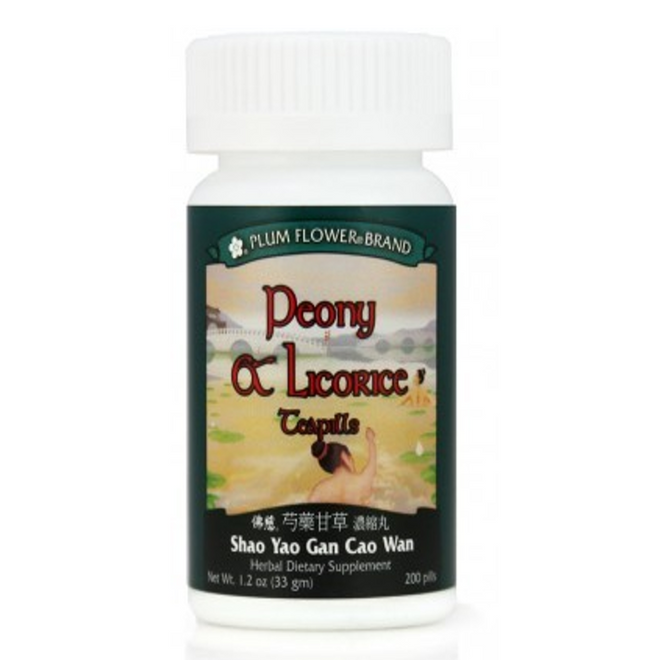
Peony & Licorice Teapills – Shao Yao Gan Cao Wan – Plum Flower
A classic two-herb Traditional Chinese Medicine formula combining Bai Shao (Peony Root) and honey-fried Gan Cao (Licorice Root) for its traditional TCM pattern.
Sometimes a traditional Chinese herbal formula does not need a long ingredient list. Shao Yao Gan Cao Wan (芍藥甘草丸), commonly called Peony & Licorice Teapills, contains just two primary herbs: Bai Shao and honey-fried Gan Cao.
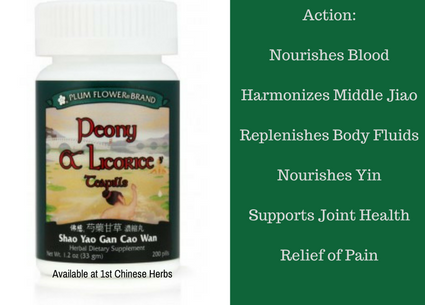
In Traditional Chinese Medicine, this classic pairing is traditionally associated with nourishing Blood, preserving Yin, harmonizing the Liver and supporting relaxation of the sinews within an appropriate TCM pattern.
If you are comparing Chinese herbal formulas, the important question is not simply, “What symptom do I have?” It is whether the traditional pattern and actions of the formula match what you are trying to support.
What Is Shao Yao Gan Cao Wan?
Shao Yao Gan Cao Wan is the prepared teapill form of the traditional formula also known as Shao Yao Gan Cao Tang. Its Chinese name is 芍藥甘草丸.
The formula brings together two herbs with complementary traditional roles:
Bai Shao (Paeonia lactiflora root) is traditionally associated with nourishing Blood, preserving Yin and supporting the Liver and sinews.
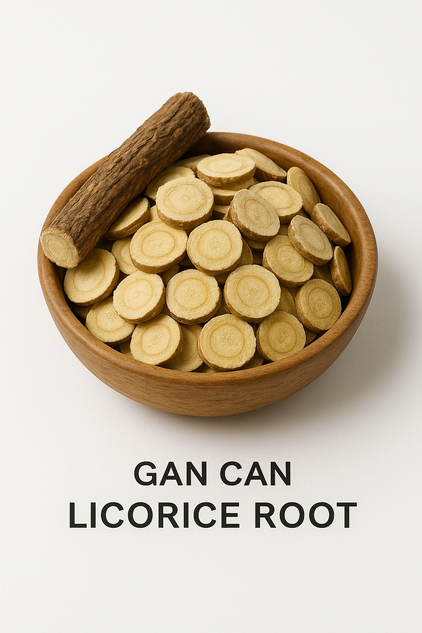
Zhi Gan Cao (honey-fried Glycyrrhiza uralensis root) traditionally supports Qi and harmonizes the formula while complementing Bai Shao.
The simplicity of this pairing is one of the most interesting things about Shao Yao Gan Cao. Rather than trying to address many different traditional patterns at once, it has a focused two-herb composition.
Product Details at a Glance
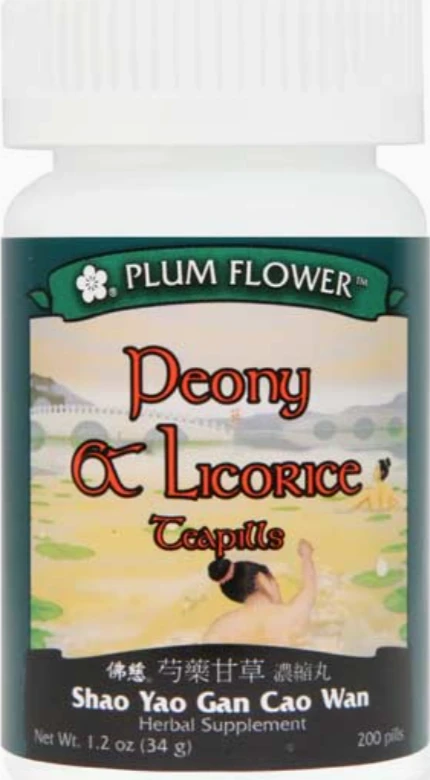
Traditional Name: Shao Yao Gan Cao Wan (芍藥甘草丸)
Alternate Name: Shao Yao Gan Cao Tang
English Name: Peony & Licorice Teapills
Brand: Plum Flower
Form: Prepared Chinese herbal teapills
Bottle Size: 200 teapills
Formula Size: 2 traditional herbal ingredients
Label Directions: 8 teapills, 3 times daily
Approximate Supply: Approximately 8 days at the standard label directions
Preparation Required: None — swallow the prepared teapills with water
What's in Peony & Licorice Teapills?
| Pin Yin | Botanical Ingredient | Traditional Role |
|---|---|---|
| Bai Shao | Paeonia lactiflora root | Traditionally associated with nourishing Blood, preserving Yin and supporting the Liver and sinews. |
| Gan Cao (Zhi) | Glycyrrhiza uralensis root (honey-fried) | Traditionally used to support Qi and harmonize herbal formulas. |
Other Ingredients: Maltose, hydrated magnesium silicate, activated carbon and China wax.
Why Are Peony and Licorice Paired Together?
The relationship between Bai Shao and Zhi Gan Cao is the heart of this traditional formula.
Within TCM theory, Bai Shao contributes the nourishing and Yin-preserving aspect of the pairing, while honey-fried Gan Cao contributes its harmonizing and Qi-supporting qualities.
Together, they form a traditional combination associated with harmonizing the relationship between Yin and Yang and supporting the sinews within the appropriate TCM pattern.
Terms such as Blood, Yin, Qi, Liver and sinews in this discussion describe Traditional Chinese Medicine concepts. They should not be interpreted as Western medical diagnoses or claims about treating a disease.
What Does “Supporting the Sinews” Mean in TCM?
The word “sinews” appears frequently in traditional Chinese herbal literature, but it can be confusing to someone encountering TCM for the first time.
Within Traditional Chinese Medicine theory, the sinews are traditionally associated with movement and flexibility and with the Liver system. TCM practitioners consider the person's complete pattern rather than interpreting the term as a diagnosis involving a particular muscle, tendon or neurological condition.
For that reason, Shao Yao Gan Cao Wan should not be chosen simply because a person notices one physical sensation. The complete traditional pattern matters.
Why Teapills & How Do I Use Them?
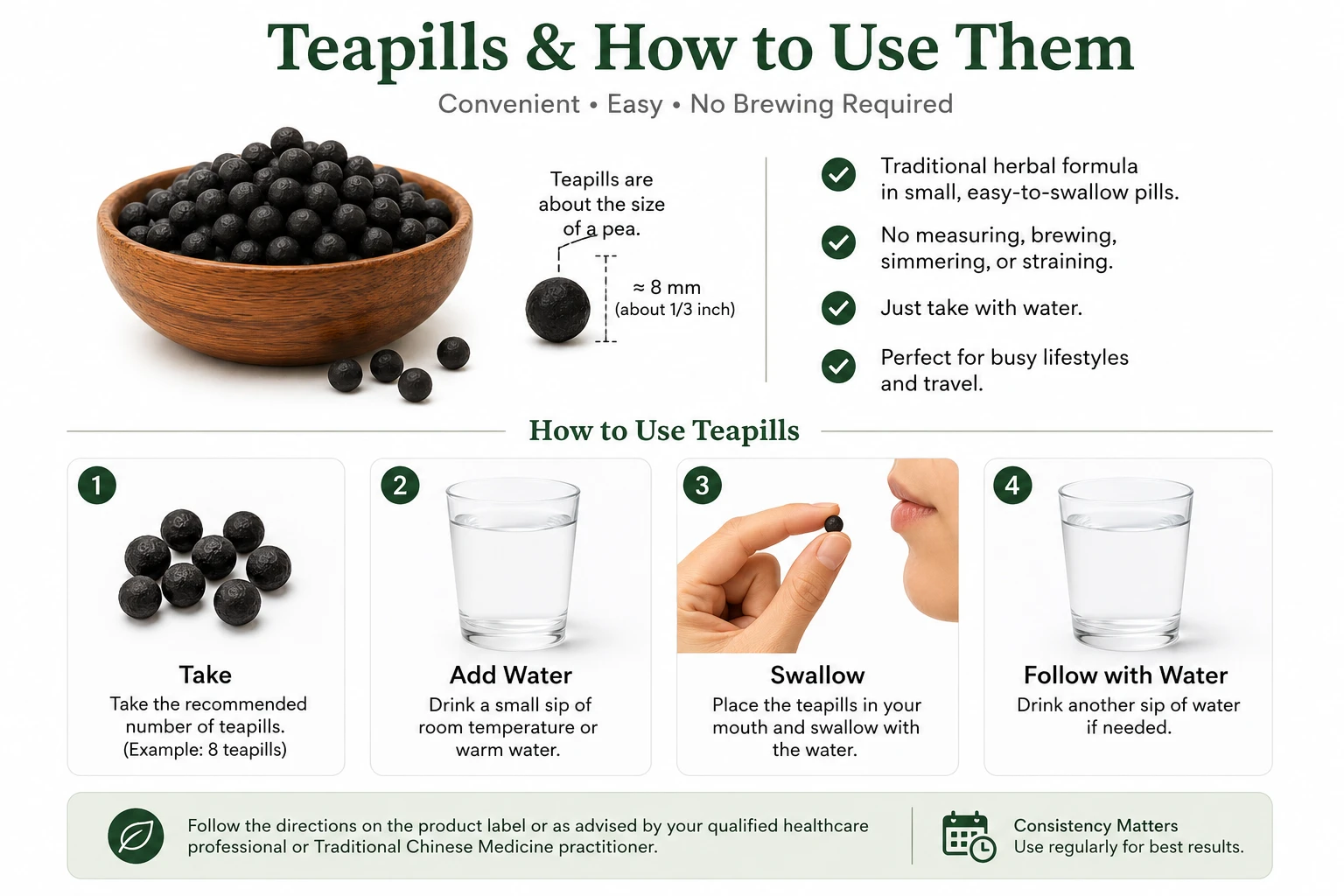
Peony & Licorice is supplied as prepared teapills and does not require brewing or decocting.
The manufacturer's standard dosage is 8 teapills, 3 times per day.
At 24 teapills per day, a 200-count bottle provides approximately 8 days of use.
Swallow the teapills with water and follow the product label unless your qualified healthcare professional or Traditional Chinese Medicine practitioner has provided different instructions.
Important Safety Information
Because this formula contains licorice root (Glycyrrhiza uralensis), customers taking medications or managing a medical condition should discuss its use with an appropriate healthcare professional. Licorice can be clinically significant for some people and may interact with certain medications.
Seek professional guidance before using Chinese herbal formulas during pregnancy or nursing.
Traditional Chinese Medicine terminology on this page describes historical and traditional herbal-use concepts and is not intended to diagnose a Western medical condition.
Frequently Asked Questions
How many herbs are in Shao Yao Gan Cao Wan?
This Plum Flower formula contains only two primary herbs: Bai Shao (Paeonia lactiflora root) and honey-fried Gan Cao (Glycyrrhiza uralensis root).
Is Shao Yao Gan Cao Wan the same as Shao Yao Gan Cao Tang?
They refer to the same traditional formula family presented in different prepared forms. This product is a prepared teapill form.
Why is the licorice root honey-fried?
Honey-processing, indicated by Zhi, is a traditional Chinese herbal preparation method. The manufacturer's formula specifically identifies the Gan Cao in this product as honey-fried.
How many teapills do I take?
The manufacturer's standard dosage is 8 pills, 3 times per day. Follow the product label and seek individualized professional guidance when appropriate.
How long does one bottle last?
A 200-count bottle provides approximately 8 days when used at the manufacturer's standard dosage of 24 teapills per day.
A Classic Two-Herb Traditional Formula
Shao Yao Gan Cao Wan demonstrates that a traditional Chinese herbal formula does not have to contain numerous ingredients to have a clearly defined traditional purpose.
Its combination of Bai Shao and honey-fried Gan Cao has made Peony & Licorice one of the recognizable two-herb pairings in traditional Chinese herbalism.
When comparing this formula with other teapills, look at the complete traditional pattern, ingredients and cautions rather than selecting a formula based on a single characteristic.
PubMed Research & Further Reading
- Shao Yao Gan Cao Decoction – Comprehensive Review of the Formula, Pharmacology, Clinical Applications & Safety
- Shao Yao Gan Cao – Systematic Review of Clinical Research on Muscle Cramps
- Shao Yao Gan Cao – Randomized Controlled Clinical Trial
- Shao Yao Gan Cao – Research on the Interaction Between Peony and Licorice
- Shao Yao Gan Cao – Experimental Research on the Two-Herb Combination
- Shao Yao Gan Cao – Pharmacokinetic Study in Healthy Adults
Traditional Use & FDA Disclaimer
References to Blood, Yin, Yang, Qi, Liver and sinews on this page describe concepts within Traditional Chinese Medicine and are not Western medical diagnoses.
These statements have not been evaluated by the Food and Drug Administration. This product is not intended to diagnose, treat, cure, or prevent any disease.