
Not all circulation herbs feel the same. Some herbs are cooling. Some are moving. Some are calming. Some taste pleasant enough to enjoy daily, while others are stronger, more bitter, and traditionally used in formulas. The best herb is usually not the strongest herb. It is the herb you can realistically use consistently alongside healthy lifestyle habits and medical guidance. Jump directly to the section that fits what you are looking for. Most people do not start researching blood pressure herbs because everything feels perfect. They start looking because something feels off. Maybe the numbers at the pharmacy machine were higher than expected. Maybe stress has been through the roof. Maybe the face feels hot, the head feels tight, sleep has been terrible, or the body feels like it is constantly running in “emergency mode.” Then they search online and immediately get buried in herbal confusion. Every herb seems to “support circulation.” Every herb seems “good for the heart.” Every herb sounds important. And suddenly you are staring at six browser tabs wondering whether you need tea, capsules, roots, flowers, berries, or a small degree in Chinese medicine. High blood pressure can be serious and may not cause obvious symptoms. This page is for education about traditional herbal wellness support only. Do not stop, reduce, or replace blood pressure medication without guidance from a licensed healthcare provider. If you take blood pressure medication, blood thinners, heart medication, diabetes medication, diuretics, or kidney-related medication, speak with your healthcare provider before using herbs. For beginners, Ju Hua, Shan Zha, and Luo Bu Ma are usually the easiest to understand because they can be prepared as simple teas. For stronger traditional pattern support, Gou Teng, Dan Shen, and Xia Ku Cao are more often used in decoctions or formulas. The best herb is not always the strongest herb. The best herb is the one that matches the person, the pattern, the preparation method, and the routine they can actually stick with. Start with Ju Hua or Shan Zha. They are usually easier to drink and less intimidating than strong roots or bitter formula herbs. Gou Teng is traditionally associated with tension, head pressure, and Liver Yang rising patterns. Luo Bu Ma or Ju Hua may be the easiest place to begin because they work well as simple infusions. Dan Shen and Shan Zha are traditionally used in circulation-focused wellness routines. Ju Hua, Gou Teng, and Xia Ku Cao are traditionally cooling herbs often discussed in heat-type patterns. Choose one simple tea herb first. Do not build a 12-herb mountain and then wonder why your kitchen looks like a wizard moved in. Most people want the “strongest” herb. But stronger is not always better. A strong herb that tastes awful, feels wrong, or requires complicated preparation often ends up sitting untouched in the cabinet. The routine that works is usually the routine you can actually repeat. Traditionally used for Liver Yang rising patterns, tension, and head pressure. Modern studies have explored Uncaria compounds for vascular relaxation and blood-pressure-related mechanisms. Traditionally used for digestion, food stagnation, and circulation. Hawthorn has modern research exploring cardiovascular and blood-pressure-related outcomes. Traditionally used to support blood movement and circulation. Research has explored Dan Shen compounds in cardiovascular wellness and vascular function. Traditionally used as a tea-like herb. Research has explored Apocynum venetum leaf extract for vascular relaxation and blood-pressure-related mechanisms. Traditionally used to clear heat, soothe the head and eyes, and support Liver-related tension patterns. It is one of the easiest herbs to enjoy as tea. Traditionally used for heat-clearing and Liver constraint patterns. It is more bitter than beginner-friendly tea herbs and is often used in stronger traditional formulas. How To Use These Herbs Best for lighter herbs such as Ju Hua and Luo Bu Ma. Pour hot water over the herb, cover, and steep. This is the easiest method for beginners. Step-by-Step detailed instructions on how to make an infusion. Best for denser herbs such as Gou Teng, Dan Shen, Xia Ku Cao, and Shan Zha. Simmering helps extract tougher roots, fruits, stems, and spikes. Herbs can be part of a wellness routine, but they are not the entire routine. Blood pressure support is often influenced by daily habits that feel boring but matter deeply. The herb is not the whole story. The routine is the story. If you are completely new to Chinese herbs, start simple. Some herbs have been studied for blood-pressure-related mechanisms, but this does not mean they should replace medical care. Use herbs as wellness support only and continue monitoring your blood pressure. Ju Hua and Shan Zha are often easiest because they taste better than many stronger herbs and are simple to prepare as tea. Hawthorn has several clinical studies and reviews related to blood pressure and cardiovascular wellness. Luo Bu Ma, Gou Teng, and Dan Shen also have research exploring vascular and cardiovascular mechanisms. Ask your healthcare provider first. Herbs may interact with blood pressure medication, blood thinners, heart medication, diabetes medication, and diuretics. Ju Hua is light and floral. Shan Zha is tart and fruity. Luo Bu Ma is more grassy and tea-like. Dan Shen, Gou Teng, and Xia Ku Cao are more bitter or earthy. Educational Notice: This article discusses traditional Chinese herbal use and modern research for educational purposes only. It is not medical advice and is not intended to diagnose, treat, cure, or prevent high blood pressure, hypertension, heart disease, stroke, kidney disease, or any medical condition. Choose real herbs, learn how to use them correctly, and build a routine that feels simple enough to actually follow. Get Real Herbs. Feel the Difference. Trusted Since 1994 | Lab-Tested Herbs | COA Available Upon Request | Fast Shipping from Washington StateStop Guessing Which Herbs to Take:
6 Chinese Herbs Traditionally Used for Blood Pressure & Circulatory Wellness SupportAbout Blood Pressure Herbs
Compare Gou Teng, Shan Zha, Dan Shen, Luo Bu Ma, Ju Hua, and Xia Ku Cao — Without the Confusion
Quick Navigation Guide
Important First: This Is Not a Replacement for Blood Pressure Care
 Quick Answer: Which Herb Should You Look At First?
The Herb Comparison Chart
Herb
Best Known For Traditionally
Taste
Best Use Style
Best Fit
Gou Teng
Uncaria RhynchophyllaCooling, calming, settling Liver Yang patterns
Earthy, slightly bitter
Short decoction or formula
Stress tension, head pressure, feeling “wound up”
Shan Zha
Hawthorn BerryCirculation, food stagnation, cardiovascular wellness
Tart, fruity, sour
Tea, powder, decoction
Beginners, sour tea lovers, digestion + circulation routines
Dan Shen
Salvia RootBlood movement and circulation support
Bitter, earthy
Decoction, powder, formula
More advanced circulation-focused routines
Luo Bu Ma
Apocynum LeafCooling tea traditionally associated with pressure and tension support
Green, grassy, tea-like
Infusion tea
People wanting a simple daily tea routine
Ju Hua
Chrysanthemum FlowerCooling heat, head tension, eye strain, Liver patterns
Light, floral, pleasant
Simple tea infusion
Beginners, tea drinkers, people who dislike bitter herbs
Xia Ku Cao
Prunella SpikeClearing heat and supporting Liver constraint patterns
Bitter, cooling, earthy
Decoction or formula
People with heat-type traditional patterns
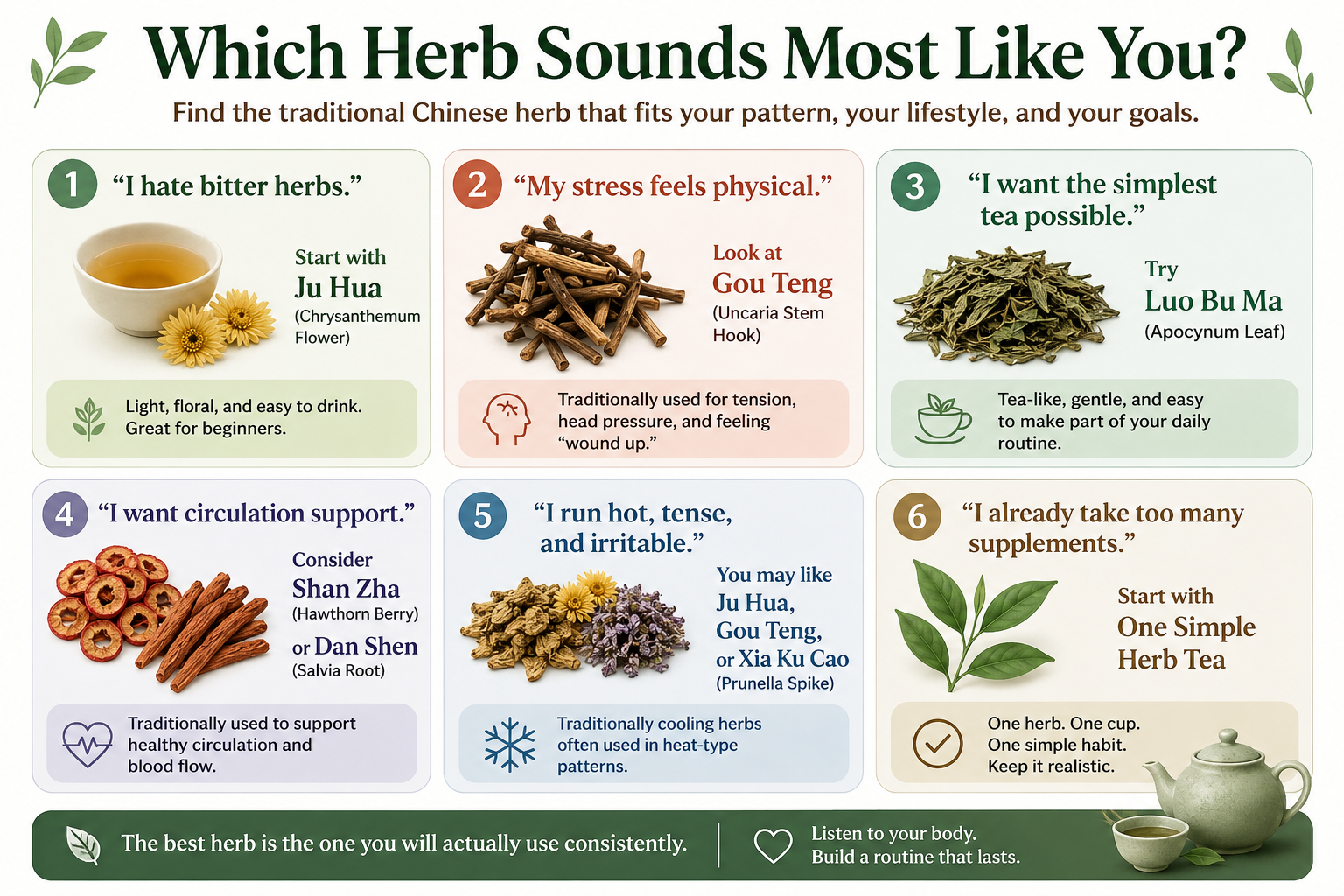
Which Herb Sounds Most Like You?
“I hate bitter herbs.”
“My stress feels physical.”
“I want the simplest tea possible.”
“I want circulation support.”
“I run hot, tense, and irritable.”
“I already take too many supplements.”
What You Need To Know About Blood Pressure Herbs
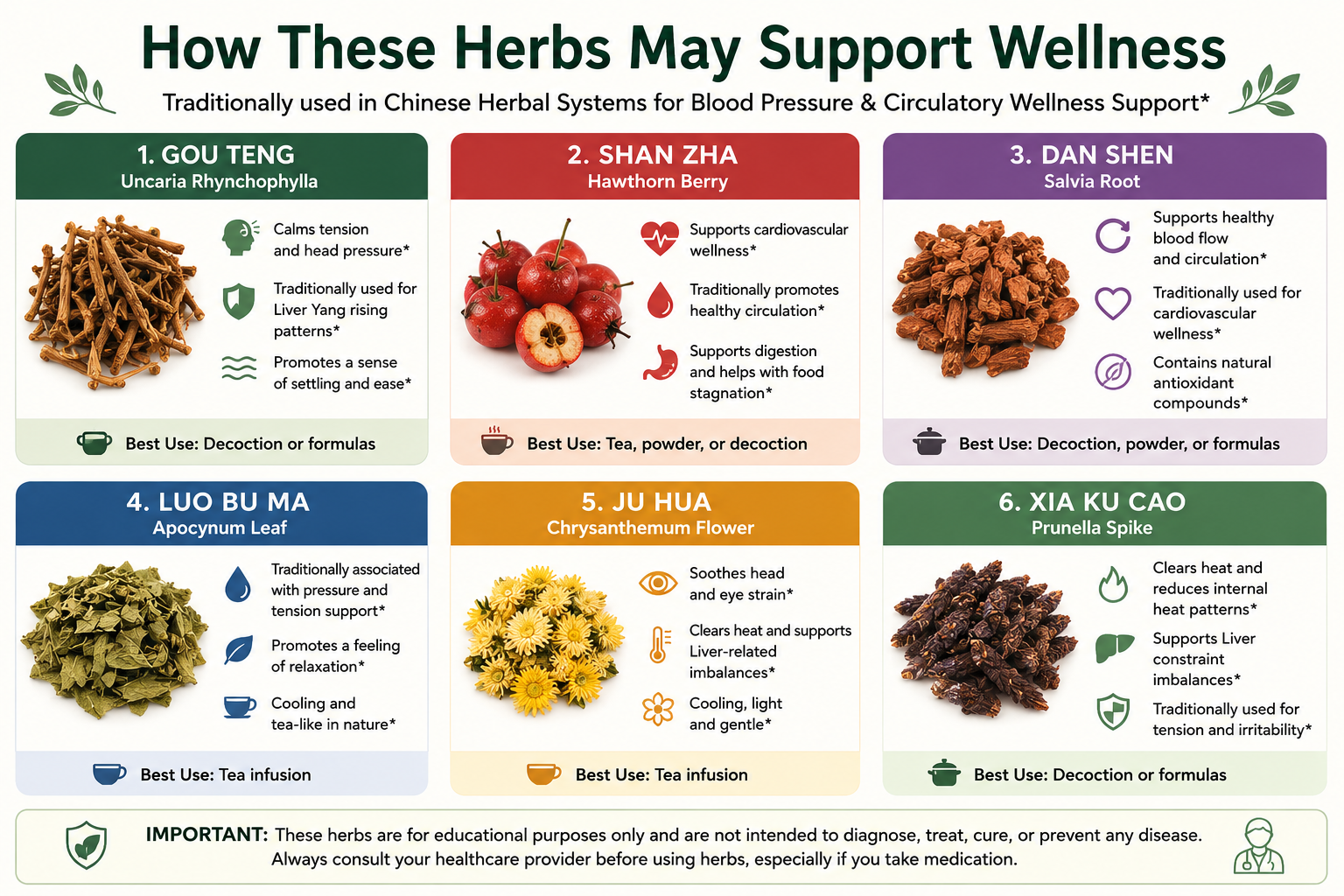
How These Herbs May Support Wellness
Gou Teng - Shop Your Favorite Form
Shan Zha - Shop Your Favorite Form
Dan Shen - Shop Your Favorite Form
Luo Bu Ma - Shop Our Teapills
Ju Hua - Shop Your Favorite Form
Xia Ku Cao - Shop Your Favorite Form
Best Herb by Situation
Situation
Better Herb Choice
Why
Best beginner tea
Ju Hua
Light, floral, simple to steep
Best sour-tasting circulation tea
Shan Zha
Tart berry flavor and traditional circulation use
Best simple daily tea routine
Luo Bu Ma
Tea-like leaf traditionally used for pressure and tension support
Best stronger traditional tension herb
Gou Teng
Traditionally used for Liver Yang rising and head tension patterns
Best circulation-focused formula herb
Dan Shen
Traditionally used to support blood movement
Best for heat-type traditional patterns
Xia Ku Cao
Cooling, bitter, heat-clearing traditional profile
Our step-by-step, detailed guides on how to use herbs 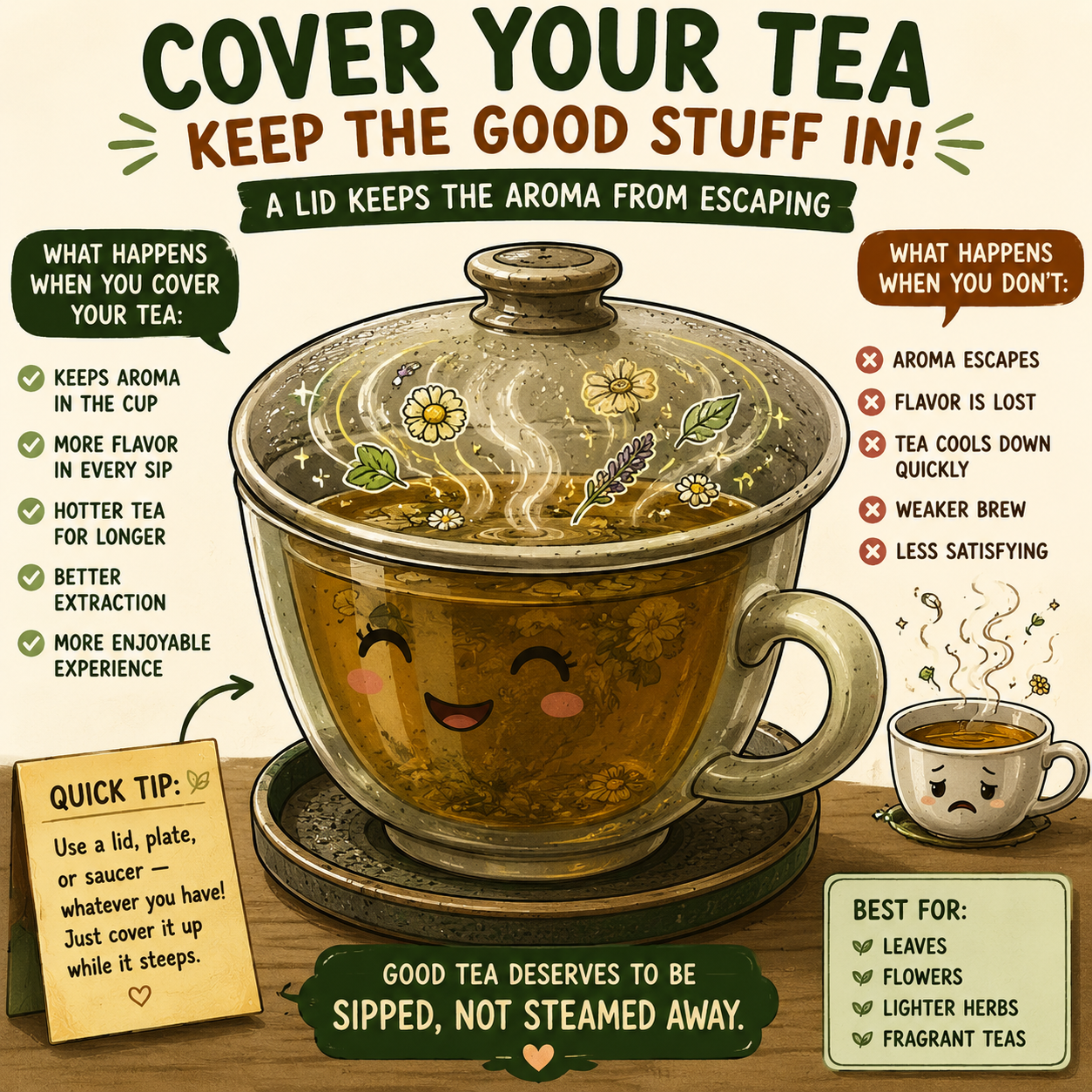
Tea / Infusion
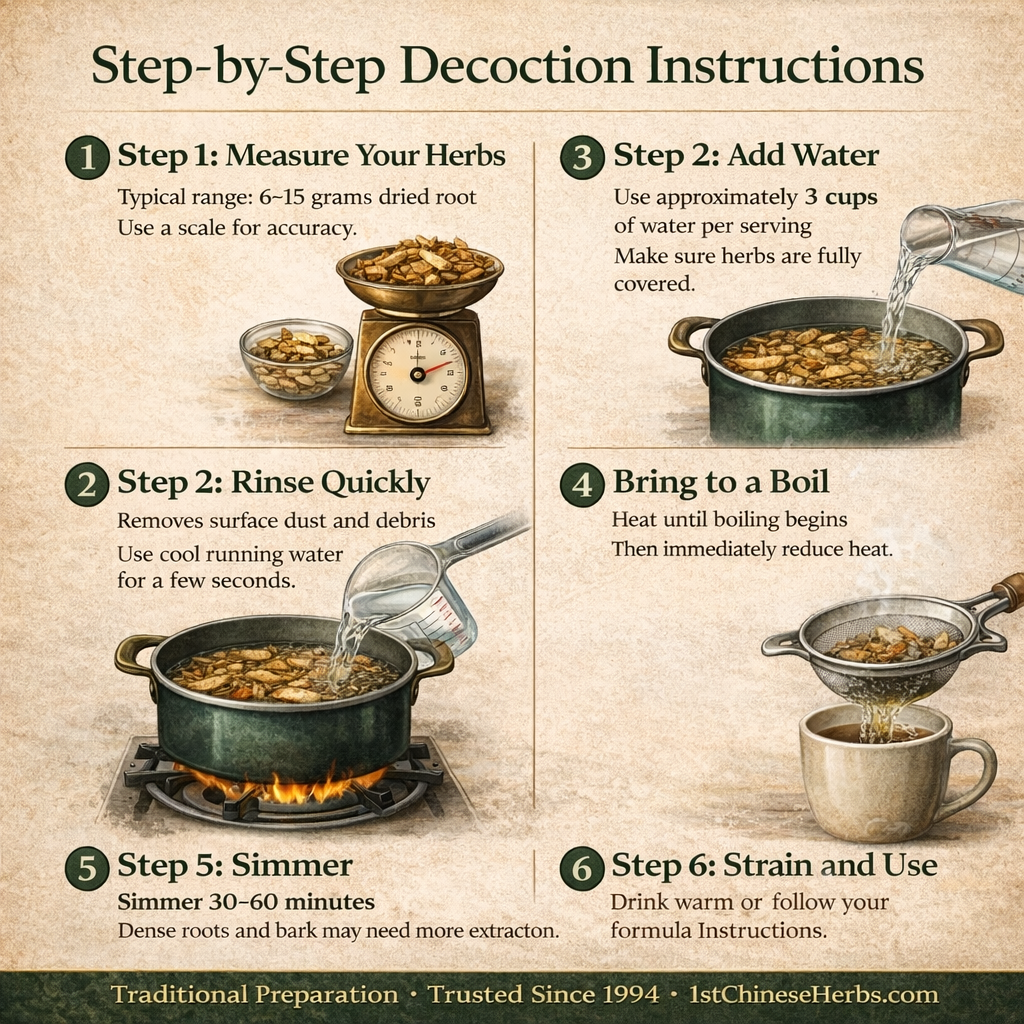
Decoction
Common Beginner Mistakes
What Blood Pressure Wellness Really Requires
Beginner-Friendly Starting Point
FAQ: You Asked So We Answered
Can Chinese herbs lower blood pressure naturally?
Which herb is easiest for beginners?
Which herb has the most research?
Can I take these herbs with blood pressure medication?
Which herb tastes best?
Scientific Research References
Helpful Herbal Guides
Explore Traditional Circulatory Wellness Herbs