
Sun-Dried vs Machine-Dried Herbs: Why Drying Changes Aroma, Texture & Freshness
The Hidden Step That Quietly Changes the Quality of Chinese Herbs
Written by 1st Chinese Herbs | Trusted Since 1994 | Last Updated May 17, 2026
Most consumers think dried herbs simply “stay dried.”
But one of the biggest hidden factors affecting aroma, freshness, texture, color, appearance, storage life, and overall herb quality happens long before herbs ever reach your shelf:
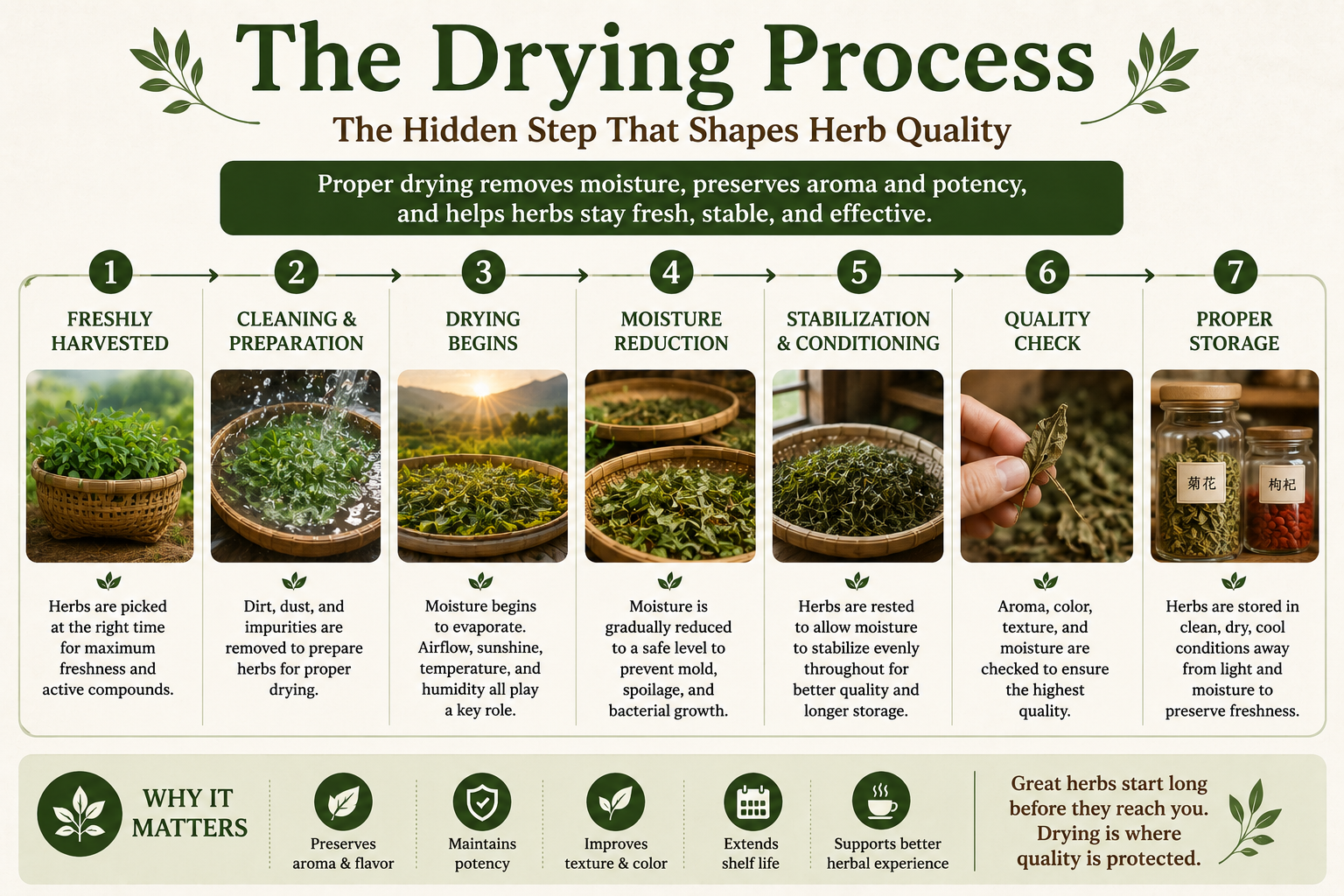
The drying process.
This is one of the most overlooked parts of herbal quality.
Yet drying quietly affects almost everything consumers notice about herbs:
- why one herb smells vibrant while another smells stale
- why some herbs look bright while others appear faded
- why some herbs feel crisp while others feel damp
- why one batch smells rich and another smells dusty
- why some herbs store beautifully while others lose freshness quickly
And once you understand drying, you begin seeing herbs very differently.
Quick Answer: Sun-dried herbs and machine-dried herbs may differ in aroma, texture, freshness, moisture level, appearance, storage quality, and color. Drying is one of the most overlooked factors affecting herbal quality and can dramatically influence the final herb consumers receive.
What You Need To Know
Fresh herbs naturally contain moisture.
If moisture is not properly managed, herbs may:
- develop stale odors
- lose aroma
- fade in color
- become unstable during storage
- mold
- spoil prematurely
Drying is not simply about removing water.
It is about balancing:
- airflow
- temperature
- humidity
- timing
- storage stability
- overall herb quality
And this is where drying begins changing the final herb itself.
Detailed Explanation About Herb Drying
Most websites simply tell consumers what an herb does.
Very few explain:
- why herbs smell different
- why colors vary naturally
- why one herb feels fresher than another
- why some herbs arrive brittle while others feel soft
- why some herbs lose aroma quickly
Drying can affect:
- volatile aromatic compounds
- moisture levels
- surface texture
- overall appearance
- storage stability
- freshness perception
This is one reason the exact same herb can sometimes look completely different from one supplier to another.
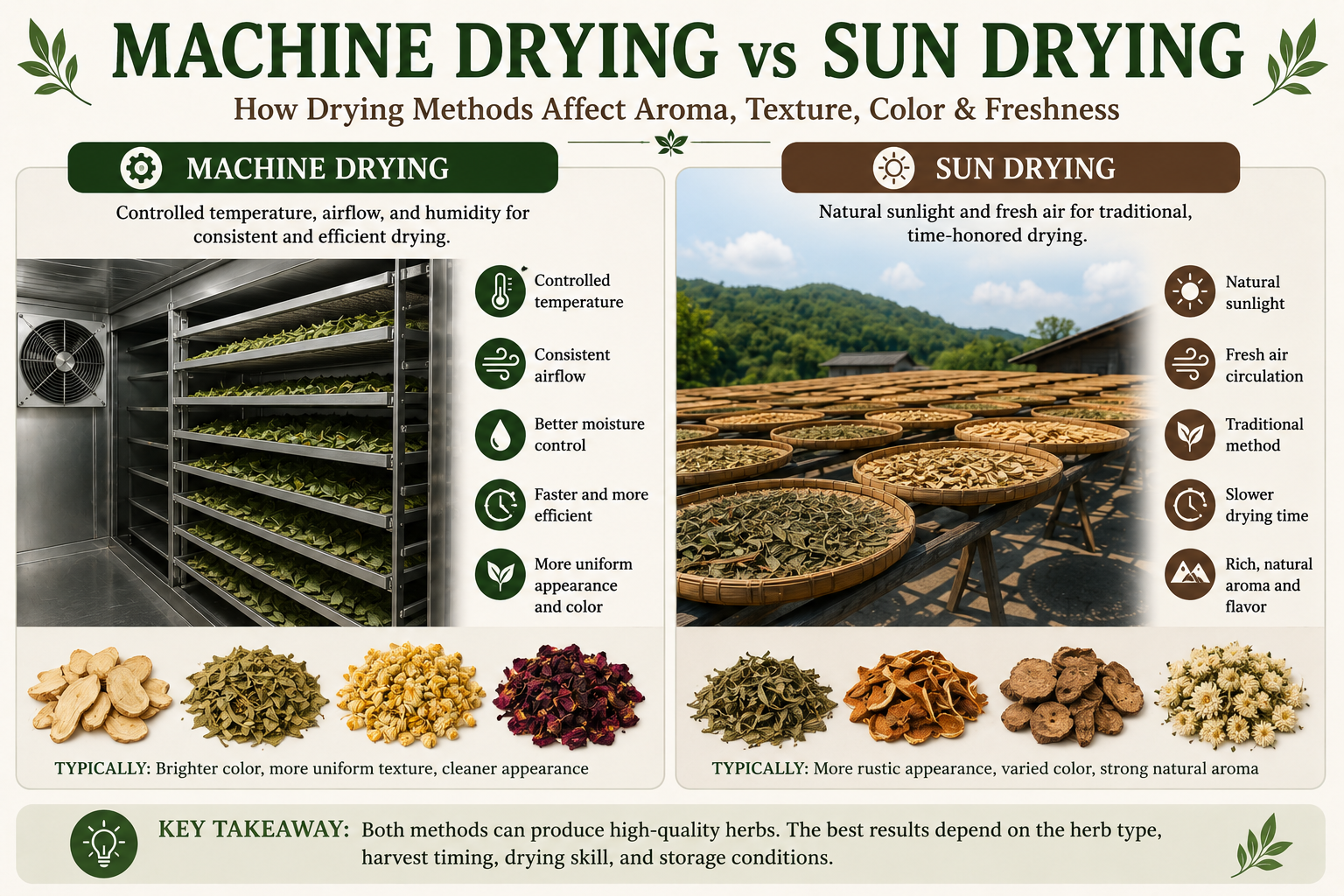
What Is Sun-Drying?
Sun-drying is one of the oldest herbal preparation methods in the world.
Traditionally, herbs were spread out under sunlight and airflow while moisture slowly evaporated over time.
Sun-drying depends heavily on:
- sunlight
- temperature
- humidity
- weather
- air circulation
- drying duration
Many consumers associate sun-dried herbs with:
- traditional craftsmanship
- slower natural drying
- earthier aroma
- more rustic appearance
- traditional herbal preparation
However, weather conditions constantly change.
Humidity, cloud cover, rain, and airflow may all influence the final herb.
What Is Machine-Drying?
Machine-drying uses controlled airflow, temperature, and drying systems to remove moisture more consistently.
Modern drying systems may allow better control of:
- drying speed
- humidity
- moisture levels
- storage stability
- consistency
Machine-drying may help herbs dry more evenly, especially in humid climates or unstable weather conditions.
Consumers often associate machine-dried herbs with:
- more uniform appearance
- more predictable drying
- better moisture consistency
- cleaner storage stability
Sun-Dried vs Machine-Dried Herbs
| Feature | Sun-Dried Herbs | Machine-Dried Herbs |
|---|---|---|
| Drying Method | Natural sunlight and airflow | Controlled drying systems |
| Weather Dependence | Highly weather dependent | Less weather dependent |
| Drying Speed | Typically slower | More controlled and predictable |
| Appearance | Often more rustic and variable | Often more uniform |
| Moisture Control | May vary more | Often more controlled |
| Storage Stability | Can vary depending on climate | Often more predictable |
Fresh vs Stale Herbs: Can You Spot The Difference?
Fresh Herbs Often:
- have stronger aroma
- look more vibrant
- feel properly dried
- appear cleaner
- retain more natural color
Stale or Poorly Dried Herbs May:
- smell musty or dusty
- look faded
- feel damp or oddly soft
- lose aroma quickly
- appear lifeless
Once you begin recognizing these differences, you often understand why herb quality can vary so dramatically.
Can Poor Drying Ruin Good Herbs?
Absolutely.
Even beautiful freshly harvested herbs may lose quality if drying is rushed or poorly managed.
Poor drying may contribute to:
- musty odor
- weak aroma
- faded appearance
- uneven moisture
- mold risk
- poor storage life
- stale-smelling herbs
Drying mistakes can quietly damage herbs long before consumers ever receive them.
Common Herb Drying Mistakes
| Drying Mistake | Possible Result |
|---|---|
| Poor airflow | Uneven drying and moisture buildup |
| Excess humidity | Mold risk and stale odor |
| Overheating | Color fading and aroma loss |
| Drying too quickly | Texture and moisture imbalance |
| Poor storage afterward | Loss of freshness and quality |
Real Herbs That Change Dramatically During Drying
Bo He (Mint)
Mint is highly aromatic and may lose fragrance quickly if drying or storage is poorly managed.
Ju Hua (Chrysanthemum Flowers)
Flowers may lose aroma and color if drying temperatures become too harsh.
Chen Pi (Aged Citrus Peel)
Drying and aging dramatically affect aroma, color, texture, and appearance over time.
Sheng Di Huang vs Shu Di Huang
Drying and processing dramatically change texture, color, moisture level, and appearance in Rehmannia preparations.
What Scientific Research Says About Drying & Plant Quality
Modern research has explored how drying methods may influence:
- volatile oils
- aromatic compounds
- moisture levels
- plant stability
- appearance
- storage quality
Researchers have also studied how drying temperature and moisture may affect plant compounds and freshness characteristics.
PubMed & Scientific References:
- Effect of drying methods on medicinal plant quality
- Drying effects on plant volatile compounds and aroma
- Influence of drying on herbal plant compounds
- Drying technologies and botanical quality
While consumers may not think much about drying, researchers and agricultural specialists have studied these processes extensively because moisture and drying influence long-term plant stability and quality.
Why Herbs Sometimes Arrive Looking Different Than Last Time
This is one of the most common consumer questions.
Natural herbs vary.
Differences may happen because of:
- seasonal weather
- harvest timing
- humidity
- drying conditions
- processing methods
- storage
- natural agricultural variation
Plants are agricultural products.
They are not factory-made plastic items designed to look identical forever.
That natural variation is part of working with real herbs.
Can You Tell If an Herb Was Dried Well?
In many cases, yes.
Consumers often evaluate drying quality through:
- aroma
- texture
- color
- crispness
- freshness
- moisture feel
Some herbs should crackle or snap lightly.
Others should remain flexible but never damp.
Strong musty odors, stale dusty smells, or excess softness may suggest moisture or storage issues.
Quick Herb Freshness Test
Can You Spot the Fresher Herb?
Which herb would you trust more?
- A herb with vibrant aroma, natural color, and crisp texture?
- Or a herb that smells dusty, feels damp, and looks faded?
Most consumers immediately notice freshness once they begin paying attention to aroma, texture, and appearance.
The 5 Signs of Fresh Herbs
| Sense | What To Notice |
|---|---|
| Sight | Natural color and appearance |
| Smell | Fresh aroma rather than musty odor |
| Touch | Proper dryness without dampness |
| Sound | Some herbs crackle or snap lightly |
| Taste | Natural flavor without flat stale taste |
How To Store Dried Herbs At Home
Even properly dried herbs may lose freshness if stored poorly.
For better storage:
- keep herbs away from humidity
- avoid direct sunlight
- store away from excess heat
- use sealed containers when possible
- avoid bathrooms and damp kitchens
- keep herbs away from moisture sources
Good storage helps preserve:
- freshness
- aroma
- appearance
- overall quality
Why Drying Affects Price
Many consumers assume drying is simple.
In reality, proper drying requires:
- space
- airflow
- labor
- timing
- monitoring
- moisture control
- weather awareness
- storage management
Improper drying may lead to spoilage, stale herbs, moisture problems, or quality loss.
This is one reason freshness, drying systems, handling, and storage practices may influence herb pricing.
Downloadable Herb Freshness Checklist
When evaluating herbs, remember to check:
- aroma
- color
- texture
- moisture level
- overall freshness
Consumers who learn how to recognize freshness often become far more confident herbal buyers.
Explore Quality Bulk Chinese Herbs
Shop bulk Chinese herbs, roots, flowers, teas, mushrooms, spices, powders, and traditional ingredients carefully selected with freshness and quality in mind.
- Trusted Since 1994
- Fast Shipping from Washington State
- COA Available Upon Request
- Carefully Stored
Explore This Herbal Quality Education Hub
- From Seed to Shelf: What Happens Before Chinese Herbs Reach Your Home
- Why Chinese Herbs Are Processed
- How Harvest Timing Changes Aroma, Texture, Color & Quality
- What No One Tells You About Chinese Herbs
- How To Use Bulk Herbs
Final Thoughts
Most people never think about drying.
Yet drying quietly affects nearly everything consumers notice about herbs:
- freshness
- aroma
- texture
- appearance
- storage stability
- overall herb quality
And once you begin understanding drying, you begin understanding why real herbs are never all exactly the same.
Ready To Choose Fresher, Better-Stored Herbs?
Once you understand drying, aroma, texture, storage, and freshness, it becomes easier to recognize why herb quality matters.
Explore bulk Chinese herbs, roots, flowers, teas, spices, mushrooms, powders, and traditional ingredients carefully selected with freshness and quality in mind.