There are no products listed under this category.
Updated: January 2026
Green Tea vs Black Tea vs Oolong vs Earl Grey vs Assam vs Sencha
What’s the Difference Between the World’s Most Popular Teas?
All true teas come from the same plant—Camellia sinensis—yet they can taste completely different, vary widely in caffeine content, and suit different times of day. The difference isn’t the plant. It’s how the tea leaves are processed after harvest.
This guide explains the differences between green tea, black tea, oolong tea, Earl Grey, Assam tea, sencha, and other popular teas—covering processing, flavor, caffeine, brewing, and how to choose the right tea.
Quick Tea Picker: Find the Right Tea in 30 Seconds
Not sure where to start? Use this quick guide:
- Need energy in the morning? → Black Tea, Assam, Matcha
- Want something light & refreshing? → Green Tea, Sencha
- Prefer smooth, complex flavors? → Oolong Tea
- Sensitive to caffeine? → White Tea
- Love citrus aroma? → Earl Grey
This section helps you choose the right tea before you brew, so you enjoy every cup.
Why the Differences Between Teas Matter
Understanding tea types helps you:
- Avoid bitterness from over-oxidized or over-brewed tea
- Match caffeine levels to your daily routine
- Choose flavors you’ll actually enjoy
- Brew tea correctly (a major reason people think they “don’t like tea”)
Most tea disappointment comes from choosing the wrong type, not from poor-quality tea.
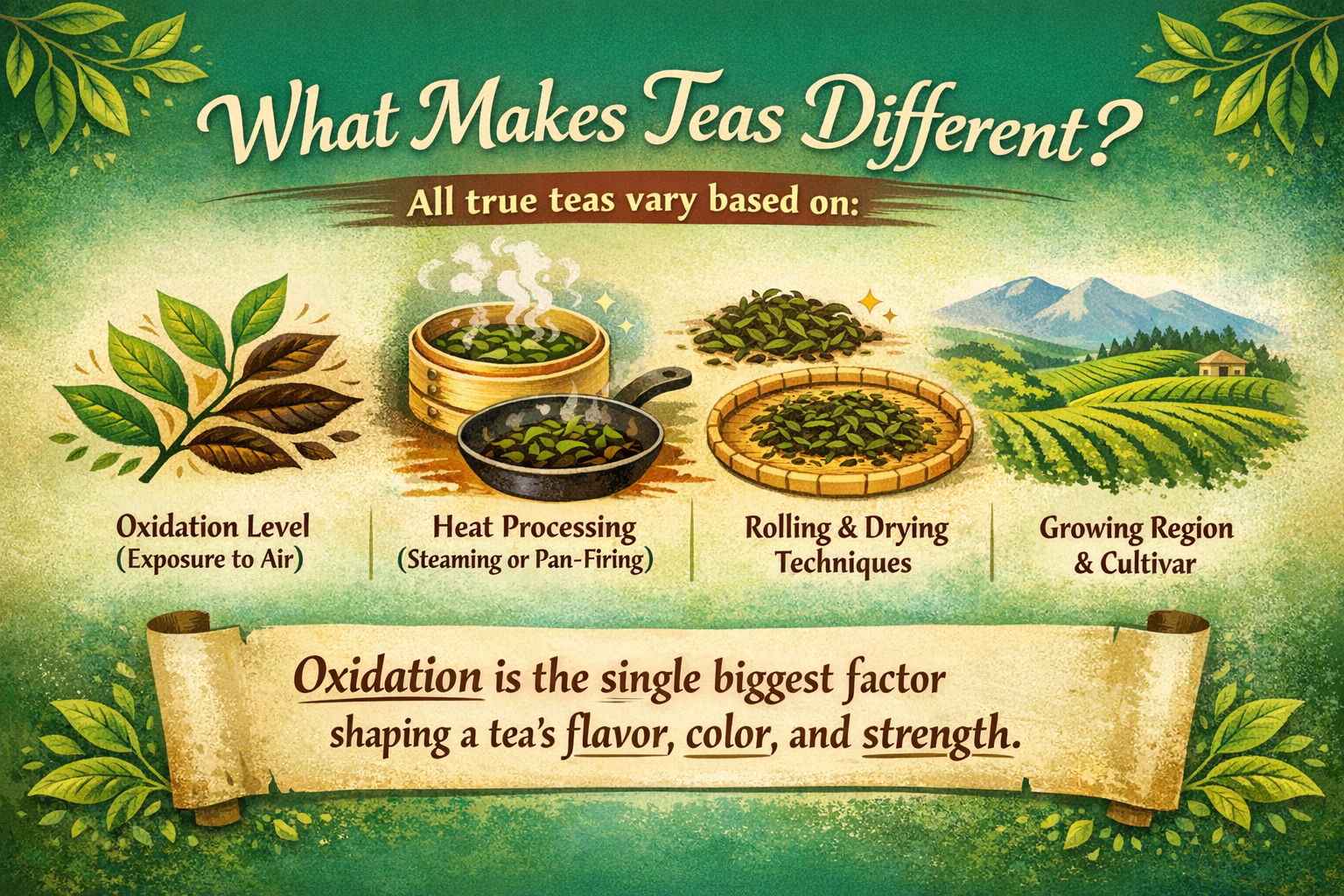
What Makes Teas Different?
All true teas vary based on:
- Oxidation level (exposure to air)
- Heat processing (steaming or pan-firing)
- Rolling and drying techniques
- Growing region and cultivar
Oxidation is the single biggest factor shaping a tea’s flavor, color, and strength.
Green Tea: Fresh, Light, and Minimally Oxidized
Oxidation: Minimal
Flavor: Fresh, grassy, vegetal, sometimes sweet
Caffeine: Low to moderate
Green tea is heated shortly after harvest to stop oxidation, preserving its green color and fresh taste.
Common green teas
- Sencha
- Dragon Well (Long Jing)
- Gunpowder
- Matcha (powdered green tea)
Best for: Morning or midday tea drinkers who prefer lighter, cleaner flavors.
Looking for high-quality green tea?
Sencha Tea: Japan’s Signature Green Tea
Type: Steamed green tea
Flavor: Bright, grassy, slightly sweet, sometimes sea-like
Caffeine: Moderate
Sencha differs from many Chinese green teas because it is steam-processed, which locks in its vibrant green color and fresh taste.
Best for: People who want green tea that’s refreshing without being bitter.
Black Tea: Bold, Fully Oxidized, and Robust
Oxidation: Full
Flavor: Strong, malty, brisk, sometimes smoky
Caffeine: Moderate to high
Black tea is fully oxidized, creating a darker leaf and a richer, more robust flavor.
Common black teas
- Assam
- Darjeeling
- Ceylon
- English Breakfast blends
Best for: Morning energy, tea with milk, or coffee drinkers switching to tea.
Assam Tea: Strong and Malty
Type: Black tea from India
Flavor: Bold, malty, brisk
Caffeine: High
Assam tea is grown in India’s Assam region and is prized for its strength. It’s often used in breakfast blends.
Best for: Those who want a powerful, energizing cup to start the day.
Earl Grey Tea: Black Tea with Citrus Aroma
Type: Black tea blend
Flavor: Bold black tea with bright citrus notes
Caffeine: Moderate to high
Earl Grey is not a tea type—it’s black tea flavored with bergamot oil.
Best for: Black tea drinkers who enjoy aromatic, refined flavors.
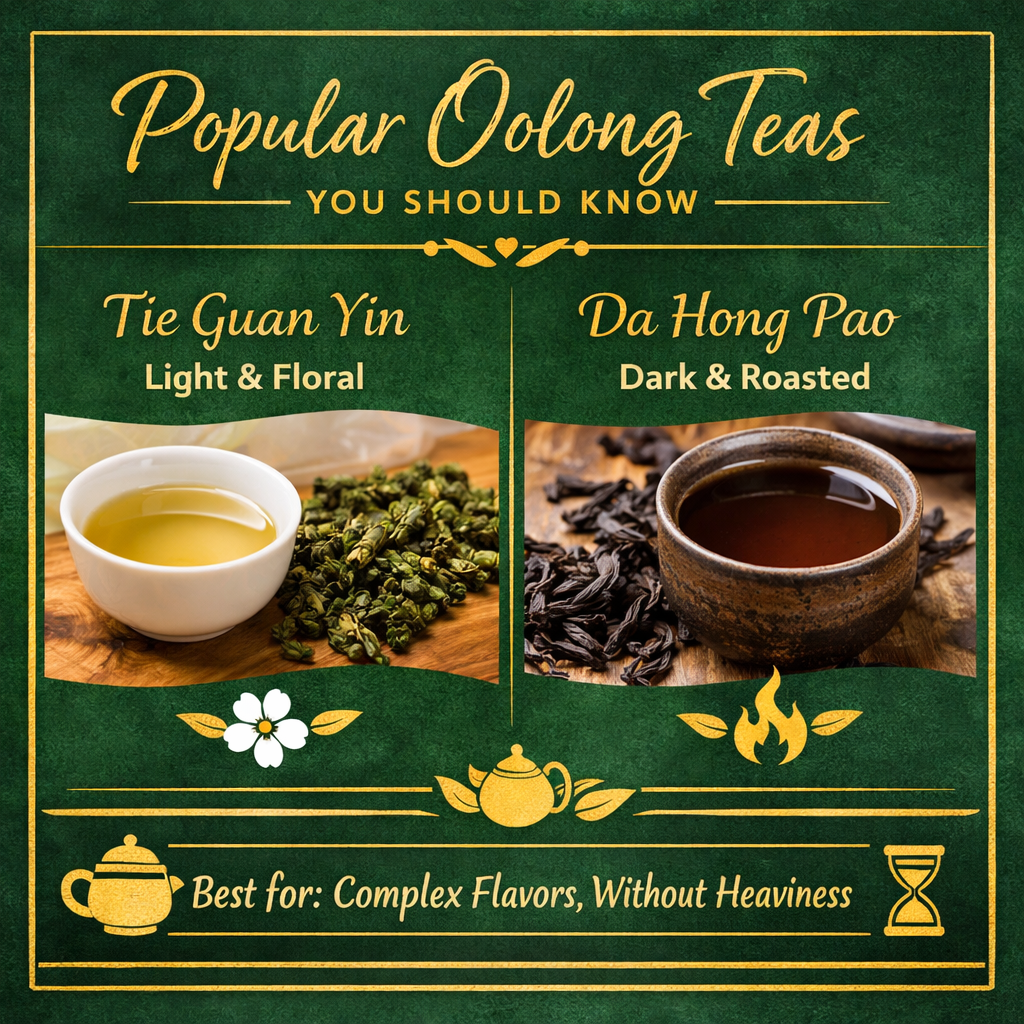
Oolong Tea: The Middle Ground
Oxidation: Partial
Flavor: Floral, creamy, roasted, or fruity (varies widely)
Caffeine: Moderate
Oolong teas sit between green and black tea and offer the widest flavor range of any tea category.
Popular oolongs
- Tie Guan Yin (light and floral)
- Da Hong Pao (dark and roasted)
Best for: Tea drinkers who enjoy complexity without heaviness.
White Tea: Delicate and Subtle
Oxidation: Minimal
Flavor: Light, slightly sweet, delicate
Caffeine: Low
White tea is the least processed tea, often made from young buds and leaves.
Best for: Evening tea drinkers or those sensitive to caffeine.
Pu-erh Tea: Fermented and Earthy
Processing: Post-fermented
Flavor: Earthy, deep, sometimes woody
Caffeine: Moderate
Pu-erh tea is aged over time, developing complex and grounding flavors.
Best for: Experienced tea drinkers who enjoy bold, earthy profiles.
Matcha: Whole-Leaf Green Tea Powder
Type: Shade-grown green tea powder
Flavor: Umami-rich, grassy, full-bodied
Caffeine: Moderate with steady release
Because you consume the whole leaf, matcha provides a more sustained energy experience than brewed green tea.
Best for: Focused energy and traditional tea preparation.
How to Brew Each Tea Correctly (So It Tastes the Way It Should)
Many people think they “don’t like tea”—when the real issue is over-brewing or water that’s too hot. Use the chart below as a quick reference.
If you don't like charts, here is our herbal steep timer- super easy to use
| Tea Type | Water Temp | Brew Time | Notes |
|---|---|---|---|
| Green Tea | 160–175°F | 1–2 min | Too hot = bitter |
| Sencha | 160–170°F | 1 min | Short steeps taste best |
| Black Tea | 200–212°F | 3–5 min | Can handle milk |
| Assam | 212°F | 4–5 min | Strong & bold |
| Earl Grey | 200–212°F | 3–4 min | Avoid over-steeping |
| Oolong | 185–205°F | 2–4 min | Often great re-steeped |
| White Tea | 160–170°F | 2–3 min | Very delicate |
| Pu-erh | 200–212°F | 2–4 min | Rinse leaves first |
| Matcha | 160–175°F | Whisk | No steeping |
Quick Tea Comparison Table (Decision-Focused)
| Tea | Oxidation | Flavor | Caffeine | Best Time | Good With Milk |
|---|---|---|---|---|---|
| Green | Minimal | Fresh, grassy | Low–Med | Morning | No |
| Sencha | Minimal | Bright, vegetal | Med | Morning | No |
| Black | Full | Bold, malty | Med–High | Morning | Yes |
| Assam | Full | Strong, malty | High | Morning | Yes |
| Earl Grey | Full + citrus | Aromatic | Med–High | Morning | Yes |
| Oolong | Partial | Floral to roasted | Med | Afternoon | Sometimes |
| White | Minimal | Delicate, sweet | Low | Evening | No |
| Pu-erh | Fermented | Earthy | Med | Afternoon | No |
| Matcha | Minimal | Umami, rich | Med | Morning | No |
How to Choose the Right Tea for You
Want energy? Assam, black tea, matcha
Want light & refreshing? Green tea or sencha
Want complexity? Oolong or pu-erh
Love aroma? Earl Grey
Avoid caffeine? White tea or herbal infusions
Important Note: Herbal Teas Are Not True Teas
Herbal teas (such as chamomile, peppermint, rooibos, or licorice) do not come from Camellia sinensis. They are herbal infusions rather than “true tea.”
Why Customers Trust Our Tea Guides
Family-Owned Since 1994
Lab-Tested Herbs & Teas
Sulfur-Free Options Whenever Possible
Trusted by Practitioners & Long-Term Customers
Our goal is clarity, not trends.
About the Author
Sarah Aries has worked with traditional herbs and teas for over 30 years through her family-owned business, 1st Chinese Herbs. She focuses on helping customers understand what they’re using—so they can choose with confidence and consistency.
Final Thoughts
Tea isn’t one drink—it’s a spectrum of flavors, traditions, and daily rituals. Understanding how teas differ allows you to choose what truly fits your taste, energy needs, and lifestyle—so tea becomes something you enjoy, not tolerate.
Save this guide for future reference, and share it with someone who loves tea.
Frequently Asked Questions
Is green tea healthier than black tea?
Green and black tea come from the same plant and differ mainly in processing. Which is “better” depends on taste preference, caffeine tolerance, and how you plan to drink it.
Which tea has the most caffeine?
Among popular teas, Assam and matcha often contain higher caffeine levels, though brewing strength and portion size matter.
Is Earl Grey a black tea?
Yes. Earl Grey is a black tea flavored with bergamot oil.
Is sencha the same as green tea?
Sencha is a type of green tea. It is steam-processed, which gives it a bright green color and fresh taste.
What tea is best if I don’t like bitterness?
White tea, lightly brewed green tea, and many oolongs are naturally smoother and less bitter than strong black teas. Brewing temperature and time also make a big difference.