
Tonic Herbs vs Adaptogens: What’s the Difference and Which Should You Choose?
And maybe, just maybe, to feel more balanced, more resilient,
and less exhausted by the nonstop demands of everyday life.
Everyone wants more energy. Less stress. Better resilience. More balance. I know I do, especially with the garden coming on strong, fruit ready to pick, and weeding, yes, that never-ending chore of pulling weeds.
That is why two herbal categories keep showing up everywhere:
Tonic herbs
and
Adaptogens
At first glance, they sound almost the same.
Both are popular for long-term wellness.
Both are used in daily routines.
Both are often connected with energy, stress, aging, and resilience.
So what is the real difference?
 The Big Difference Nobody Explains
Here is the simplest way to understand it:
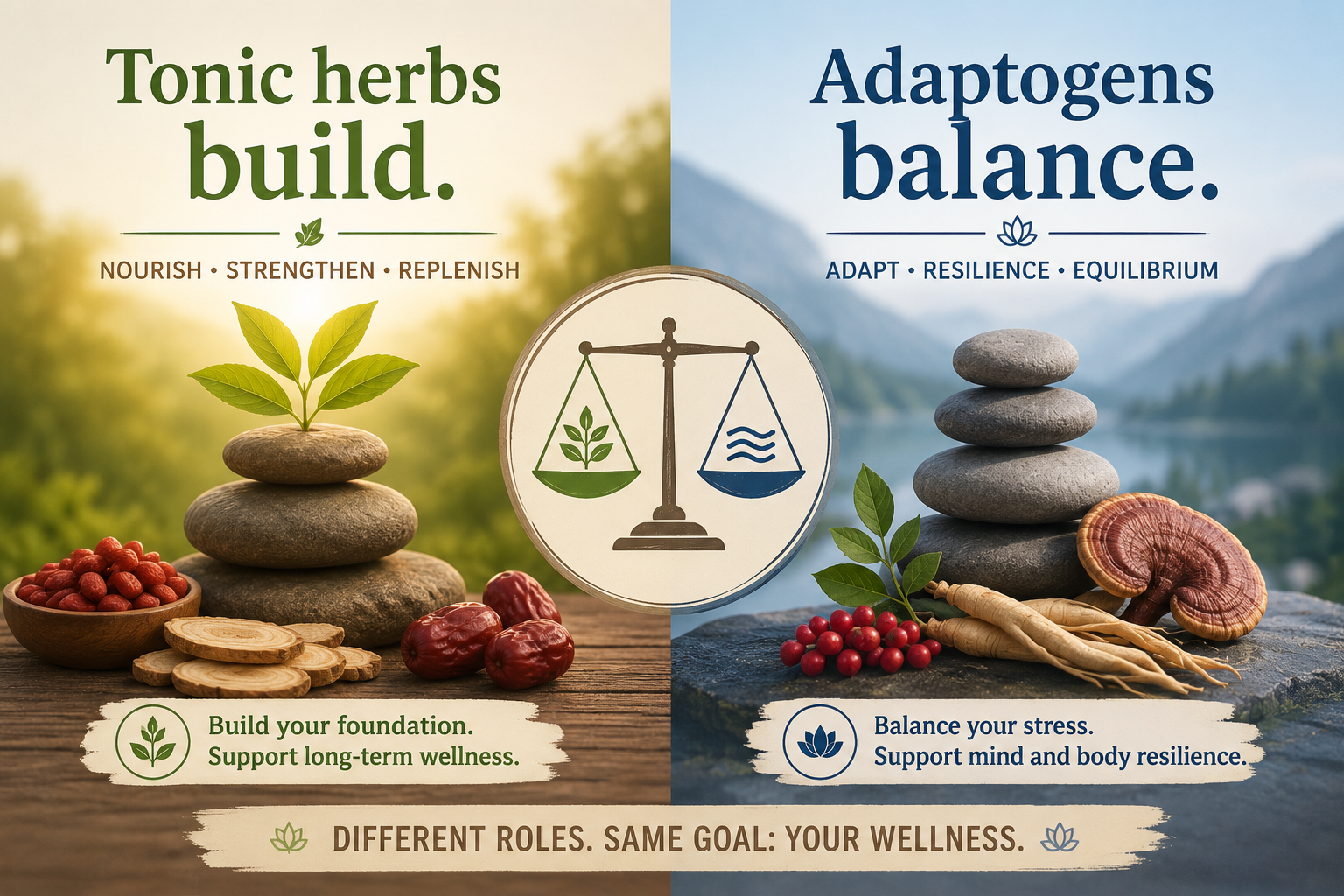
Tonic herbs build.
Adaptogens balance.
Let's Make This Easy
Tonic herbs are traditionally used to nourish, strengthen, and build the body over time.
Adaptogens are herbs that help the body adapt to stress and stay more balanced during demanding times.
| Herb Type | Simple Meaning | Personality |
|---|---|---|
| Tonic Herbs | Build and nourish | The Builder |
| Adaptogens | Balance and adapt | The Balancer |
One helps build your foundation.
The other helps you handle life better.
And some herbs?
Some herbs do both.
Quick Comparison Chart: Tonic Herbs vs Adaptogens
| Feature | Tonic Herbs | Adaptogens |
|---|---|---|
| Main Role | Nourish, build, strengthen | Support balance and stress resilience |
| Best For | Long-term wellness support | Stress, pressure, demanding routines |
| How They Feel | Steady and nourishing | Balancing and supportive |
| Best Use | Daily routines | Daily or targeted routines |
| Timeline | Slow and steady | Gradual support over time |
| Best Beginner Herbs | Goji Berry, Red Dates, Astragalus | Reishi, Cordyceps, American Ginseng |
Choose Tonic Herbs If This Sounds Like You
- “I feel run down.”
- “I want steady daily support.”
- “I want to build myself back up.”
- “I want herbs I can use long term.”
- “I want something nourishing, not harsh.”
Tonic herbs are often chosen by people who want a stronger foundation.
Not a quick jolt. Not an overnight miracle.
More like:
“Let’s rebuild the house instead of just painting the front door.”
Choose Adaptogens If This Sounds Like You
- “I feel stressed.”
- “I feel overwhelmed.”
- “I need better resilience.”
- “My energy crashes when life gets intense.”
- “I feel wired, tired, and mildly annoyed by everything.”
Adaptogens are popular because modern life is not exactly gentle.
Emails. Bills. Appointments. Deadlines. Bad sleep. Too much news. Not enough quiet.
Adaptogens are the herbs people often reach for when life feels like too much.
Easy To Use Decision Chart
| If You Feel Like... | You May Prefer... | Good Herbs to Explore |
|---|---|---|
| Drained, depleted, worn down | Tonic Herbs | Astragalus, Goji Berry, Red Dates |
| Stressed, overwhelmed, under pressure | Adaptogens | Reishi, Schisandra, American Ginseng |
| Low energy but also stressed | Both | Astragalus, Cordyceps, Reishi |
| You want daily wellness support | Tonic Herbs | Goji Berry, Red Dates, Astragalus |
| You want stress resilience | Adaptogens | Reishi, Eleuthero, Schisandra |
Best Herbs by Goal
| Goal | Best Herb | Type | Why You May Like It |
|---|---|---|---|
| Daily Wellness | Astragalus | Both | Mild, versatile, easy to use in tea, soup, or crockpot recipes |
| Stress | Reishi | Adaptogen | Grounding, calming, popular for evening routines |
| Energy | Cordyceps | Adaptogen | Popular with active people and morning routines |
| Nourishment | Goji Berry | Tonic | Sweet, easy, beginner friendly, and simple to add to tea |
| Active Aging | Du Zhong | Tonic | Traditionally used for long-term support and mobility routines |
| Balanced Energy | American Ginseng | Adaptogen | Gentler option for people who dislike harsh energy herbs |
| Stamina | Schisandra | Adaptogen | Tart berry traditionally used for resilience and endurance |
| Simple Sweet Tea | Red Dates | Tonic | Sweet, food-like, and easy for beginners |
What Are Tonic Herbs?
Tonic herbs are herbs traditionally used to nourish, strengthen, and support the body over time.
They are not usually “quick fix” herbs.
They are the long-game herbs.
Tonic herbs are often used in traditional wellness routines for:
- daily nourishment
- energy support
- healthy aging
- strength and vitality
- long-term balance
Many tonic herbs are gentle, food-like, and easy to add to teas, soups, broths, and daily routines.
Common Tonic Herbs
| Tonic Herb | Why People Like It | Taste | How to Use | Beginner Friendly |
|---|---|---|---|---|
| Astragalus | Daily wellness and energy support | Mild, slightly sweet | Tea, soup, crockpot | 9/10 |
| Goji Berry | Easy nourishing daily herb | Sweet, berry-like | Tea, snacks, soups | 10/10 |
| Red Dates | Sweet nourishing tea and soup herb | Sweet, fruity | Tea, soup, broth | 10/10 |
| Du Zhong | Traditional long-term mobility support | Mild, earthy | Decoction, soup | 7/10 |
| He Shou Wu | Traditional longevity-style tonic | Earthy | Prepared forms, formulas | 5/10 |
What Are Adaptogens?
Adaptogens are herbs that help the body adapt to stress.
They are often used for resilience, balance, stamina, and support during demanding times.
Adaptogens are commonly discussed for:
- stress support
- energy balance
- resilience
- mental and physical stamina
- support during busy seasons of life
They are not “energy drinks in herb form.”
They are not supposed to make you feel like you drank three espressos and heard a motivational speech from a squirrel.
Good adaptogens are more about balance.
Common Adaptogenic Herbs
| Adaptogen | Why People Like It | Taste | How to Use | Beginner Friendly |
|---|---|---|---|---|
| Reishi | Calm, grounding resilience support | Earthy, bitter | Tea, powder, capsules | 7/10 |
| Cordyceps | Energy and stamina support | Earthy, mild mushroom | Powder, capsules, broth | 8/10 |
| American Ginseng | Balanced energy support | Slightly bitter | Tea, slices, capsules | 8/10 |
| Schisandra | Stress and resilience support | Tart, sour | Tea, tincture, capsules | 7/10 |
| Eleuthero | Stamina and daily resilience | Earthy | Tea, tincture, capsules | 7/10 |
Taste Guide: Which Herbs Are Easiest to Enjoy?
Taste matters. A lot.
Because if an herb tastes like damp bark and regret, most people are not going to drink it every day.
| Herb | Taste | Best For | Beginner Note |
|---|---|---|---|
| Goji Berry | Sweet, berry-like | Tea, snacks, soups | One of the easiest herbs to enjoy |
| Red Dates | Sweet, fruity | Tea, soup, broth | Excellent for beginners |
| Astragalus | Mild, slightly sweet | Tea, soup, crockpot | Easy and versatile |
| Reishi | Earthy, bitter | Tea, powder, capsules | Better blended with cinnamon or cacao |
| Schisandra | Sour, tart | Tea, tincture, capsules | Great if you like tart flavors |
| Cordyceps | Earthy, mild mushroom | Powder, capsules, broth | Easy in capsules or powder blends |
| American Ginseng | Slightly bitter, earthy | Tea, slices, capsules | Often better with goji or red dates |
| Du Zhong | Mild, earthy | Decoction, soup | Better in broth than plain tea |
The Interesting Twist: Some Herbs Are Both
This is where people get confused.
Some herbs are tonic-like because they nourish and support the body over time.
But they are also discussed as adaptogenic because they support resilience and stress response.
In other words:
Some herbs build and balance.
| Herb | Tonic Side | Adaptogen Side | Best For |
|---|---|---|---|
| Astragalus | Daily nourishment and vitality | Resilience support | Beginner daily wellness |
| Reishi | Deep long-term support | Stress resilience | Calm and grounding |
| Cordyceps | Energy and vitality | Stamina and adaptation | Active lifestyles |
| American Ginseng | Gentle energy support | Stress balance | People who dislike harsh stimulants |
| Schisandra | Nourishing traditional berry | Adaptogenic support | Stress and stamina routines |
Which One Should You Start With?
If you are brand new to herbs, do not start with the most complicated thing on the shelf.
Start with the herb you are most likely to use consistently.
Because herbs sitting in the cupboard are not exactly winning any wellness awards.
| Your Goal | Start With | Why |
|---|---|---|
| Easy daily tonic | Goji Berry | Sweet, simple, easy to use |
| Daily energy support | Astragalus | Mild, versatile, good in tea or soup |
| Stress support | Reishi | Grounding and popular for calm routines |
| Active energy | Cordyceps | Good for busy and active lifestyles |
| Balanced energy | American Ginseng | Gentler than many stronger energy herbs |
Best Tonic Herbs to Start With
If you are new to tonic herbs, start simple.
| Herb | Why Start Here | How to Use |
|---|---|---|
| Astragalus | Mild, versatile, classic daily support herb | Tea, soup, crockpot |
| Goji Berry | Sweet, easy, beginner friendly | Tea, snacks, soups |
| Red Dates | Sweet, nourishing, easy to combine | Tea, soup, broth |
Best Adaptogens to Start With
| Herb | Why Start Here | How to Use |
|---|---|---|
| Reishi | Grounding, popular, excellent for calm routines | Tea, powder, capsules |
| Cordyceps | Great for energy and active lifestyles | Powder, capsules, broth |
| American Ginseng | Balanced energy without feeling overly harsh | Tea, slices, capsules |
Best Pairings by Goal
Best Pairings for Energy
| Pairing | Why It Works | Best Time |
|---|---|---|
| Cordyceps + American Ginseng | Energy and stamina without coffee-style jitters | Morning |
| Astragalus + Red Dates | Classic nourishing tea or soup blend | Morning |
| Lion’s Mane + Cordyceps | Focus plus active support | Morning |
Best Pairings for Stress
| Pairing | Why It Works | Best Time |
|---|---|---|
| Reishi + Schisandra | Grounding plus tart adaptogenic support | Afternoon or evening |
| Reishi + Albizzia Bark | Calm and unwind support | Evening |
| Albizzia Bark + Red Dates | Gentle calm with better flavor | Evening |
Best Pairings for Daily Wellness
| Pairing | Why It Works | Best Time |
|---|---|---|
| Astragalus + Goji Berry | Mild tonic support with natural sweetness | Morning |
| Astragalus + Reishi | Long-term wellness and resilience support | Morning or midday |
| Goji Berry + Chrysanthemum | Sweet, floral, easy to enjoy | Afternoon |
The Biggest Mistake People Make
The biggest mistake people make?
Thinking they need the strongest herb.
They don’t.
Most people need the herb they will actually use consistently.
The best herb is not always the most powerful one.
It is the one that fits your goal, your taste, your routine, and your life.
If you hate bitter tea, do not start with bitter tea.
If you are busy, do not start with a method that requires a full kitchen ceremony every morning.
Start simple.
That is how herbs become part of your life instead of another bag sitting in the pantry judging you quietly.
Common Mistakes People Make
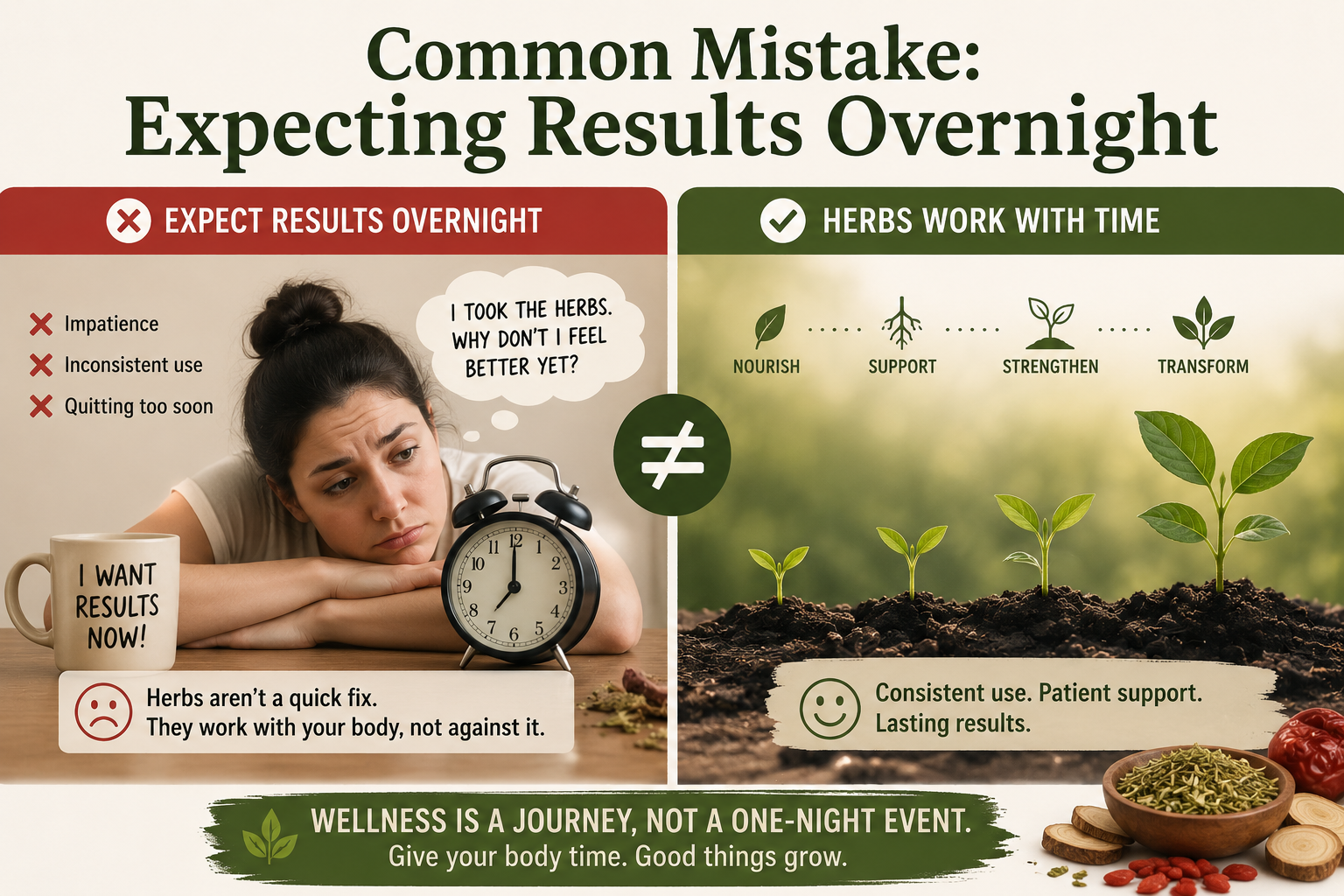
1. Expecting Overnight Results
Tonic herbs and adaptogens are usually not instant herbs. They work best as part of consistent routines.
2. Choosing the Strongest Herb First
Stronger is not always better. Sometimes gentle and consistent works best.
3. Ignoring Taste
If you hate the taste, you probably will not use it. Choose a form you can actually stick with.
4. Confusing Energy with Stimulation
Adaptogens are not supposed to feel like a caffeine blast. They are more about balance and resilience.
5. Buying Random Herbs Without a Goal
Start with your goal first. Then choose the herb.
What Research Says About Tonic Herbs and Adaptogens
Modern research continues to explore many tonic herbs and adaptogens for their traditional use, plant compounds, and wellness-supporting properties.
Research does not mean an herb cures disease. It simply helps us better understand how these plants have been studied.
- Astragalus: Research has explored Astragalus membranaceus for immune and wellness-related properties. View PubMed Study
- Reishi: Reishi mushroom has been studied for its polysaccharides, triterpenes, and traditional wellness use. View PubMed Study
- Cordyceps: Cordyceps research has explored traditional use, bioactive compounds, and wellness applications. View PubMed Study
- American Ginseng: Research has explored Panax quinquefolius for adaptogenic and energy-related traditional use. View PubMed Study
- Schisandra: Schisandra chinensis has been studied for adaptogenic properties and traditional use. View PubMed Study
Important Note: Research on herbs is ongoing. These studies are for educational reference only and are not intended to diagnose, treat, cure, or prevent disease.
Frequently Asked Questions About Tonic Herbs and Adaptogens
1. Are tonic herbs the same as adaptogens?
No. Tonic herbs are traditionally used to build and nourish the body over time. Adaptogens are herbs that help the body adapt to stress. Some herbs may fit both categories.
2. Can a herb be both a tonic and an adaptogen?
Yes. Herbs like Astragalus, Reishi, Cordyceps, American Ginseng, and Schisandra are often discussed as having both tonic-like and adaptogenic qualities.
3. Which is better, tonic herbs or adaptogens?
Neither is automatically better. Tonic herbs may be better for long-term nourishment, while adaptogens may be better for stress resilience and demanding routines.
4. Which tonic herb is best for beginners?
Goji Berry, Red Dates, and Astragalus are excellent beginner tonic herbs because they are easy to use and have mild or pleasant flavors.
5. Which adaptogen is best for beginners?
Reishi, Cordyceps, and American Ginseng are popular beginner adaptogens. The best choice depends on whether your goal is calm, energy, or balanced support.
6. Is Ashwagandha a tonic or adaptogen?
Ashwagandha is commonly described as an adaptogen in modern herbalism. It is not a traditional Chinese herb, but it is often compared with Chinese adaptogens like Reishi, Cordyceps, and Ginseng.
7. Can you take tonic herbs and adaptogens together?
Many people use tonic herbs and adaptogens together, especially when they want both nourishment and resilience support. Start with simple pairings and consult a practitioner if you take medications or have health conditions.
8. Which is better for stress?
Adaptogens are usually the better category to explore for stress support. Reishi, Schisandra, and American Ginseng are common examples.
9. Which is better for daily wellness?
Tonic herbs are often excellent for daily wellness routines. Astragalus, Goji Berry, and Red Dates are popular choices.
10. Which herbs taste the best?
Goji Berry and Red Dates are usually the easiest tasting. Astragalus is mild. Reishi is more bitter and earthy. Schisandra is sour and tart.
11. Do adaptogens give instant energy?
Not usually. Adaptogens are not stimulants. They are typically used consistently over time for resilience, balance, and support.
12. What is the easiest way to use tonic herbs?
Tea, soup, and crockpot recipes are often easiest for tonic herbs like Astragalus, Goji Berry, and Red Dates.
Final Comments
Tonic herbs build. Adaptogens balance. That is the cleanest way to remember the difference.
Tonic herbs are best when you want nourishment, strength, and long-term support.
Adaptogens are best when you want resilience, balance, and support during stressful times.
And some of the best herbs do both. The truth is, most people do not need dozens of herbs.
They need the right herb for the right goal. That is where herbal wellness gets easier.
Understand your goal.
Choose the right herb.
Keep it simple.
That is where real progress begins.
Explore More Helpful Herb Guides
- Astragalus vs American Ginseng vs Cordyceps
- The Complete Guide to Chinese Herb Pairings
- Chinese Herbs for Beginners
- Compare Chinese Herbs Side by Side

Author
Sarah Johnson
Certified Herbalist | Founder, 1st Chinese Herbs
Trusted Since 1994
Sarah Johnson has spent more than 30 years helping customers understand Chinese herbs, mushrooms, roots, berries, teas, powders, and botanical wellness products.
Medical Disclaimer: This article is for educational purposes only and is not intended to diagnose, treat, cure, or prevent any disease. Always consult a qualified healthcare professional before using herbs, especially if you are pregnant, nursing, taking medications, or managing a health condition.