
Herbs Explained: What Herbs Are, How They’re Used, and How They Differ From Spices
If you’re new to cooking with herbs, buying herbs online, or learning how herbs are used in traditional wellness practices, one of the first questions you may have is:
What’s the difference between an herb and a spice?
It’s a great question—and one that confuses a lot of people because the words are often used interchangeably.
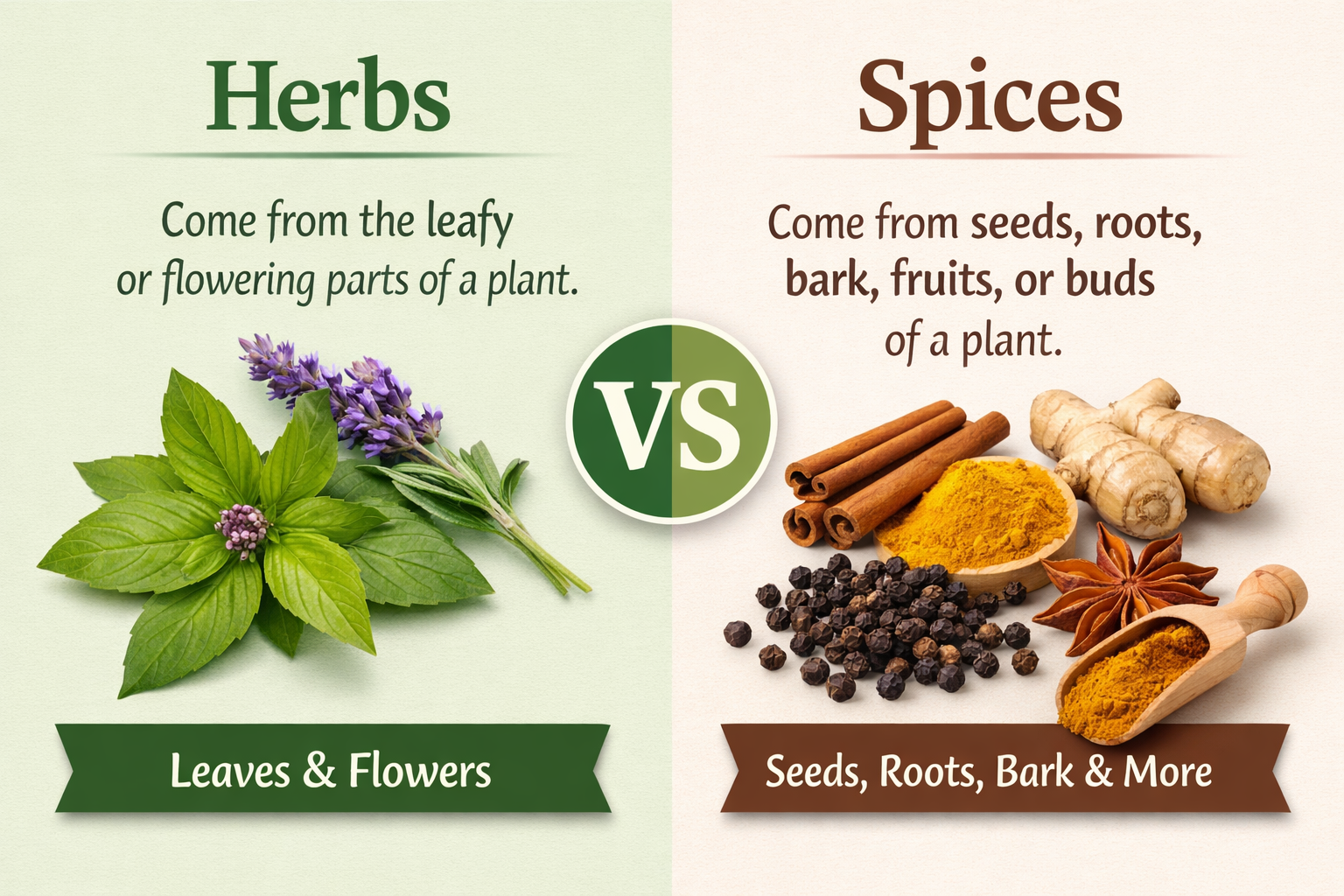
Here’s the simple answer:
-
Herbs usually come from the leafy or flowering parts of a plant.
-
Spices usually come from seeds, roots, bark, fruits, or buds of a plant.
Both can add flavor, aroma, and character to foods and beverages, but they come from different parts of the plant and are often used in different ways.
This guide explains:
-
what herbs are,
-
common herb uses,
-
how herbs differ from spices,
-
how to choose better-quality herbs,
-
how to store them properly,
-
and how this helps you get better results at home.
Quick Answer: Herb vs. Spice
What is an herb?
An herb is typically the leaf, flower, or soft stem of a plant used for culinary, aromatic, or traditional herbal purposes.
What is a spice?
A spice is typically the seed, root, bark, fruit, or flower bud of a plant used to add stronger flavor, aroma, or color.
Can one plant be both?
Yes. Some plants provide both an herb and a spice.
Example:
-
Cilantro leaves = herb
-
Coriander seeds = spice
Let's keep things simple
What Are Herbs?
Herbs are the leafy green or flowering parts of plants used in cooking, teas, traditional wellness routines, and aromatic preparations. They may be used fresh or dried depending on the plant and the purpose.
In everyday use, people often think of herbs as kitchen ingredients like basil, parsley, and thyme. In herbal traditions, herbs can also refer to a much wider group of plant materials used in decoctions, teas, powders, and traditional formulas.
Common Characteristics of Herbs
-
Usually come from leaves, flowers, or soft stems
-
Often used fresh or dried
-
Typically have lighter, more aromatic flavors than spices
-
Common in teas, soups, broths, and food seasoning
-
May be used in culinary or traditional herbal preparations
Examples of Common Herbs
-
Basil – used in sauces, soups, and many Mediterranean and Asian dishes
-
Parsley – used fresh for garnish and flavor
-
Thyme – earthy herb often used in soups and stews
-
Mint – cooling flavor used in teas, beverages, and recipes
-
Chamomile – flower commonly used in herbal tea
-
Rosemary – aromatic herb used in roasted dishes and infused oils
What Are Spices?
Spices are usually the dried non-leafy parts of plants, such as roots, bark, seeds, fruits, and buds. They are generally more concentrated in flavor and often used in smaller amounts than herbs.
Spices are common in cooking, baking, tea blends, broths, and traditional food preparation methods around the world.
Common Characteristics of Spices
-
Come from roots, bark, seeds, fruits, or buds
-
Commonly sold dried, whole, or ground
-
Often have stronger, more concentrated flavors
-
Used in both savory and sweet dishes
-
Frequently used in blends (curry blends, masala blends, spice rubs, chai blends)
Examples of Common Spices
-
Cinnamon (bark)
-
Turmeric (rhizome/root)
-
Black pepper (fruit/berry)
-
Cardamom (seed pod)
-
Cloves (flower buds)
-
Ginger (rhizome/root)
How Herbs and Spices Differ at a Glance
| Category | Herbs | Spices |
|---|---|---|
| Plant part | Leaves, flowers, soft stems | Seeds, roots, bark, fruits, buds |
| Flavor strength | Often lighter, fresher, aromatic | Often stronger, warmer, more concentrated |
| Typical use amount | Often used in larger quantities | Often used in smaller amounts |
| Fresh vs. dried | Frequently used fresh or dried | Most often used dried (whole or ground) |
| Common uses | Teas, soups, garnishes, broths, seasoning | Cooking, baking, spice blends, color, warming flavor |
Why This Matters for Beginners
Understanding the difference between herbs and spices helps you make better choices when shopping and preparing recipes.
1) You’ll buy the right form
If a recipe calls for a decoction-style simmer, a leafy herb may behave differently than a dense root or bark spice.
2) You’ll get better flavor
Herbs and spices release flavor differently:
-
many herbs lose aroma with long boiling,
-
many roots/barks/seeds need longer heat to fully release flavor.
3) You’ll avoid waste
Knowing what you’re buying helps you store it correctly and use it before it loses potency.
4) You’ll understand labels better
-
common name,
-
pinyin name,
-
botanical name,
-
plant part,
-
form (cut, powder, granules, etc.)
Common Uses of Herbs
Herbs are used in many ways depending on the plant and tradition.
Culinary Uses
Herbs are widely used to add flavor, aroma, and freshness to food:
-
soups and broths
-
sauces and dressings
-
roasted vegetables
-
marinades
-
rice dishes
-
infused oils and vinegars
Tea and Beverage Uses
Many herbs are used in tea-like preparations:
-
leaf infusions
-
flower infusions
-
blended herbal teas
-
culinary wellness beverages
Traditional Herbal Use
In many traditions, herbs are used in:
-
decoctions
-
infusions
-
powders
-
broths
-
formula combinations
Important: The best preparation method depends on the herb, plant part, and intended use.
How to Tell if an Herb or Spice Is High Quality
Quality makes a big difference in flavor, aroma, and overall cooking experience.
1) Look at Color
High-quality herbs and spices usually have clear, vibrant color.
-
Dull, faded color often suggests age or poor storage.
-
Bright green leafy herbs and richly colored spices often indicate better freshness.
2) Check Aroma
When you open the container, you should notice a clear aroma.
-
If it smells weak, stale, or dusty, it may be old.
-
Strong natural aroma usually means better freshness.
3) Examine Texture and Appearance
-
Herbs should not look overly crushed into dust (unless sold intentionally powdered).
-
Whole spices should look clean and intact.
-
Ground spices should look uniform, not clumpy from moisture exposure.
4) Read the Label
Look for clear labeling such as:
-
common name
-
botanical name (when available)
-
plant part
-
country/region of origin (when available)
-
lot/date information (if provided)
-
storage recommendations
5) Buy From Reputable Sellers
Choose sellers that provide clear product details, good handling practices, and transparent quality information.
Why Herb and Spice Quality Matters
Better Flavor and Aroma
Fresh, well-handled herbs and spices deliver stronger flavor and better fragrance.
Better Cooking Results
The same recipe can taste completely different depending on ingredient quality.
Better Consistency
Reliable quality makes it easier to repeat recipes and get the same result each time.
Better Storage Performance
Well-processed, properly dried herbs and spices often keep their quality longer when stored correctly.
Factors That Affect Herb and Spice Quality
Growing Conditions
Plant quality starts at the source:
-
soil quality
-
climate
-
harvest timing
-
cultivation methods
-
handling after harvest
Processing Methods
How an herb or spice is dried, cut, or ground can affect:
-
aroma
-
color
-
texture
-
shelf life
Storage and Packaging
Exposure to:
-
heat
-
moisture
-
light
-
air
can reduce flavor and aroma over time.
Safety Tips When Buying Herbs and Spices
This topic matters whether you’re buying culinary herbs, tea herbs, or herbs for traditional preparation.
What to Look For
-
Clean, properly labeled packaging
-
No off odors
-
No visible moisture or mold
-
No unusual debris or contamination
-
Clear ingredient listing (especially in blends)
Smart Shopping Tips
-
Buy smaller amounts if you use items infrequently
-
Replace old pantry items regularly
-
Store in airtight containers
-
Keep away from heat and sunlight
-
Choose trusted sellers with clear quality standards
Note: If you have allergies, sensitivities, or a medical condition, read labels carefully and consult a qualified professional before using unfamiliar herbs or blends.
Best Way to Store Herbs and Spices at Home
Proper storage protects flavor and helps reduce waste.
Best Practices
-
Store in airtight containers
-
Keep in a cool, dark, dry place
-
Avoid storing next to stove heat or steam
-
Label containers with name + date
-
Keep a smaller “working jar” and refill from bulk storage when needed
General Shelf-Life Guidelines (Practical Kitchen Use)
-
Fresh herbs: usually shortest shelf life (often days to 1–2 weeks)
-
Dried leafy herbs: typically lose aroma faster than whole spices
-
Ground spices: lose strength faster than whole spices
-
Whole spices: often keep quality longer when stored well
A quick smell test is often the easiest way to decide if something needs replacing.
Beginner FAQs About Herbs and Spices
Are herbs and spices the same thing?
Not exactly. They’re related, but they usually come from different plant parts. Herbs are usually leafy/flowering parts; spices are usually roots, bark, seeds, fruits, or buds.
Is garlic a herb or a spice?
In cooking, garlic is often grouped with seasonings. Botanically and by plant part use, it’s typically treated more like a spice/vegetable ingredient than a leafy herb.
Is ginger a herb or a spice?
Ginger is usually classified as a spice because the part used is the rhizome (root-like underground stem).
Can dried herbs replace fresh herbs?
Yes, often—but the flavor is different and dried herbs are more concentrated. The amount used usually needs adjustment.
Why do some herbs taste weak?
Age, poor storage, low quality, and exposure to heat/light/moisture can all reduce flavor and aroma.
Final Thoughts
Herbs and spices may seem confusing at first, but once you understand the plant parts and how they’re used, shopping and cooking become much easier.
If you remember just one thing, remember this:
-
Herbs = usually leafy/flowering parts
-
Spices = usually roots, bark, seeds, fruits, or buds
That one distinction helps you make better decisions in the kitchen, understand labels more clearly, and prepare ingredients with more confidence.