
How Reishi Mushrooms Helped Me
Posted by 1st Chinese Herbs research team on Mar 21st 2026
Reishi Mushroom (Ling Zhi)
The Complete Guide to One of the World’s Most Respected Herbal Tonics for Longevity, Immune Balance, and Daily Resilience
What Is Reishi Mushroom?
Reishi mushroom (Ganoderma lucidum), known in Traditional Chinese Medicine (TCM) as Ling Zhi (灵芝), is one of the most revered herbal substances in history.
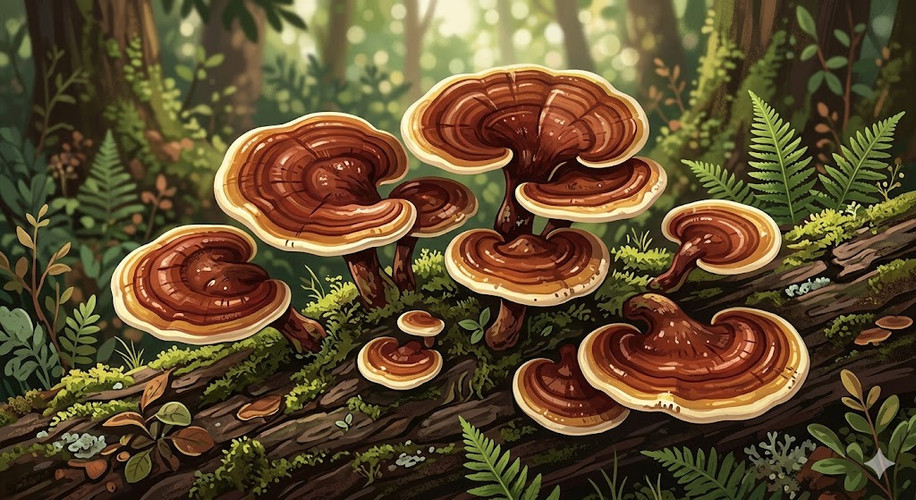
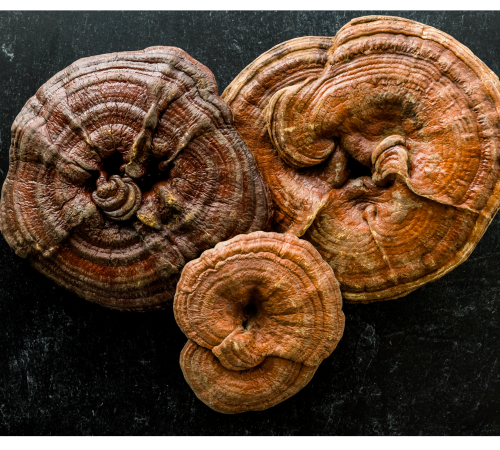
Recognizable by its kidney-shaped, glossy red cap and woody texture, Reishi grows naturally on hardwood trees such as oak, maple, and elm. Unlike common culinary mushrooms, it has no gills, a bitter taste, and a firm, cork-like structure, making it unsuitable for typical cooking—but exceptionally valuable as a tonic herb.
For over 2,000 years, Reishi has been used in classical Chinese herbal traditions as a symbol of vitality, longevity, and balance.
Today, it stands at the intersection of ancient wisdom and modern wellness, making it one of the most searched and trusted functional mushrooms worldwide.
Quick Summary
- Botanical Name: Ganoderma lucidum
- Chinese Name: Ling Zhi (灵芝)
- Category (TCM): Shen (Spirit) tonics / Qi tonics
- Primary Use: Long-term vitality and system balance
- Taste & Nature: Bitter, neutral to slightly warm
- Best For: Immune support, stress resilience, cardiovascular wellness
- Common Forms: Powder, capsules, extracts, whole slices
Why Reishi Works (Modern Science + TCM Perspective)
Reishi’s power lies in its complex synergy of naturally occurring compounds, not a single isolated ingredient.
Key Active Compounds:
- Polysaccharides (Beta-glucans): Support immune modulation
- Triterpenoids: Associated with calming and regulatory effects
- Peptides & Amino Acids: Contribute to systemic balance
- Antioxidant compounds: Help protect cells from oxidative stress
Unlike pharmaceuticals that target a single pathway, Reishi works as a whole-system regulator, which is why it has been traditionally used for long-term wellness, not quick fixes.
TCM Understanding:
In Traditional Chinese Medicine, Reishi:
- Nourishes the Heart and calms the Shen (spirit)
- Supports Lung Qi
- Tonifies overall vitality (Qi)
- Promotes internal balance rather than forcing change
Benefits of Reishi Mushroom
1. Supports Immune System Balance
Reishi is widely used to help maintain a healthy immune response, especially during seasonal challenges.
2. Promotes Calm and Stress Resilience
Traditionally used to settle the mind, Reishi is valued for supporting relaxation without sedation.
3. Supports Cardiovascular Wellness
Used historically to support healthy circulation and heart function as part of a balanced lifestyle.
4. Encourages Healthy Respiratory Function
Often included in herbal approaches for lung support and seasonal breathing comfort.
5. Long-Term Vitality and Longevity
Known as the “Mushroom of Immortality,” Reishi is used as a daily tonic to promote sustained wellness over time.
Adaptogen Explained: Why Reishi Is Different
Reishi is considered an adaptogen, meaning it helps the body:
- Adapt to physical and emotional stress
- Maintain internal balance
- Support normal function across multiple systems
This is why Reishi is often taken daily over weeks or months, not just occasionally.
How to Use Reishi
1. Capsules (Easiest)
- Take with water
- Best for consistency and convenience
2. Powder
- Add to tea, coffee, or soups
- Can be encapsulated at home
3. Liquid Extract (Fast Absorption)
- Add drops to warm beverages
- Ideal for quick daily use
4. Whole or Cut Mushroom
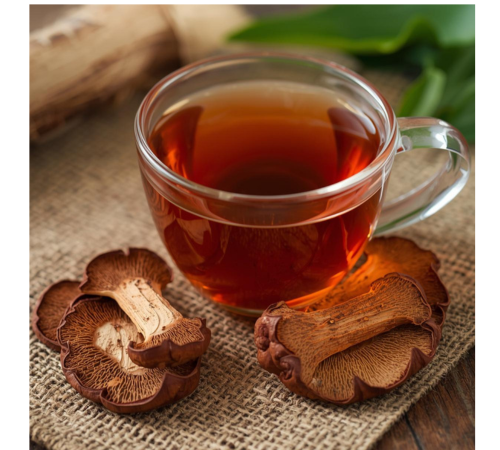
- Use in decoctions (simmered tea)
- Traditional and highly effective method
Basic Decoction Method (Traditional Use)
- Add 5–10g dried Reishi slices to water
- Simmer for 30–60 minutes
- Strain and drink
- Re-simmer slices 1–2 more times
What to Expect
- Week 1–2: Subtle shifts in energy or calm
- Week 3–4: More noticeable balance and resilience
- 1–3 Months: Deeper systemic support
Reishi is not a stimulant—it works gradually by supporting your body’s baseline function.
Safety, Taste & Considerations
- Naturally very bitter (this is a sign of potency)
- Generally well tolerated
- May not be suitable during certain conditions—consult your healthcare provider
- Always choose lab-tested, high-quality sources
Quality Matters
Not all Reishi is created equal.
Low-quality products may:
- Use only mycelium instead of fruiting body
- Be grown on grain fillers
- Lack active compounds
What to look for:
- Fruiting body content
- No fillers or additives
- Lab-tested for purity
- Proper extraction methods
How to Choose the Right Reishi Product
| Goal | Best Form |
|---|---|
| Daily wellness | Capsules or powder |
| Traditional use | Whole slices |
| Fast absorption | Liquid extract |
| Custom dosing | Powder |
Real Experience
Many of our customers turn to Reishi when they feel:
- Run down or depleted
- Out of balance
- Overwhelmed by stress
Over time, they often report feeling:
- More steady
- More resilient
- Better able to handle daily demands
Frequently Asked Questions
Is Reishi safe for daily use?
Reishi has traditionally been used as a long-term tonic herb, but always consult your healthcare provider.
Why does Reishi taste bitter?
The bitterness comes from triterpenes, which are part of its beneficial compound profile.
Can I take Reishi with other herbs?
Yes—Reishi is commonly combined with other herbs in traditional formulas.
How long should I take it?
Reishi is best used consistently over time rather than short-term.
Related Links
Important Disclaimer
This content is for educational purposes only and is not intended to diagnose, treat, cure, or prevent any disease. Always consult a qualified healthcare provider before beginning any new herbal routine.
Final Thought: Why Reishi Still Matters Today
In a world focused on quick fixes, Reishi stands apart.
It doesn’t push the body—it supports it.
It doesn’t overstimulate—it balances.
It doesn’t promise overnight change—it builds resilience over time.
That is why it has lasted for centuries—and why it continues to grow in popularity today.
Shop Premium Reishi Mushroom
Experience the difference of:
- Lab-tested quality
- Carefully sourced ingredients
- Trusted herbal expertise since 1994
Shop Reishi Mushroom Now and Start Building Long-Term Wellness
Scientific Research on Reishi Mushroom (PubMed-Backed)
Reishi mushroom (Ganoderma lucidum), also known as Ling Zhi, has been studied for its polysaccharides, beta-glucans, triterpenoids, and other bioactive compounds. Research suggests these compounds may help support immune modulation, antioxidant activity, and whole-body resilience, although human clinical results vary depending on the health goal, preparation type, and dose.
Immune Modulation
Multiple reviews report that Ganoderma lucidum polysaccharides and beta-glucans may help modulate immune activity, including innate, humoral, and cellular immune responses.
- Cellular and molecular mechanisms of immuno-modulation by Ganoderma lucidum polysaccharides (PMID: 16230843)
- Immunomodulating Effect of Ganoderma (Lingzhi) and Possible Mechanism (PMID: 31777013)
- Evaluation of Immune Modulation by β-1,3;1,6 D-Glucan from Reishi in Healthy Adults (PMID: 36766186)
Bioactive Compounds and Why Reishi Works
Modern reviews describe Reishi as rich in polysaccharides, triterpenoids, proteins, sterols, and other compounds that likely work together rather than in isolation.
- Ganoderma lucidum (Reishi) an edible mushroom; a comprehensive and critical review (PMID: 34411377)
- Therapeutic potential and nutritional significance of Ganoderma lucidum: a comprehensive review from 2010 to 2022 (PMID: 36734035)
- Pharmacological Activities and Safety of Ganoderma lucidum Spore Extract (PMID: 37790044)
Antioxidant and Inflammation-Related Research
Preclinical and review literature frequently describe antioxidant and inflammation-related activity, which helps explain why Reishi is often used as a long-term wellness tonic.
- The beneficial effects of Ganoderma lucidum on cardiovascular and metabolic disease risk (PMID: 34465259)
- Suppression of inflammatory and allergic responses by Ganoderma lucidum (PMID: 24948193)
Cardiovascular and Metabolic Research
Reishi is often marketed for cardiovascular and metabolic support, but the strongest human evidence remains mixed. A major review and randomized trial found that evidence does not currently support strong treatment claims for cardiovascular risk factors in people with type 2 diabetes, which is exactly why a trustworthy page should present this topic carefully.
- Ganoderma lucidum mushroom for the treatment of cardiovascular risk factors (PMID: 25686270)
- A double-blind, randomised, placebo-controlled trial of Ganoderma lucidum for hyperglycaemia and other cardiovascular risk components (PMID: 27511742)
- Study of potential cardioprotective effects of Ganoderma lucidum (PMID: 21801467)
Safety and Tolerability
Recent reviews discuss safety, quality control, extract type, and tolerability. Product quality matters, and fruiting body content, extraction method, and testing standards all affect what the customer is actually buying.
- Comprehensive review covering safety, efficacy, interactions, and composition (PMID: 34411377)
- Safety review of Ganoderma lucidum spore extracts (PMID: 37790044)
- Healthy-adult trial reporting Reishi β-glucan was safe and well tolerated (PMID: 36766186)
Important note: Research on Reishi is promising, especially for immune modulation and whole-body wellness support, but more high-quality human clinical trials are still needed for many specific outcomes.
Share: