
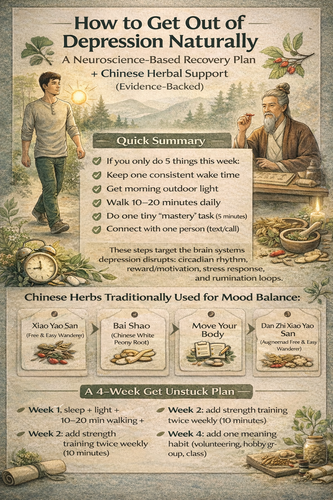
How to Get Out of Depression Naturally: A Neuroscience-Based Plan + Chinese Herbal Support (Evidence-Backed)
Jan 29th 2026
What Depression Is From a Neuroscience Perspective
Safety First
If you’re in danger of harming yourself, call or text 988 (U.S.). If you’re outside the U.S., contact your local emergency number.
This article is educational and not a substitute for medical care. If you have severe depression, suicidal thoughts, psychosis, or a history of bipolar disorder/mania, get professional help promptly.
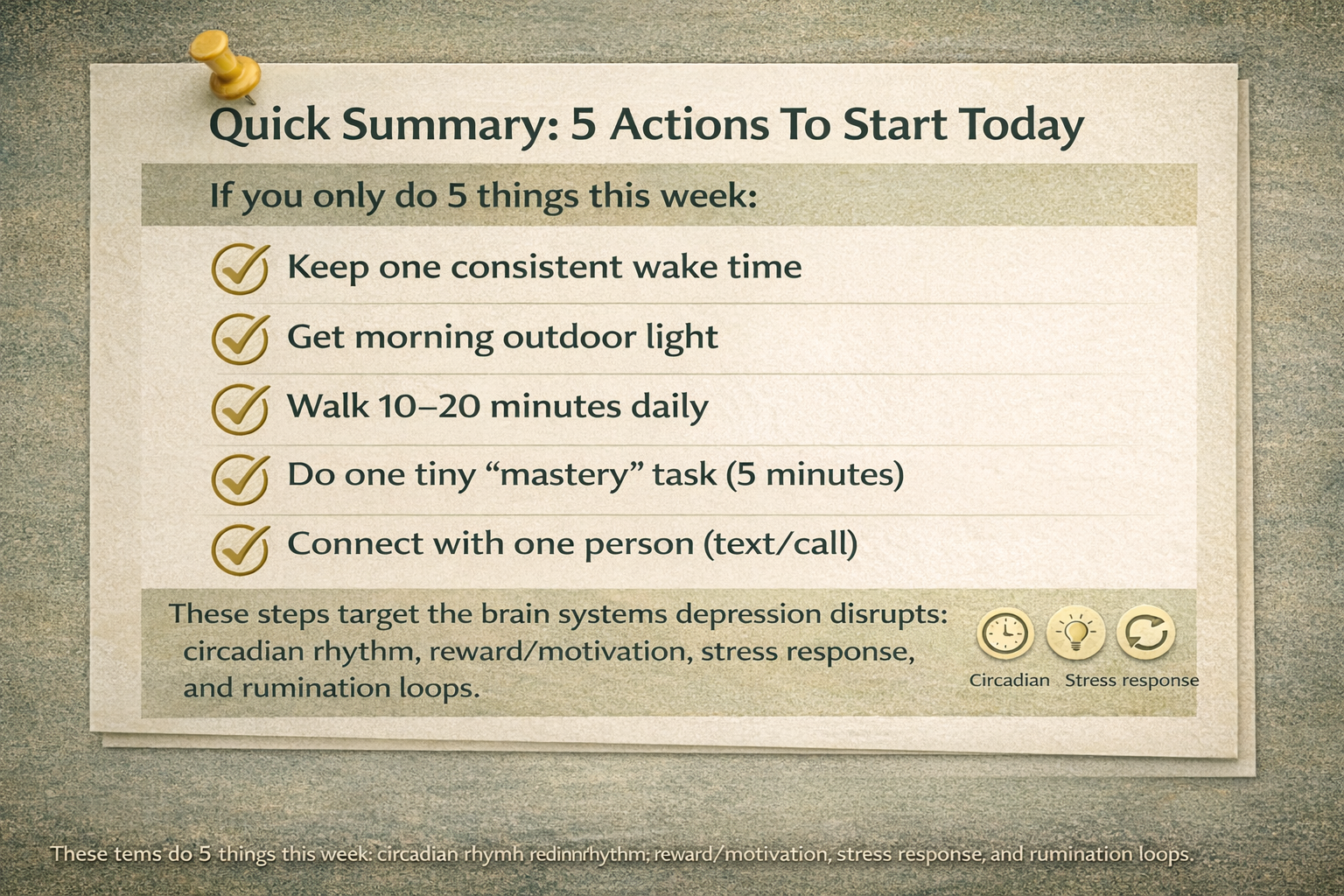
Table of Contents
-
What depression is (and why it feels “stuck”)
-
Depression vs burnout vs grief vs anxiety
-
The Natural Recovery Ladder (what works fastest)
-
A 7-day “get unstuck” plan (low effort, high impact)
-
A 4-week plan (build momentum that lasts)
-
Chinese herbs and formulas for mood balance (with safety + evidence)
-
Labs and medical causes to rule out
-
FAQs
-
PubMed references
Depression isn’t laziness. It’s often a predictable shift in a few brain-and-body networks:
-
Circadian rhythm disruption: sleep timing and energy regulation drift.
-
Reward system “downshift”: motivation drops; pleasure feels muted.
-
Rumination loops: the brain replays fears and regrets (sticky “default mode” activity).
-
Stress physiology overload: the nervous system has trouble returning to baseline.
Natural recovery works best when it targets these inputs your brain uses to regulate mood: sleep timing, light exposure, movement, small wins, and social rhythm.
Depression vs Burnout vs Grief vs Anxiety
People often search “am I depressed or just stressed?” Here’s a simple guide:
-
Burnout: exhaustion + cynicism, often work-related; rest helps but doesn’t fully reset without boundaries and meaning.
-
Grief: waves of sadness linked to loss; you can still feel moments of connection/meaning.
-
Anxiety: heightened threat system; mind races, body feels keyed up.
-
Depression: low drive + low reward + negative prediction (“nothing will help”), often with sleep/appetite changes and reduced functioning.
You can have more than one at the same time. The plan below still helps because it stabilizes the basics.
The Natural Recovery Ladder (Do This in Order)
These are the highest “return on effort” steps. They’re also the most evidence-supported.
1) Fix Sleep Timing (Mood’s Control Panel)
Depression and insomnia reinforce each other. Treating insomnia—especially with CBT-I methods—can improve sleep and also improve depressive symptoms in people with depression and comorbid insomnia.
The 7-night sleep reset:
-
Choose one wake time and keep it every day (even after a bad night).
-
Get 10–20 minutes of outdoor light within 60 minutes of waking.
-
Stop caffeine 8 hours before bed.
-
If awake >20–30 minutes at night: get up, do something calm, return only when sleepy (CBT-I principle).
Why it works: stable sleep strengthens circadian timing and improves emotion regulation.
2) Use Morning Light (The Simplest Antidepressant Habit)
Bright light therapy is supported as an adjunct for nonseasonal depressive disorders in systematic review/meta-analysis evidence.
Start with outdoor light first; it’s safer and usually enough to begin shifting circadian rhythm.
Caution: If you have bipolar history (mania/hypomania), use light therapy only with clinician guidance.
3) Exercise (Most Consistent Natural Antidepressant Evidence)
A large network meta-analysis found exercise is effective for depression, with walking/jogging, yoga, and strength training among the most effective and well tolerated options.
Start tiny (so you actually do it):
-
Day 1–3: walk 10 minutes
-
Day 4–7: walk 15–20 minutes
-
Week 2+: add 2 days/week of light strength work
This isn’t about “fitness.” It’s about signaling your brain that you’re safe, moving, and building capability.
4) Behavioral Activation (Do First, Feel Later)
Behavioral activation (BA) is one of the most practical evidence-based therapies for depression—especially when motivation is low.
BA in one minute:
-
Pick 1 activity for Pleasure, 1 for Mastery, 1 for Connection
-
Make them smaller than your brain thinks is necessary
-
Do them before you feel ready
5) CBT Skills (Reduce Rumination, Increase Flexibility)
CBT has strong evidence as a treatment for depression across many formats.
A fast CBT reframe that’s depression-friendly (no fake positivity):
-
Write the thought: “Nothing will help.”
-
Add: “I’m having the thought that nothing will help.”
-
Add one action: “The smallest thing I can do today is ___ (2 minutes).”
6) MBCT (Best for Preventing Relapse)
Mindfulness-Based Cognitive Therapy (MBCT) has evidence for reducing relapse risk in recurrent depression.
If you’ve had multiple episodes, MBCT-style training can become your long-term maintenance tool.
A 7-Day “Get Unstuck” Plan (Designed for Low Energy)
Goal: rebuild circadian rhythm + reward + agency in the smallest possible steps.
Every morning (Days 1–7)
-
Wake at the same time
-
10–20 minutes outside light
-
Drink water, eat something simple with protein/fiber
Every day
-
Walk 10–20 minutes (even slow counts)
-
Do 1 mastery task (5 minutes): one email, one dish, one drawer
-
Text one person: “Thinking of you—no need to reply.”
Every evening
-
Screens down 30–60 minutes before bed
-
Choose a “low stimulation” wind-down: shower, stretching, music, book
Track only this: Did I show up? Yes/No.
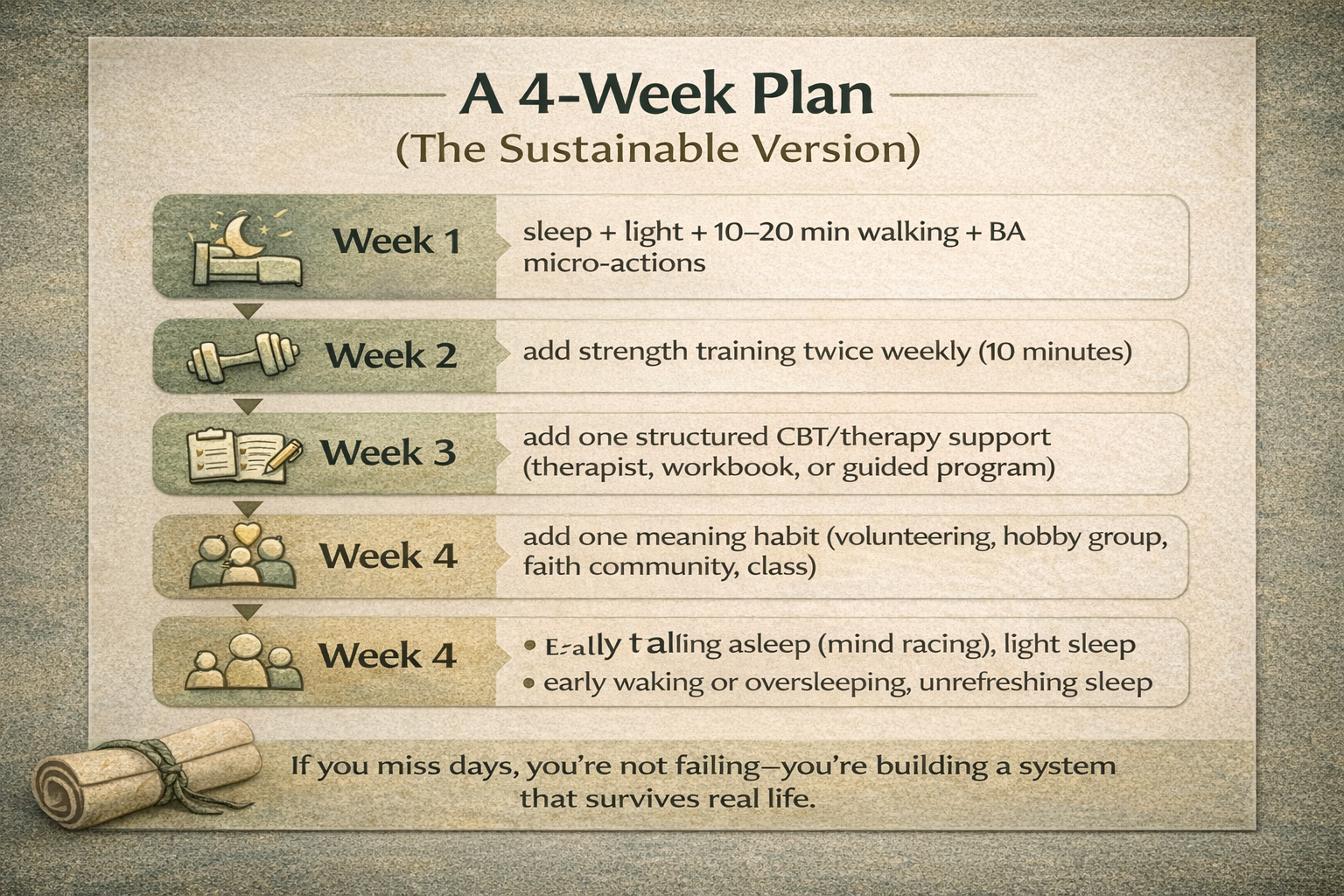
A 4-Week Plan (The Sustainable Version)
Week 1: sleep + light + 10–20 min walking + BA micro-actions
Week 2: add strength training twice weekly (10 minutes)
Week 3: add one structured CBT/therapy support (therapist, workbook, or guided program)
Week 4: add one meaning habit (volunteering, hobby group, faith community, class)
If you miss days, you’re not failing—you’re building a system that survives real life.
Chinese Herbs and Formulas for Mood Balance (Evidence + Safety)
Important: Herbs and formulas can support mood balance and stress response, but they are not a replacement for professional care when depression is severe. Always coordinate with your clinician if you take prescription medications.
Evidence Snapshot (What the research suggests)
-
Danzhi Xiaoyao San (DXS): systematic review/meta-analysis suggests benefit for depressive symptoms in clinical RCTs, while noting that more high-quality trials are needed.
-
Xiaoyao-related preparations: there is ongoing research interest, including controlled clinical studies of Xiaoyao pills for mild/moderate depression.
-
Broader reviews discuss potential antidepressant mechanisms (HPA axis, neurotransmitters, synaptic plasticity), but mechanism studies are not the same as clinical proof.
How to Choose a Formula Responsibly
-
Use products from reputable GMP manufacturers with clear labeling.
-
Prefer formulas with a long history of standardized use (not “mystery blends”).
-
Start low, change one thing at a time, and track sleep, mood, and side effects weekly.
Safety and Interaction Checklist (Read This)
Get clinician guidance before using mood-related formulas if you:
-
take SSRIs/SNRIs/MAOIs, mood stabilizers, anticoagulants, seizure meds
-
have bipolar disorder or a history of mania/hypomania
-
are pregnant or nursing
-
have complex medical conditions and multiple prescriptions
If you’re currently on antidepressants, a safe approach is: don’t add multiple new supplements at once; monitor for sleep disruption, agitation, or GI effects; and coordinate with your prescribing provider.
Labs and Medical Causes to Rule Out
If your depression is persistent, recurrent, or resistant, consider discussing these with a clinician:
-
Thyroid dysfunction (TSH, free T4)
-
Anemia/iron status (CBC, ferritin)
-
B12/folate
-
Vitamin D
-
Sleep apnea (especially with fatigue, snoring, morning headaches)
-
Medication side effects (some BP meds, steroids, hormonal changes, etc.)
Anxiety vs Depression: What’s the Difference?
| Feature | Anxiety | Depression |
|---|---|---|
| Core feeling | Fear / worry about what could happen | Sadness / emptiness or “numbness” about what’s happening |
| Brain “mode” | Threat system ON (hyper-alert) | Reward system DOWN (low drive/pleasure) |
| Typical thoughts | “What if…?” “Something bad will happen.” | “What’s the point?” “Nothing will change.” |
| Energy level | Often keyed-up, restless, tense | Often low, heavy, slowed down (or agitated in some people) |
| Body symptoms | racing heart, tight chest, sweating, shakiness, GI upset | low energy, body aches, appetite changes, sleep changes |
| Sleep pattern | trouble falling asleep (mind racing), light sleep | early waking or oversleeping, unrefreshing sleep |
| Motivation | may still do things, but with dread | often hard to start, avoid activities, “shut down” |
| Focus | distracted by worry, scanning for danger | foggy thinking, slower processing, poor concentration |
| Mood pattern | spikes in waves (triggered by uncertainty) | persistent low mood most days (often 2+ weeks) |
| What makes it worse | caffeine, stress, uncertainty, doomscrolling | isolation, irregular sleep, inactivity, rumination |
| What helps fastest | breath work, grounding, reducing stimulants, exposure therapy skills | sleep timing, morning light, behavioral activation, movement |
| Common overlap | irritability, poor concentration, sleep issues | irritability, poor concentration, sleep issues |
| When to get help urgently | panic with chest pain, fainting, or severe impairment | suicidal thoughts, inability to function, psychosis symptoms |
Quick “Self-Check” (Not a diagnosis)
-
More anxiety: you feel “wired,” worried, and stuck in future fears.
-
More depression: you feel “heavy,” numb, and stuck in hopeless predictions.
-
Both: you feel worried and drained—this is very common.
Important note
It’s possible to have anxiety and depression at the same time, and many people do. If symptoms last more than 2 weeks, significantly affect daily life, or include thoughts of self-harm, get professional support.
FAQ
How long does it take to feel better naturally?
Many people feel small shifts in 1–2 weeks from sleep + light + walking + BA. Deeper recovery often takes 4–12 weeks, especially if depression has been present for months.
What is the fastest natural technique for depression?
For most people: morning light + daily movement + behavioral activation. Exercise has particularly consistent evidence across studies.
What if I have zero motivation?
That’s a symptom, not a moral failure. Use “2-minute actions.” BA is designed exactly for this situation.
Can mindfulness help depression?
MBCT is especially supported for relapse prevention in recurrent depression.
Is bright light therapy only for seasonal depression?
Evidence supports bright light therapy as an adjunct for nonseasonal depressive disorders too. Start with outdoor morning light first.
References (PubMed / PMC)
Exercise for depression (high-impact)
-
Exercise for depression: network meta-analysis (walking/jogging, yoga, strength training)
https://pubmed.ncbi.nlm.nih.gov/38355154/
Behavioral Activation
-
Behavioral activation meta-analysis for depression
https://pubmed.ncbi.nlm.nih.gov/32138802/
CBT / psychological therapies
-
Cognitive Behavioral Therapy (CBT) meta-analysis / evidence review
https://pmc.ncbi.nlm.nih.gov/articles/PMC9840507/
Mindfulness-Based Cognitive Therapy (MBCT) relapse prevention
-
MBCT for relapse prevention (individual patient data meta-analysis)
https://pmc.ncbi.nlm.nih.gov/articles/PMC6640038/
Bright light therapy (nonseasonal depression)
-
Bright light therapy for nonseasonal depressive disorders (systematic review/meta-analysis)
https://pubmed.ncbi.nlm.nih.gov/39356500/
Sleep and depression (CBT-I and insomnia comorbidity)
-
Insomnia treatment and depression outcomes (review evidence)
https://pubmed.ncbi.nlm.nih.gov/35240417/
Chinese Herbal Formula Evidence (PubMed)
Dan Zhi Xiao Yao San
-
Danzhi Xiaoyao San for depression: systematic review/meta-analysis
https://pubmed.ncbi.nlm.nih.gov/34968660/
Xiao Yao San research overview / mechanisms (context)
-
Xiaoyao San and depression: mechanisms/research landscape (review)
https://pubmed.ncbi.nlm.nih.gov/36610123/
The information provided in this article is for educational and informational purposes only and is not intended as medical advice, diagnosis, or treatment. Depression is a complex health condition that may require professional care. Always consult a qualified healthcare provider before starting, stopping, or changing any medical treatment, therapy, supplement, or herbal regimen.
Natural approaches—including lifestyle changes, nutrition, mindfulness practices, and traditional Chinese herbal formulas—are discussed as supportive wellness strategies. They are not intended to diagnose, treat, cure, or prevent any disease and should not be used as a substitute for professional medical or mental health care.
If you are currently taking prescription medications (including antidepressants), have a history of bipolar disorder, are pregnant or nursing, or have a medical condition, consult your healthcare provider before using any supplements or herbal products.
If you are experiencing thoughts of self-harm, suicidal ideation, or feel unsafe, seek immediate help by calling or texting 988 (U.S. Suicide & Crisis Lifeline) or your local emergency number.