How to Store Bulk Herbs So They Stay Potent
Posted by 1st Chinese Herbal Review Team on Feb 12th 2026
How to Store Bulk Chinese Herbs So They Stay Potent
A professional guide to shelf life, container selection, humidity control, and pantry pest prevention
Bulk Chinese herbs are not “spices in a jar.” They include roots, barks, fruits, flowers, minerals, powders, granules, and prepared slices—each with different storage sensitivities. The goal of storage is straightforward: preserve aroma and key constituents, prevent moisture uptake, and prevent contamination (including pantry pests). This guide provides a practical, evidence-aligned storage system you can apply across most dried herbs.
Quick Summary Of How To Store Herbs
If you only do 5 things:
-
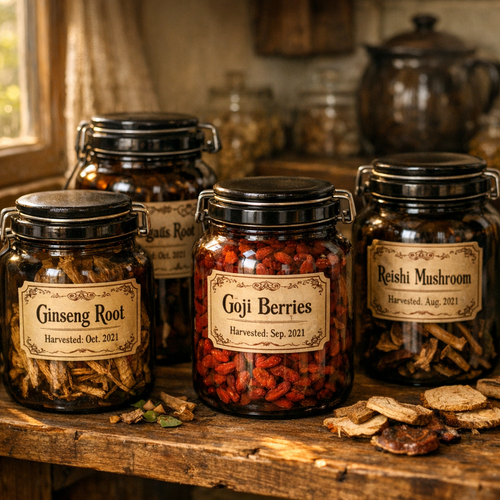
Repackage into airtight containers immediately after opening (dark glass jars are ideal).
-
Store cool, dark, and dry—away from the stove, dishwasher, and windows. (Not in refrigerator)
-
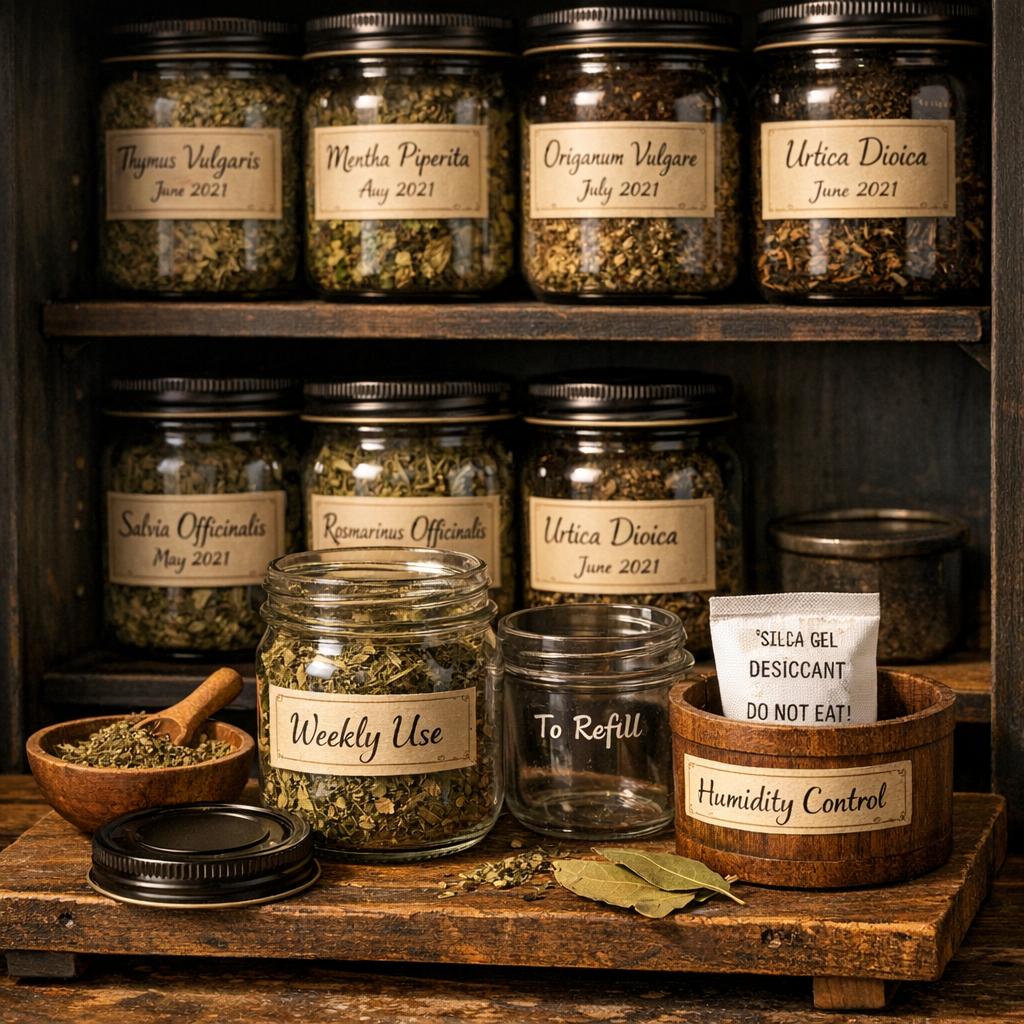
Use a working jar system (small jar for weekly use; bulk stays sealed).
-
For humid climates, add humidity control (desiccant in an outer bin, not directly touching herbs).
- Label everything (herb name; botanical names + form + date opened + batch/lot if available).
Why Bulk Herbs Lose Potency in Storage
Potency loss is usually gradual, but it accelerates under four predictable conditions:
1) Moisture exposure
Moisture is the primary cause of quality decline in dried botanicals. It can lead to clumping (especially powders), musty odor, and increased spoilage risk. Steam from cooking is a common hidden source.
Pro Tip: High-risk behavior: opening containers near a steaming pot, or shaking herbs directly over hot liquids.
2) Light exposure
Light contributes to degradation of color and aromatic intensity over time. Clear jars on an open shelf look attractive, but they are not ideal for long-term quality.
3) Heat exposure
Heat accelerates loss of volatile aromatic compounds and increases oxidation. The most common heat zones are above stoves, near ovens, above refrigerators, and beside dishwashers.
4) Oxygen exposure (repeated opening)
Oxygen and repeated opening/closing slowly dull aroma and activity. This is why the working jar system is so effective.
The Best Containers for Bulk Chinese Herbs
Tier 1: Dark Glass jars with airtight lids (best overall)
-
Excellent oxygen and moisture barrier
-
Easy to inspect for condensation, clumping, or pests
-
Neutral material (does not retain odors)
Best for: roots, barks, fruits, sliced herbs, aromatic herbs, and tea blends.
Tier 2: Mylar bags (thick) + sealed storage bin (best for large quantities)
-
Excellent long-term protection for bulk sizes
-
Works best when combined with a smaller working jar
Best for: multi-pound purchases, overflow inventory, seasonal stock.
Tier 3: Food-grade airtight plastic canisters (acceptable)
-
Fine if truly airtight
-
More odor retention than glass; can be less protective over long periods
Best for: short-to-medium-term kitchen use.
Avoid: Thin zip bags for long-term storage
They allow gradual aroma loss and moisture exchange, and they are more vulnerable to puncture and pests.
Storage by Herb Form
Whole herbs (generally longest shelf life)
Whole roots, barks, and fruits store best because they have less exposed surface area.
Storage note: keep sealed and dry; inspect periodically.
Cut / tea-cut herbs (moderate shelf life)
Tea-cut herbs are convenient and usually strain well, but they lose aroma faster than whole herbs.
Storage note: use a smaller working jar to reduce repeated exposure.
Powders (shortest shelf life)
Powders absorb humidity quickly and have the greatest surface area exposed to air.
Professional standard: buy smaller quantities, keep containers airtight, and keep away from steam. Consider double containment (jar inside a sealed bin).
Granules/extract powders
Extract granules are often more stable than raw powders, but they can still clump from humidity.
Storage note: keep very tightly sealed; avoid damp scoops.
What Is The Shelf Life Expectation?
There is no single universal shelf life for “Chinese herbs,” because stability depends on:
-
plant part (root vs flower vs fruit)
-
processing (raw vs prepared)
-
cut size (whole vs powder)
-
storage environment (humidity, temperature, light)
-
frequency of opening
A practical, professional approach is to use quality indicators, not just dates:
-
Aroma intensity (for aromatics)
-
appearance (color change, dustiness, condensation)
-
texture (powders clumping repeatedly; slices becoming rubbery)
-
presence of musty odor or visible contamination
Simple rule: if the herb no longer smells or performs as expected in tea/decoction, it may be safe but not effective for your intended use.
The Ideal Storage Location in the Home
Choose one area that is:
-
cool (stable temperature)
-
dark (cabinet/drawer, not open shelving)
-
dry (away from sink and dishwasher steam)
“Kitchen danger zones” (avoid these areas)
-
above/next to the stove or oven
-
beside kettle, coffee maker, or rice cooker
-
above refrigerator (warm airflow)
-
near dishwasher
-
windowsills or sunlit shelves
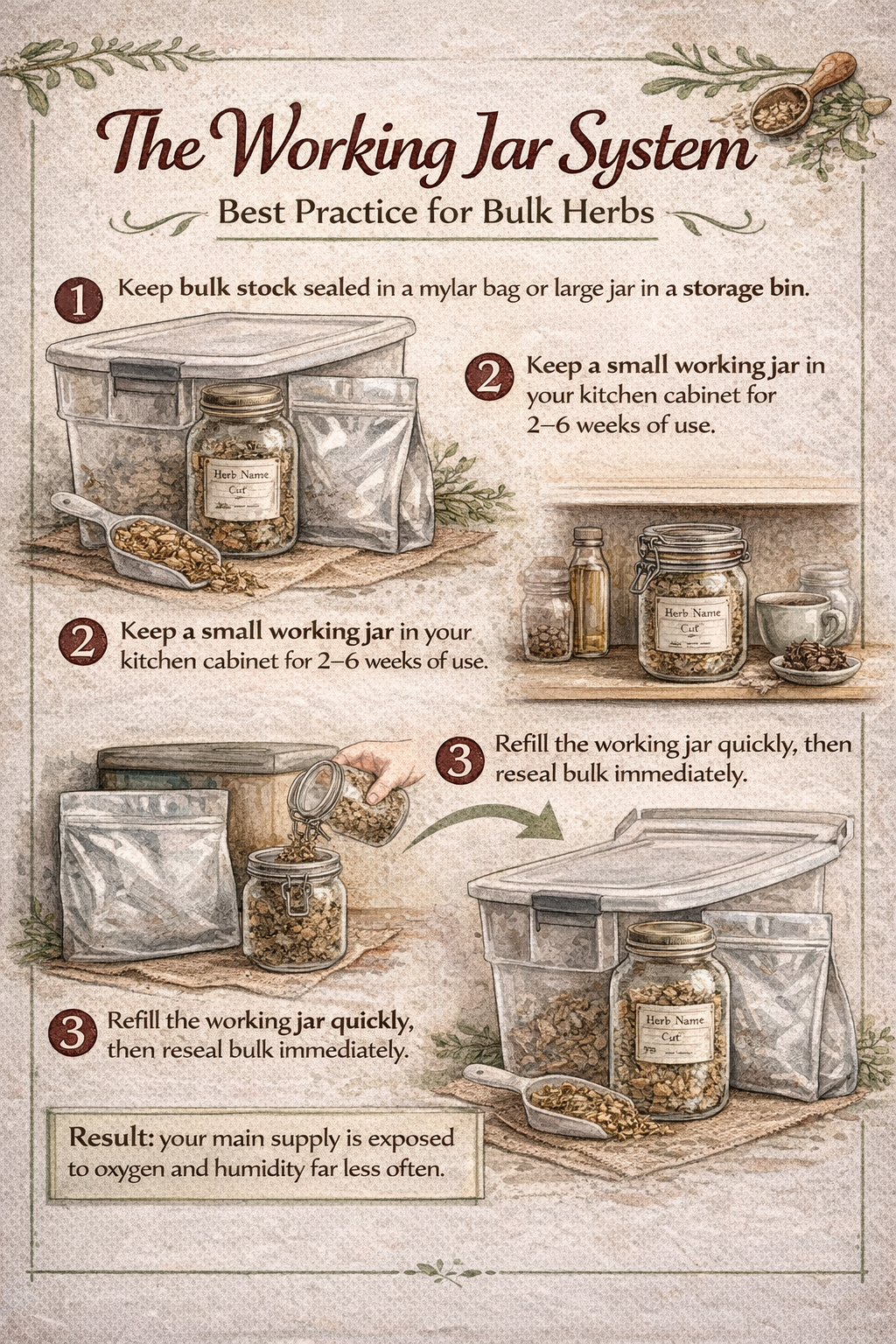
The Working Jar System - Best Practice for Bulk Herbs
This is the simplest system to preserve quality while keeping daily use convenient.
-
Keep bulk stock sealed in a mylar bag or large jar in a storage bin.
-
Keep a small working jar in your kitchen cabinet for 2–6 weeks of use.
-
Refill the working jar quickly, then reseal bulk immediately.
Result: your main supply is exposed to oxygen and humidity far less often.
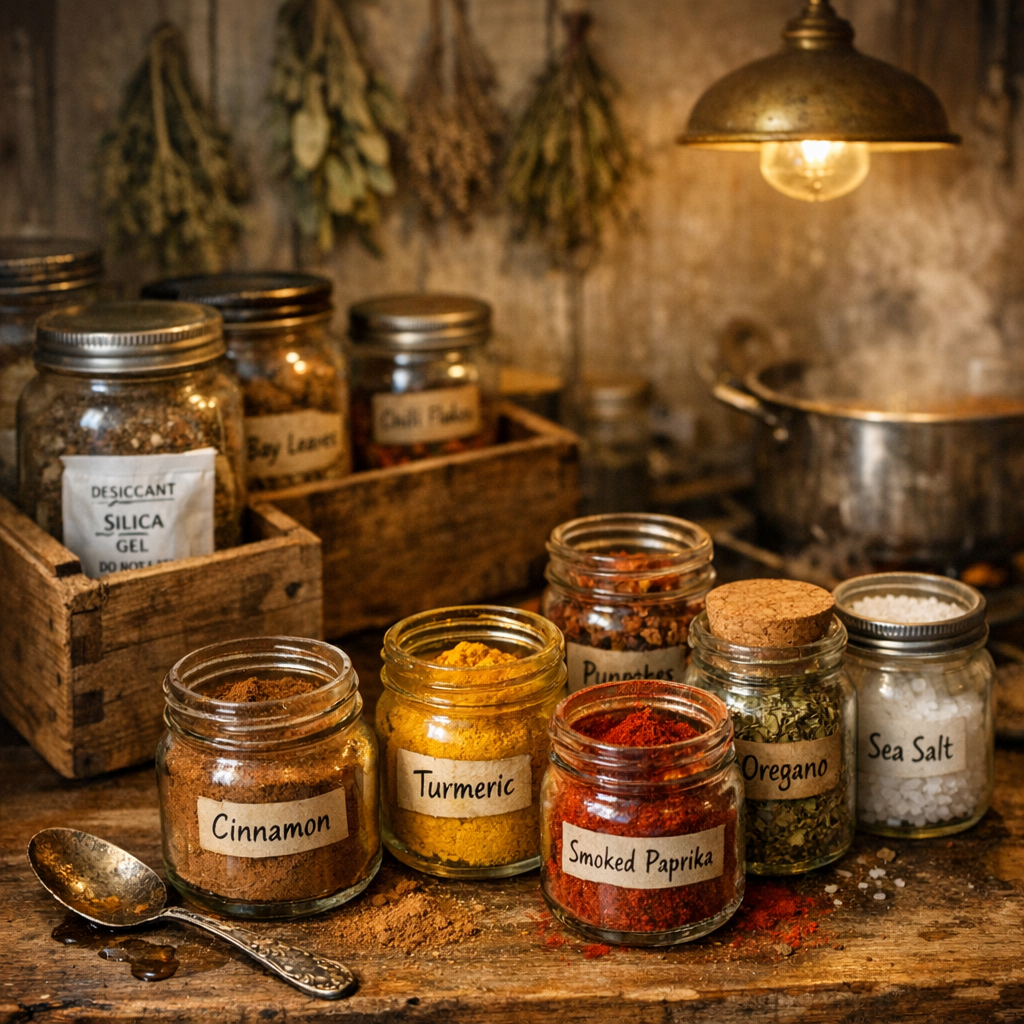
Humidity Control (Especially Important in Winter Kitchens + Coastal Climates)
If your kitchen humidity is high or your containers are opened often:
-
Use smaller containers so each jar is opened less frequently.
-
Consider a desiccant pack in the outer storage bin (not touching herbs directly).
-
Never use a wet spoon; avoid opening containers right after boiling water.
Common sign of humidity exposure: repeated clumping in powders or granules.
Pantry Pest Prevention for Dried Herbs
If you find insects, webbing, or larvae
-
Seal the affected bag immediately to prevent spread
-
Discard heavily infested items
-
Inspect surrounding products
-
Vacuum and wipe shelves; consider freezing any “maybe exposed” items before returning to storage
Quality Control: What’s Normal vs Not Normal
Usually normal (depending on herb)
-
Fine herbal dust at the bottom of a bag (especially tea-cut roots)
-
Natural color variation between batches
-
Slight brittleness in very dry roots/barks
Not normal (discard and contact supplier if needed)
-
Musty, damp, or sour odor
-
Visible fuzzy growth or wet/oily patches
-
Webbing, larvae, or active insects
-
Sudden drastic color change accompanied by off odor
-
Containers showing condensation inside
When in doubt, prioritize safety. If you cannot identify what you’re seeing, do not consume.
Labeling System Label every container with:
-
Herb name (English + Pin Yin if used)
-
Form: whole / cut / powder / granules
-
Date opened
-
Batch/lot (if provided)
-
Optional: “Aroma check date” (6–12 months out)
This reduces waste and makes rotation systematic.
Additional Storage Questions
Should I refrigerate dried herbs?
Usually no. Refrigeration can introduce condensation when opened. A cool, dark cabinet is typically better. Use refrigeration only if you can keep items sealed and avoid moisture swings.
Can I store herbs in clear jars for display?
Not ideal. If you prefer clear jars, store them in a closed cabinet or use amber glass. If only clear glass jars
are available, then wrap the jars in brown paper bags to reduce light entering jars.
Why is my tea “muddy”?
Most often caused by powders or very fine particles. Use tea-cut herbs, a tighter filter, or a reusable tea bag.
Can I store strong aromatics (like star anise) next to other herbs?
Yes, but only if everything is truly airtight. Aromatics can “perfume” nearby herbs if seals are weak.
FAQ
What is the best way to store bulk Chinese herbs?
Airtight containers stored in a cool, dark, dry location, using a working jar system so the bulk supply stays sealed.
How do I prevent clumping in powders and granules?
Avoid steam exposure, use airtight containers, keep in a dry cabinet, and consider an outer sealed bin with humidity control in humid climates.
How can I prevent pantry pests in bulk herbs?
Use airtight containers; optionally freeze new bulk purchases for several days before storage; inspect periodically and store clean/dry.
How long do bulk herbs last?
Whole herbs typically hold quality longer than powders. Practical shelf life depends on storage conditions; rely on aroma, appearance, and absence of moisture/contamination.
Recommended Storage Supplies for Bulk Herbs
-
16 oz and 32 oz glass jars with airtight lids
-
Mylar bags (thick) for bulk overflow
-
Food-safe labels + marker
-
Reusable tea bags/infusers (for cleaner tea)
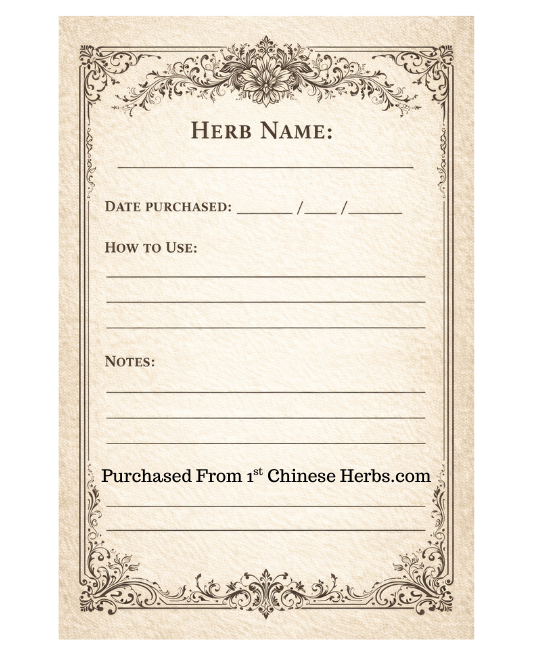
Example of what a herb label.