
How Were Herbs Discovered?
Posted by 1st Chinese Herbs Research Team on Apr 7th 2026
How Were Herbs Discovered?
The Real Story Behind How People Figured Out What Herbs Actually Do
Let’s Start With the Truth Most People Get Wrong
Most people think herbs were discovered in a lab.
White coats, petri dishes, microscopes, clipboards, and people with pocket protectors. Nope.
That came thousands of years later.
Herbal knowledge started in a much simpler—and honestly, much riskier—way:
People tried things… and hoped it didn’t go badly. Ane Yes, at times the results were deadly.
It Started With Paying Attention - Observing - Remembering
Imagine this for a moment. No pharmacy. No urgent care. No “Google your symptoms.”
If something went wrong, you had two options: Figure it out, or don’t.
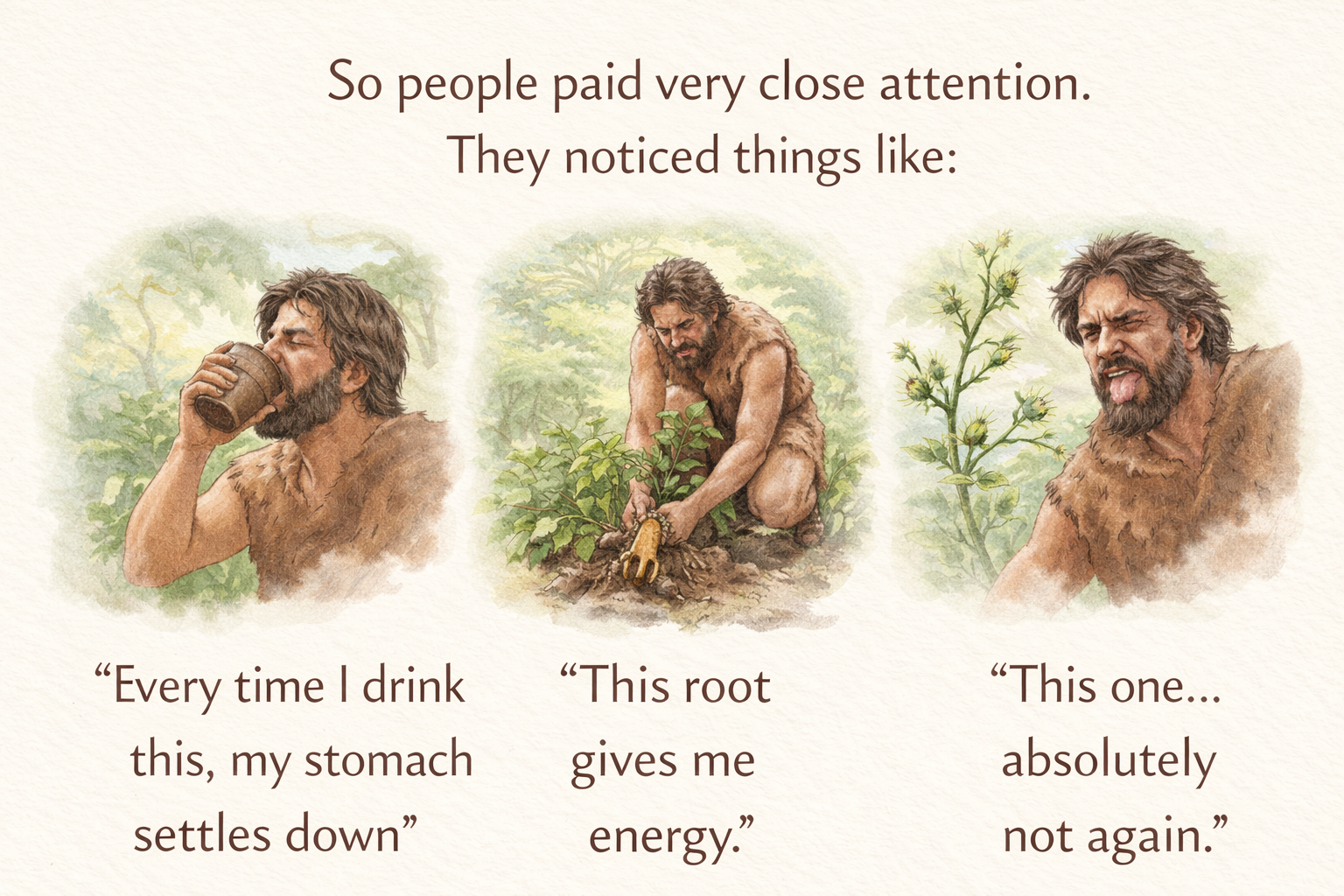
So people paid very close attention.
They noticed things like:
- “Every time I drink this, my stomach settles down”
- “This root gives me energy”
- “This one… absolutely not again”
That last category was very important.
Animals Were the Original “Herbal Experts”
Humans didn’t figure this out alone. They watched animals.
Dogs eat grass when their stomach is off.
Primates chew specific leaves when they’re sick.
That’s not random behavior. It’s instinct. Early humans saw that and thought “There’s probably something to that”. So they tried it. And just like that, herbal discovery moved forward.
Then Fire Entered the Picture—and Everything Changed
Before fire plants were eaten raw. Basically, pulled out of the ground if a root, or plucked from the vine, or stem.
After fire, changes happened. Roots were boiled, leaves were steeped, herbs were concentrated, and many times the herbs were more potent.
And suddenly, something interesting happened:
The same plant started producing different effects depending on how it was prepared. This is where herbal medicine stopped being random and became intentional.
Not just, “What is this plant?” But “How do I use this plant correctly?”
Over Time, This Became a System (Not Guesswork)
As knowledge built up, people didn’t just pass down random tips.
They organized it. That’s how systems like Traditional Chinese Medicine (TCM) developed.
Instead of asking “What does this herb do?” They asked “Who is this herb right for?”
That’s a completely different level of understanding.
Why Most People Today Think Herbs “Don’t Work”
Here’s where things fall apart in modern times.
People try herbs like this:
- Take one herb (It must be the right herb for the health issue)
- Use it once
- Expect a dramatic result
When that doesn’t happen, they assume “Herbs don’t work”. But that’s not how herbs were ever used.
Traditionally, herbs were combined, adjusted for your body and symptoms, and used consistently, so to make this clear, the herbs were used correctly.
What This Means for You
Understanding how herbs were discovered changes how you use them today.
It shifts your thinking from “What should I take?”
To “How should I use this properly?”
That one shift can make all the difference, and it does!
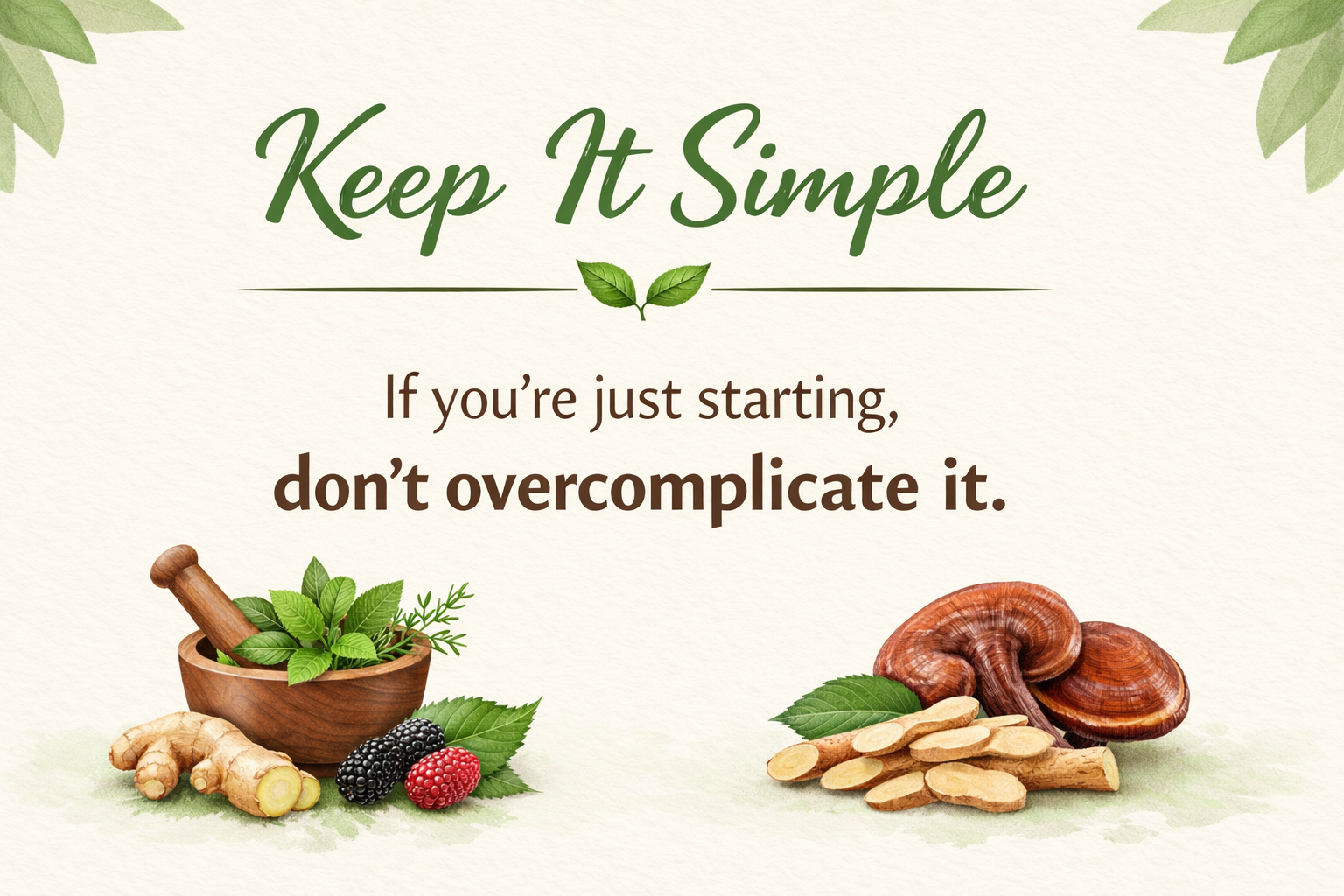
Keep It Simple
If you’re just starting, don’t overcomplicate it.
Start with herbs that have stood the test of time:
- Astragalus → long-term energy support
- Reishi → calming and restorative
- Ginger → digestion and circulation
- Mulberry leaf → metabolic balance
These are still used today for a reason: easy to use, easy to obtain, and show results.
How Herbs Were Used Then vs. How Most People Use Them Today
| Traditional Herbal Use (What Worked) | Modern Use (Why It Fails) |
|---|---|
| Herbs used consistently over time | Used once or randomly |
| Formulas with multiple herbs | Single herb approach |
| Prepared properly (tea, decoction, etc.) | Incorrect preparation |
| Matched to the individual | One-size-fits-all thinking |
| Focused on balance over time | Expecting instant results |
| Guided by experienced practitioners | Self-diagnosing without knowledge |
What this means: Herbs didn’t fail—the method changed
COMPARISON TABLE
Raw vs. Prepared Herbs (Why Preparation Matters)
| Preparation Method | What It Does | When It’s Used |
|---|---|---|
| Raw / Fresh | Mild, immediate effect | Light support |
| Tea (Infusion) | Extracts lighter compounds | Daily use |
| Decoction (Boiled roots) | Stronger extraction | Deeper support |
| Powder | Convenient, less potent extraction | Easy daily use |
| Tincture | Concentrated and fast absorption | Targeted use |
Mistakes
One of the most common mistakes people make is treating herbs like pharmaceuticals. There is often an expectation of immediate and dramatic results, but herbs typically work in a more gradual and consistent way. They are meant to support the body over time, not override it overnight.
Another issue is simply using the wrong herb. Just because something worked well for someone else does not mean it is the right choice for you. Herbs are not one-size-fits-all, and selecting the right one depends on the individual and the situation.
Inconsistent use is another major reason people don’t see results. Taking herbs once, occasionally, or at random intervals will not produce meaningful outcomes. Consistency is one of the most important factors in getting the full benefit.
Preparation methods are also frequently overlooked. Drinking a weak tea when a stronger decoction is needed is similar to turning the stove on low and expecting water to boil. How an herb is prepared directly affects how well it works.
Another mistake is relying on a single herb instead of using combinations. Traditional systems rarely used herbs alone. They were combined in ways that supported and enhanced each other, and this is often the difference between limited results and noticeable improvement.
Expecting instant results is another misunderstanding. Herbs are not a quick fix. They are part of a system that supports the body over time, and that process requires patience.
Finally, the quality of the herb itself plays a significant role. Poorly sourced, old, or low-potency herbs can lead to inconsistent or disappointing results. Even the best herbal knowledge cannot overcome low-quality ingredients.
Helpful pages to explore next
Final Thought
Herbal medicine didn’t last for thousands of years just because it sounded appealing—it lasted because people actually used it and saw results. Over time, what helped was remembered, refined, and passed down from one generation to the next. That’s how this knowledge survived.
Today, you have access to that same wisdom without having to figure it out through trial and error yourself—which, honestly, is probably for the best.
⚠️ Disclaimer
This content is for educational purposes only and is not intended to diagnose, treat, cure, or prevent any disease. Always consult a qualified healthcare provider before starting any new herbal routine.
FAQ
How were herbs originally discovered?
Herbs were discovered through observation, trial and error, and learning from nature. Early humans noticed patterns in how plants affected the body and passed that knowledge down over generations.
Did people really learn about herbs from animals?
Yes. Observing animal behavior, such as eating certain plants when sick, helped early humans identify which plants might have beneficial effects.
Why do herbs work differently depending on preparation?
Preparation methods like boiling, steeping, or drying can change how compounds are extracted from plants, which affects how the herb works in the body.
Why do some people think herbs don’t work?
Many people use herbs incorrectly—taking the wrong herb, using it inconsistently, or expecting fast results instead of gradual support.
What are the best herbs to start with?
Common beginner-friendly herbs include astragalus, reishi, ginger, and mulberry leaf due to their long history of traditional use.