
Tea vs. Energy Drinks: Which Is Better for Energy, Focus, and Health?
Posted by 1st Chinese Herbal Review Tea on Jan 30th 2026
Tea vs. Energy Drinks: Which Is Better for Energy, Focus, and Health?
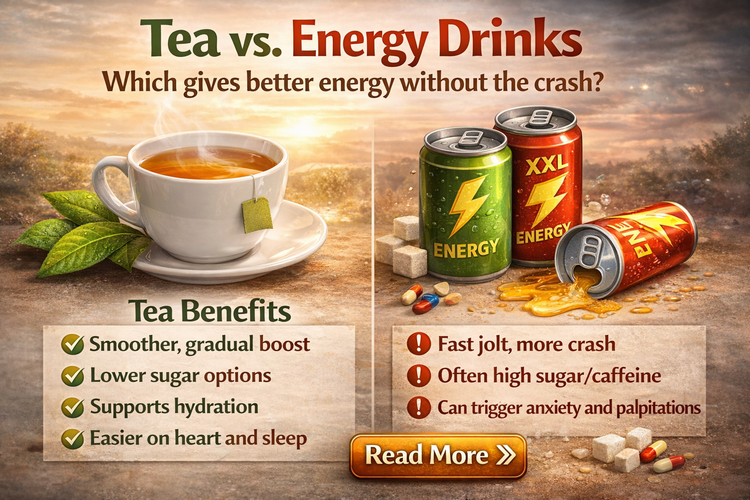
Tea usually provides steadier energy with fewer jitters and less crash than energy drinks because it’s typically lower in caffeine per serving, often consumed more slowly, and can be enjoyed without sugar. Energy drinks may deliver a faster jolt but can disrupt sleep and may raise cardiovascular concerns in some people.
Quick Summary Of Tea Drinking Vs Energy Drinks
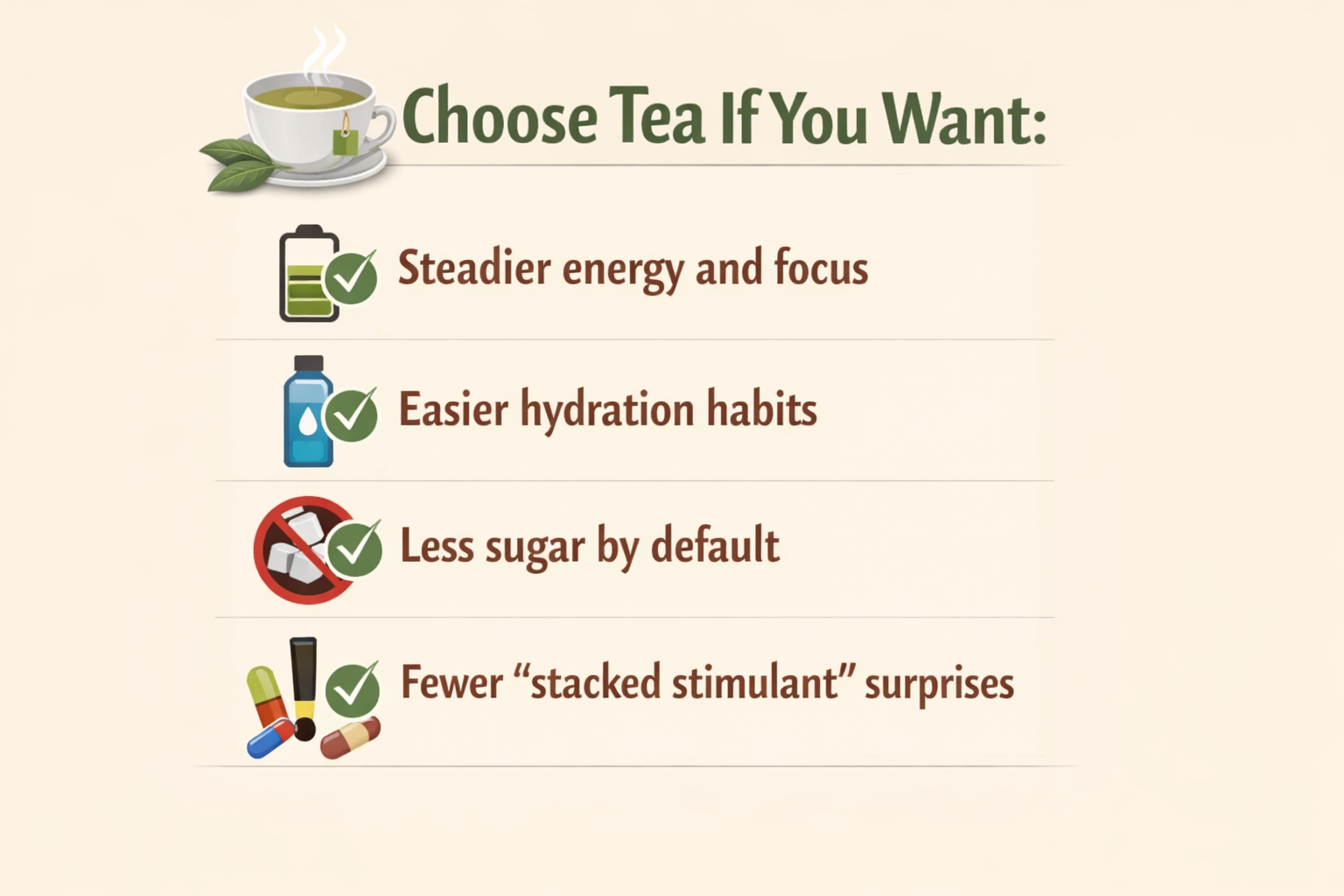
Choose tea if you want:
-
steadier energy and focus
-
easier hydration habits
-
less sugar by default
-
fewer “stacked stimulant” surprises
Choose an energy drink only if:
-
you tolerate caffeine well
-
you keep total caffeine reasonable
-
it doesn’t trigger anxiety, palpitations, or insomnia
Key safety note: For most adults, the FDA cites 400 mg/day caffeine as an amount not generally associated with negative effects (sensitivity varies).
Table of Contents
-
Tea vs. energy drinks: what “energy” really means
-
The biggest benefits of tea over energy drinks
-
Comparison table (caffeine, sugar, crash, hydration, heart)
-
What’s actually in energy drinks (and why it matters)
-
Best teas for energy (morning vs afternoon)
-
How to switch without headaches (7-day plan)
-
Who should be extra cautious
-
FAQ
1) Tea vs. Energy Drinks: What “Energy” Really Means
Most people don’t want “more stimulation.” They want:
-
alertness (wake up)
-
focus (stay on task)
-
stable mood (not edgy)
-
stamina (no crash)
-
better sleep later (tomorrow energy)
Tea tends to support these more consistently because it’s often lower-dose caffeine, easier to drink unsweetened, and fits into hydration-friendly routines. Energy drinks can be effective short-term, but they’re more likely to overshoot into “wired + tired.”
2) The Benefits of Tea Over Energy Drinks (The Ones People Notice)
Benefit #1: Smoother energy, fewer crashes
Energy drinks are often consumed quickly and may include sugar—both increase the likelihood of a spike-then-drop feeling.
Benefit #2: Easier to stay under a safe daily caffeine range
The FDA cites 400 mg/day for most adults as an amount not generally associated with negative effects (individual variation matters).
Tea makes it easier to “sip and stay reasonable.”
Benefit #3: Less sugar by default
Unsweetened tea is naturally low sugar. Many energy drinks (not all) are sugar-heavy, and sugar can worsen the crash cycle.
Benefit #4: Better hydration habits
Tea is mostly water, and moderate intake can contribute to daily fluid intake for most people.
Benefit #5: Often gentler for anxiety and sleep
If you’re sensitive, energy drinks can feel like launching your nervous system into orbit. Tea is easier to “dose.”
Benefit #6: Flexible options (strong → light → caffeine-free)
Tea gives you a full spectrum: matcha/black tea (strong), green/oolong (moderate), herbal (caffeine-free).
3) Tea vs. Energy Drinks: The Comparison Table People Want
| Feature | Tea (typical brewed) | Energy Drinks (typical) | What it means for you |
|---|---|---|---|
| Caffeine per serving | Black tea ~48 mg/8 oz; Green tea ~29 mg/8 oz | ~79 mg per 8 oz (often sold in larger cans) | Energy drinks can unintentionally push caffeine high fast |
| Sugar | Often 0 g if unsweetened | Can be high (many brands), though sugar-free exists | Sugar increases crash risk |
| Crash risk | Lower (usually) | Higher (especially with sugar + rapid intake) | “Wired → tired” happens more |
| Hydration pattern | Supports hydration routines | Mixed; depends on dose and intake pattern | Tea often fits “drink more fluids” goals |
| Heart / BP concerns | Generally milder stimulation | Evidence shows QTc prolongation + BP rise in controlled trials | Important for sensitive people |
| Best use | Daily steady energy | Occasional emergency boost | Frequency matters |
Important nuance: caffeine amounts vary by brand and brew method. Mayo Clinic notes caffeine varies widely and depends on steep time and product factors.
4) What’s in Energy Drinks (and Why Some People Feel Awful After)
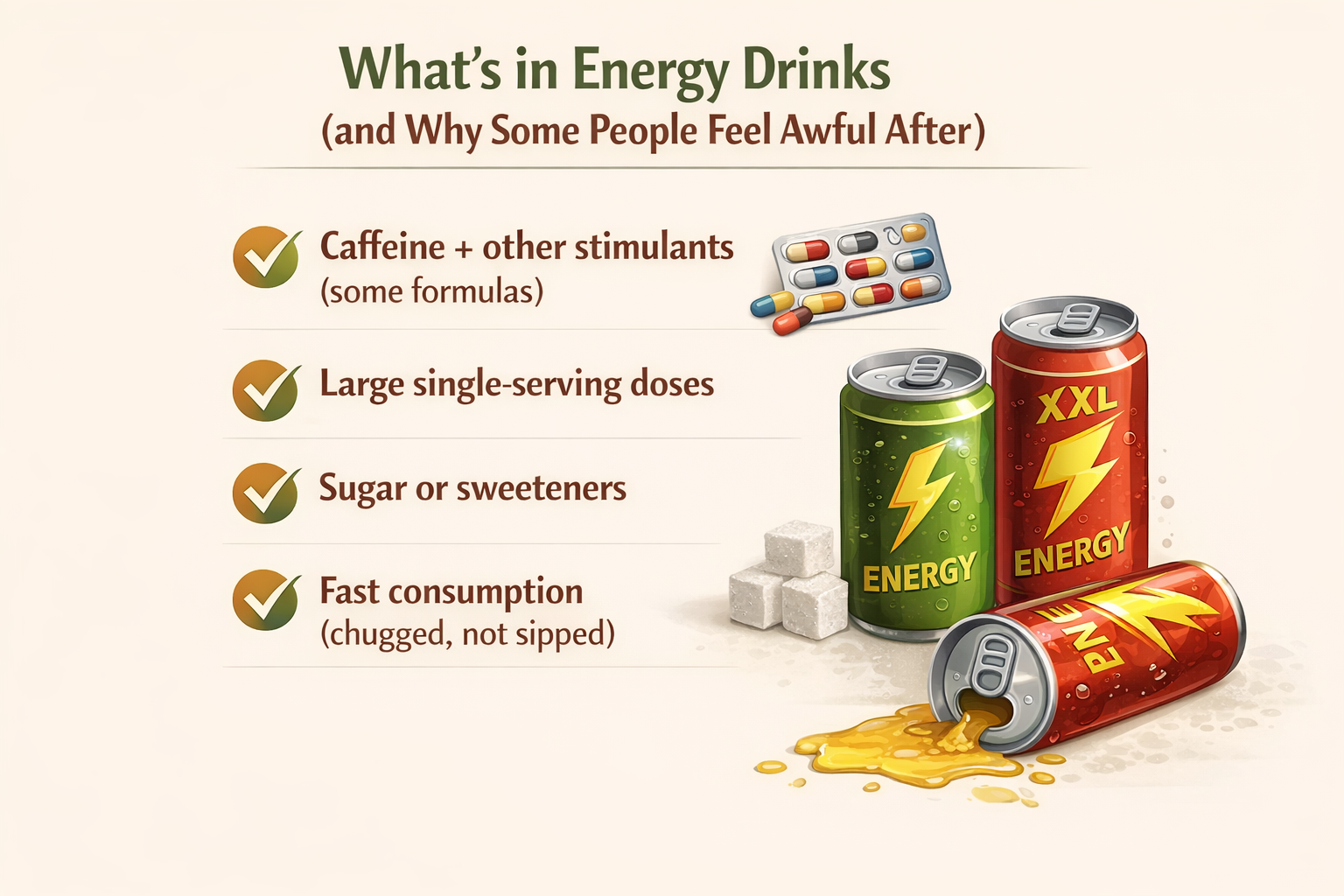
Many energy drinks include more than caffeine:
-
Caffeine + other stimulants (some formulas)
-
Large single-serving doses
-
Sugar or sweeteners
-
Fast consumption (chugged, not sipped)
The heart question people are afraid to ask:
Controlled research published in an American Heart Association journal found energy drinks significantly raised blood pressure and prolonged QTc (a marker tied to heart rhythm risk) in healthy volunteers.
That doesn’t mean “everyone is in danger,” but it explains why some people feel palpitations, chest discomfort, or anxiety after energy drinks.
5) Best Teas for Energy (Without the “Energy Drink Feeling”)
Best for morning energy
-
Black tea (classic steady)
-
Matcha (stronger—start smaller if sensitive)
-
Oolong (balanced “middle gear”)
Best for afternoon energy without wrecking sleep
-
Green tea (often lower caffeine than black tea)
-
Light oolong
-
If sleep is a struggle, switch to caffeine-free herbal tea after early afternoon.
Pro tip: Strength without bitterness
If tea tastes harsh, you may be over-steeping or using water that’s too hot for that tea type. Strong doesn’t have to mean bitter.
6) How to Switch From Energy Drinks to Tea Without Headaches (7-Day Plan)
If you use energy drinks daily, don’t quit caffeine abruptly.
Day 1–2: Replace only the morning drink
-
Swap energy drink → strong black tea or matcha
Day 3–4: Replace the midday drink
-
Swap midday energy drink → green tea or oolong
Day 5–7: Fix the late-day trap
-
If you drink caffeine late afternoon: switch → caffeine-free herbal tea + a snack with protein/fiber
If you get withdrawal headaches
Reduce caffeine gradually and hydrate more. If you have severe symptoms (racing heart, chest pain, vomiting), seek medical care.
7) Who Should Be Extra Cautious With Energy Drinks
Be cautious and talk to a clinician if you have:
-
high blood pressure, heart disease, palpitations, or arrhythmia concerns
-
anxiety/panic symptoms
-
insomnia
-
pregnancy/breastfeeding
-
stimulant medications
Kids/teens: The CDC notes the American Academy of Pediatrics says caffeine and other stimulants in energy drinks have no place in children’s and adolescents’ diets.
8) FAQ
Is tea healthier than energy drinks?
Often yes, especially unsweetened tea. Tea typically has lower caffeine per serving and avoids the “high-dose, fast-drink” pattern that can cause jitters and sleep disruption.
How much caffeine is too much in a day?
For most adults, the FDA cites 400 mg/day as an amount not generally associated with negative effects, but sensitivity varies.
Are sugar-free energy drinks safer?
They remove sugar, which can reduce crash risk, but they may still deliver high caffeine and stimulant intensity. If you’re sensitive to caffeine, sugar-free doesn’t automatically mean “gentle.”
What tea is closest to an energy drink?
Matcha and strong black tea are closest in “kick,” but usually feel smoother for many people due to slower intake and lower total caffeine per serving.
Can energy drinks affect the heart?
Research in an AHA journal found energy drinks increased blood pressure and prolonged QTc in healthy volunteers under study conditions. If you feel palpitations or chest discomfort, stop and talk to a clinician.
References
A) “Energy drinks may raise cardiovascular concerns… increase BP and prolong QTc”
-
Randomized controlled trial (high-volume energy drink vs caffeine): QTc + systolic BP increased
Fletcher EA, et al. Randomized Controlled Trial of High-Volume Energy Drink Versus Caffeine Consumption on ECG and Hemodynamic Parameters. (2017).
-
Energy drink cardiovascular review (covers HR/BP/QTc concerns)
Mandato J, et al. The Effects of Energy Drinks on the Cardiovascular System. (2025).
- Systematic review/meta-analysis: acute energy drink intake increases blood pressure in healthy adults
Gualberto PIB, et al. Acute effects of energy drink consumption on… (2024).
B) “Energy drinks can disrupt sleep” (and why caffeine timing matters)
-
Systematic review/meta-analysis: caffeine reduces total sleep time, worsens sleep efficiency, delays sleep onset
Gardiner C, et al. The effect of caffeine on subsequent sleep: A systematic review and meta-analysis. (2023).
-
Review: energy drinks associated with insomnia/jitteriness
Nadeem IM, et al. Energy Drinks and Their Adverse Health Effects. (2020).
C) “Tea tends to feel smoother / supports focus (less edgy for many people)”
You can’t claim “no jitters” universally, but you can support the tea-constituent mechanism (L-theanine + caffeine) for calmer attention:
-
Systematic review/meta-analysis: L-theanine (alone or with caffeine) affects alertness/calmness and cognition measures
Camfield DA, et al. (2014). -
Human trial: L-theanine + caffeine improves attention/task switching
Einöther SJL, et al. (2010).
D) “Tea supports hydration habits” (moderate tea isn’t meaningfully dehydrating)
-
Randomized trial: black tea hydration comparable to water (in healthy men at tested intake)
Ruxton CH, et al. (2011). -
Review: typical caffeine doses found in tea/coffee/soft drinks show no diuretic action
Maughan RJ, Griffin J. Caffeine ingestion and fluid balance: a review. (2003).
E) “Caffeine amounts vary widely” (tea vs brand vs brew method)
-
Lab analysis of brewed teas: caffeine ranged ~14–61 mg per 6–8 oz serving
Chin JM, et al. Caffeine content of brewed teas. (2008). -
-
Comprehensive safety review: discusses 400 mg/day as a commonly referenced upper level for healthy adults
Temple JL, et al. The Safety of Ingested Caffeine: A Comprehensive Review. (2017). -
Systematic review commentary: reiterates up to 400 mg/day not associated with adverse effects in healthy adults
Doepker C, et al. (2018). -
Review-style explainer: caffeine content varies across products (including energy drinks)
Antonio J, et al. Common questions and misconceptions about caffeine… (2024).
F) “400 mg/day caffeine safety note (most healthy adults; sensitivity varies)”
-
Gardiner C, et al. The effect of caffeine on subsequent sleep: A systematic review and meta-analysis. 2023.
Nadeem IM, et al. Energy Drinks and Their Adverse Health Effects. 2020.
Camfield DA, et al. Acute effects of tea constituents L-theanine, caffeine, and polyphenols on cognition and mood: systematic review/meta-analysis. 2014.