
The Mitochondria Method: Why Your Coffee Isn’t Working But We Will Show You What Will
Posted by 1st Chinese Herbal Review Team on Mar 26th 2026
The Mitochondria Method: Why Your Coffee Isn’t Working and What to Do Instead
If you feel tired even after sleep, fade hard in the afternoon, and rely on caffeine just to get through the day, your body may need more than stimulation. It may need better cellular energy support.
This guide explains what mitochondria do, why they matter for steady energy, and how Chinese herbs, nutrient-dense foods, and a simple daily routine may help support the systems behind sustainable vitality.
Quick Answer: What supports mitochondrial energy naturally?
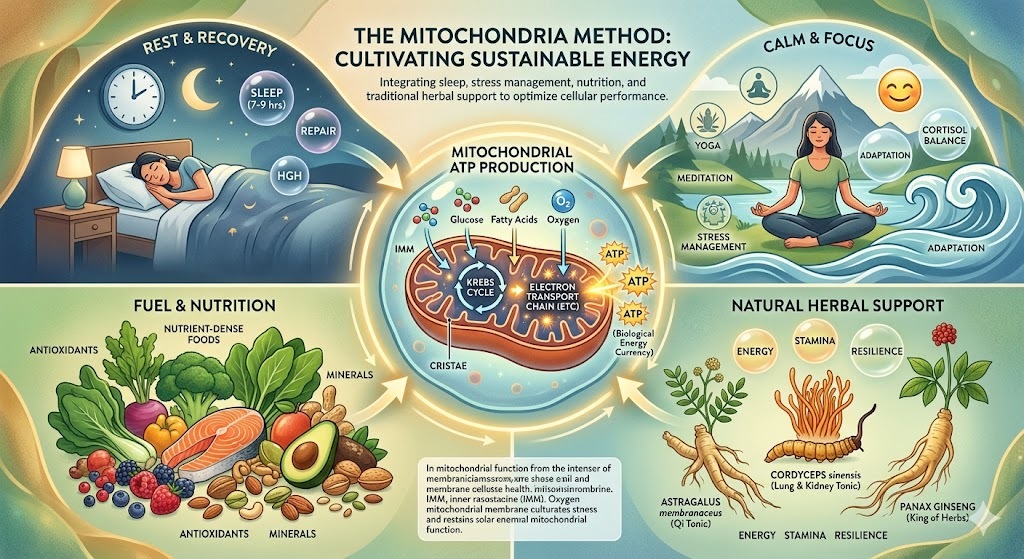
Mitochondrial energy is best supported through a combination of sleep, stress management, nutrient-dense foods, and herbs traditionally used to support energy, stamina, and resilience, such as astragalus, cordyceps, and ginseng. Mitochondria are central to ATP production, and review literature discusses how mitochondrial function is tied to energy metabolism and cellular performance.
Common Signs
- Tired even after sleep
- Afternoon energy crashes
- Brain fog or low focus
- Low stamina
- Too much dependence on caffeine
What Most People Do
- More coffee
- More sugar
- Random supplements
- Push through the fatigue
Better Approach
- Support steady energy foundations
- Use herbs consistently
- Eat for metabolic resilience
- Reduce “borrowed energy” habits
Why This Topic Matters
You do not feel “mitochondria.” You feel the downstream effect. You feel the drag, the heavy mornings, the mental haze, the afternoon crash, and the sense that your old energy is harder to reach. That is why this topic matters. It connects the science of cellular energy with the real-world experience your customers are trying to solve.
Mitochondria are core sites of ATP production in human cells, and energy metabolism depends heavily on their function. That does not mean every tired person has a single mitochondrial problem, but it does mean that supporting the body’s energy systems with better habits, better food, and a smarter herbal routine is a more useful strategy than relying on temporary stimulation alone.
What Are Mitochondria?
Mitochondria are tiny structures inside your cells that help convert nutrients and oxygen into ATP, the chemical energy your cells use to do work. They are especially important in tissues with high energy needs, including muscle, brain, and heart tissue.
In plain English, they help power the daily work of being alive. When people say they feel “run down,” “flat,” or “not like themselves,” the conversation often needs to move beyond stimulants and toward the foundations of energy production, recovery, and metabolic balance.
This is also why supporting sleep, managing stress, improving food quality, and using well-chosen herbs can matter so much. You are not just chasing a feeling. You are supporting the conditions that allow better energy to be made and used.
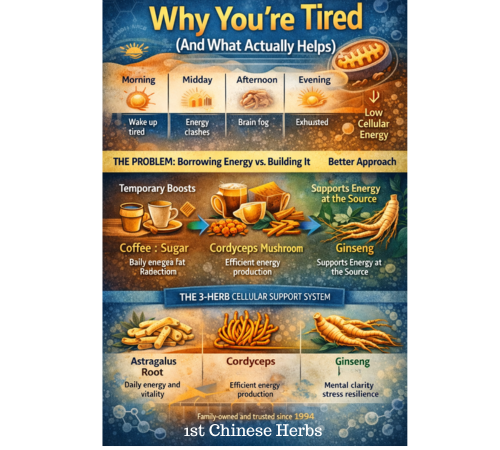
Why You’re Tired and What Actually Helps
1. The Pattern
Wake up tired. Push with caffeine. Crash by afternoon. Feel mentally dull by evening.
2. The Mistake
Temporary stimulation can mask fatigue, but it does not replace foundational support for energy production.
3. The Support Plan
Astragalus for foundation, cordyceps for stamina, ginseng for clarity, plus food, sleep, and consistency.
4. The Goal
More stable energy, better focus, fewer crashes, and less dependence on the coffee-to-collapse cycle.
Why Coffee Sometimes Stops Working
Caffeine can be useful, but it is not the same thing as rebuilding a steady energy baseline. It can improve alertness temporarily, yet many people eventually hit a point where the lift feels weaker and the crash feels worse.
That is one reason this topic resonates with so many readers. They are not asking for more stimulation. They are asking why they no longer feel steady, sharp, or durable. A better article needs to explain that difference clearly.
The more helpful approach is to support the body’s ability to create and use energy over time instead of leaning exclusively on quick fixes.
The Three-Herb Energy Support System
1. Astragalus Root (Huang Qi): Foundation Support
Astragalus is one of the best-known Qi tonics in Chinese herbal practice. It is traditionally used to support overall vitality, resilience, and everyday energy. Review literature on astragalus constituents discusses antioxidant, metabolic, and mitochondrial-related pathways, which is one reason it is often featured in modern energy-support conversations.
2. Cordyceps: Stamina and Metabolic Support
Cordyceps is widely discussed for stamina, endurance, and recovery support. Review and preclinical literature suggests cordyceps-related compounds may influence metabolic signaling, antioxidant defenses, and energy-related pathways. At the same time, human performance evidence is mixed, so it is better to describe cordyceps as supportive rather than as a guaranteed performance booster.
3. Ginseng: Focus, Stress Resilience, and Drive
Ginseng has a long history of traditional use for vitality and stress adaptation. Review literature on ginsenosides discusses antioxidant signaling, mitochondrial function, and energy metabolism. This makes ginseng a strong fit for readers who describe not only fatigue, but also poor focus and that “wired but worn out” feeling.
How These Herbs May Help
| Herb | Traditional Role | Modern Support Angle | Best Fit |
|---|---|---|---|
| Astragalus | Qi tonic | Metabolic, antioxidant, and mitochondrial pathway discussion in review literature | Daily foundation support |
| Cordyceps | Vitality and stamina support | Energy-related, antioxidant, and metabolic signaling support in preclinical and review literature | Stamina and recovery support |
| Ginseng | Adaptogenic energy support | Review literature discusses mitochondrial and oxidative-stress pathways | Focus and resilience support |
Foods That Support a Better Energy Foundation
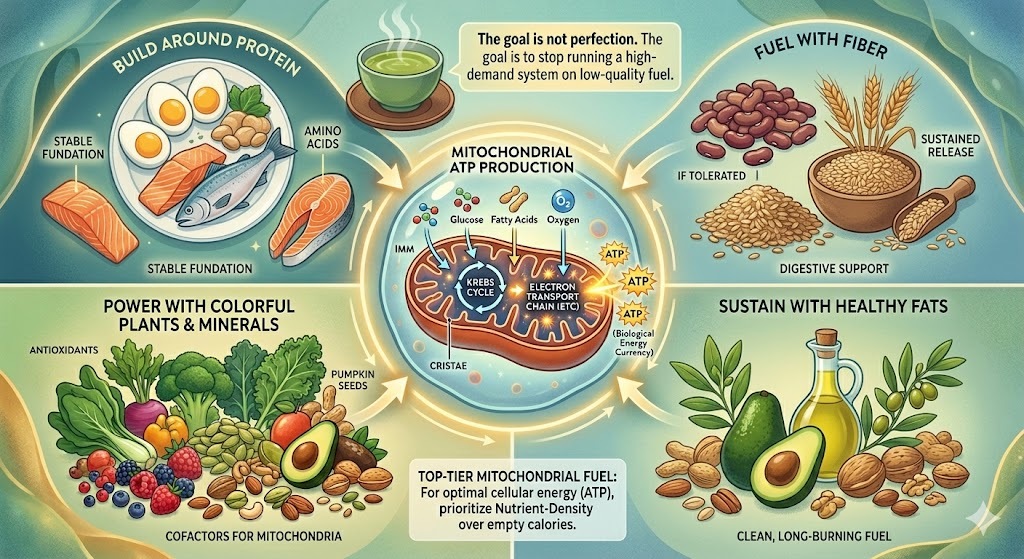
Food matters. For better energy support, build meals around protein, fiber, minerals, colorful plants, and healthy fats. Think eggs, fish, beans if tolerated, berries, leafy greens, pumpkin seeds, olive oil, avocado, and green tea.
The goal is not perfection. The goal is to stop running a high-demand system on low-quality fuel.
A Simple Daily Starting Plan
Morning
Start with astragalus tea or a simple astragalus-based formula.
Midday
Add cordyceps if stamina and afternoon drop-off are major concerns.
As Needed
Use ginseng more strategically for focus and demanding days, depending on the product and your tolerance.
Energy Timeline Graphic
Days 1–3
Some people notice that the “heavy” feeling lifts slightly and the day feels a bit more manageable.
Days 4–10
Energy may begin to feel steadier with fewer pronounced crashes.
Weeks 2–4
Stamina and day-to-day consistency often matter more than a dramatic “boost.”
1–2 Months
The goal is more dependable energy and less need to chase quick fixes.
Product Picks for an Easy Start
Astragalus Root
Best for readers who want a gentle foundation herb for daily energy support.
View AstragalusGinseng
Best for readers who want more support for mental sharpness and stress resilience.
View GinsengWhy Customers Trust 1st Chinese Herbs
- Family-owned and trusted since 1994
- Lab-tested focus on quality and consistency
- Traditional herbal knowledge paired with practical education
- Products chosen for people who want substance, not hype
FAQ
What are common signs your energy system may need support?
Common signs include feeling tired even after sleep, frequent afternoon crashes, low stamina, brain fog, and dependence on caffeine just to function normally.
How do herbs support energy naturally?
Herbs traditionally support energy by helping the body maintain better resilience, metabolic steadiness, oxygen use, and stress adaptation rather than acting as a short-lived stimulant.
What is the easiest way to start?
Many people begin with astragalus tea daily, then add cordyceps for stamina support and ginseng for focus support if needed.
Herbs vs coffee for energy
| Approach | Primary Effect |
|---|---|
| Coffee / energy drinks | Temporary stimulation |
| Herbal support | Supports a steadier energy foundation over time |
Helpful Internal Links
PubMed References
- Energy metabolism depends on proper mitochondrial function
- ATP production and compartmentalized energy metabolism
- ATP synthesis and oxidative phosphorylation overview
- Review of astragalus polysaccharides and relevant molecular pathways
- Review of ginsenosides targeting mitochondrial function
- Mitochondrial connection to ginsenosides
- Cordyceps review in metabolic-related disorders
- Preclinical study on cordyceps and endurance-related metabolic regulators
- Early study discussing Cordyceps extract and ATP-related measures
- Human endurance study showing mixed results for Cordyceps
DSHEA Disclaimer
These statements have not been evaluated by the Food and Drug Administration. This content is for educational purposes only and is not intended to diagnose, treat, cure, or prevent any disease.