What No One Tells You About Chinese Herbs (And Why Most People Use Them Wrong)
Posted by 1st Chinese Herbal Review Team on Mar 20th 2026
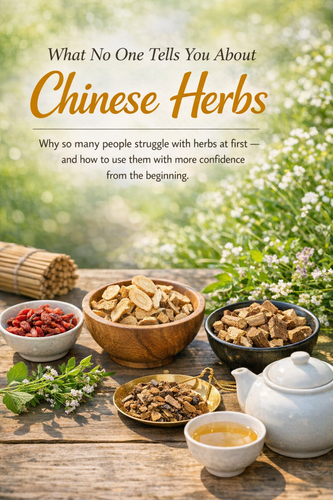
What No One Tells You About Chinese Herbs
Why so many people struggle with herbs at first — and how to use them with more confidence from the beginning.
Let’s be honest. A lot of people buy herbs with high hopes, make one cup of tea, and then wonder why the experience feels confusing, weak, or disappointing. In most cases, the problem is not that herbs “do not work.” The real issue is that the wrong herb was chosen, the preparation did not match the herb, or expectations were shaped by quick-fix wellness marketing instead of real herbal experience.
After years of working with herbs, one thing becomes very clear: herbs make much more sense once you understand how they are meant to be used. This guide is here to help you do exactly that in a way that is practical, easy to follow, and useful whether you are brand new to herbs or have been buying them for years.
Quick Answer
The biggest reason people struggle with Chinese herbs is usually not the herb itself. More often, it is a mismatch between the herb, the person, the form of the product, the preparation method, the quality of the material, and how consistently it is used.
In This Guide
Why People Get Confused About Chinese Herbs
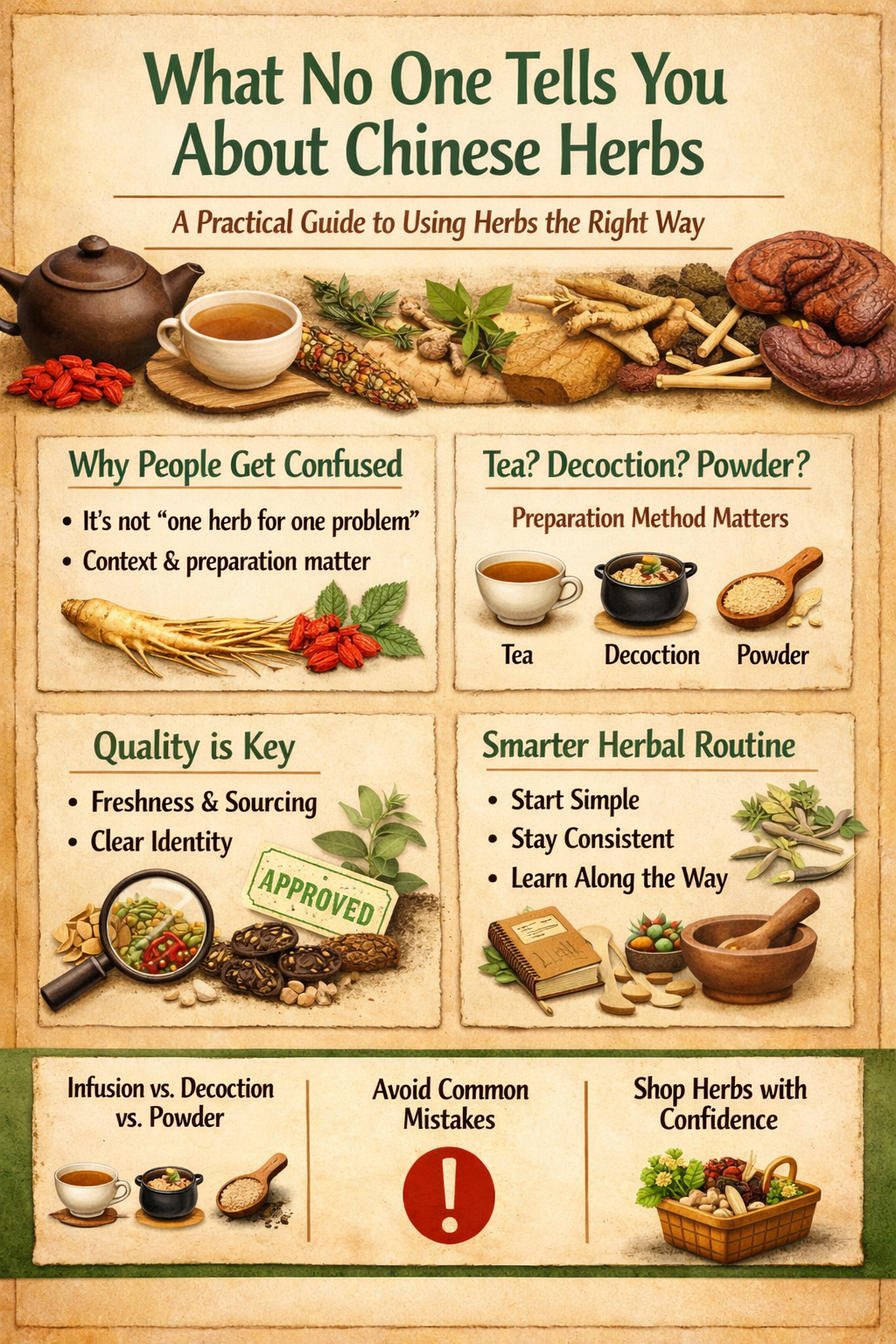
Most people begin with a very simple idea: one herb for one problem, one cup of tea, one quick result. That sounds reasonable, but herbs usually do not work that way. Chinese herbs belong to a much bigger system of understanding. The plant part matters. The form matters. The way it is prepared matters. The person using it matters. Even the same herb can feel very different depending on whether it is tea cut, powdered, sliced, extracted, or blended with other herbs.
This is where many people get discouraged. They may buy a good herb, but they treat it like a generic supplement instead of learning what kind of material it is and how it is traditionally used. Then they assume herbs are weak, confusing, or overhyped. In reality, the herb may have been fine. The method just did not match the material.
Experienced herbal buyers eventually learn this through trial and error. First-time buyers should not have to. A good herbal guide should make the learning curve much easier and save people from wasting time, money, and enthusiasm.
The Full Story Most Herbal Websites Leave Out
A lot of herb pages online repeat the same short phrases. They tell you an herb is traditional, popular, warming, cooling, or commonly used in teas. That is not enough. What people really want to know is how to make sense of the product in front of them.
For example, is this herb best steeped like a tea, or does it need a longer simmer? Is it a root, a flower, a berry, a bark, or a mushroom? Is it commonly used on its own, or is it better known as part of a formula? Is the product a tea-cut herb, a whole sliced root, a powder, or a concentrated extract? These details are not minor. They shape the entire experience.
Another common problem is tone. Some articles are so vague they tell the reader almost nothing. Others are so technical that a first-time buyer feels lost halfway through.
Shop Herbs With More Confidence
Explore quality bulk herbs, tea cuts, powders, mushrooms, and traditional options with clearer preparation guidance and educational support.
Shop Herbs Learn How to Use Bulk HerbsWhy Herb Form Matters More Than People Think
One of the biggest things consumers overlook is form. People often focus only on the herb name, but the form of the herb changes the experience dramatically. A tea-cut herb behaves differently from a chunky sliced root. A whole berry is different from a fine powder. A concentrated extract is different from a gentle daily tea.
Form affects convenience, strength, preparation time, taste, storage, and whether you are realistically going to keep using the product. One person may love the slower ritual of simmering roots on the stove. Another person may know perfectly well that if the herb is not quick and easy, it will sit untouched in the cupboard for six months.
That is why the best herb is not always the most exotic-looking or traditional-looking option. The best herb is the one you understand and will actually use properly. Herbs do not do much sitting forgotten on a shelf.
Tea vs. Decoction vs. Powder: The Difference Actually Matters
Many people use the word “tea” for everything, but not every herb is meant to be prepared the same way. Lighter herbs such as leaves and flowers are often better suited to infusion. That means you pour hot water over them and let them steep. It is simple, approachable, and perfect for many daily-use herbs.
Denser materials such as roots, bark, seeds, and mushrooms often do better with a decoction. This means simmering them longer in water. These tougher materials usually need more time and heat to make a stronger, fuller brew.
Powders are another useful option. They are popular because they are convenient, easy to measure, and often much easier to work into a busy routine. Some people truly enjoy preparing herbs the traditional way. Others want something practical they can use without turning it into a full kitchen project. Both approaches can be good. The key is choosing the right style for the herb and for your life.
| Preparation Style | Common Use | Best For | Why People Like It |
|---|---|---|---|
| Infusion | Leaves, flowers, lighter materials | Simple daily routines | Easy, familiar, and tea-like |
| Decoction | Roots, bark, seeds, mushrooms | Traditional simmered preparation | Stronger extraction for dense herbs |
| Powder | Fine milled herb or extract | Fast routines and flexible use | Convenient and easy to measure |
How Quality Changes the Experience
Not all herbs with the same name are equal in real life. Quality changes what you see, smell, prepare, and experience. One batch may look vibrant, smell fresh, and brew beautifully. Another may look dull, broken, or tired.
Quality can be influenced by handling, storage, age, cut size, cleanliness, plant identity, and how carefully the herb was sourced. This is why it is worth slowing down and asking a few smart questions before buying.
- What exactly is this product, and what form is it in?
- How is it commonly prepared?
- Is it better for steeping, simmering, blending, cooking, or encapsulating?
- Does the supplier clearly explain what you are buying?
- Do the herbs look fresh, well handled, and intentionally sourced?
Trust matters here. The best herbal companies do not make you guess. They explain the form, the plant part, the preparation style, and the practical details that help you use the product well.
Step-by-Step Guidance for Choosing Herbs Wisely
1. Know What You Are Looking At
The common name, pinyin name, plant part, and product form should all be clear. If they are not, keep looking.
2. Match the Herb to the Method
Do not guess whether to steep, simmer, blend, or cook the herb. Good guidance should be easy to find.
3. Look for Quality Signals
Freshness, handling, sourcing, and transparency often tell you a lot about the experience you can expect.
4. Choose What You Will Actually Use
The right herb in the wrong format can still be the wrong purchase if it is too complicated for your routine.
A Simple Place to Start
If you are new to herbs, do not try to build a full apothecary in one weekend. Start smaller and smarter. Choose one herb or blend you are realistically going to prepare, one article that teaches you how to use it, and one supplier you feel good about buying from again.
That may not sound glamorous, but it is how good herbal routines are actually built. Confidence grows when the process feels manageable. Once you understand one herb and one method well, the rest becomes much easier.
Frequently Asked Questions
Why do Chinese herbs seem not to work for some people?
Usually because the herb, the form, or the preparation style was not a good match for the person using it. Sometimes the issue is also inconsistent use or poor product quality.
What is the difference between an infusion and a decoction?
An infusion is usually used for lighter herbs such as leaves and flowers and is made by steeping. A decoction is more often used for dense materials such as roots, bark, seeds, and mushrooms and is made by simmering.
Are single herbs better than formulas?
Not necessarily. Single herbs can be useful, but many traditional herbal systems use combinations because herbs often work best when they support and balance one another.
How long does it take to notice a difference with herbs?
That depends on the herb, the form, the preparation method, and the person using it. Some herbs feel more noticeable right away, while others make more sense as part of a steady routine over time.
How do I choose higher quality herbs?
Look for clarity, freshness, good product descriptions, transparent sourcing, and preparation guidance that helps you understand exactly what you are buying.
Get More Herbal Guides Like This
Join our email list for educational herb tips, special offers, and practical guides that help you shop and use herbs with more confidence.
About This Guide
This guide was written for readers who want a clearer, more practical understanding of Chinese herbs without the usual confusion, fluff, or vague language. It is meant to help first-time buyers feel less overwhelmed while still offering enough real-world perspective to be useful to experienced herbal shoppers.
Disclaimer: This content is for educational purposes only and is not intended to diagnose, treat, cure, or prevent any disease. Product selections, herbal traditions, and preparation methods should be evaluated in the context of individual needs and, when appropriate, with guidance from a qualified professional.