
Why Herbs Don’t Work for You (But Work for Others): The Missing Link
Posted by 1st Chinese Herbs Research Team on Apr 13th 2026
Herbal Education Guide
Why Herbs Don’t Work for You
(But Work for Others): The Missing Link
If you have ever tried an herb that seemed to work beautifully for someone else but did nothing for you, you are not alone. This is one of the most common reasons people lose confidence in herbs too early.
Reviewed by the 1st Chinese Herbs team • Trusted since 1994 • Educational, practical, and easy to understand
Quick Answer
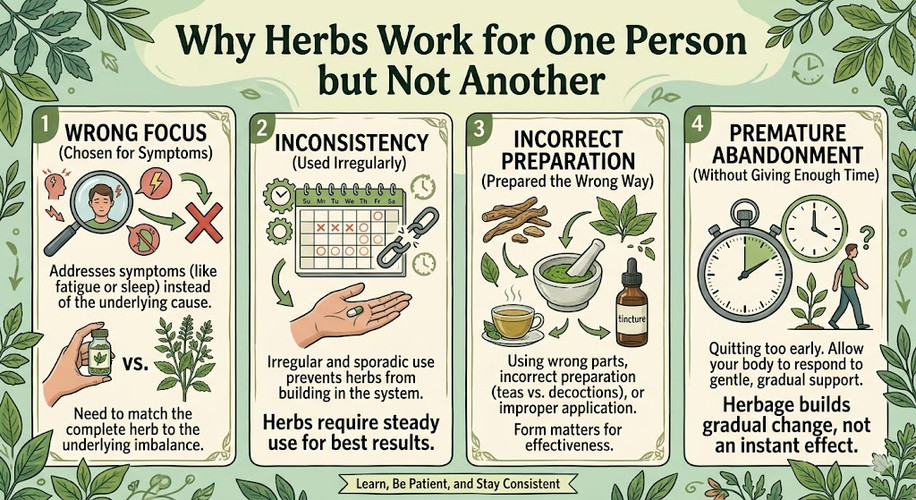
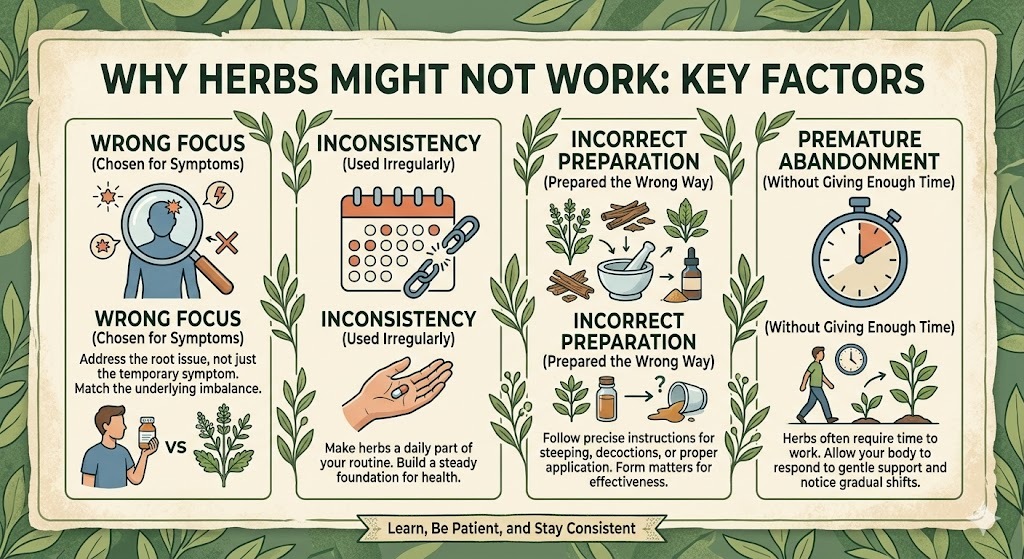
Herbs often do not work when they are chosen for the symptom instead of the underlying issue, used inconsistently, prepared the wrong way, or taken without giving the body enough time to respond.
Start Here If Herbs Have Not Worked for You Before
The simplest way to get better results is to stop guessing. Start with one main concern, choose one or two herbs that fit that direction, and use them consistently before changing course.
Why Herbs Work for One Person but Not Another
Most people choose herbs the same way they choose over-the-counter products. They notice a symptom such as fatigue, poor sleep, stress, or sluggish digestion and then look for a herb associated with that symptom. That sounds reasonable, but it often leads to disappointment because symptoms do not tell the full story.
Two people can both feel tired for very different reasons. One may feel tired because their overall energy is low. Another may feel tired because they are tense, overstimulated, and not sleeping well. A third may feel tired because digestion is sluggish and everything feels heavy. If all three people take the same herb, at least one of them is likely to feel like it did not work.
The Real Problem: Treating the Symptom Instead of the Pattern
In traditional herbal practice, the better question is not just “What helps this symptom?” but “What is happening underneath this symptom?” That shift is the missing link most websites skip.
When herbs are matched to the wrong underlying issue, they can feel weak, inconsistent, or completely ineffective. When they are matched correctly, used consistently, and prepared properly, the experience is very different.
Wrong Herb vs Better Herb Direction
| What You Feel | Common Mistake | Better Direction |
|---|---|---|
| Fatigue | Taking random “energy herbs” without asking why you are tired | Match the herb to low energy, stress, poor sleep, or sluggish digestion |
| Stress | Using stimulants when tension is the real issue | Choose a direction that supports stress balance and steadier routines |
| Sleep issues | Trying strong herbs without looking at restlessness, dryness, or emotional tension | Choose herbs that fit the type of sleep problem you are having |
| Digestion problems | Taking random digestive aids without looking at heaviness, stress, or weak appetite | Match the herb to bloating, sluggishness, or stress-sensitive digestion |
The Four Most Common Reasons Herbs Feel Like They Do Not Work
First, the herb does not match the underlying issue. This is the biggest reason people get weak results. A symptom alone is not enough information.
Second, the herb is not used consistently enough. Herbs are rarely a one-time answer. Most are used as part of a routine.
Third, the herb is not prepared correctly. Roots, bark, leaves, flowers, powders, and extracts do not all behave the same way.
Fourth, absorption is poor. Digestion, meal timing, herb form, and routine all influence how well the body responds.
How to Use Herbs Correctly So You Actually Feel a Difference
The simplest approach is usually the best. Start with one or two herbs that clearly match your situation. Use them every day. Prepare them properly. Stay with them long enough to evaluate what your body is doing before changing direction.
If your fatigue is related to low energy, herbs like Astragalus Root (Huang Qi) are often used in traditional herbal practice.
If stress and tension are affecting how you feel, herbs such as Chai Hu (Bupleurum Root) are commonly discussed.
For sleep-related concerns, Suan Zao Ren (Ziziphus Seed) is frequently used in traditional nighttime routines.
If dryness or overheating is part of the picture, Goji Berries (Gou Qi Zi) are often included in supportive formulas.
When digestion feels sluggish or heavy, Chen Pi (Aged Tangerine Peel) is commonly used in traditional herbal approaches.
Absorption: The Overlooked Factor That Changes Everything
Even the right herb can feel disappointing if your body is not processing it well. Digestion strength, herb form, preparation method, and consistency all affect absorption. That is one reason warm teas, proper decoctions, and regular daily use often feel more effective than random use.
Why Most People Quit Too Early
Many people try an herb for a few days, feel no dramatic shift, and decide it does not work. In reality, herbs are often used over time. The goal is not always an instant jolt. It is often steadier support that builds with consistency.
Simple Starter Combinations
If you want a more practical starting point, many people begin with simple combinations like these:
Energy support: Astragalus + Reishi
Stress balance: Chai Hu + Albizia
Sleep support: Suan Zao Ren + Bai Zi Ren
Digestive support: Chen Pi + Atractylodes
Build Your Herbal Routine the Right Way
Most people do not need more herbs. They need the right herbs, used in the right way, for the right reason.
Start here:
- Find herbs based on your situation
- Learn how to use herbs properly
- Download the herbal starter guide
Keep it simple. Stay consistent. That is when herbs start to make sense.
Why Trust Our Herbal Guidance
We have been sourcing and providing herbs since 1994, with a focus on quality, consistency, and education. Our goal is not just to sell herbs, but to help customers understand how to use them with more confidence and less guesswork.
Frequently Asked Questions
Why don’t herbs work for me?
Herbs may not work if they are not matched to the underlying issue, used inconsistently, or prepared incorrectly.
Why do herbs work for some people and not others?
People can have the same symptom for different reasons. Herbs work best when they are matched to the person, not just the symptom.
How long do herbs take to work?
Many herbs are used consistently over time. It is common for the response to build gradually rather than appear instantly.
Does absorption affect how herbs work?
Yes. Digestion, preparation method, herb form, and consistency all affect how well herbs are absorbed and used by the body.
What is the best way to start using herbs?
Start with one or two herbs that match your main concern, use them consistently, and keep the process simple enough to follow.
Scientific & Educational References
These references support the article’s educational points about individualized response, combinations, absorption, and system-level effects.
- Ginseng in traditional and modern context
- Combination effects of ginseng and astragalus
- Review of Astragalus membranaceus
- Bioavailability and formulation review
- Astragalus and multi-system biological effects
Important Note: These statements have not been evaluated by the Food and Drug Administration. These products are not intended to diagnose, treat, cure, or prevent any disease.
Energy & Vitality Starter Bundle
If you’re not sure where to start, this bundle gives you a simple, effective herbal routine without the guesswork.
What’s Included
- Astragalus Root
- Codonopsis Root
- Goji Berries
Why These Work Together
These herbs are commonly combined to support overall energy and balance.
How to Use
Use daily as tea or decoction. Start simple and stay consistent.
Who This Is For
This bundle is ideal for those looking to build a steady herbal routine.
Start simple. Stay consistent. That’s when herbs begin to make sense4