

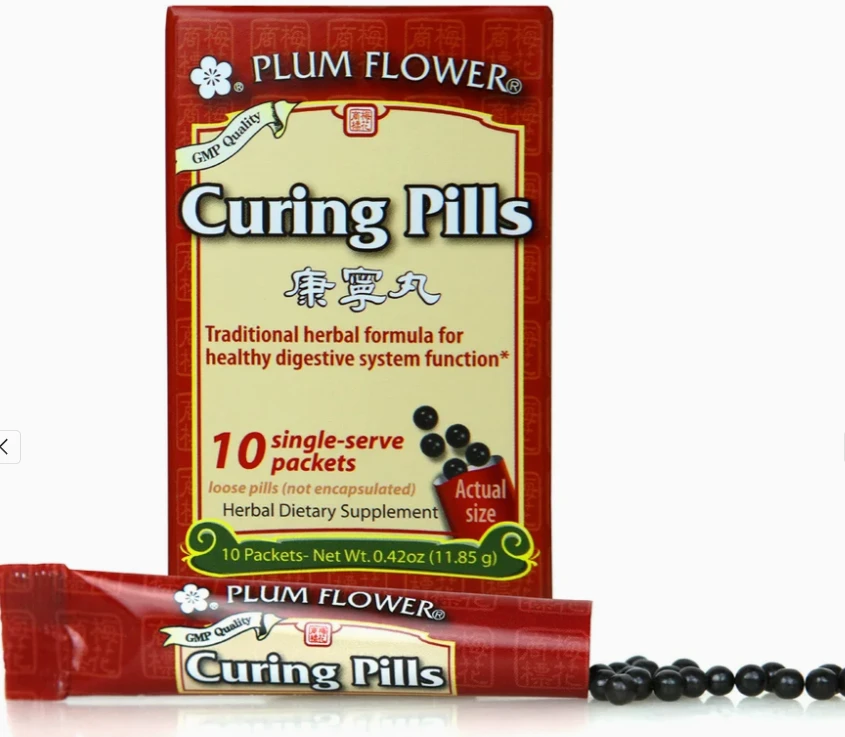
Curing Pills – Kang Ning Wan – Plum Flower – 10 Stick Packs
A convenient traditional Chinese herbal formula used in Traditional Chinese Medicine for patterns involving digestive stagnation, Dampness, and disrupted digestive Qi.
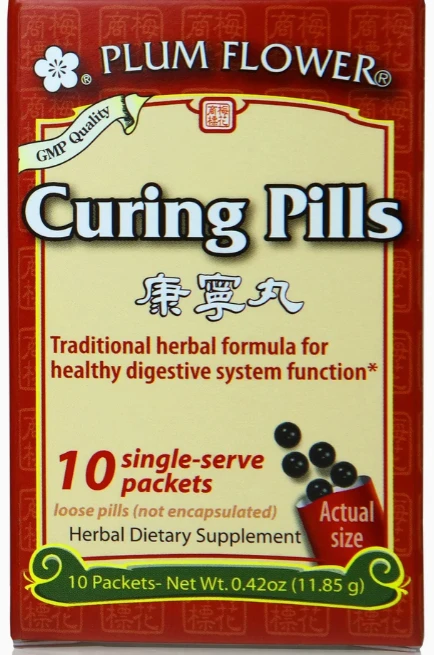
Curing Pills, traditionally known as Kang Ning Wan, combine 15 traditional Chinese herbal ingredients in convenient individual stick packs. The formula includes herbs traditionally used to support digestion, transform Dampness, move Qi, and address Food Stagnation.
This is an especially convenient formula to keep on hand because each box contains 10 individually packaged sticks. There is no measuring, brewing, or preparation required.
What Are Curing Pills?
Curing Pills (Kang Ning Wan), sometimes called the “Pill of Happy Recovery,” are a traditional Chinese herbal formula commonly associated with digestive patterns involving Food Stagnation, Dampness, and disrupted Qi.
In Traditional Chinese Medicine, Food Stagnation describes a pattern in which food is not believed to be moving and transforming efficiently through the digestive system. Dampness is another traditional TCM concept often associated with feelings of heaviness, fullness, sluggish digestion, or digestive imbalance.
Rather than relying on a single digestive herb, Kang Ning Wan combines herbs with several complementary traditional actions:
- Supports healthy digestion
- Transforms Dampness
- Addresses Food Stagnation
- Regulates digestive Qi
- Supports the Spleen in traditional Chinese herbal theory
- Helps harmonize the digestive system
These are traditional Chinese herbal uses and TCM pattern descriptions. They are not claims that Curing Pills diagnose, treat, cure, or prevent gastrointestinal disease.
 Product Details at a Glance
Traditional Name: Kang Ning Wan
Common Name: Curing Pills
Brand: Plum Flower
SKU: 13966I
Form: Prepared Chinese herbal pills in individual stick packs
Package Size: 10 stick packs per box
Label Directions: 1 packet, 3 times per day as needed
Formula Size: 15 traditional herbal ingredients
Origin: China
Preparation Required: None — take according to the packet directions
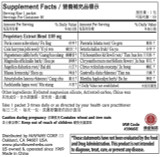
Allergen Information: Contains tree nuts and wheat. Shen Qu (Massa fermenta) is processed with wheat and may contain gluten proteins.
What's in Curing Pills?
Kang Ning Wan contains 15 traditional herbal ingredients. Each ingredient contributes a different function to the overall formula according to traditional Chinese herbal theory.
| Pin Yin | Botanical / Ingredient | Traditional Role in the Formula |
|---|---|---|
| Fu Ling | Poria cocos fungus | Traditionally strengthens the Spleen and helps drain Dampness, supporting the formula's overall digestive balance. |
| Yi Yi Ren | Coix lacryma-jobi seed | Traditionally strengthens the Spleen and promotes the resolution of Dampness. |
| Huo Xiang | Pogostemon cablin herb | Aromatic herb traditionally used to transform Dampness and harmonize the digestive system. |
| Hou Po | Magnolia officinalis bark | Moves Qi and transforms Dampness; traditionally included when digestive stagnation is associated with fullness or distention. |
| Bai Zhi | Angelica dahurica root | Aromatic, dispersing herb that contributes to the formula's traditional action of addressing Dampness and stagnation. |
| Shen Qu | Massa fermenta | A traditional fermented ingredient used specifically to support food digestion and address Food Stagnation. |
| Cang Zhu | Atractylodes lancea rhizome | Traditionally dries Dampness and strengthens the Spleen, making it an important part of the formula's digestive strategy. |
| Mu Xiang | Aucklandia lappa root | Regulates digestive Qi and traditionally helps restore movement when Qi has become stagnant. |
| Ge Gen | Pueraria lobata root | Traditionally generates fluids and supports the raising and functioning of Spleen Qi. |
| Gu Ya | Setaria italica fruit | Traditionally supports digestion and is particularly associated with Food Stagnation involving grains and starchy foods. |
| Tian Hua Fen | Trichosanthes kirilowii root | Traditionally clears Heat and generates fluids, helping balance the warmer and drying herbs in the formula. |
| Ju Hua | Chrysanthemum morifolium flower | A cooling herb traditionally used to clear Heat and balance the formula's aromatic and warming ingredients. |
| Ju Hong | Citrus rubrum peel | Traditionally regulates Qi and transforms Dampness and Phlegm, complementing the formula's digestive herbs. |
| Tian Ma | Gastrodia elata rhizome | Traditionally calms internal Wind and helps harmonize the formula when digestive imbalance occurs alongside other TCM pattern features. |
| Bo He | Mentha haplocalyx herb | Provides a cooling, dispersing action and traditionally helps promote the smooth movement of Qi. |
Other Ingredients: Hydrated magnesium silicate, activated carbon, and China wax.
How Does the Formula Work as a Whole?
Kang Ning Wan approaches digestive imbalance from several directions within traditional Chinese herbal theory.
Shen Qu and Gu Ya are included specifically for their traditional role in helping address Food Stagnation. Huo Xiang, Cang Zhu, Fu Ling, and Yi Yi Ren concentrate on transforming or draining Dampness and supporting the Spleen.
Hou Po, Mu Xiang, and Ju Hong help regulate Qi and encourage movement, while the remaining herbs help balance, cool, harmonize, or support the overall combination.
This multi-herb approach is one of the reasons Kang Ning Wan is different from simply taking one digestive herb by itself.
What Do “Food Stagnation” and “Dampness” Mean?
If you are new to Chinese herbalism, these terms can sound confusing.
Food Stagnation is a TCM pattern describing food that is believed to be lingering rather than being efficiently transformed and moved through the digestive system. Traditional practitioners may associate the pattern with sensations such as uncomfortable fullness or digestive sluggishness after eating.
Dampness is another TCM concept. It is traditionally associated with heaviness, sluggishness, fullness, and inefficient transformation of fluids and food.
These terms describe traditional Chinese medicine patterns and are not conventional medical diagnoses.
Why Choose the Stick-Pack Curing Pills?
The stick-pack format makes this product particularly convenient. Instead of carrying a full bottle of teapills, you can take individual packets with you.
Each box contains 10 individual stick packs, making them easy to store in a purse, travel bag, desk, or overnight bag.
The herbs have already been prepared into pills, so there is no measuring, simmering, brewing, or straining.
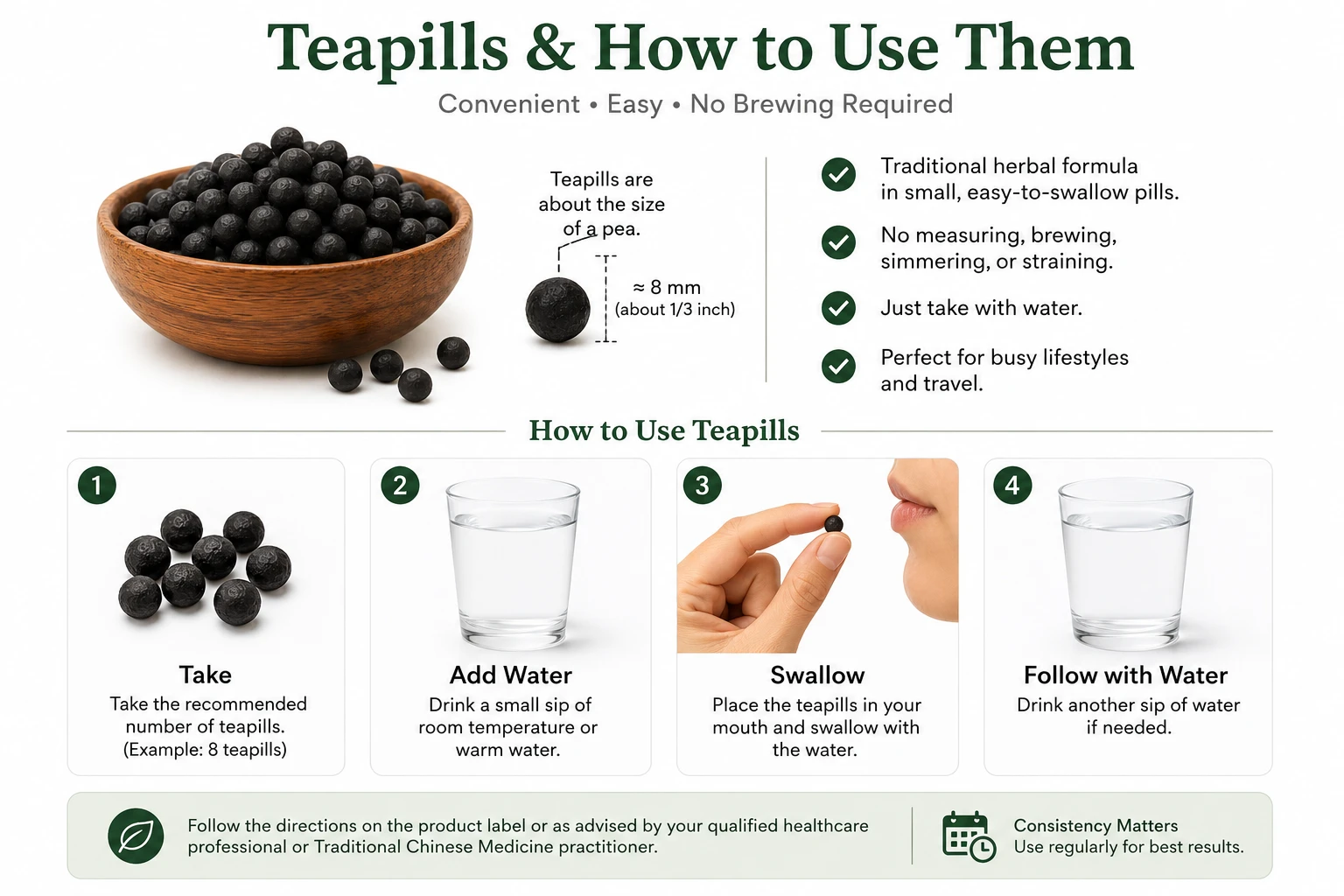 How Do I Take Curing Pills?
The directions on the packet state:
Take 1 packet, 3 times per day as needed, or as directed by your healthcare professional.
Because this product is packaged differently from standard Plum Flower 200-count teapill bottles, follow the directions specifically printed on the Curing Pills packet rather than general teapill dosage instructions.
Do not exceed the product directions unless instructed by a qualified healthcare professional.
Who Should Use Extra Caution?
Do not use during pregnancy or while nursing unless specifically directed by a qualified healthcare professional.
Allergen Warning: This product contains tree nuts and wheat. Shen Qu (Massa fermenta) is processed with wheat and may contain gluten proteins.
Talk with your physician, pharmacist, or qualified herbal practitioner before use if you take prescription medications, have a chronic medical condition, are preparing for surgery, or regularly use other herbal supplements.
Persistent or severe abdominal pain, repeated vomiting, blood in the stool or vomit, dehydration, high fever, or persistent gastrointestinal symptoms warrant medical evaluation rather than self-treatment with an herbal product.
California Proposition 65 Warning
Frequently Asked Questions About Curing Pills
What are Curing Pills?
Curing Pills, traditionally called Kang Ning Wan, are a 15-ingredient traditional Chinese herbal formula. In TCM, the formula is associated with digestive patterns involving Food Stagnation, Dampness, and disrupted Qi.
Why are they called the “Pill of Happy Recovery”?
“Pill of Happy Recovery” is one of the traditional English names associated with Kang Ning Wan. It should not be interpreted as a claim that the product cures a medical condition.
Are Curing Pills used for digestion?
Yes. Kang Ning Wan is traditionally associated with digestive balance in Chinese herbal practice, particularly TCM patterns described as Food Stagnation, Dampness, and Qi stagnation.
How many herbs are in Curing Pills?
The formula contains 15 traditional herbal ingredients, including Poria, Coix seed, Patchouli, Magnolia bark, Atractylodes, Aucklandia, fermented Shen Qu, Pueraria, Gastrodia, and other traditional herbs.
How do I take the Curing Pills stick packs?
The packet directions state 1 packet, 3 times per day as needed. Follow the directions printed on the product you receive or the instructions provided by your qualified healthcare professional.
How many packets are in a box?
Each box contains 10 individual stick packs.
Do I have to brew the herbs?
No. The formula has already been prepared into pills and packaged into individual sticks. No brewing or decoction preparation is necessary.
Do Curing Pills contain wheat?
Yes. The product's allergen information states that it contains tree nuts and wheat. Shen Qu (Massa fermenta) is processed with wheat and may contain gluten proteins.
Can I take Curing Pills with medications?
Because Kang Ning Wan contains 15 herbal ingredients, people taking prescription medications should discuss its use with their physician, pharmacist, or qualified herbal practitioner before use.
Curing Pills – Traditional Digestive Formula in Convenient Stick Packs
Kang Ning Wan combines 15 traditional herbal ingredients selected to work together according to Chinese herbal theory. Herbs traditionally associated with Food Stagnation are combined with herbs that transform Dampness, regulate Qi, support the Spleen, and balance the overall formula.
The convenient stick-pack format makes it particularly easy to keep the prepared formula close at hand without carrying a full bottle or preparing an herbal decoction.
10 individual stick packs • 15-herb traditional formula • No brewing required
Research on Herbs Found in Curing Pills
Several herbs found in Curing Pills (Kang Ning Wan) have been studied in modern scientific research. The links below are provided for educational purposes and do not mean that Curing Pills have been proven to diagnose, treat, cure, or prevent any disease.
Fu Ling (Poria cocos)
PubMed: Poria cocos – Traditional Uses, Phytochemistry & Pharmacology
Huo Xiang (Pogostemon cablin)
PubMed: Pogostemon cablin – Traditional Uses, Phytochemistry & Pharmacology
Huo Xiang (Pogostemon cablin)
PubMed: Pogostemon cablin – Pharmacological Activities & Mechanisms
Hou Po (Magnolia officinalis)
PubMed: Magnolia officinalis – Gastrointestinal Research & Pharmacological Activities
Hou Po (Magnolia officinalis)
PubMed: Magnolia officinalis – Phytochemistry & Pharmacological Activities
Disclaimer: These statements have not been evaluated by the Food and Drug Administration. This product is not intended to diagnose, treat, cure, or prevent any disease. Information concerning traditional uses refers to Traditional Chinese Medicine theory and is provided for educational purposes only. Consult a qualified healthcare professional before using dietary supplements, particularly if you have a medical condition, take medications, are pregnant, nursing, or are preparing for surgery.