
Written by: 1st Chinese Herbs Learning Center | Herbal Education Team
Reviewed by: TCM Practitioner
Last Updated: November 2025
In Traditional Chinese Medicine (TCM), strength is not measured by muscle alone — but by the foundation that holds us upright: the bones, the spine, and the steady energy that carries us gracefully through life.
Among herbs used to nourish that foundation, Du Zhong (Eucommia Bark) has stood as a trusted ally for centuries. Revered in classical herbal texts and now gaining renewed interest in modern wellness circles, Du Zhong supports:
Lower-back and knee strength (TCM lens)
Tendons and ligaments
Steady energy and structural vitality
Warmth and foundational resilience, especially in cooler seasons
Whether you are curious about traditional uses, preparing for winter nourishment, or seeking a time-tested herb to support a strong and active life, Eucommia offers gentle, grounded support rooted in ancient wisdom and affirmed by emerging research.
| Category | Details |
|---|---|
| Name | Eucommia Bark (Du Zhong) |
| TCM Category | Kidney & Liver Tonic • Strengthens Sinews & Bones |
| Taste / Temperature | Sweet, Warm |
| Meridians | Kidney, Liver |
| Traditionally Used For | Lower-back/knee support, tendon strength, foundational vitality |
| Modern Interest | Longevity support • mobility • healthy aging • active lifestyle resilience |
| Best Season | Late Fall & Winter (Yang nourishing seasons) |
| Common Forms | Bark slices, powder, teapills, herbal formulas |
Traditional Guidance:
Du Zhong supports the foundation — like strengthening the roots of a tree.
In TCM philosophy, the Kidneys govern bones, and the Liver nourishes sinews. Du Zhong is one of the few herbs that supports both systems:
Kidney Yang Tonic → steady warmth, stability, grounding energy
Liver Support → tendon & ligament nourishment
The result? A herb favored for strength, structure, endurance, and graceful aging.
This makes it particularly valued for:
✔ Active adults & athletes
✔ Healthy aging & mobility
✔ Walkers, hikers, gardeners
✔ Winter herbal routines
✔ Gentle foundational support over time
Du Zhong is first recorded in classical texts such as the Shennong Bencao Jing. Historically, it was used for those who felt:
Weakness in the lower back or legs
Fatigue from long days of physical work
Coldness in the lower body (TCM Yang deficiency signs)
Need for structural reinforcement over time
In traditional households, it was often simmered with bone broth or longevity soups through winter.
Modern studies align with traditional observations.
| Focus | PubMed-Supported Insight |
|---|---|
| Antioxidant & anti-inflammatory | PMC review of broad protective effects |
| Bone metabolism support | Eucommia compounds regulate bone remodeling via OPG/RANKL |
| Blood pressure modulation | Leaf extract reduced systolic BP in CKD individuals |
| Kidney oxidative stress studies | Protective effects in high-purine diet model |
| Bioactive compounds | Iridoids, lignans, polysaccharides researched for health effects |
Note: Research supports traditional understanding but does not diagnose, treat, or cure disease.
Warms and nourishes Kidney Yang → foundational strength
Helps Liver support tendons → movement, flexibility
Supports healthy connective tissue response
Encourages joint comfort & mobility lifestyle maintenance
Promotes antioxidant defense and cellular resilience
Think of it as herbal training for your structural foundation — gentle, consistent, and cumulative.
Feeling cold/weak in lower back or legs
Winter tonic season
Desk workers needing spine resilience
Athletes or active movers
Healthy aging wellness routines
Warm nourishing foods
Walking or Tai Chi
Winter herbal soups, teas, broths
How to Use Du ZhongSimmer 10–15g bark slices for 30–45 minutes.
Enhanced Winter Version:
Add ginger, goji berries, and black sesame.
Mix 1–3g daily into warm water or broth.
As directed (commonly 8–12 teapills, 2–3x/day).
Add bark to bones or mushroom broth and simmer 1–2 hours.
Gentle tonics work gradually — most notice steady support over weeks.
Ingredients
10g Du Zhong bark
6–8 slices fresh ginger
½ cup goji berries
Bone broth or veggie broth
Optional: jujube dates, shiitake, black sesame
Simmer 60–90 minutes.
Sip warm throughout cold months.
| Purpose | Pair With |
|---|---|
| Deep foundational strength | Xu Duan |
| Tendon flexibility | Gou Ji |
| Warm Yang support | Rou Cong Rong, Cinnamon |
| Classic formula | Du Huo Ji Sheng Tang |
Shop these herbs at 1st Chinese Herbs.
Pregnant people (traditional “calm fetus” use — needs qualified guidance)
Individuals sensitive to latex
Those on BP or medical therapies
Each preparation of Eucommia bark supports a different lifestyle and intention. Selecting the right format ensures you receive the most benefit, in a way that fits smoothly into your daily routine.
Best for: Traditional herbal users, broth makers, tea ritual lovers
If you enjoy slow herbal preparation, whole bark offers the deepest traditional experience. Simmering it gently releases a warm, grounding essence ideal for tonic soups and long-brewed teas.
Benefits:
Most classical preparation
Excellent for winter nourishment
Perfect for soups, stews, and long infusions
Allows full sensory connection to the herb
Ideal for:
Those who love the “brew and sip” ritual and seasonal nourishing broths.
Best for: Busy schedules, daily wellness habits
Powdered Du Zhong blends seamlessly into warm water, broths, smoothies, or congee. It’s one of the easiest ways to enjoy a consistent herbal routine without cooking time.
Benefits:
Quick and easy to use
Measured dosing
Works well in morning drinks or soups
Supports consistent, long-term use
Ideal for:
Anyone wanting efficient, everyday support with minimal preparation.
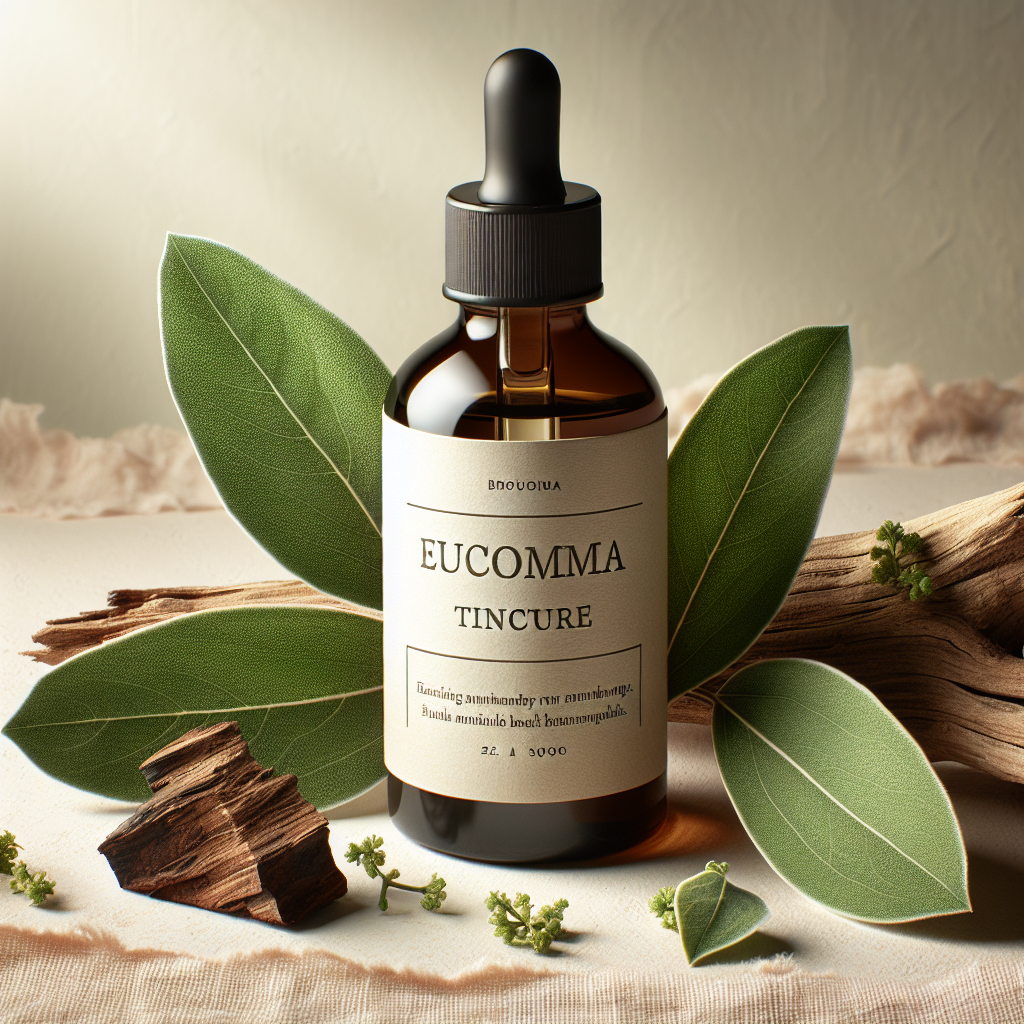
Liquid Extract (Tincture)Best for: Fast, flexible use and deeper concentration
Liquid Du Zhong extracts offer concentrated support in an easy-to-absorb format. Dosed by dropper, they are ideal for those who prefer strong tonal support without long brewing times.
Benefits:
Concentrated, efficient delivery
Fast to take; suitable for layering with other tinctures
Precise control of dose
Ideal for:
Experienced herbal users, tincture enthusiasts, and those seeking a compact, potent form.
To preserve the vitality and aroma of your Du Zhong:
Store in a cool, dry place
Keep away from heat, sunlight, and moisture
Seal tightly after each use
For powders and bark, a glass airtight jar is ideal
Avoid refrigeration unless humidity is high
Tip: Write the opening date on the package — best quality is enjoyed within 12–18 months.
For seasonal herbal tonics, many choose:
Whole bark in winter for deep nourishment
Powder or tincture during busy months
Teapills for travel or everyday maintenance
Herbal wellness should flow with your lifestyle — not overwhelm it.
Is Du Zhong warming?
Yes — gentle warming, ideal in cooler months.
How long until I notice effects?
Traditionally, 4–12 weeks for layered benefits.
Can I take it daily?
Traditionally, yes, particularly in winter — follow practitioner guidance.
As you sip Du Zhong tea, imagine warmth gathering in the lower back and legs.
With each breath, feel the body supported — rooted, steady, ready.
Eucommia Bark, known in Traditional Chinese Medicine as Du Zhong, is a respected tonic herb used for centuries to support lower-back strength, knee comfort, tendon health, and foundational vitality. Traditionally associated with nourishing the Kidney and Liver systems, Du Zhong is valued for its steady warming nature and its role in strengthening the body's structural foundation — much like strengthening the roots of a tree to support lifelong resilience.
Modern interest aligns with classical use: emerging research highlights Eucommia’s antioxidant, connective-tissue-supportive, and stress-adaptation properties, making it a natural choice for those seeking gentle support for mobility, healthy aging, and seasonal nourishment.
This herb is most often integrated during colder months, when warmth and structural support are emphasized in TCM. Du Zhong can be prepared as a traditional decoction, blended into daily powders and broths, taken in convenient teapill form, or enjoyed as a concentrated extract — allowing flexibility for every lifestyle.
Eucommia is not a quick-acting stimulant; instead, it works gradually and cumulatively, rewarding consistent use with grounded strength and sustainable vitality. Best suited for active individuals, walkers, older adults, and those who value long-term nourishment, Du Zhong remains a timeless herbal ally for winter wellness and whole-body support.
References
Ethnopharmacology, phytochemistry & pharmacology of Eucommia ulmoides
“Eucommia ulmoides Oliv.: ethnopharmacology, phytochemistry and pharmacology of an important traditional Chinese medicine.”
J Ethnopharmacol. 2013;151:78-92. PubMed
Key points: Identifies about 112 compounds in Eucommia, including lignans and iridoids; discusses broad pharmacological actions (hypertension, osteoporosis, sexual dysfunction, etc.) — supports your “why it works” section.
Effects of Eucommia ulmoides extract on longitudinal bone growth in adolescent rats
“Effects of Eucommia ulmoides extract on longitudinal bone growth rate and growth plate height in adolescent female rats.”
Bone & Joint Res. 2014;3(6):234-241. PMID: 25087723. PubMed
Key points: Demonstrated increased bone-growth rate, growth plate height, and increased BMP-2 & IGF-1 expressions — supports bone / tendon / “structural foundation” claims.
Review: Advances in Eucommia ulmoides polysaccharides
“Advances in Eucommia ulmoides polysaccharides.”
Carbohydr Polym. 2024;306:120601. PMID: 39221141. PubMed
Key points: Focus on extraction, structural characteristics, pharmacological activities of bark/leaf polysaccharides — supports your “how it works” deeper chemical mechanism section.
Exploratory single-arm clinical trial: Eucommia ulmoides leaf extract and blood pressure in CKD
“An exploratory single-arm clinical trial on Eucommia Ulmoides Oliv. leaf extract in mild chronic kidney disease participants: effects on systolic blood pressure.”
Clin Hypertens. 2024;30:12. PMID: 40575587. PubMed
Key points: Showed decrease in systolic BP in CKD patients after use — supports the “modern research” section under circulation/yang support.
Traditional application & modern pharmacological research of Eucommia ulmoides
“Traditional application and modern pharmacological research of Eucommia ulmoides Oliv.”
Chinese Medicine. 2021;16(1):120. PMID: 34362420. PubMed
Key points: Comprehensive review of traditional uses (lumbar pain, tendon strength) + modern pharmacology (bone, metabolism, neuroprotection) — ideal for your “history & tradition” and “modern research” linkage.
Effect of Eucommia ulmoides extract on articular cartilage
“Effects of an aqueous extract of Eucommia on articular cartilage in osteoarthritis model.”
Evid Based Complement Alternat Med. 2013;2013:892364. PMC article. PMC
Key points: Supports the use of Du Zhong for joints, cartilage, and mobility — directly supports “joint/tendon” sections.