

Hawthorn Berry (Shan Zha): Benefits, Tea, Uses, Taste & Certified Organic Cut Hawthorn Fruit
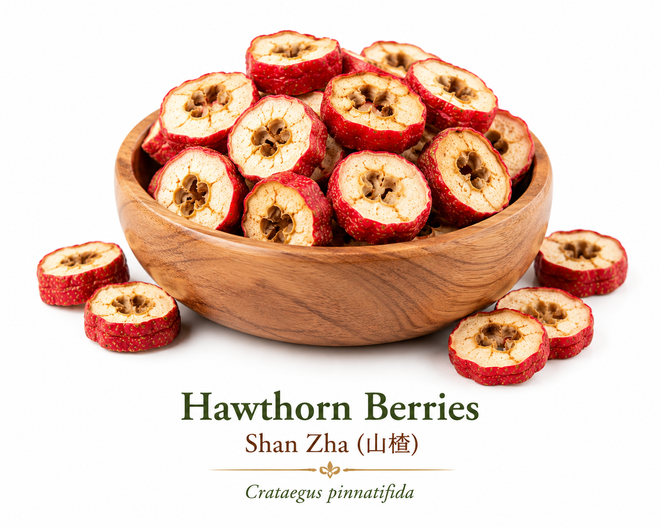
Certified Organic Hawthorn Berry (Shan Zha) in cut form by Nuherbs — perfect for tea, decoctions, herbal blends, and traditional post-meal wellness routines.
Some herbs are earthy and bitter. Some are warming and spicy. And some are bright, fruity, tart, and surprisingly enjoyable to drink.
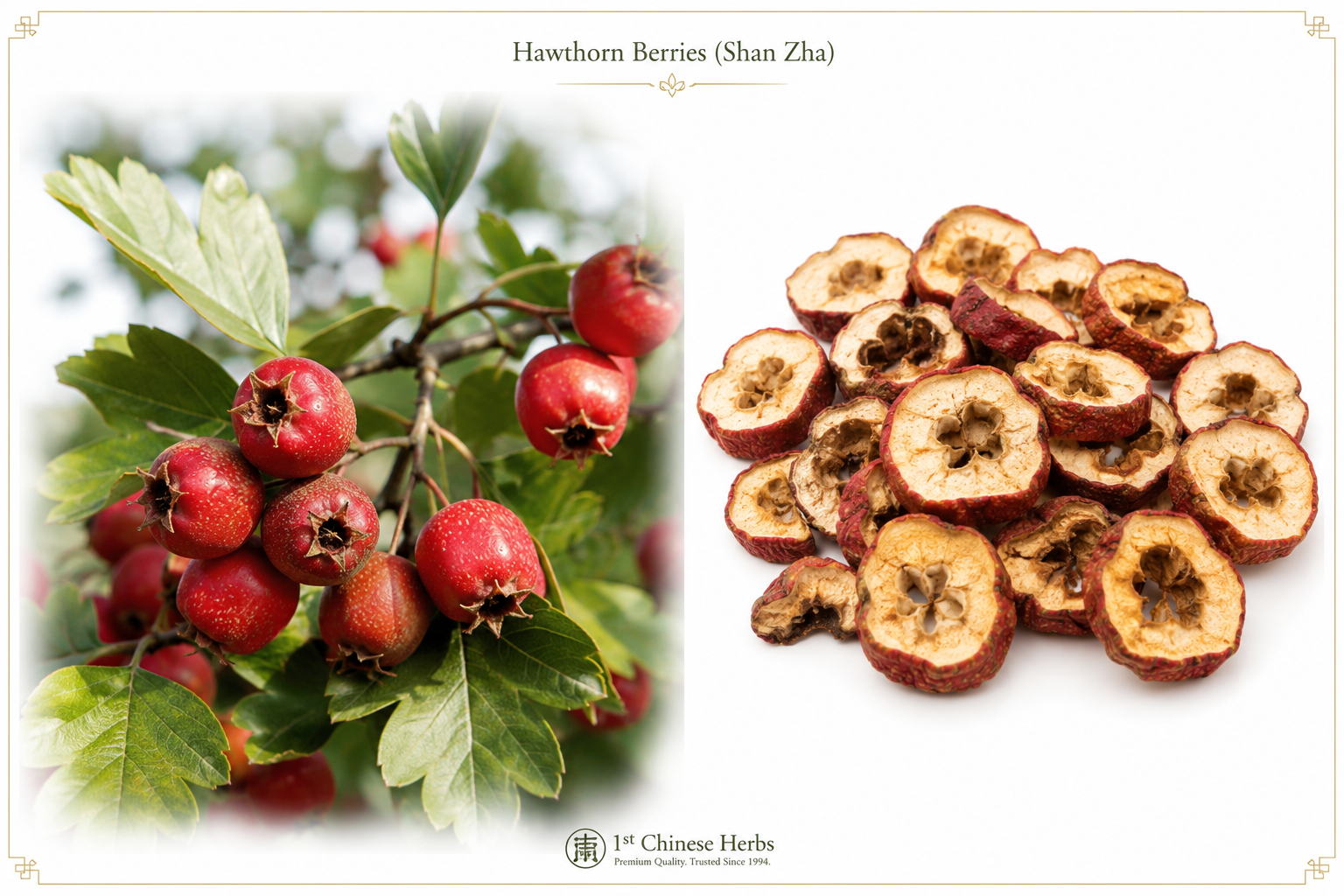
Hawthorn Berry, known in Chinese herbalism as Shan Zha (山楂), is one of those herbs.
If you have ever felt heavy, sluggish, or overly full after a rich meal, you can understand why hawthorn has been treasured in Traditional Chinese Medicine for centuries.
Today, hawthorn is also widely discussed in modern wellness research because of its naturally occurring flavonoids, polyphenols, and antioxidant compounds.
Quick Summary
| Category | Details |
|---|---|
| Common Names | Hawthorn Berry, Hawthorn Fruit, Haw, May Flower, Whitehorn |
| Pin Yin | Shan Zha (山楂) |
| Botanical Name | Crataegus pinnatifida |
| Part Used | Fructus / Fruit |
| Form | Cut, Certified Organic |
| Brand | Nuherbs |
| Origin | China |
| Net Weight | 1 lb |
| Other Ingredients | None |
| ✔ Trusted Since 1994 ✔ Certified Organic ✔ Lab Tested ✔ Fast Shipping ✔ No Fillers |
Best For: Tart herbal tea lovers, traditional post-meal herbal routines, tea blends, decoctions, and customers who want a flavorful beginner-friendly Chinese herb.
Top Benefits of Hawthorn Berry (Shan Zha)
Post-Meal Comfort*
Traditionally used in Chinese herbal practice after rich, greasy, or heavy meals.
Tart Herbal Tea
Bright, fruity, slightly sweet, and much easier to enjoy than many bitter herbs.
Cardiovascular Wellness*
Popular in heart-focused wellness routines and widely discussed in modern wellness research.
Antioxidant Support*
Naturally contains flavonoids, polyphenols, and other plant compounds studied for antioxidant activity.
Traditional Properties of Shan Zha
- Taste: Sour, sweet
- Nature: Slightly warm
- Traditional Channels: Spleen, Stomach, Liver
In Traditional Chinese Medicine, Shan Zha is commonly discussed for food stagnation, a traditional pattern often associated with feeling overly full, heavy, sluggish, or uncomfortable after eating.
Traditionally, hawthorn is especially associated with rich meals, greasy foods, meat-heavy meals, and post-meal herbal routines.
What Does Hawthorn Berry Taste Like?
Hawthorn has one of the more enjoyable flavors in Chinese herbal medicine. It is tart, bright, fruity, refreshing, and slightly sweet.
| Flavor Note | What It Tastes Like |
|---|---|
| Tart | Similar to cranberry or hibiscus |
| Fruity | Light apple-like fruitiness |
| Slightly Sweet | Gentle natural sweetness, especially when blended |
| Refreshing | Great as warm tea or a cooled herbal drink |
Herbal Note: Hawthorn is a favorite for customers who want something practical, flavorful, and easy to enjoy. It is approachable enough for beginners, yet respected enough that experienced herbal users often keep it in their herbal pantry.
Who Should Choose Hawthorn Berry?
Choose Hawthorn If...
You enjoy tart fruit teas and want a bright, flavorful herb.
Choose Hawthorn If...
You want a traditional herb often enjoyed after rich or heavy meals.
Choose Hawthorn If...
You prefer whole herbs for tea instead of capsules.
Choose Hawthorn If...
You like herbs that blend well with citrus, cinnamon, goji, and red dates.
Who May Prefer a Different Herb?
| If You Want... | Consider... | Why |
|---|---|---|
| A sweeter tea | Red Dates / Da Zao | Naturally sweet and comforting |
| A mild calming food-style herb | Lotus Seeds / Lian Zi | Gentle, neutral, and grounding |
| A berry-style daily wellness tea | Goji Berry / Gou Qi Zi | Mildly sweet and easy to drink |
| A citrus digestive tea profile | Chen Pi | Aromatic, orange-peel flavor |
How to Use Hawthorn Berry
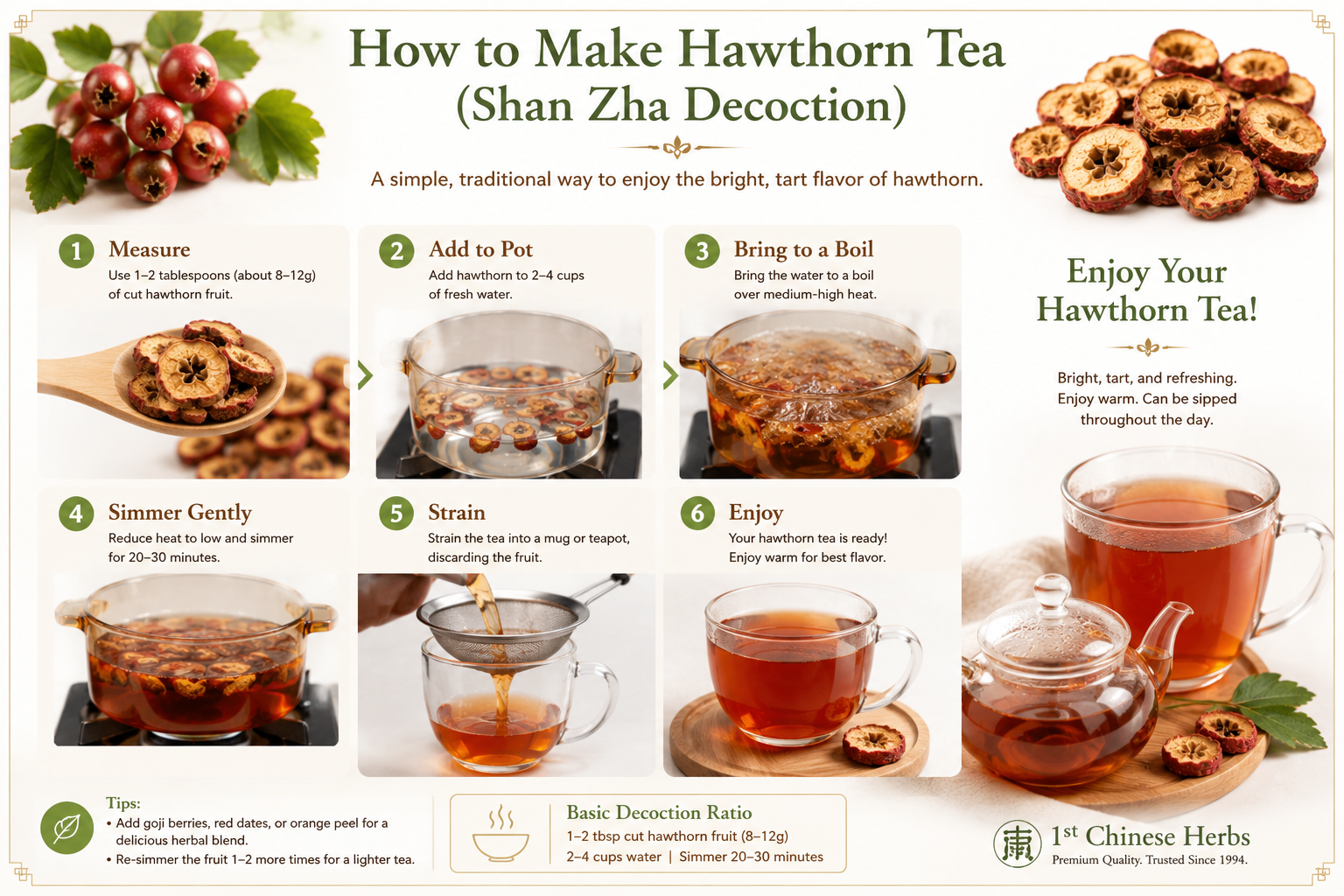
One of the best things about hawthorn is how versatile it is. You can enjoy it as tea, decoction, herbal blend, powder, or extract.
Basic Tea Infusion
- Use 1–2 teaspoons cut hawthorn
- Add 8–12 oz hot water
- Steep 10–15 minutes
This makes a lighter, easy-to-drink tea.
Traditional Decoction
- Use 6–12 grams cut hawthorn
- Add 2–4 cups water
- Simmer gently for 20–30 minutes
This creates a stronger traditional preparation.
4 Delicious Hawthorn Tea Recipes
| Recipe | Ingredients | Best For |
|---|---|---|
| Basic Hawthorn Tea | 1 tbsp hawthorn + 12–16 oz water | Simple tart tea |
| Post-Meal Comfort Tea | Hawthorn + Chen Pi + orange peel | Traditional post-meal routine |
| Daily Wellness Tea | Hawthorn + goji berries + red dates | Tart-sweet everyday blend |
| Warming Winter Hawthorn Tea | Hawthorn + cinnamon stick + red dates | Cold-weather comfort tea |
Best Herbs to Pair with Hawthorn
Hawthorn + Chen Pi
A classic bright citrus-style pairing for traditional post-meal herbal routines.
Hawthorn + Red Dates
Balances hawthorn’s tartness with natural sweetness and a more comforting flavor.
Hawthorn + Goji Berry
A popular daily tea blend with tart, sweet, and fruity notes.
Hawthorn + Cinnamon
Adds warmth and makes hawthorn especially enjoyable in colder months.
Hawthorn vs Other Popular Herbs
| Herb | Best For | Taste | Traditional Feel | Choose This If... |
|---|---|---|---|---|
| Hawthorn / Shan Zha | Post-meal comfort + tea blends | Tart, fruity | Bright and active | You want a tart fruit tea with traditional post-meal use. |
| Red Dates / Da Zao |
Sweet nourishing tea blends | Sweet | Gentle and comforting | You want natural sweetness and a cozy tea flavor. |
| Goji Berry / Gou Qi Zi | Daily wellness tea blends | Mildly sweet | Balanced | You want an easy berry-style daily tea. |
| Lotus Seeds / Lian Zi | Food-style herbal use | Mild | Grounding | You want something neutral, mild, and calming in feel. |
| Chen Pi | Citrus tea blends | Aromatic, orange-peel | Moving and bright | You want a citrus-forward herb to blend with teas. |
Cut vs Whole vs Powder vs Extract
| Form | Best For | Why People Choose It |
|---|---|---|
| Cut | Tea and decoctions | Easy to brew, good extraction, easy to strain |
| Whole | Long simmer decoctions | Traditional preparation, slower extraction |
| Powder | Capsules and smoothies | Convenient, no brewing required |
| Extract | Fast preparation | Concentrated and convenient |
Our Take: If you want the best balance of convenience, flexibility, and traditional preparation, cut hawthorn is often the sweet spot. It brews faster than whole fruit, extracts well, and is easier to strain than powder.
Safety & Interactions
Hawthorn is widely used in traditional and modern herbal wellness routines, but safety always matters.
Do Not Use If:
- You are pregnant or nursing unless advised by a qualified healthcare professional
- You have known allergies to hawthorn or related plants
Talk With Your Healthcare Provider First If You:
- Take heart medications
- Take blood pressure medications
- Take blood thinners or anticoagulants
- Have cardiovascular concerns
- Have a medical condition or take prescription medication
Because hawthorn has been studied in cardiovascular wellness research, medication interactions are important to consider.
Why Buy Hawthorn from 1st Chinese Herbs?
Not all herb suppliers are equal. The difference between a great herbal experience and a disappointing one often comes down to freshness, quality, purity, and correct botanical identity.
Trusted Since 1994
Decades of herbal experience and customer trust.
Lab-Tested Quality
Herbs are screened for quality and purity.
Correct Identity
Clear botanical and traditional naming.
No Fillers
Single-ingredient certified organic hawthorn fruit.
Ready to Try Certified Organic Hawthorn Berry?
Enjoy the bright, tart flavor of Shan Zha in tea, decoctions, and herbal blends.
Get real herbs. Feel the difference.
PubMed & Research References
Research Disclaimer: The scientific studies referenced below are provided for educational purposes only. Research includes various hawthorn preparations such as fruit, leaf, flower, extracts, and standardized compounds. This product contains certified organic cut hawthorn fruit and is not intended to diagnose, treat, cure, or prevent any disease.
General Hawthorn Research
- Chemical composition, biological activities, and quality standards of hawthorn
https://pmc.ncbi.nlm.nih.gov/articles/PMC10623334/ - Food applications and potential health benefits of hawthorn
https://pmc.ncbi.nlm.nih.gov/articles/PMC9498108/
Cardiovascular Wellness Research
- Hawthorn and cardiovascular wellness research
https://pubmed.ncbi.nlm.nih.gov/40732315/ - Hawthorn extract and cardiovascular wellness pilot study
https://pubmed.ncbi.nlm.nih.gov/11807965/ - Hawthorn fruit extract drink research
https://pmc.ncbi.nlm.nih.gov/articles/PMC11583496/
Metabolic & Antioxidant Research
- Crataegus pinnatifida and metabolic wellness pathways: A review
https://pubmed.ncbi.nlm.nih.gov/31217924/ - Chinese hawthorn fruit extract and antioxidant pathways
https://pmc.ncbi.nlm.nih.gov/articles/PMC7697658/
Frequently Asked Questions
Is hawthorn a berry or a fruit?
Both terms are commonly used. Hawthorn looks like a berry, but botanically it is a small fruit called a pome.
What is Shan Zha?
Shan Zha is the Traditional Chinese Medicine name for Chinese hawthorn fruit.
What does hawthorn tea taste like?
Hawthorn tea is tart, fruity, bright, and slightly sweet. Many people compare it to cranberry, apple, or hibiscus tea.
Can I drink hawthorn tea daily?
Many people enjoy hawthorn tea regularly as part of a wellness routine. Frequency depends on your individual health needs and medications.
When do people traditionally use hawthorn?
In Traditional Chinese Medicine, hawthorn is commonly used after rich, heavy, or greasy meals.
Is hawthorn warming or cooling?
Traditionally, hawthorn is considered slightly warm.
Can hawthorn be blended with other herbs?
Yes. Hawthorn blends beautifully with herbs like red dates, goji berries, orange peel, Chen Pi, and cinnamon.
What is the difference between hawthorn fruit and hawthorn leaf?
They are different plant parts. Shan Zha traditionally refers to hawthorn fruit. Some modern research uses leaf, flower, fruit, extracts, or standardized preparations.
How should I store hawthorn?
Store sealed in a cool, dry place away from heat, sunlight, and humidity.
Is this product single ingredient?
Yes. This product contains 100% certified organic hawthorn fruit with no fillers or additives.
Disclaimer: The statements made on this website have not been evaluated by the Food and Drug Administration. This product is not intended to diagnose, treat, cure, or prevent any disease. The information provided is for educational purposes only and is not intended as medical advice. Always consult a qualified healthcare professional before using herbal products, especially if you are pregnant, nursing, have a medical condition, or take medications.