Hu Zhang (Japanese Knotweed): Traditional Uses, Natural Compounds & Buying Guide
Get to know Hu Zhang, its place in traditional Chinese herbal practice, the compounds found in its rhizome, and the differences between cut herbs, whole-herb powder, and extracts.
Japanese knotweed, known as Hu Zhang in Chinese herbal practice, has been used in East Asia for generations. Today, customers can find this botanical in several forms, each with its own preparation method and product specifications.
Whether you're looking for cut Hu Zhang, organic rhizome powder, or a concentrated extract, understanding what you're buying is a useful first step.
What Is Hu Zhang?
Hu Zhang (虎杖) is the Chinese name for Japanese knotweed, a perennial plant native to parts of East Asia. Its accepted botanical name is Reynoutria japonica, and it is also widely identified by the botanical synonym Polygonum cuspidatum.
The dried rhizome and root are the plant materials traditionally associated with Hu Zhang. The rhizome is the underground stem from which the plant grows.
Hu Zhang at a Glance
- Chinese name: 虎杖
- Pinyin: Hu Zhang
- Common names: Japanese Knotweed, Japanese Bushy Knotweed, Tiger's Cane
- Botanical name: Reynoutria japonica
- Botanical synonym: Polygonum cuspidatum
- Traditional plant material: Rhizome and root
Hu Zhang in Traditional Chinese Medicine
Hu Zhang has a long history in Traditional Chinese Medicine (TCM). Classical herbal texts describe it through concepts such as clearing heat, resolving dampness, and moving blood stasis.
In traditional herbal theory, Hu Zhang is generally described as bitter and cold and is associated with the Liver and Gallbladder channels. Traditional classifications can vary among texts and practitioners.
These descriptions explain the herb's historical role within the TCM system. They are not modern medical diagnoses or evidence that Hu Zhang treats a particular disease.
Hu Zhang also appears in traditional multi-herb preparations. The selection and proportions of herbs in a formula depend on the preparation and the practitioner's assessment.
Naturally Occurring Compounds in Japanese Knotweed
Japanese knotweed contains several groups of naturally occurring plant constituents. Researchers have identified compounds including:
- Resveratrol: A stilbene also found in grapes and certain other plants.
- Polydatin: A naturally occurring glycoside of resveratrol.
- Emodin: A compound belonging to the anthraquinone group.
- Physcion: Another naturally occurring anthraquinone.
- Chrysophanol: An anthraquinone identified in Japanese knotweed and other plants.
The amounts of these compounds can vary with the plant material, growing conditions, harvest, processing, and extraction method. A whole-herb powder does not necessarily contain a standardized amount of any individual constituent.
Is Japanese Knotweed the Same as Resveratrol?
No. Japanese knotweed is botanical material containing multiple constituents. Resveratrol is one individual compound found in the plant.
Research involving isolated resveratrol cannot automatically be applied to whole-herb Hu Zhang or to every Japanese knotweed extract. The composition of the preparation matters.
For scientific publications about the plant, explore Japanese knotweed research on PubMed .
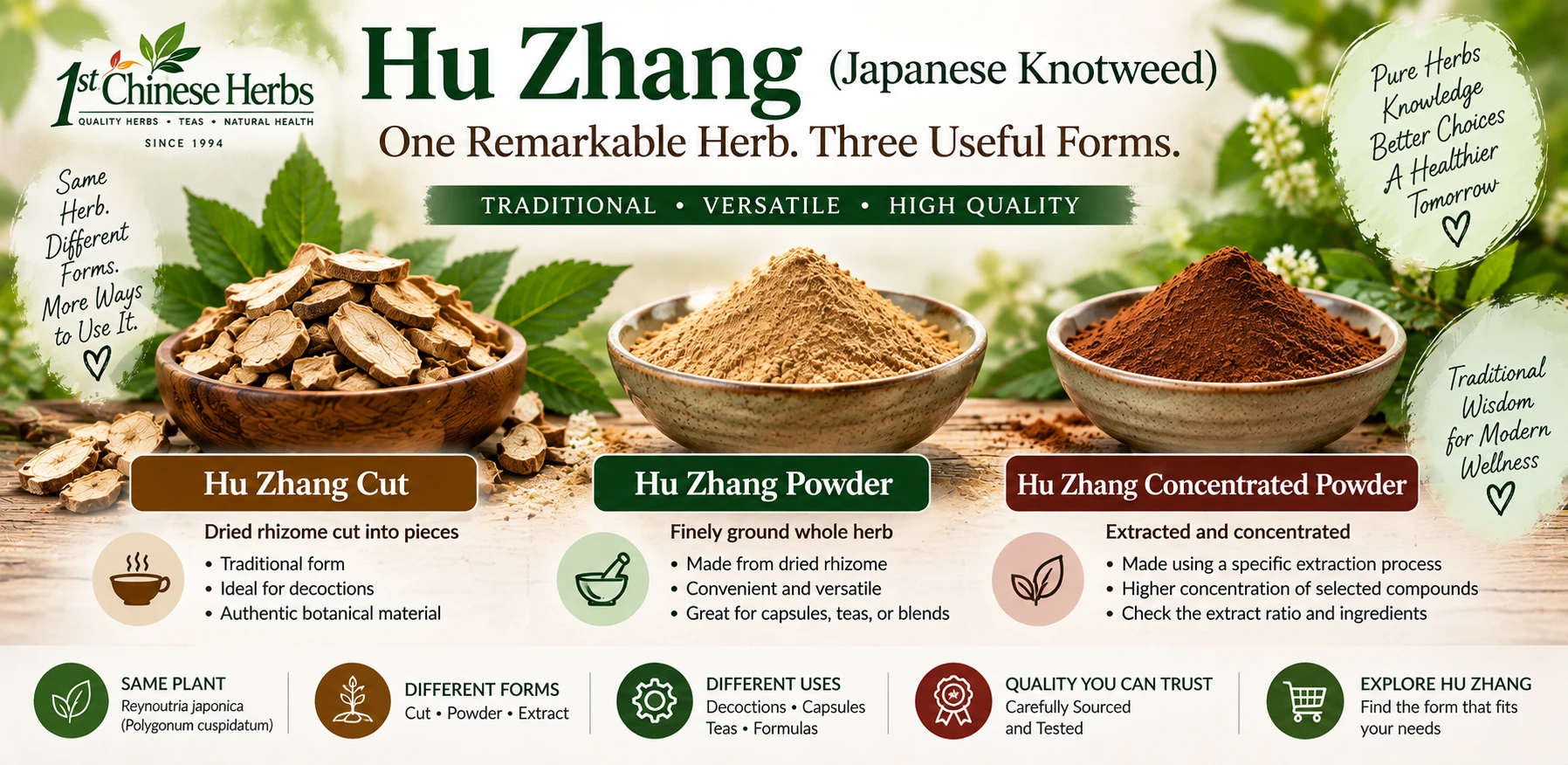
Cut Hu Zhang, Whole-Herb Powder, or Extract: What's the Difference?
Hu Zhang is available in different forms. Each is prepared differently, so it is important to select the form specified for your intended preparation.
| Product Form | What It Is | Preparation Notes |
|---|---|---|
| Cut Hu Zhang | Dried rhizome or root cut into smaller pieces. | Traditionally used in preparations such as decoctions, following appropriate herbal guidance. |
| Whole-Herb Powder | Dried botanical material ground into powder. | Used in preparations that call for ground botanical material. It is not a concentrated extract. |
| Extract Powder | A manufactured preparation made by extracting constituents from botanical material. | Follow the specific product directions. Check the extract ratio, ingredients, and available specifications. |
Important: These forms are not automatically interchangeable. Do not calculate a substitute serving amount based solely on an extract ratio.
Want to understand extract ratios? Read our guide: Herbal Powder vs. Extract: What's the Difference, and Which Should You Choose?
Quality and Safety: What to Know Before Buying
When comparing Hu Zhang products, look beyond the product name and consider the details that identify what is actually in the package.
Five Product Details Worth Checking
- Botanical identity: Confirm the scientific name.
- Plant part: Check whether the product contains the identified rhizome, root, or another plant part.
- Product form: Verify whether it is cut herb, ground powder, or a concentrated extract.
- Ingredients: Review any additional ingredients, including carriers used in some extracts.
- Testing information: Ask about available identity, purity, and contaminant testing for the product or lot.
At 1st Chinese Herbs, we encourage customers to review each product listing and contact us with questions about available product specifications or certificates of analysis.
Important Precautions
Hu Zhang is not suitable for everyone. Consult a qualified healthcare professional before use if you take medications, have a medical condition, or are preparing for surgery. Particular caution is warranted with anticoagulant or antiplatelet medications.
Avoid use during pregnancy or breastfeeding unless specifically advised by a qualified healthcare professional. Follow the directions and precautions for the individual product, and discontinue use if you experience an adverse reaction.
Shop Hu Zhang at 1st Chinese Herbs
Looking for Japanese knotweed? Explore our available Hu Zhang products and compare the botanical identity, plant part, ingredients, and product form before choosing.
Whether you prefer cut rhizome, organic whole-herb powder, or an available extract, the individual product listing is the best place to confirm current specifications and availability.
Have a product-specific question? Contact 1st Chinese Herbs for assistance with available product information.