
How Do I Actually Prepare Chinese Herbs at Home?
A Simple, Step-by-Step Guide (Tea vs. Decoction, Boil Time, Taste Fixes, Storage + FAQs)
If you’ve ever opened a bag of Chinese herbs and thought:
-
“How long am I supposed to boil this?”
-
“Can I just make a tea?”
-
“Why does this taste so bitter?”
You’re not alone—and you’re not doing anything wrong.
Most people searching how to prepare Chinese herbs at home are beginners, and many websites skip the practical details that make the difference between “I tried” and “I did it correctly.” This guide fixes that with clear rules, simple steps, and the most common troubleshooting answers.
By the end of this article, you’ll know exactly what to do, why it works, and how to avoid beginner mistakes—so you can prepare herbs confidently and consistently.
Educational note: This guide is for general information and traditional preparation methods. Herbs can interact with medications and may not be appropriate for pregnancy, nursing, or certain health conditions. If you’re unsure what’s right for you, consult a qualified healthcare professional.
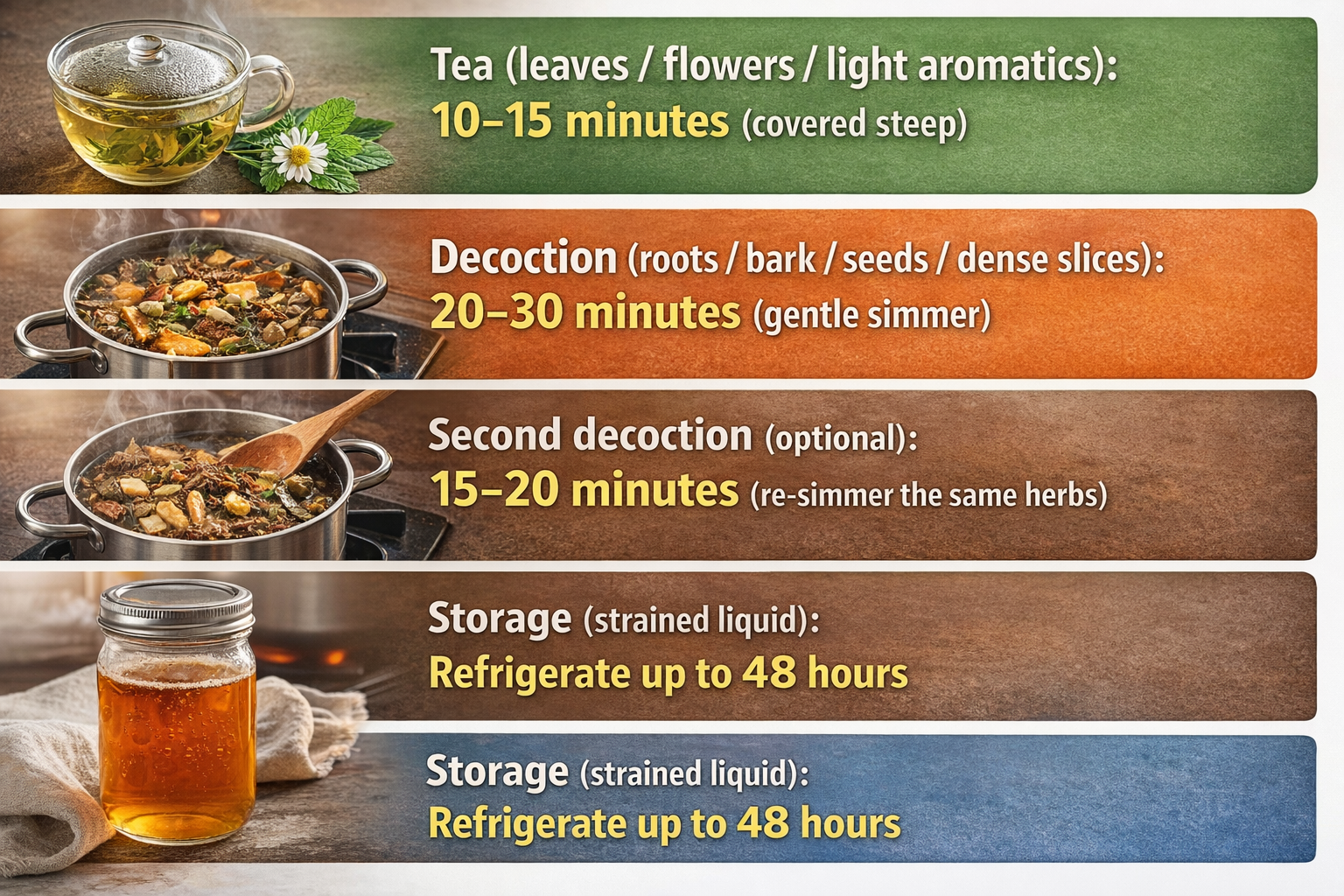
Quick Prep Chart: Tea vs. Decoction (Beginner-Simple)
Place this chart at the top of your page so readers get instant clarity:
-
Tea (leaves/flowers/light aromatics): 10–15 minutes (covered steep)
-
Decoction (roots/bark/seeds/dense slices): 20–30 minutes (gentle simmer)
-
Second decoction (optional): 15–20 minutes (re-simmer the same herbs)
-
Storage (strained liquid): refrigerate up to 48 hours
Why This Guide Works (And Why Your Herbs “Didn’t” Before)
Chinese herbs aren’t complicated—but they are different from typical Western tea bags. Two things matter most:
-
Plant part (leaf vs root)
-
Heat + time (steep vs simmer)
When you match the method to the herb, the results become consistent.
Tea or Decoction—Which One Do I Use?
This Is The #1 Point Of Confusion And We Have The Solution
Use this rule:
-
Leaves, flowers, light herbs → Tea (infusion)
-
Roots, bark, seeds, dense slices → Decoction
If your herb feels hard, woody, thick, or dense, it almost always needs a decoction.
If you’re unsure, decoction is the safer default for dense herbs.
How Long Do I Boil Chinese Herbs?
Short answer: don’t “boil hard”—simmer gently
Most Chinese herbs are simmered for 20–30 minutes, not aggressively boiled.
Why simmering matters
Gentle simmering:
-
extracts herbal constituents steadily
-
reduces harshness
-
prevents “overcooked” taste
Boiling harder doesn’t make herbs stronger. It often makes them more bitter and harder to drink.
In the context of boiling herbs for Traditional Chinese Medicine (TCM), the term "fish eyes" refers to a specific stage of boiling where the water has small bubbles forming on the surface, resembling the eyes of fish. This is a gentle simmer rather than a vigorous boil.
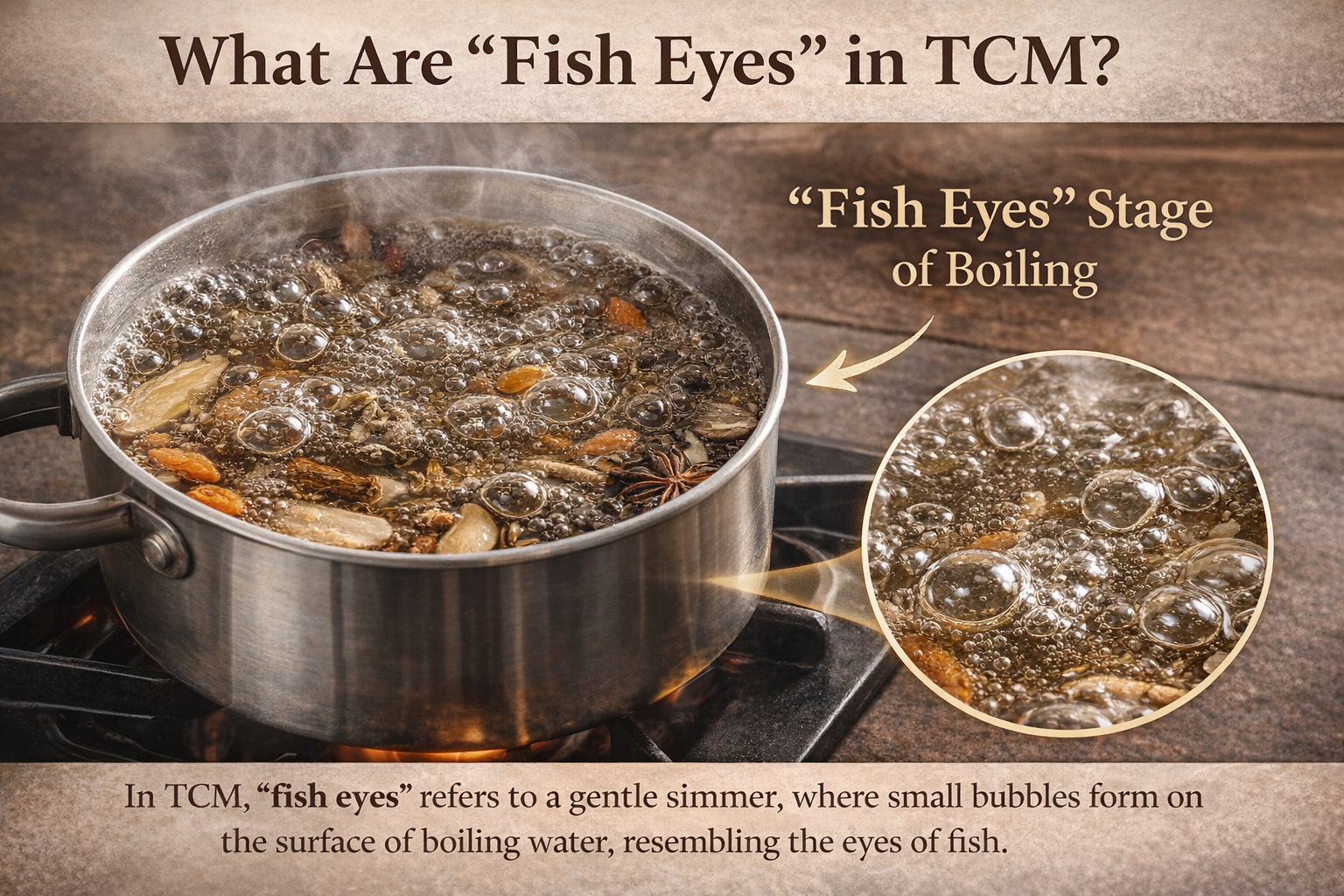
Importance of "Fish Eyes" Stage:
- Preserves Active Components: A gentle simmer helps to preserve the delicate active components found in the herbs, which can be destroyed or diminished at higher boiling temperatures.
- Enhances Extraction: This method allows for a more effective extraction of the medicinal properties from the herbs, ensuring that you receive the full benefits of the herbal constituents.
- Avoids Over-extraction: A hard boil may lead to over-extraction of certain compounds, resulting in a bitter or overly potent brew that may not be desirable.
Recommended Boiling Method:
- Start with Cold Water: Begin with your herbs in cold water.
- Bring to a Gentle Simmer: Gradually heat the water until you reach the fish eyes stage, then maintain this gentle heat for the recommended brewing time.
- Monitor Bubbles: You should see small bubbles rising to the surface, but the water should not be violently boiling.
Utilizing this technique will help ensure that you are preparing your herbs in a way that maximizes their efficacy while maintaining their traditional properties
How Much Herb Do I Use?
The most accurate guidance is always your practitioner’s instructions or the product label. If you’re starting without a custom formula, a common beginner range for single-herb decoctions is often 9–15 grams dried herb per day (this varies widely by herb and individual).
Tip for better results: use a kitchen scale. Scoops and tablespoons vary a lot depending on cut size and density.
Step-by-Step: How to Make a Chinese Herb Decoction (Beginner Method)
You do not need special equipment.
What you need
-
9–15 g dried herbs (unless instructed otherwise)
-
3–4 cups water
-
Stainless steel or ceramic pot with lid
-
Strainer
-
Mug or glass jar
Instructions
Step 1: Quick rinse (optional but helpful)
Quickly rinse herbs under cool water for a few seconds. This removes dust.
Do not soak—a brief rinse does not “wash away potency.”
Step 2: Add herbs to the pot
Place herbs in the pot.
Step 3: Add water
Add 3–4 cups water, or enough to cover the herbs well.
Step 4: Bring to a gentle boil
Bring to a gentle boil, then reduce heat promptly.
Step 5: Simmer 20–30 minutes (lid on)
Keep it at a gentle simmer.
Step 6: Strain and drink warm
The liquid will reduce—normal.
The color may be dark—also normal.
Optional Upgrade: Do a Second Decoction (Often Worth It)
If you want more “bang for your herbs,” do a second simmer:
-
Add fresh water to the same herbs
-
Simmer 15–20 minutes
-
Strain and combine with the first decoction
This is especially useful with dense roots and seeds.
Can I Make Chinese Herbs as Tea Instead?
Yes—when the herb allows it.
Tea works best for:
-
leaves
-
flowers
-
light aromatic herbs
Pro Tip: If the plant is delicate start with 3 minutes, and then check every 1 minute for taste.
How to make Chinese herbal tea (infusion)
-
Place herbs in a mug or teapot
-
Pour hot water over them
-
Cover and steep 10–15 minutes
-
Strain and drink warm
Important: Roots and dense herbs usually won’t extract fully as tea.
Why Does My Chinese Herb Taste So Bitter?
This is one of the most common questions—and the answer surprises beginners.
Bitterness is often intentional. In traditional Chinese herbal practice, many classic herbs are naturally bitter and used that way. A bitter taste can mean:
-
the herb is authentic
-
you extracted it correctly
-
you’re tasting what it’s known for
Bitterness does not automatically mean poor quality.
How to Reduce Bitterness (Without Ruining Your Decoction)
Try these options (in order):
-
Drink it warm (cold tastes more bitter)
-
Dilute with warm water
-
Sip slowly instead of gulping
-
Add a small amount of honey after cooking, if appropriate
-
Check your method:
-
you may have boiled too hard
-
simmered too long
-
used the wrong method (tea vs decoction)
-
used too much herb
-
Avoid: adding sugar during cooking. It often makes the final drink less pleasant and doesn’t fix the real issue.
Can I Store or Reheat Chinese Herbs?
Yes.
Storage guidelines
-
Store strained decoction in glass (a dark jar is the best)
-
Refrigerate promptly
-
Best used within 48 hours
Reheating
-
Reheat gently on the stove (best)
-
If microwaving, use low power and avoid boiling hot
Common Beginner Mistakes (And How to Avoid Them)
1) Using aluminum cookware
Use stainless steel or ceramic instead.
2) Boiling too hard
A gentle simmer is the goal.
3) Using “more herb” to get faster results
More is not always better. Follow label/practitioner guidance.
4) Assuming bitter = bad quality
Bitterness is often normal.
5) Guessing doses by spoon
Use a kitchen scale for consistent results.
6) Not covering tea while steeping
Covering keeps aromatic compounds in the brew.
FAQ
Do I rinse herbs first?
Yes—a quick rinse under cool water is fine, especially for dusty herbs. Keep it brief and don’t soak them.
Can I use a slow cooker?
Yes—especially for decoctions (roots, bark, dense slices). Use enough water to keep herbs covered and set to low. The goal is steady extraction. Keep notes so you can repeat what works.
Can I brew overnight?
Sometimes, but it depends:
-
Tea/infusions: overnight steeping can become overly strong or bitter.
-
Decoctions: it’s safer to simmer, then refrigerate rather than leaving herbal liquid at room temperature overnight.
Can I freeze decoctions?
Yes. Freezing is great for batch prep:
-
Cool first
-
Freeze in glass-safe containers with headspace (liquid expands)
-
Or freeze in silicone ice cube trays and store cubes in a freezer bag
Label with herb/formula and date.
How do I reduce bitterness?
Drink warm, dilute with warm water, sip slowly, add a little honey after cooking if appropriate, and check whether you boiled too hard or simmered too long.
The Simple Takeaway
If you remember nothing else, remember this:
-
Tea: 10–15 minutes
-
Decoction: 20–30 minutes
-
Second decoction: 15–20 minutes
-
Storage: 48 hours refrigerated
-
Bitter taste: often normal
Preparing Chinese herbs doesn’t need to be complicated—it just needs clear instructions.
Use Our Steeping Timer for Best Results
Use Our Steeping Timer For Best Results
Consistency matters. Use our steeping timer so your brew time and results stay reliable from batch to batch.
Related Guides You May Find Helpful
Author
Last reviewed: February 2026
Reviewed by: Sarah Johnson & Editorial Review Team
Our quality standard: we prioritize clearly identified herbs and practical preparation guidance written for real beginners.