
How Do I Know If My Herbs Are Actually Working?
Let Me Be Very Clear And Honest Here!
If you have ever sat there holding a mug of herbal tea thinking,
“Am I actually feeling something… or am I just drinking warm leaf soup?”
you are completely normal.
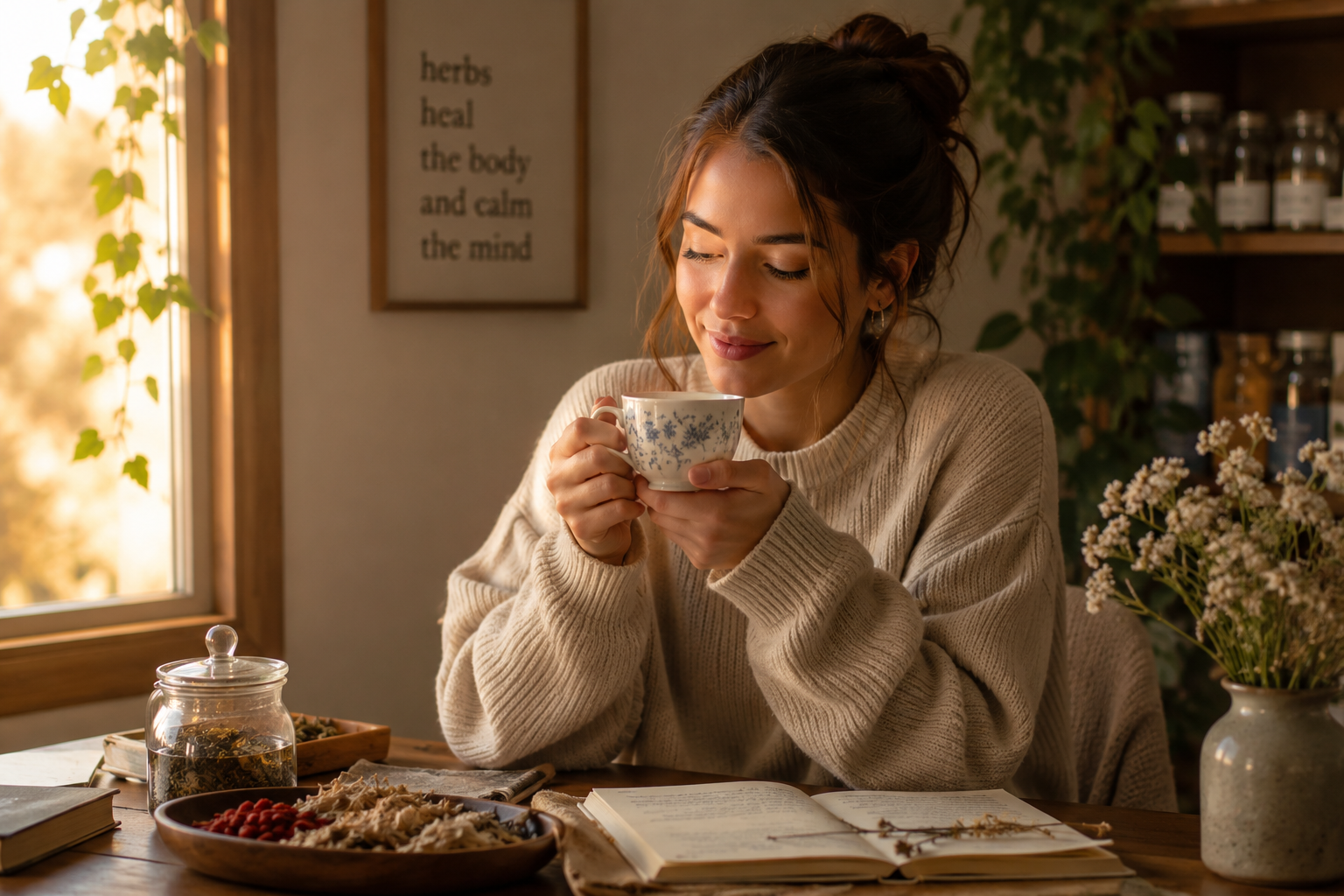
Most herbal websites either make herbs sound like instant magic or explain them like a dusty textbook. Neither one helps the beginner standing in the kitchen wondering, “Okay, but how do I know if this is doing anything?”
This page is here to make that question easier to understand.
Quick Answer
Some herbs feel obvious, warming, or noticeable fairly quickly. Others feel gradual, subtle, steady, or supportive over time.
That does not automatically mean the subtle herbs are weak.
One of the biggest beginner mistakes is expecting herbs to feel like caffeine, energy drinks, or movie-style miracle potions. Herbs often work more like routines than fireworks.
In Simple Terms: Why Don’t Herbs Feel Strong Immediately?
Many herbs work more gradually than stimulants or caffeine. Some herbs feel gentle and supportive rather than dramatic and immediate.
That can be confusing at first, especially if you are waiting for a giant “WOW” moment.
Sometimes herbs are more like a quiet shift in your routine than a marching band entering your living room.
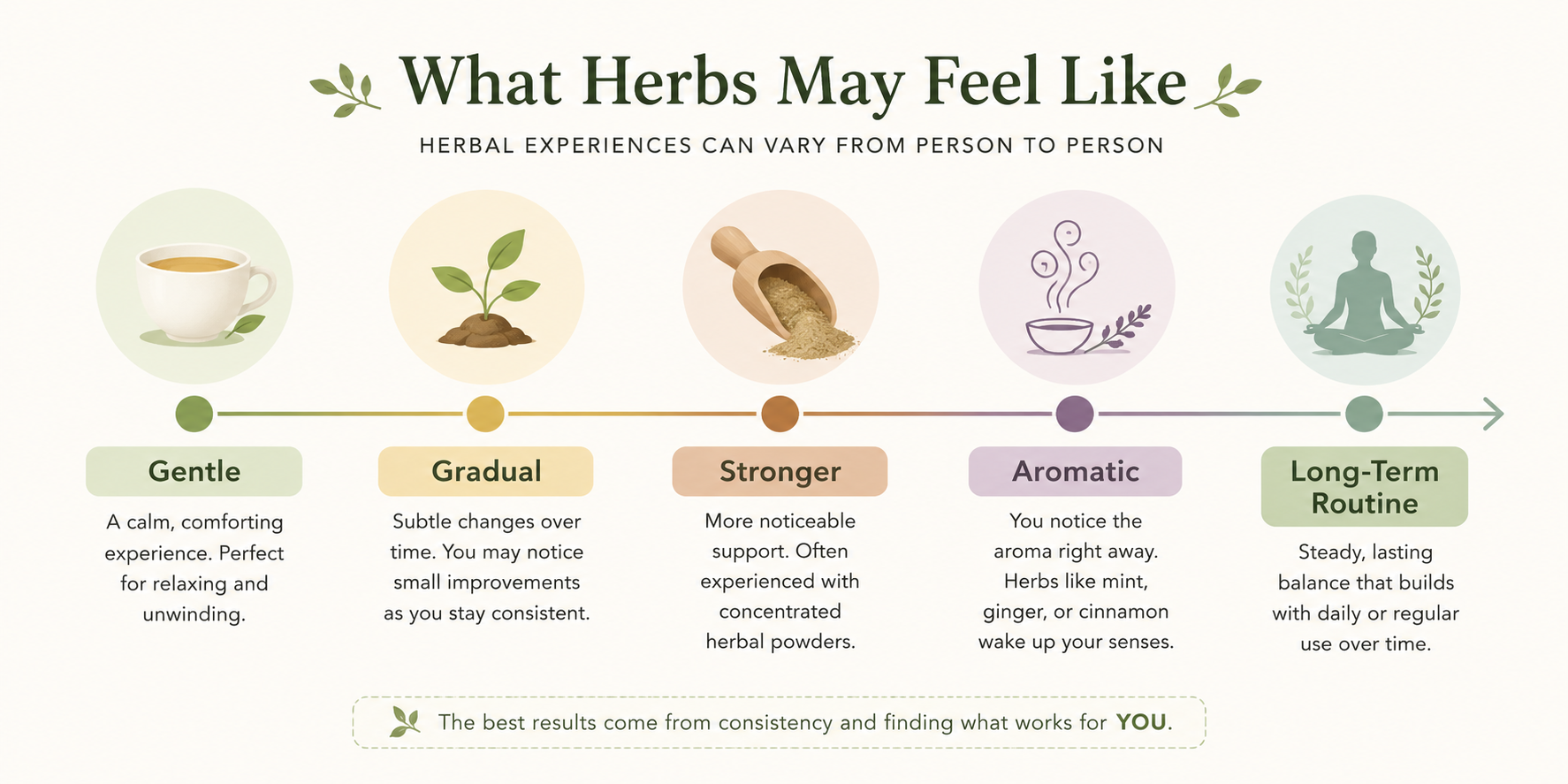
What Herbs May Actually Feel Like
One of the biggest beginner misunderstandings is thinking herbs should feel the same for everybody.
They do not.
Some people love rich, strong teas and concentrated powders. Others prefer gentle evening tea, soft flavors, and gradual routines. Both can be completely normal.
| Experience | What It Might Feel Like |
|---|---|
| Gentle | A calm evening tea that feels soft, warm, and easy to drink. |
| Gradual | Smoother digestion or more predictable routines over time. |
| Stronger | Rich concentrated powders or extract-style products that feel more noticeable. |
| Immediate Aroma | Mint, ginger, cinnamon, citrus peel, or other aromatic herbs that you notice quickly. |
| Long-Term Routine | Steadier daily balance because you are using herbs consistently. |
Beginner Expectations vs. Reality
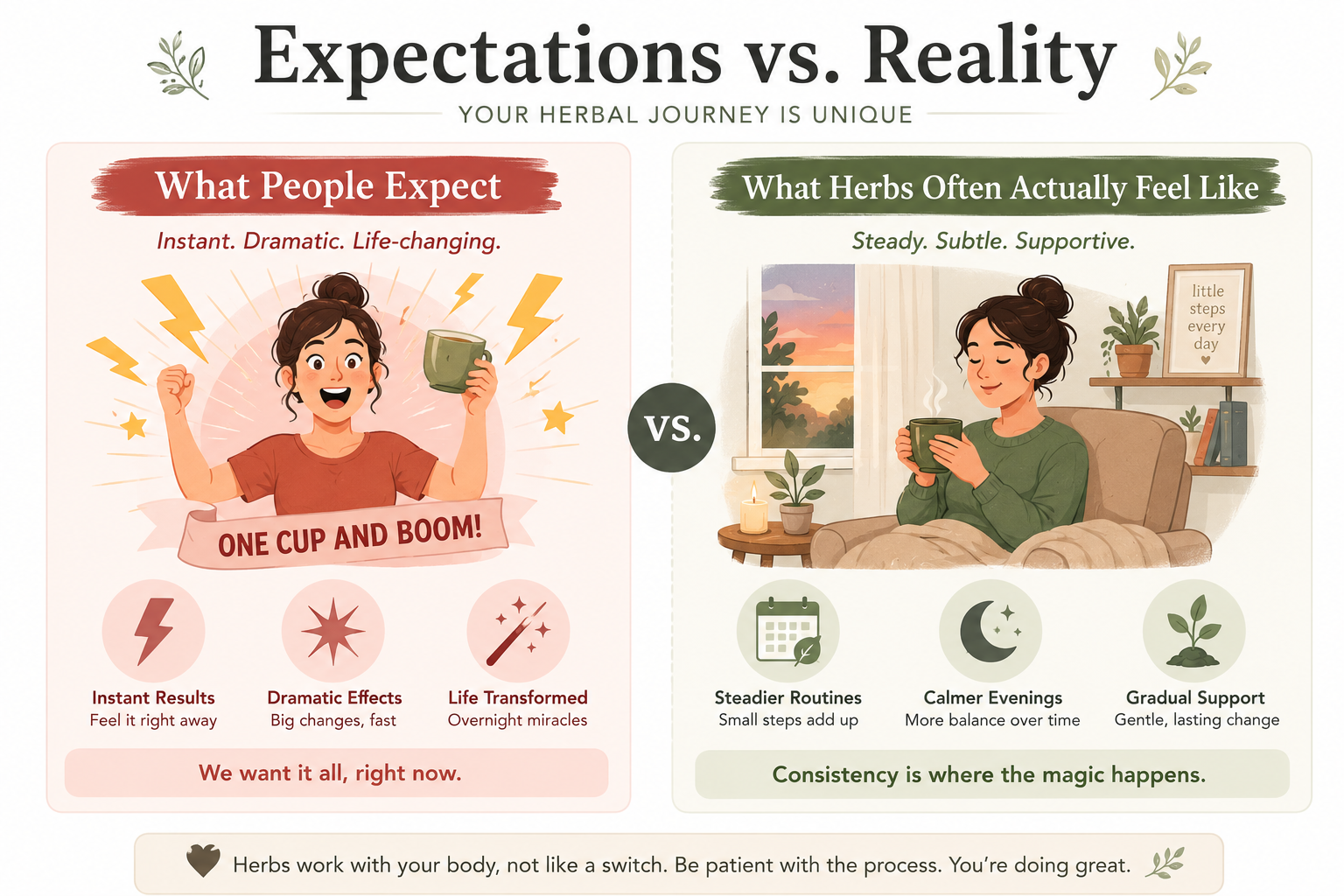
This is probably one of the most important sections on this page because modern wellness marketing has made people expect instant everything.
What Beginners Usually Expect
- Instant results
- Dramatic feelings
- Immediate transformation
- One cup of tea and suddenly life is fixed
What Herbs Often Actually Feel Like
- Steadier routines
- Subtle shifts
- Gradual support
- Consistency over time
That does not make herbs weak. It simply means herbs often work differently than stimulants.
The “I Drank One Cup and Expected Enlightenment” Problem
Modern life has completely destroyed people’s patience.
We expect instant shipping, instant answers, instant entertainment, and instant everything else. So naturally, many people try herbs once and think, “Well… I drank one cup 14 minutes ago. Why am I not glowing spiritually?”
Meanwhile the herbs are quietly sitting there like, “Sir… I am literally a mushroom.”
Traditional herbal systems were usually built around consistency, rhythm, routine, and gradual support. Not “take once and immediately transcend reality.”
Oh Good… I Thought I Was Doing It Wrong
Honestly? Almost everybody new to herbs has at least one moment where they think, “This can't be this. hard. Stop overthinking, and just follow the directions"
You are not.
Most beginners go through at least a few of these:
- Accidentally making bitter tea
- Forgetting herbs brewing for 40 minutes
- Using way too little herb
- Expecting instant dramatic effects
- Buying 12 herbs at once and immediately feeling overwhelmed
- Making tea that tastes like somebody boiled a backpack
That is normal. Nobody starts out as a mystical tea master floating peacefully through life with perfect steeping times.
Most people learn herbs slowly, imperfectly, and one cup at a time.
Some Herbs Feel Strong. Others Feel Gentle.
A lot of beginners assume “strong feeling” means “better herb.” Not always.
Some herbs naturally feel warming, aromatic, stimulating, or noticeable quickly. Others are nourishing, steadier, gentler, and more gradual.
Think about food. A jalapeño feels very different than oatmeal. That does not mean oatmeal is weak or useless.
Herbs can work the same way.
Tea, Powders, and Teapills Can Feel Very Different
This is one of the biggest beginner confusion points.
| Form | Typical Experience | Beginner Friendly? |
|---|---|---|
| Herbal Tea | Gentle, gradual, comforting, and ritual-based. | Yes |
| Extract Powder | Stronger, more concentrated, and sometimes more noticeable. | Moderate |
| Teapills | Convenient, steady, and easier to use consistently. | Yes |
Why Tea Often Feels Gentler
Tea is usually slower, softer, and more gradual, especially when made as an infusion with leaves, flowers, berries, or lighter herbs.
And honestly, many people like that.
Tea is often less about “feeling blasted into another dimension” and more about comfort, routine, and taking five quiet minutes for yourself.
Why Powders Sometimes Feel Stronger
Extract powders are often more concentrated, denser, and stronger tasting.
That stronger experience often comes from the preparation and concentration. A powder may contain more herbal material in a smaller serving than a light cup of tea.
This is why some people try a powder and suddenly say, “Oh. Okay. I definitely noticed that one.”
Why Teapills Are So Popular
Honestly, many people do well with teapills for one simple reason: they remember to take them.
Life gets busy. Not everyone wants to simmer roots, measure herbs, or become a part-time kitchen herbal wizard.
Teapills can make consistency easier. And consistency matters much more than most beginners realize.
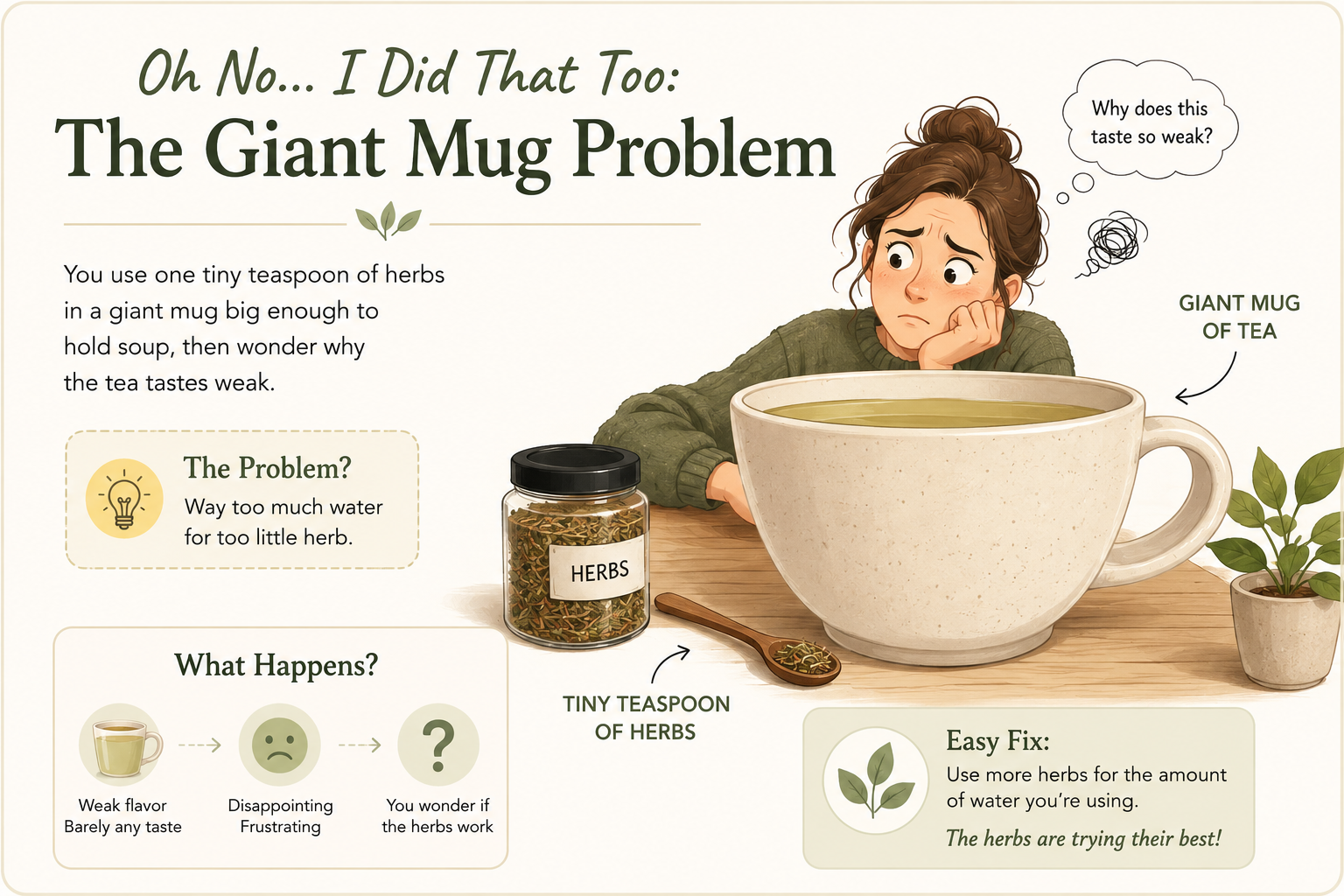
Oh No… I Did That Too: The Giant Mug Problem
This one is extremely common.
You use one tiny teaspoon of herbs in a giant mug big enough to hold soup, then wonder why the tea tastes weak.
(I know you are probably like me have a 32 ounce thermal mug that lasts me the entire day- that is one giant mug to say the least)
That is usually a water-to-herb ratio problem.
The herbs are in there trying their best, but they are basically swimming in a lake.
Oh No… I Did That Too: The Forgotten Tea Disaster
One minute your tea smells amazing.
Then life happens. You answer emails. Feed the dog. Fold laundry. Suddenly your tea has been sitting there for 45 minutes.
You take a sip and it tastes like somebody boiled the moss off of a birch tree.
That is usually over-extraction. Long steep times can pull out more tannins, bitter compounds, and harsh flavors, especially from delicate herbs.
Steeping vs. Decoction, Without Making This Weirdly Complicated
| Method | Best For | Simple Meaning |
|---|---|---|
| Steeping / Infusion | Leaves, flowers, berries, and lighter herbs. | Pour hot water over herbs and let them soak. |
| Decoction | Roots, bark, mushrooms, seeds, and dense herbs. | Simmer low and slow to pull more from tougher plant material. |
Easy way to remember it: Leaves take a bath. Roots need a workout.
Results Timeline: What Beginners Often Experience
This matters because unrealistic expectations cause many people to quit too early.
| Timeline | What Often Happens |
|---|---|
| Day 1–3 | You are getting familiar with flavor, preparation, and routine. You may still be wondering if your tea tastes weird. That is normal. |
| Week 1 | Some people notice subtle shifts such as calmer evenings, smoother routines, or fewer “ups and downs.” |
| Week 2–4 | Many people start understanding which form, flavor, and routine fits them best. |
| Long-Term | The biggest benefit may be consistency: a routine that feels natural, realistic, and easier to continue. |
What Most Beginners Get Wrong
| The Mistake Is | This Is What Usually Happens |
|---|---|
| Using tiny amounts of herbs | Weak tea or barely noticeable flavor. |
| Brewing roots like tea bags | Poor extraction because dense herbs often need simmering. |
| Over-steeping delicate herbs | Bitter, muddy, or harsh flavor. |
| Using herbs randomly | Inconsistent experience. |
| Expecting instant miracles | Frustration and disappointment. |
| Giving up too quickly | Missing gradual routine benefits. |
Your Body Matters Too
Sometimes people expect herbs to overpower poor sleep, stress, dehydration, fast food, six cups of coffee, and doomscrolling until 2 a.m.
That is asking a lot from one innocent root, or delicate flower.
How herbs feel can depend on your sleep, stress level, hydration, food habits, caffeine intake, consistency, and overall routine.
Freshness Matters More Than People Realize
Fresh herbs usually smell stronger, taste fuller, and feel more vibrant.
Old or poorly stored herbs can taste dusty, flat, and lifeless.
At 1st Chinese Herbs, we focus on quality, freshness, proper storage, sulfur-free herbs when available, lab-tested sourcing when available, and clear herbal education.
Because honestly, quality changes everything.
Why Buy From 1st Chinese Herbs?
- Trusted since 1994
- Family-owned herbal business
- Beginner-friendly herbal education
- Bulk herbs, powders, teapills, mushrooms, and extracts
- Lab-tested products when available
- COAs available upon request when applicable
- Focus on clean sourcing, freshness, and practical preparation guidance
We believe herbs should feel understandable, approachable, realistic, and useful in everyday life.
Beginner-Friendly Herbs Many People Enjoy
| Herb | Flavor | Preparation | Beginner Level |
|---|---|---|---|
| Gou Qi Zi (Goji Berry) | Slightly sweet and mild. | Tea or light simmering. | Easy |
| Chrysanthemum | Light and floral. | Steeping / infusion. | Easy |
| Sang Ye (Mulberry Leaf) | Soft, green, slightly earthy. | Steeping / infusion. | Easy |
| Jujube Dates | Mildly sweet. | Tea or simmering. | Easy |
| Shan Yao | Mild and earthy. | Often simmered. | Moderate |
| He Huan Pi | Earthy and woody. | Decoction / simmering. | Moderate |
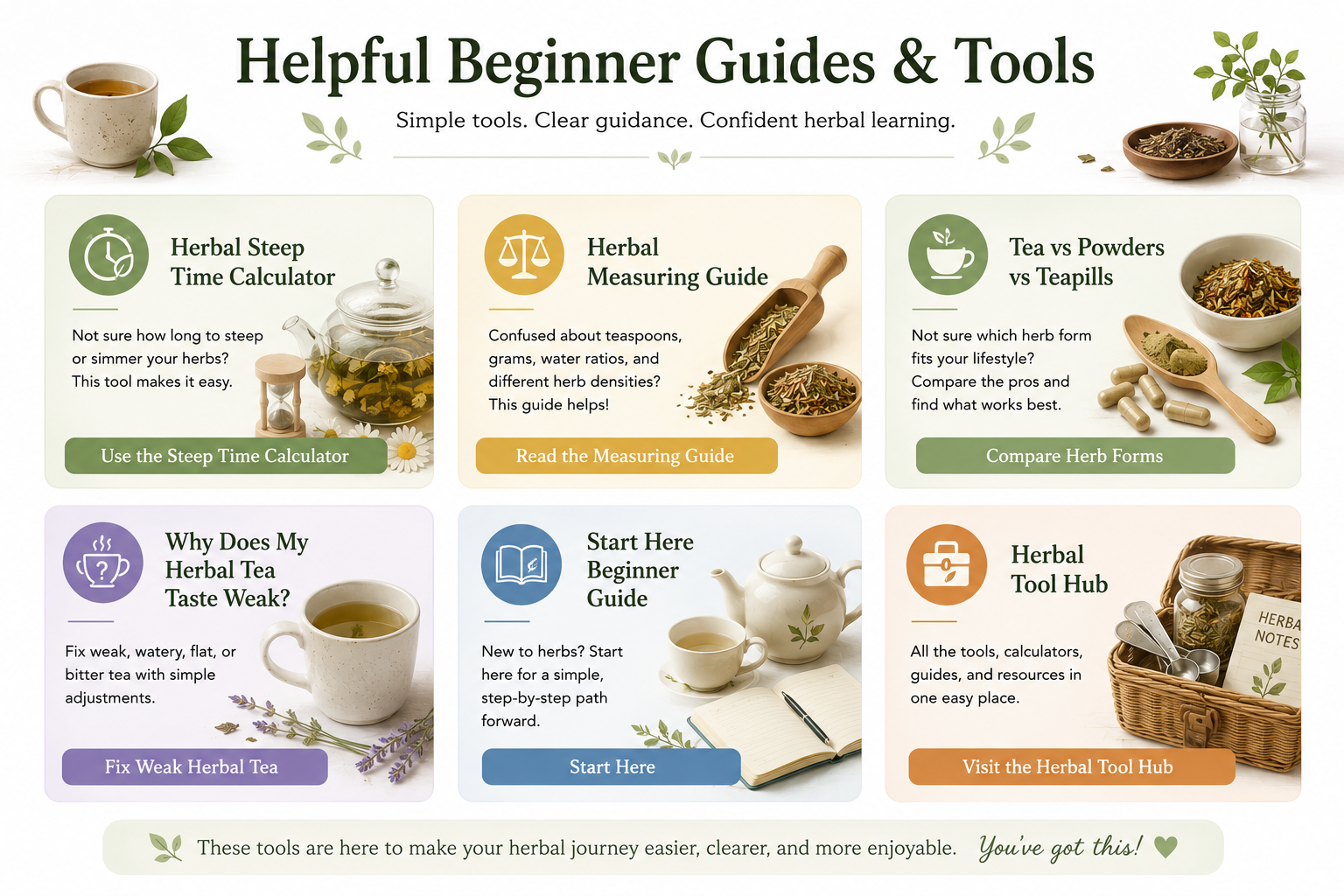
Helpful Beginner Guides & Tools
These pages help you keep learning without feeling like you need to understand everything at once.
Herbal Steep Time Calculator
Helpful if you are not sure how long to steep or simmer herbs.
Herbal Measuring Guide
Helpful if you are confused about teaspoons, grams, water ratios, and herb density.
Tea vs Powders vs Teapills
Helpful if you are unsure which herb form fits your lifestyle.
Why Does My Herbal Tea Taste Weak?
Helpful if your tea tastes watery, bitter, flat, or disappointing.
Herbal Tool Hub
Helpful if you want calculators, guides, and beginner tools in one place.
Still Wondering Where to Start?
Start simple. One goal. One herb form. One realistic routine.
You do not need to become a mountain hermit tea master by Friday afternoon.
Start HereUse Herbal Tools
Shop Bulk Herbs Shop Teapills
Final Thoughts
If you are wondering, “How do I know if my herbs are actually working?” the honest answer is: sometimes you notice quickly, sometimes it takes time, and sometimes it is subtle.
That is normal.
The people who usually do best with herbs are not the people chasing instant miracles. They are the people willing to experiment, stay consistent, learn gradually, pay attention, and build simple routines.
One cup at a time.
Usually after accidentally making at least one mug of tea that tasted like somebody boiled a backpack in hot water.
Educational Disclaimer: This information is for educational purposes only and is not intended to diagnose, treat, cure, or prevent any disease. Always consult a qualified healthcare professional before using herbs, especially if pregnant, nursing, taking medication, managing a health condition, or preparing herbs for children.