
400-Pound Shelves + The Right Herbs = Results
The Day the World Fell on Me
 Back in 1988 - Feels like a lifetime ago. I found myself in a dire situation: a 400-pound shelving unit unexpectedly decided to fall on my lower back. One moment I was minding my own business and next, I was introduced to a level of pain that made every step feel like I was a 100-year-old fragile elder. I turned to herbs because I believed nature had a cure, but let’s be honest—I wasn't prepared for how unpredictable, scary, and occasionally ridiculous that road would be.
Quick Answer: Yes, This Happened To Me Too
Many herbs fail not because the herbs are bad — but because the preparation method is wrong. Flowers and leaves are often steeped, while roots, bark, mushrooms, and dense herbs usually need simmering through a decoction method.
The "Herbal Fog": I Get the Frustration
If you’ve ever stood in your kitchen staring at a bag of roots feeling completely overwhelmed, please know: I have been exactly where you are.
It’s frustrating when you're in pain and everything feels like a guessing game. I remember feeling like a "mad scientist," surrounded by bubbling pots and strange-smelling barks, wondering if I was actually helping myself or just making a mess. I know that overwhelming fear:
-
The "Google Trap": Feeling like you need a PhD just to figure out what a "rhizome" is.
(Actually, that what I did, I went to school and got my Master's Degree in Herbology.) -
The "Am I Doing This Right?" Panic: Wondering if a "pinch" is enough or if you’re about to accidentally turn into a philosopher like I did during my "animated debate with my cat" phase.
-
The "Slow Sunrise": Herbal results aren't usually like a light switch—they're a slow burn, which makes you wonder if anything is happening at all.
The Turning Point: Why My Tea Was Failing Me
For a long time, I just made teas. I’d steep the herbs in hot water, sip, and hope for the best. They were good, but they weren't matched for the level of inflammation I was fighting. I realized my potent barks and roots were "trapped"—the herbs I had were not suited to tea because they should have been decocted.
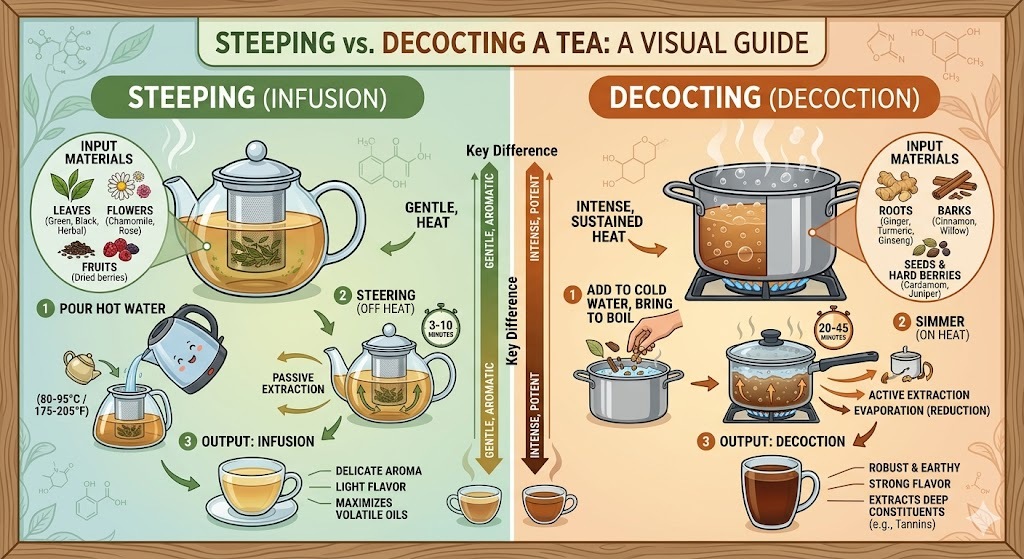
Once I started to decoct the herbs, everything changed.
It wasn't an overnight miracle, but a gradual and constant improvement. I actually remember the first morning I got out of bed without moaning. I stood up, felt my strength return, and realized: I finally have this pain and inflammation beat.
Real Herbs for Real People
I’ve been family-owned since 1994 because I never want you to feel as lost as I did. We provide quality-screened, non-sulfur herbs because the "right herbs" are the foundation of your results. We aren't here to give you a quick fix; we’re here to provide the tools and the education so you can find your own "morning without a moan".
Introducing: Our New Herbal Tool Kits
We designed these kits specifically to take the guesswork out of herbal wellness. Whether you are looking to support your energy or manage your daily stress, these kits provide a clear path forward so you don't have to wander through the "fog" alone.
 Sarah’s Pro-Tip: Are You Steeping or Decocting?
One of the biggest reasons people feel herbs "aren't working" is simply the preparation method. Just as I discovered after my injury, different parts of the plant require different levels of heat to release their healing power.
-
When to Steep (Make a Tea): Use this for delicate materials like Sang Ye (Mulberry Leaf), flowers, or small berries like Gou Qi Zi (Goji Berries). Pour boiling water over the herbs, cover, and let sit for 5–10 minutes.
-
When to Decoct (The "Simmer" Method): Use this for "heavy hitters" like He Huan Pi (Mimosa Bark) or roots like Shan Yao (Chinese Yam). Place these in a pot with water, bring to a boil, and then simmer on low for 15–20 minutes to "cook" the medicine out of the fiber.
In Simple Terms
Herbs can feel confusing at first, but the preparation method is often simpler than people think.
- Steeping = lighter herbs
Leaves, flowers, and delicate herbs are usually steeped like tea. - Decoction = simmering dense herbs
Roots, bark, mushrooms, seeds, and tougher herbs usually need simmering. - Roots and bark need more heat
Dense herbs often require longer cooking times to release their compounds. - Weak tea is often a preparation problem
Many people simply are not using enough herb or steeping long enough. - The right herb form matters
Tea, powders, teapills, and extracts all fit different lifestyles and routines.
What Most People Get Wrong About Herbs
One of the biggest reasons people feel herbs “do not work” is because they assume all herbs prepare the same way.
But steeping dense roots, bark, mushrooms, or seeds like ordinary tea bags is one of the most common beginner mistakes.
Many herbs need:
- longer steep times
- stronger water ratios
- simmering instead of steeping
- more consistent use
- the correct herb form for the person’s lifestyle
Most people are not failing because herbs are useless.
They are failing because nobody explained how to use them properly.
Beginner-Friendly Herbs Mentioned in This Guide
Gou Qi Zi (Goji Berries)
Taste: Slightly sweet
Best Preparation: Steeping
Beginner Level: Very easy
Popular in simple daily tea routines and often added directly to hot water.
Sang Ye (Mulberry Leaf)
Taste: Mild and earthy
Best Preparation: Steeping
Beginner Level: Easy
Typically prepared like tea using lighter steeping methods.
Shan Yao (Chinese Yam)
Taste: Mild and starchy
Best Preparation: Decoction
Beginner Level: Moderate
Usually simmered because roots require stronger extraction methods.
He Huan Pi (Mimosa Bark)
Taste: Mildly earthy
Best Preparation: Decoction
Beginner Level: Moderate
Dense bark materials are often simmered to help extract their constituents.
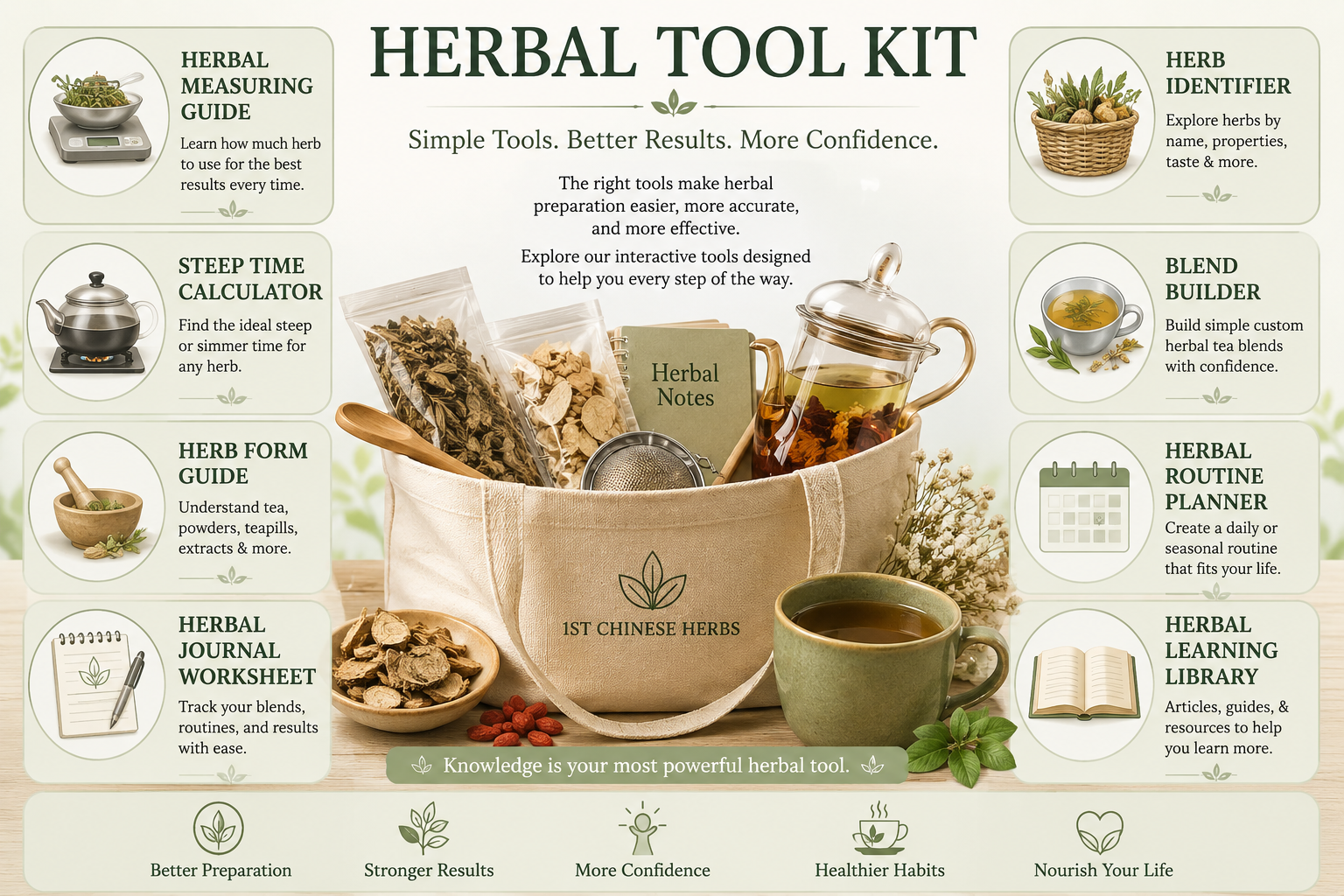
Helpful Beginner Herbal Guides & Tools
If this page helped things make more sense, these beginner-friendly guides can help you continue learning step-by-step.
- Start Here Beginner Guide
- The Complete Guide to Herbal Tea
- Herbal Measuring Guide
- Herbal Steep Time Calculator
- Tea vs Powders vs Teapills
- 7 Common Chinese Herb Mistakes
- Herbal Tool Hub
New to Herbs?
You do not need to learn everything overnight.
One of the biggest reasons beginners feel overwhelmed with herbs is because they try to learn: everything, every herb form, every preparation method, and every wellness routine all at once.
That usually leads to confusion, frustration, and cabinets full of herbs that never get used.
Most experienced herbal users actually started much simpler than people realize.
Instead of trying to master everything immediately, start with:
One Goal
Choose the main thing you want to focus on first.
Examples might include:
- Learning how to prepare herbs correctly
- Building a simple evening tea routine
- Understanding the difference between tea and teapills
- Learning how to measure herbs properly
- Finding an easier daily wellness routine
Trying to focus on too many goals at once usually becomes overwhelming very quickly.
One Herb Form
Not every herb needs to be brewed the same way.
Some people enjoy traditional herbal tea.
Others prefer: powders, teapills, extracts, or capsules because they fit their schedule better.
The best herb form is usually the one that realistically fits your lifestyle and daily routine.
One Daily Routine
Herbs tend to work best when they become part of a steady routine instead of something used randomly once in a while.
This does not need to be complicated.
For many beginners, a routine might simply be:
- A warm cup of herbal tea in the evening
- A morning mushroom powder drink
- Taking teapills at the same time each day
- Learning how to simmer herbs properly once or twice a week
Simple routines are usually easier to stay consistent with long-term.
One Preparation Method
Many beginners become confused because different herbs require different preparation methods.
Some herbs are: steeped, others are simmered, while powders and teapills are used completely differently.
Instead of trying to master every preparation style immediately, focus on learning one method first.
That is usually where confidence starts to build.
The truth is: herbs usually become much easier once you stop trying to do everything perfectly all at once.
Most experienced herbal users learned step-by-step over time — not overnight.
What’s your herbal story? Are you currently in the "fog" or have you had your own "aha!" moment? Hit reply and let me know—I’m actually here reading these!
Author: Sarah Johnson
Updated: May 11, 2026