 A classic Chinese herb traditionally used to clear summer-heat and clear deficient-heat patterns (the “low-grade, lingering warmth” style of heat).
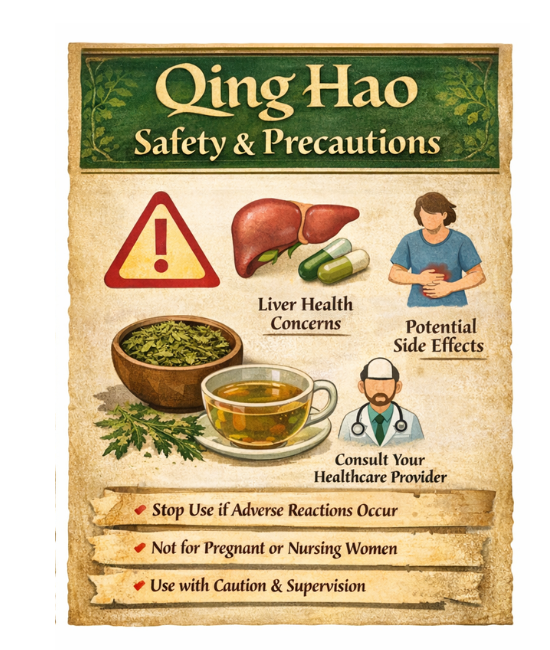 Cautions, Side Effects, and Interactions
There are no products listed under this category.
1) History, identity, and “Qing Hao” in Chinese medicine
-
Hsu E. (2006) The history of qing hao in the Chinese materia medica. (PMID: 16566952) — Strong source for: historical use, naming/identity issues (qing hao vs huang hua hao), and classic preparation notes from Chinese texts. PubMed
-
Hsu E. (2006) Reflections on the ‘discovery’ of the antimalarial qinghao. (PMID: 16722826) — Supports: the link between qinghao and the discovery of artemisinin (qinghaosu) in the 1970s. PubMed+1
2) Artemisinin in Artemisia annua and what tea/infusion actually extracts
-
van der Kooy F, Verpoorte R. (2011) The content of artemisinin in the Artemisia annua tea infusion. (PMID: 21544776) — Supports: artemisinin is present in tea, extraction varies by method/temperature, and measured infusion content. PubMed
-
Weathers PJ, et al. (2012) The flavonoids casticin and artemetin are poorly extracted into A. annua tea infusion… (PMC) — Useful for: showing tea extraction differs by compound, stability/behavior of constituents, and that “tea chemistry” is not one-size-fits-all. PMC
-
Weathers PJ, et al. (2014) Dried-leaf Artemisia annua: A practical malaria therapeutic… (PMC) — Helpful background on: dried-leaf preparations, extraction considerations, and broader chemistry discussion (still keep your claims DSHEA-clean). PMC
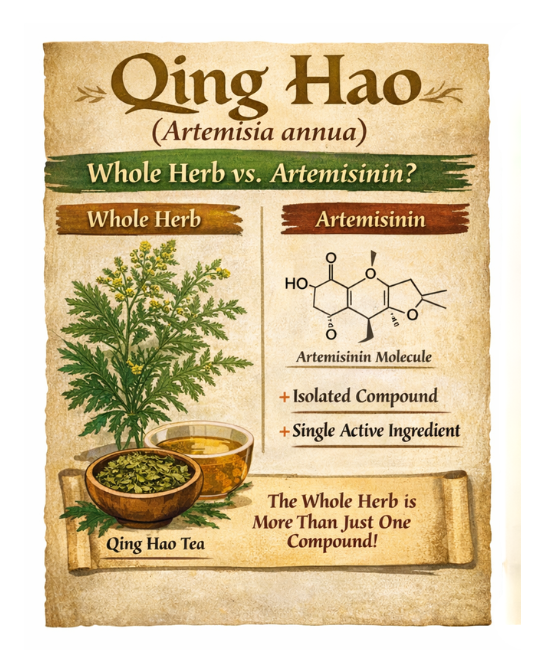
3) “Whole herb vs single compound” (why artemisinin ≠ the whole plant)
-
van der Kooy F, Sullivan SE. (2013) The complexity of medicinal plants: The traditional Artemisia annua formulation, current status and future perspectives. (PMID: 23973523) — Supports: “not just one compound,” whole-plant complexity, and why standardization varies. PubMed
-
Gruessner BM, et al. (2019) It is not just artemisinin: Artemisia sp. for treating diseases… (PMC) — Broad review: phytochemistry and multiple bioactives; cite carefully and avoid disease-treatment wording on your page. PMC
4) Safety
-
Ruperti-Repilado FJ, et al. (2019) A Case of Acute Cholestatic Hepatitis Due to Artemisia annua… (PMID: 31681778) — Direct support for: rare but serious liver injury reports associated with Artemisia annua tea use. PubMed
-
Savage RL, et al. (2019) Suspected Hepatotoxicity… Artemisia annua extract… (PubMed + PMC case series) — Supports: pharmacovigilance/case series concerns with certain Artemisia annua extracts. PubMed+1
-
Jamil M, et al. (2023) A Case of Acute Liver Failure Due to Artemisinin-Derived… (PMC) — Supports: liver injury reported with supplements containing artemisinin/derivatives (again: use as a safety reference, not a “benefits” claim). PMC
5) Clinical tea studies
If you cite clinical trials, you must also keep the page clear that herbs aren’t a substitute for medical treatment and avoid implying efficacy for malaria.
-
Mueller MS, et al. (2004) Randomized Controlled Trial of a Traditional Preparation of Artemisia annua… (PMID: 15109558) — Supports: Artemisia annua tea has been studied clinically in malaria contexts (medical context only; don’t market as treatment). PubMed
-
Munyangi J, et al. (2019) trial page exists on PubMed, but note: it has a retraction notice. I would not use it as supportive evidence on your page; if mentioned at all, cite the retraction. PubMed+1