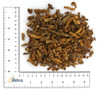


Solomon’s Seal Root (Yu Zhu) – Cut & Sliced
Premium Yin-Nourishing Chinese Herb | Lab-Tested | Geo-Authentic
Solomon’s Seal root, known in Traditional Chinese Medicine as Yu Zhu, is a deeply nourishing, moisture-restoring herb traditionally used to support dry lungs, dry digestion, and depleted Yin conditions. Unlike stimulating tonics, Yu Zhu works gently and restoratively, helping replenish fluids, soothe irritation, and support long-term balance.
This cut and sliced Solomon’s Seal root is lab-tested, geo-authenticated, and harvested at peak maturity, making it ideal for teas, decoctions, and especially cold infusions.
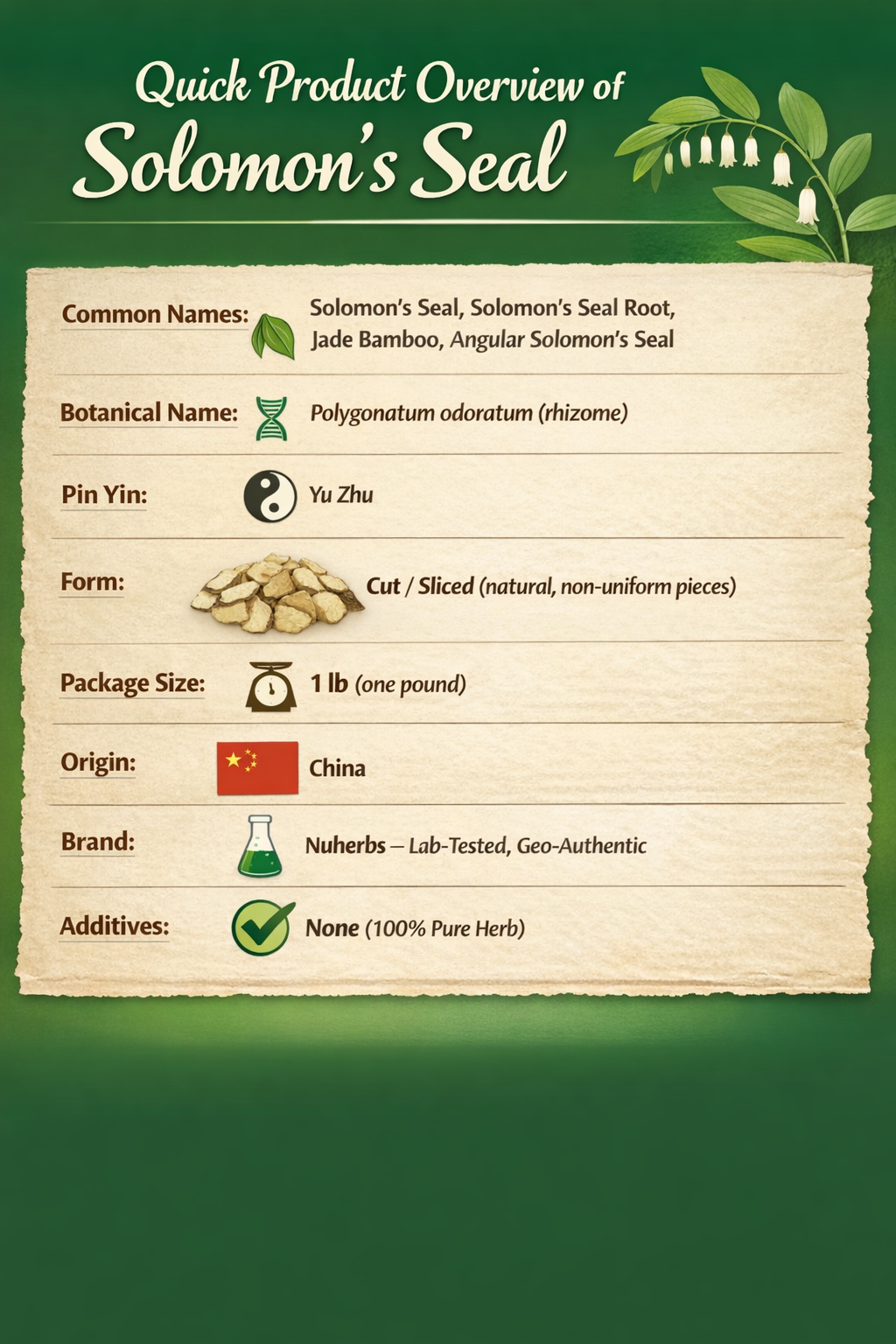
Quick Product Overview Of Solomon's Seal
-
Common Names: Solomon’s Seal, Solomon’s Seal Root, Jade Bamboo, Angular Solomon’s Seal
-
Botanical Name: Polygonatum odoratum (rhizome)
-
Pin Yin: Yu Zhu
-
Form: Cut / sliced (natural, non-uniform pieces)
-
Package Size: 1 lb (one pound)
-
Origin: China
-
Brand: Nuherbs – Lab-Tested, Geo-Authentic
-
Additives: None (100% pure herb)
What Makes Solomon’s Seal (Yu Zhu) Unique?
Most herbs marketed for joints, lungs, or digestion are warming, stimulating, or drying over time. Yu Zhu is different.
Solomon’s Seal is classified in Chinese medicine as a Yin-nourishing, dryness-moistening herb, meaning it helps:
-
Restore moisture rather than force stimulation
-
Soothe irritated tissues instead of masking discomfort
-
Support long-term resilience rather than short-term effects
This makes it especially valuable for people who experience:
-
Dry or scratchy throat
-
Non-productive or dry cough
-
Dry digestion or low stomach fluids
-
Tight, under-lubricated joints or sinews
-
General dryness from stress, aging, or climate
Traditional Chinese Medicine (TCM) Actions
In TCM, Yu Zhu is traditionally used to:
-
Nourish Lung Yin – supports moisture in the respiratory tract
-
Nourish Stomach Yin – helps maintain digestive fluids
-
Moisten dryness – without creating heaviness or stagnation
-
Support sinews and connective tissue – gentle lubrication
Taste & Nature:
-
Sweet
-
Slightly cold
-
Slightly bitter
Meridians Entered:
-
Lung
-
Stomach
Naturally Occurring Plant Compounds
Solomon’s Seal contains a range of naturally occurring constituents, including:
-
Convallarin & Convallamarin – traditionally associated with cardiovascular support
-
Allantoin – known for soothing and tissue-supportive properties
-
Kaempferol & Quercitol – plant flavonoids
-
Azetidine-2-carboxylic acid
-
Trace Vitamin A
These components help explain why Yu Zhu has long been valued for soothing, cooling, and restorative applications rather than stimulation.
How Solomon’s Seal Is Traditionally Used
Dry Coughs & Throat Irritation
Yu Zhu is considered demulcent, meaning it coats and soothes irritated tissues. Traditionally used in teas for:
-
Dry, raspy, or irritated throat
-
Non-productive coughs
-
Lung dryness
Joints, Tendons & Ligaments
Solomon’s Seal is well known in multiple herbal traditions for supporting:
-
Joint comfort
-
Connective tissue hydration
-
Tendons and ligaments
This reputation appears in both Chinese medicine and Native American herbal use.
Digestive Dryness
Yu Zhu supports digestive fluids without irritating the stomach, making it suitable for people who experience:
-
Dry digestion
-
Reduced appetite related to dryness
-
Sensitivity to harsher herbs
Taste Profile
Solomon’s Seal has a mild, slightly sweet, nutty flavor.
It is not bitter or harsh and blends well into teas and soups.
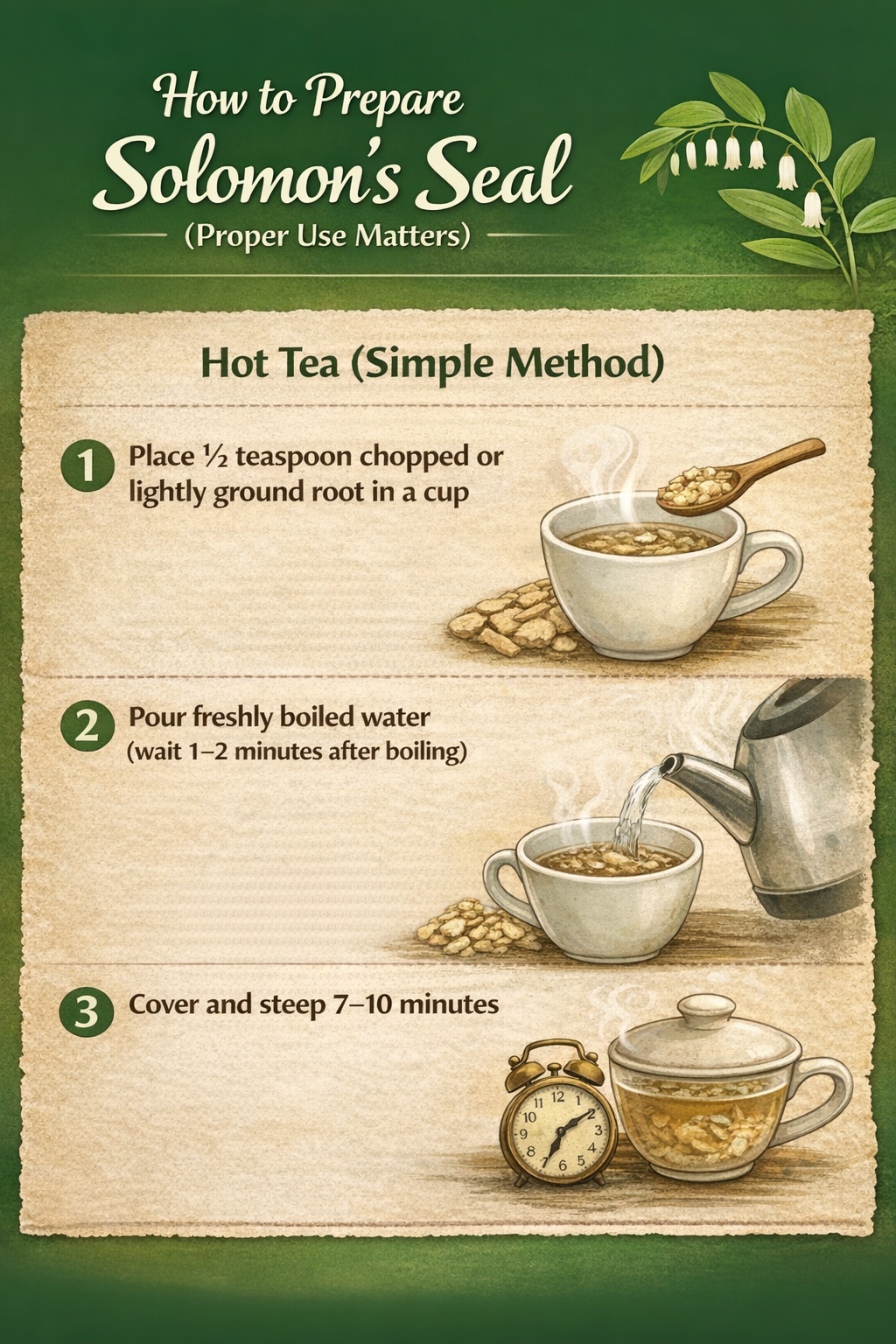
How to Prepare Solomon’s Seal (Proper Use Matters)
Hot Tea (Simple Method)
-
Place ½ teaspoon chopped or lightly ground root in a cup
-
Pour freshly boiled water (wait 1–2 minutes after boiling)
-
Cover and steep 7–10 minutes
Cold Infusion (Best for Dryness)
Cold infusion preserves the demulcent qualities.
-
Add 1 tablespoon sliced root to room-temperature water
-
Cover and steep 7–10 hours
-
Strain and sip throughout the day
This is the preferred method for throat, lung, and digestive dryness.
Traditional & Culinary Use
Solomon’s Seal rhizomes are naturally rich in starch.
Historically:
-
Native American tribes processed the starch to make breads and soups
-
Dried root was ground and added to foods as nourishment
This dual use highlights Yu Zhu’s role as both medicine and food.
Herbs That Pair Well With Solomon’s Seal
Common complementary herbs include:
-
Horsetail – mineral support
-
Nettle Leaf – nutritive and balancing
These pairings enhance nourishment without increasing dryness.
Safety & Cautions
-
Do not use if pregnant or nursing
-
Avoid use in cases of damp-phlegm or qi stagnation in the stomach
-
Consult a qualified practitioner if unsure
How Solomon’s Seal Fits Modern Herbal Use
Traditional Chinese herbs are commonly used as:
-
Teas and infusions
-
Decoctions
-
Tinctures
-
Capsules or powders
-
Foot baths and topical preparations
They are intended to support balance and wellness, not replace medical care.
Frequently Asked Questions
Is Solomon’s Seal the same as Yu Zhu?
Yes. Yu Zhu is the Chinese Pin Yin name for Polygonatum odoratum.
Is Solomon’s Seal stimulating?
No. It is considered nourishing and moistening rather than stimulating.
Is cold infusion really better?
For dryness, yes. Cold infusion preserves the demulcent qualities.
Can Solomon’s Seal be used long-term?
Traditionally, yes—under guidance and as part of a balanced approach.
Learn More
Nuherbs takes great care to ensure the herb is harvested at the proper level of maturity and correct time of the season to maximize potency.
About Nuherbs Lab Tested Quality.
Each batch of herbs is dual-lab tested by our in-house lab and an independent third-party lab. Our in-house lab is equipped with instruments such as a high-performance liquid chromatography, moisture determination meter, a Fourier transform infrared spectrometer, an atomic absorption spectrophotometer, a gas chromatograph, etc.
In addition, the following additional tests are performed:
- Micro bacteria
- Pesticides - over 200 pesticides tested for (Uab 2000 screen).
- Heavy Metals - Lead, Mercury and Arsenic
- Sulphur
Traditional Chinese Herbs encompasses the use of different parts of plants, such as the leaves, roots, stems, flowers, and seeds. These plant parts are often used as a tea, decoctions, extracts, made into capsules or even a footbath. These bulk herbs should be regarded as an added feature to modern western healthcare, and not as a replacement. Chinese traditional herbs ( Teas ) emphasize harmony and balance.
We encourage you to educate yourself on herbs and supplements, by researching reputable sites, and books. Having an open discussion with your physician on what will be most beneficial for your health issues. And lastly discussing interaction of herbs and pharmaceuticals with your pharmacist or physician.
Check out our How to Use Bulk Herbs page to see how to use herbs correctly. Our web page is constantly expanding, as of today we have articles on:
|
Hard/Dried Berries |
YES |
YES |
YES |
Grind First |
NO |
|
Soft Fruit |
YES |
YES |
YES |
YES |
YES |
|
Leaves |
YES |
YES |
YES |
YES |
YES |
|
Roots/Tubers |
YES |
YES |
Decoct First |
Grind First |
NO |
|
Bark |
YES |
YES |
Decoct First |
Grind First |
NO |
|
Stems |
YES |
YES |
Decoct First |
Grind First |
YES |
|
Flowers |
YES |
YES |
Make Tea First |
Grind First |
YES |
References:
https://trustherb.com/health-benefits-of-solomon-seal-also-cakked-mahameda/
https://www.healthbenefitstimes.com/smooth-solomons-seal/
https://www.wildrootsapothecary.com/blogs/herbal-musings/solomons-seal-the-musculoskeletal-healing-wizard
1 Review
-
Solomons Seal
Excellent product, we us it in our pain relieving topical salve. Your service is always excellent. Thank you