
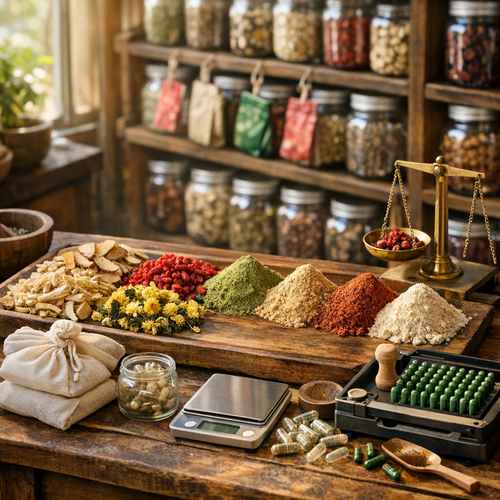
How to Use Chinese Bulk Herbs Correctly: A Simple Beginner Guide (No Guessing)
Posted by 1st Chinese Herbal Review Team on Feb 6th 2026
How to Use Chinese Bulk Herbs Correctly
7 Mistakes Beginners Make (and Easy Fixes)
Learn how to use Chinese bulk herbs the right way—cut vs powder, steep vs simmer,
storage, and beginner steps to make effective herbal tea at home.
If you’ve ever bought beautiful Chinese herbs… and then stared at the bag like, “Okay, now what?” — you’re not alone.
Most people don’t get great results from Chinese herbs for one simple reason: they’re using the wrong method. Many Chinese herbs aren’t “tea bag herbs.” They’re traditionally prepared as a decoction (a gentle simmer), especially roots, bark, and dense ingredients.
This guide is beginner-friendly, and focused on Chinese herbs only—so you can stop guessing and start using your herbs correctly.
Quick Summary Of How To Use Herbs
(Do These 5 Things and You’ll Be Ahead of 90% of People)
-
Choose the right form: cut vs powder vs extract
-
Simmer dense herbs (roots/bark)—don’t just steep
-
Measure consistently (use a scale that can measure grams when possible)
-
Store herbs airtight (moisture ruins quality fast)
-
Keep blends simple: start with 2–4 herbs, not 12
Steep vs Simmer Table
| Herb material (Chinese herbs) | Best method | Typical time | Why |
|---|---|---|---|
| Roots (dense slices) | Simmer (decoction) | 20–45+ min | Needs time to extract well |
| Bark | Simmer (decoction) | 30–60 min | Very dense material |
| Seeds / hard fruits | Simmer (decoction) | 20–45 min | Dense; benefits from heat/time |
| Rhizomes | Simmer (decoction) | 20–45 min | Extracts better with simmering |
| Leaves | Steep (infusion) | 10–20 min | Delicate; overcooks easily |
| Flowers | Steep (infusion) | 10–15 min | Best aroma and taste via steeping |
| Aromatics | Steep or add late | 5–15 min | Preserves volatile oils |
| Powders | Capsule / mix | N/A | No simmer needed (texture can be gritty) |
| Extract powders | Mix | N/A | Concentrated; dissolves easily |
One-line rule: If it’s hard and dense, simmer. If it’s light and leafy/flowery, steep.
Need More information on steeping your herbs? Use our Herbal Steep Timer
What are Chinese bulk herbs?
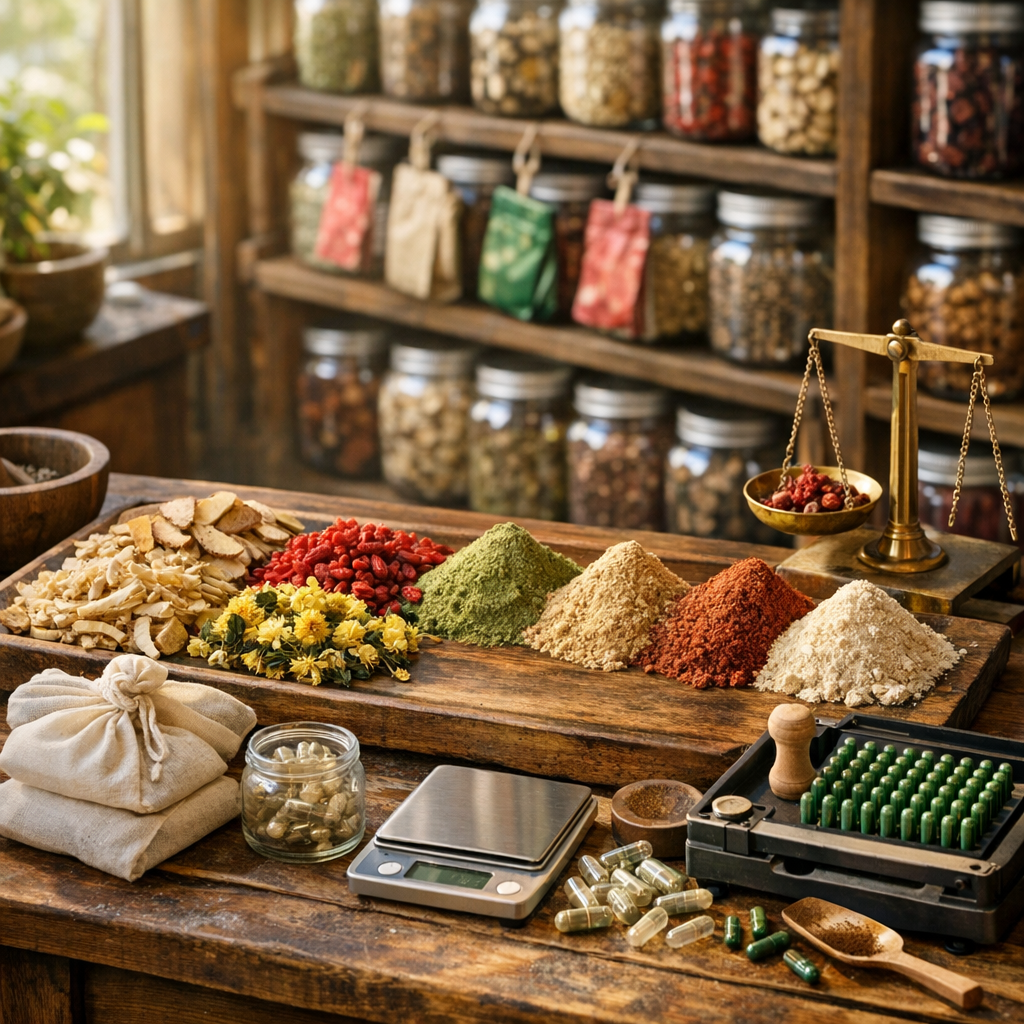
Chinese bulk herbs are traditional botanicals used in Traditional Chinese Medicine (TCM) and culinary-style preparations. They’re often sold as:
-
Cut/sliced pieces (best for simmering/decoctions)
-
Powders (best for capsules or mixing into formulas)
-
Extract powders (concentrated and convenient)
Different forms work best for different preparation styles—this is where most beginners accidentally mess up.
The 7 Most Common Mistakes (and how to fix them fast)
Mistake #1: Steeping everything like green tea
Why it’s a problem
Many Chinese herbs are dense (roots, bark, seeds). A quick steep often doesn’t extract much.
Fix in 1 minute
Use this cheat sheet:
| Herb type | Best method | Typical time |
|---|---|---|
| Roots, bark, seeds, dense slices | Simmer (decoction) | 20–45+ minutes |
| Leaves, flowers, light aromatics | Steep (infusion) | 10–20 minutes |
| Powders | Mix / capsule | No simmering needed |
Mistake #2: Buying powder when you needed cut (or vice versa)
Fix
-
Cut herbs: best for traditional simmering and strong tea
-
Powder: best for capsules, quick mixing, formulas
-
Extract powder: best for convenience and smaller serving size (not identical to a decoction)
Rule of thumb:
If you want a traditional tea you simmer → choose cut.
If you want capsules or fast blending → choose powder.
Mistake #3: Using random spoonfuls instead of a consistent method
Why it matters
Inconsistent amounts create inconsistent results.
Fix
-
Use a small kitchen scale if possible (easiest upgrade)
-
If you don’t have one, use the same spoon every time and write it down
Consistency beats perfection.
Mistake #4: Expecting instant results from a slow-building approach
Chinese herbs are often used as part of a routine. Some people notice quick changes (especially in comfort or digestion), but many benefits come from consistent use.
Fix
Give a new routine a fair trial:
-
Start simple
-
Track how you feel - This is a huge bonus, as herbs work gradually
-
Adjust gradually rather than changing everything at once
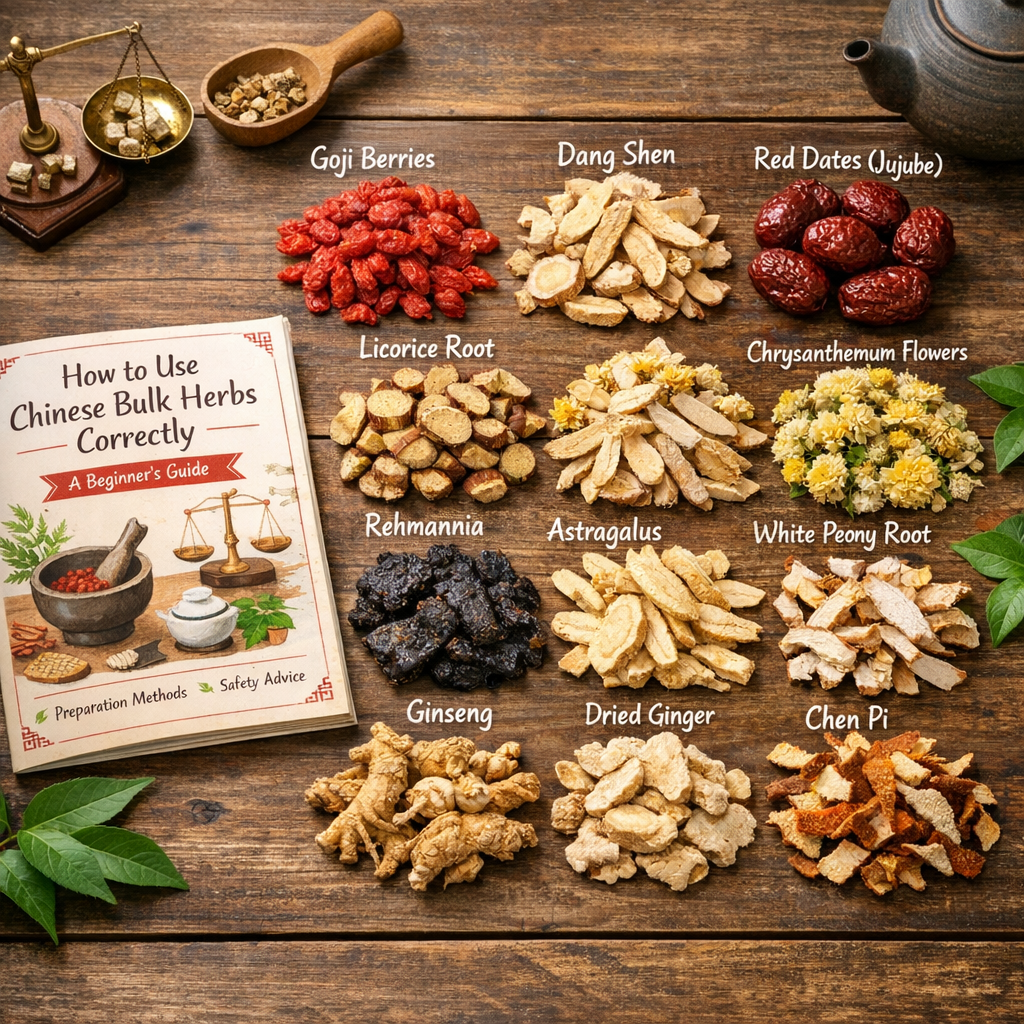
Mistake #5: Making blends too complicated
A “kitchen sink” blend is one of the fastest ways to waste herbs.
Fix: Use the simple 3-role blend method
Start with:
-
1–2 main herbs (your focus)
-
1 supporting herb
-
1 harmonizer (optional)
Beginner blends should be 2–4 herbs total.
Mistake #6: Storing herbs where moisture and odors ruin them
Bulk herbs can absorb moisture and odors (especially in kitchens).
Fix
-
Airtight container or reseal tightly
-
Cool, dry cabinet away from stove/steam
-
Label the herb + date opened
Mistake #7: Ignoring cautions and interactions
Even natural products can be inappropriate for certain people.
Fix
If you are pregnant/nursing, have a medical condition, or take prescriptions:
-
check with a qualified professional
-
start low and introduce one herb at a time
-
stop if you feel unwell
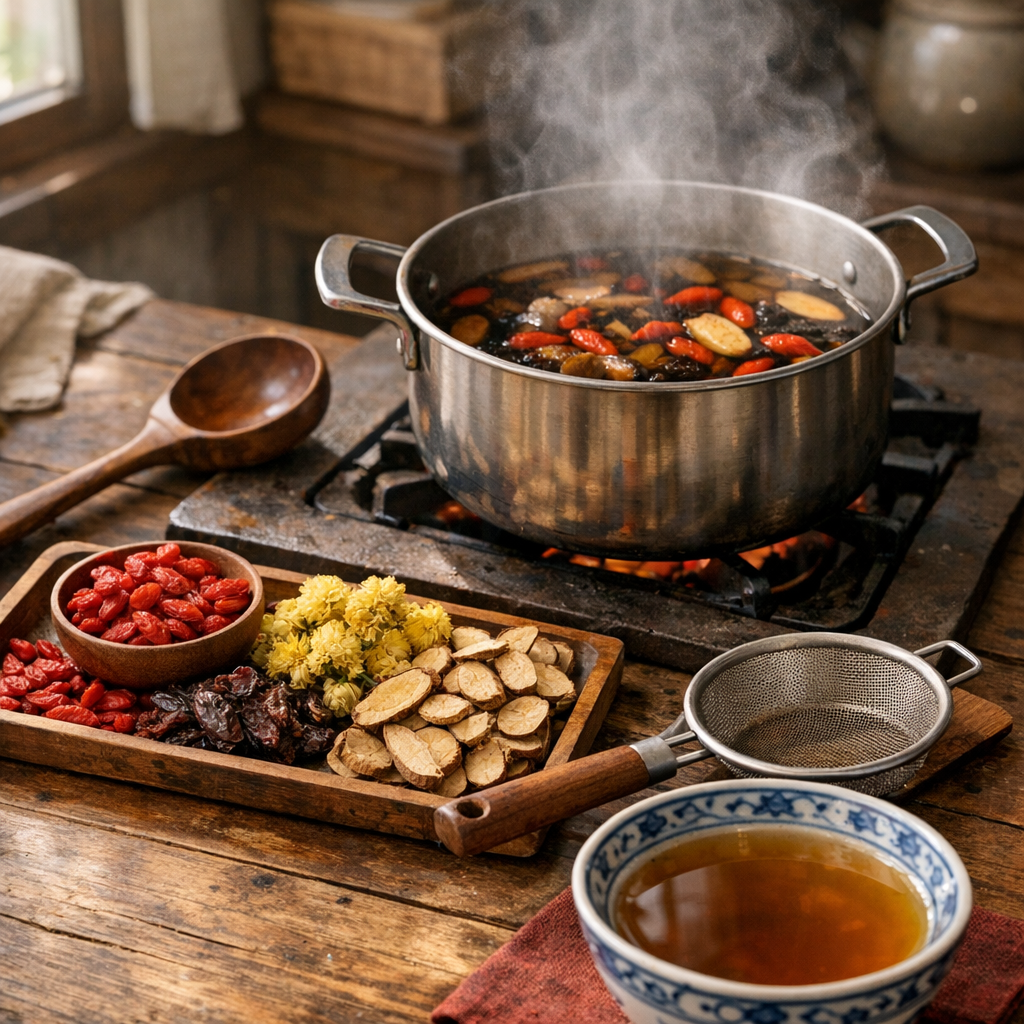
How to Make a Basic Chinese Herb Decoction (Beginner Steps)
This is the most useful “how-to” block on the whole page.
Basic method
-
Add herbs to a pot
-
Add water (enough to cover herbs + extra for simmering)
-
Bring to a gentle boil
-
Reduce to a low simmer
-
Simmer 20–45 minutes (depending on density)
-
Strain and drink warm
Storage
Refrigerate leftover decoction and use within 24–48 hours.
Simple Chinese Herb Examples
These are educational examples to show structure, not prescriptions.
Example A: “Warm & Cozy” style decoction structure
-
1 main herb (root)
-
1 supportive herb
-
optional harmonizer
Example B: “Cooling” style structure
-
1–2 cooling herbs
-
1 supporting herb
FAQs
How long do you boil Chinese herbs?
Many dense Chinese herbs are traditionally simmered as a decoction rather than briefly steeped. Simmer time depends on the herb type and form.
Decoction vs infusion: what’s the difference?
An infusion is steeped like tea. A decoction is gently simmered, usually used for roots/barks/dense herbs.
Can I capsule Chinese herb powder?
Yes—many people use powders for encapsulation because it’s convenient and avoids strong taste.
How should I store bulk Chinese herbs?
Airtight, cool, dry, away from heat and moisture. Label the date opened.
Why do my Chinese herbs feel like they aren’t working?
The most common reasons are preparation method errors (steeping instead of simmering), inconsistent amounts, wrong form, or expecting instant results.
Shop Chinese Herbs the Easy Way (No Guessing)
If you’re building a routine, match the product to the method:
-
Cut herbs → best for decoctions (simmered tea)
-
Powders → best for capsules and quick blending
-
Accessories → muslin bags, capsule tools, scales
Helpful Links
Editorial
Written by: Sarah Johnson
Last updated: 02/06/2026
This article is for educational purposes only and is not medical advice. Herbs may interact with medications and may not be appropriate for everyone. Consult a qualified professional if needed.