
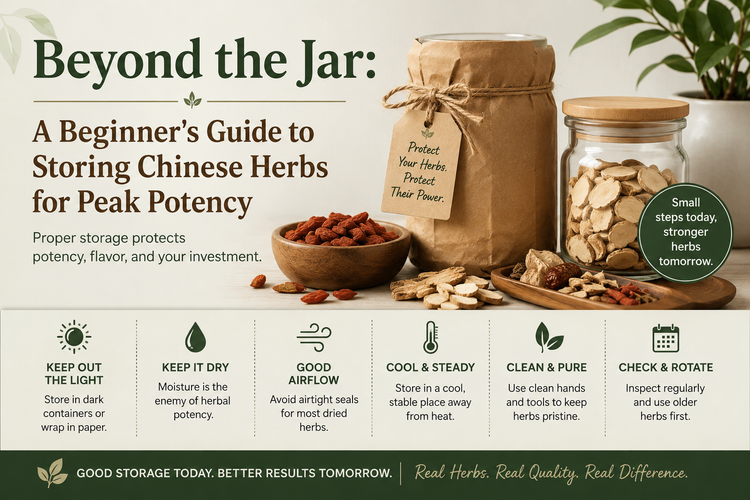
There Are More Ways Of Storing Herbs Than In Jars- A Beginner's Guide.
Posted by 1st Chinese Herbs Research Team. on May 21st 2026
Beyond the Jar: A Beginner's Guide to Storing Chinese Herbs for Peak Potency
Introduction
As a longtime herbalist, I cannot stress enough how crucial proper storage is to the vitality of your herbs. I will never forget the heartbreak of losing an entire batch of high-quality Gou Teng (Uncaria rhynchophylla) because I carelessly left it sitting in a humid cabinet. Mold completely overtook it within weeks. It was a harsh but valuable lesson: when it comes to plant medicine, freshness and proper handling are everything if you want real results from your infusions and decoctions.
Herbs are living things—even when dried—and they carry active therapeutic properties that degrade if neglected. By mastering a few simple storage techniques, you can lock in their healing virtues, vibrant colors, and rich aromas. Let’s make sure every single cup you brew is as potent and delicious as intended.
1. Keeping Tender Herbs Vibrant & Crisp (Fresh Herbs From The Garden)
Tender, aromatic herbs can wilt or lose their volatile oils incredibly fast without the right care. If you are working with fresh aromatic greens or delicate components, they require immediate attention to prevent them from turning into a sad, brown mess.
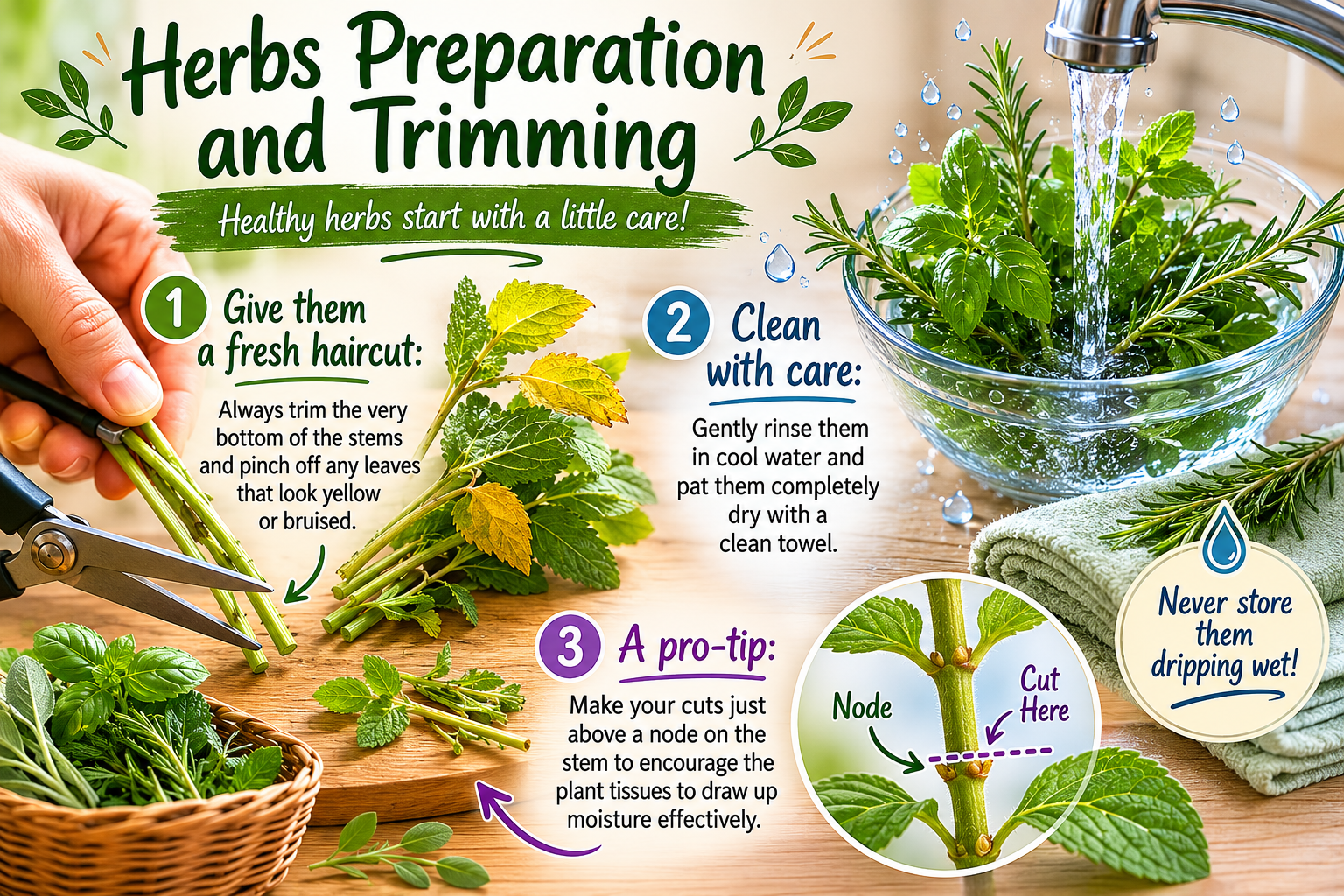
Preparation and Trimming
- Give them a fresh haircut: Always trim the very bottom of the stems and pinch off any leaves that look yellow or bruised.
- Clean with care: Gently rinse them in cool water and pat them completely dry with a clean towel. Never store them dripping wet!
- A pro-tip: Make your cuts just above a node on the stem to encourage the plant tissues to draw up moisture effectively.
The Mason Jar "Bouquet" Method
For delicate fresh herbs, place a slightly damp paper towel at the bottom of a glass jar, stand the trimmed stems upright on top of it, and seal the lid. This creates a perfectly balanced mini-greenhouse effect in your refrigerator. Just be sure to swap out the paper towel every couple of days to keep things clean. A tiny bit of maintenance goes a long way!
2. Managing Fresh, Hardy Rhizomes
When dealing with fresh, dense roots and rhizomes—like fresh Sheng Jiang (Ginger Root)—the goal is to maintain moisture balance without triggering mold. They need a cool, stable environment to preserve their pungent oils and crisp texture.
The Damp Towel Wrap
Wrap your fresh roots loosely in a slightly damp paper towel and place them inside an airtight container or silicone bag in the crisper drawer. This mimics the natural humidity of the earth, preventing them from shriveling up and drying out, while avoiding the excess pooling water that invites rot.
Pro-Tip: I use pure cotton towels; they seem to work much better than a paper towel, plus reusable, and save money.
3. Freeze-Drying: The Ultimate Luxury for Long-Term Preservation
Standard home freezing can easily cause freezer burn and ruin delicate plant tissues. However, if you are lucky enough to own a home freeze-dryer, you have access to the absolute gold standard of herbal preservation. Freeze-drying completely locks in the active chemical constituents, vivid colors, and aromatic profiles of your herbs for years.
How to Freeze-Dry Your Stock
Lay your fresh herbs—whether it's premium sliced roots or vibrant leaves—in a single layer on your freeze-dryer trays, ensuring they aren’t overlapping. Run the machine through its proper cycle. Once completed, immediately transfer the perfectly preserved herbs into a Mylar bag with an oxygen absorber or a tightly sealed glass jar. They will remain in a state of suspended animation, ready to deliver peak potency whenever you need them.
Pro-Tip: We cover our herbs with parchment paper before putting them into the freeze dryer. It stops them from being blown about when we take them out of the freeze dryer.
4. Traditional Air-Drying for Root and Bark Longevity
There is a profound, grounding nostalgia to traditional herb drying. I still remember the rich, earthy scent of my grandmother hanging batches of Chai Hu (Bupleurum) and sturdy roots to cure in the kitchen. For dried bulk herbs like Huang Qi (Astragalus) or Gan Cao (Licorice Root), protecting them from environmental enemies is paramount.
The Cool, Dark Rule
If you are drying fresh roots, slice them thin while fresh and spread them out in a dark, well-ventilated space with low humidity. Once your bulk herbs are bone-dry, keep them far away from direct sunlight, heat, and moisture. Store them in a dedicated herbal pantry or a dark cupboard—never above a hot stove or next to a humid sink.
5. Safeguarding Your Handcrafted Herbal Preparations
Once you’ve put the time and love into crafting your own liquid extracts, decoctions, or herbal oils, you need to protect that investment. Light damage (photodegradation) can break down active compounds faster than you think.
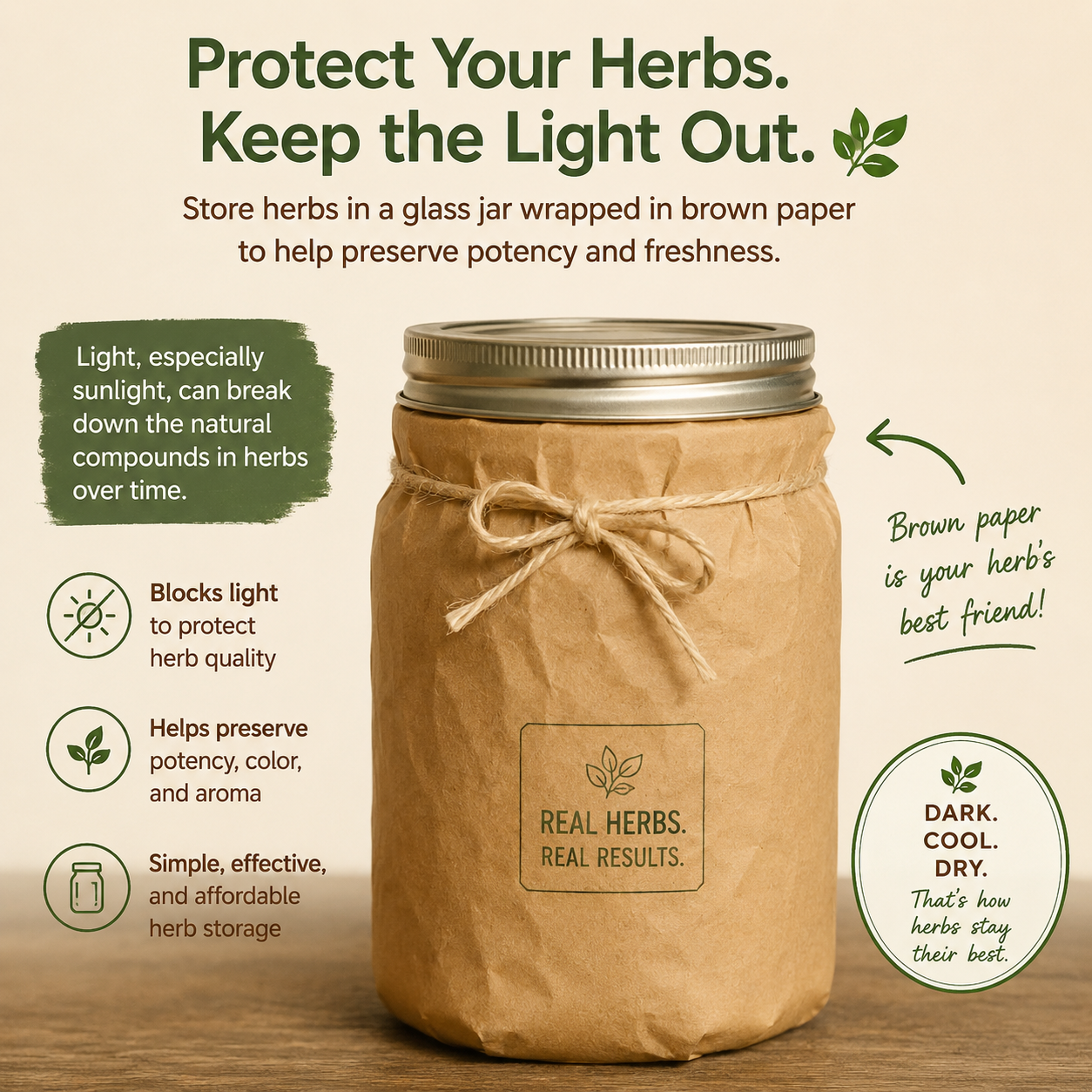 The Amber Glass Standard
Always store your finished liquid extractions in amber or cobalt glass bottles. The dark glass filters out harmful UV rays, significantly extending the shelf life of your remedies. Keep these bottles in a cool, dark cupboard to ensure they remain as reliable and strong as the day you strained them.
Pro Tip: Amber glass jars, at times, are hard to find. When we can't find them, we just wrap the mason jar with brown paper, and it works out perfect.
6. Containers Matter: Why Glass Wins Every Time
The container you choose can actively interact with your herbs. Plastic containers are often porous and can leach unwanted chemicals over time, or absorb the strong, pungent aromatic oils of herbs like Dang Gui (Angelica sinensis), permanently ruining the container and degrading the herb.
Always choose glass jars with tight-fitting, airtight lids. Glass is entirely non-reactive, non-porous, and odor-free. It creates an impenetrable barrier against oxygen and pests, keeping your herbal pharmacy pristine and organized.
Frequently Asked Questions
Can I store herbs while they are still damp from washing?
Absolutely not! Moisture is the ultimate enemy of stored herbs. Introducing even a tiny amount of trapped water into an airtight jar creates the perfect breeding ground for mold and bacteria, which will ruin your entire batch. Ensure everything is thoroughly patted dry or fully cured before sealing it away.
Conclusion
Taking the time to store your Chinese herbs properly isn't just about kitchen organization—it is a foundational practice of good medicine. When you open a jar of Huang Qi or Dang Gui months from now, you want to be greeted by that unmistakably rich, deep aroma and vibrant color. Treat your herbs with respect, and they will reward you with the highest level of therapeutic efficacy. Happy storing!