
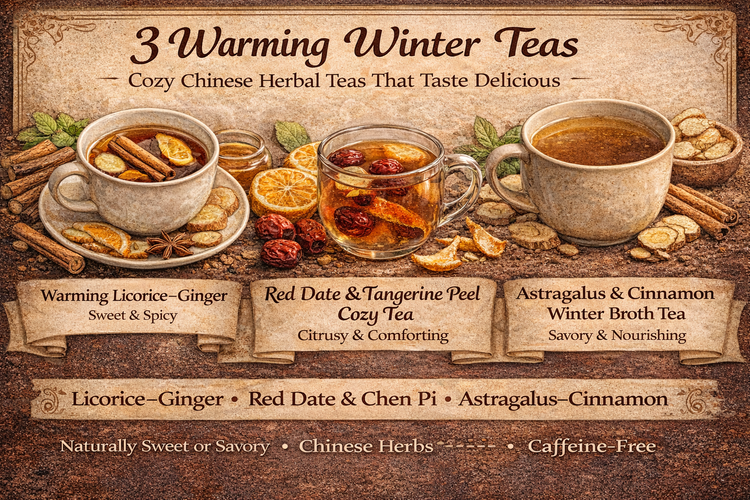
Three Warming Winter Teas That Taste as Good as They Feel
Posted by 1st Chinese Herbal Review Team on Jan 14th 2026
Cozy Chinese Herbal Teas You’ll Actually Want to Drink
When winter arrives, most people reach for hot drinks—but many herbal teas fall short. They’re bitter, flat, or feel more like medicine than comfort.
The truth is, Chinese herbal teas can be deeply warming, naturally sweet, and genuinely enjoyable when the right herbs are used the right way.
In this guide, you’ll discover three warming winter teas made with traditional Chinese herbs that are:
-
Cozy and comforting
-
Easy to prepare at home
-
Caffeine-free
-
Chosen specifically because they taste good, not just because they’re traditional
These are teas you’ll want to make again and again throughout the colder months.
Quick Winter Tea Guide - You Will Be Glad You Read
Best for sweet tea lovers: Licorice–Ginger Comfort Tea
Best after meals: Red Date & Tangerine Peel Cozy Tea
Best savory option: Astragalus & Cinnamon Winter Broth Tea
-
Brewing time: 15–40 minutes
-
Caffeine-free: Yes
-
Sweet or savory: Both options included
-
Beginner-friendly: Yes
Who These Winter Teas Are For
These teas are especially helpful if you:
-
Feel cold easily during winter
-
Want caffeine-free alternatives to coffee or black tea
-
Prefer gentle, traditional herbs over harsh flavors
-
Enjoy cozy daily rituals like evening tea
-
Want teas that feel comforting—not medicinal
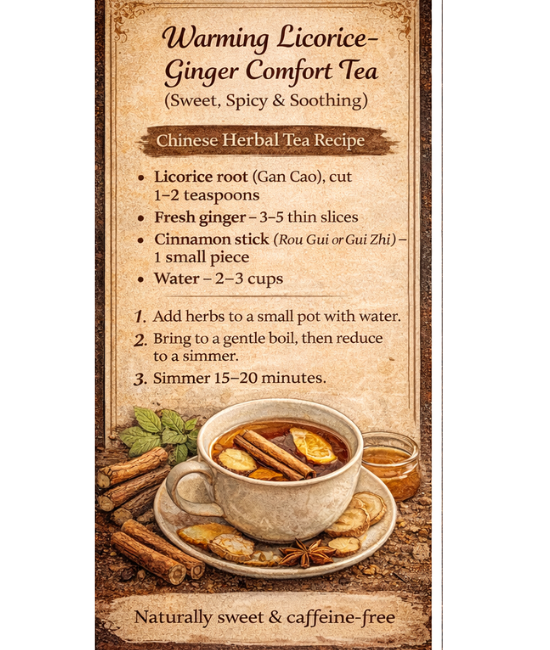
1. Warming Licorice–Ginger Comfort Tea
Sweet, Spicy, and Naturally Soothing
This is often the favorite for people new to Chinese herbs—because it’s naturally sweet without added sugar.
Why this tea works (Traditional perspective)
Licorice root (Gan Cao) is traditionally used to harmonize herbal formulas and soften flavors. Ginger (Sheng Jiang) adds warmth and spice, making this blend comforting and gently invigorating.
Ingredients (1–2 cups)
-
Licorice root (Gan Cao), cut — 1–2 teaspoons
-
Fresh ginger — 3–5 thin slices
-
Cinnamon stick (Rou Gui or Gui Zhi) — 1 small piece
-
Water — 2–3 cups
How to prepare
-
Add all ingredients to a small pot with water.
-
Bring to a gentle boil, then reduce to a simmer.
-
Simmer 15–20 minutes.
-
Strain and drink warm.
What it tastes like
Naturally sweet, softly spicy, and smooth—similar to a mild caffeine-free chai.
Best time to drink: Morning or early afternoon.
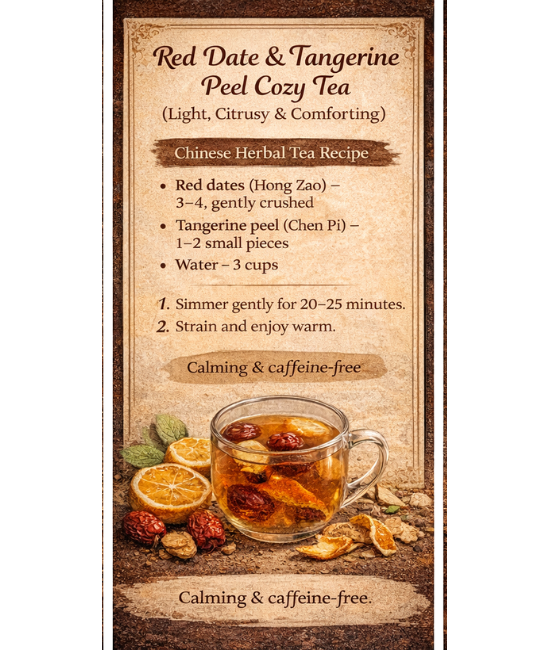
2. Red Date & Tangerine Peel Cozy Tea
Lightly Sweet, Citrusy, and Comforting
This tea tastes like something you’d be offered in a warm kitchen on a winter afternoon.
Why this tea works
Red dates (Hong Zao) add natural sweetness and richness, while aged tangerine peel (Chen Pi) brightens the tea and prevents heaviness. This pairing is widely used in traditional Chinese households.
Ingredients (2 cups)
-
Red dates (Hong Zao) — 3–4, gently crushed
-
Tangerine peel (Chen Pi) — 1–2 small pieces
-
Water — 3 cups
How to prepare
-
Simmer gently for 20–25 minutes.
-
Strain and enjoy warm.
What it tastes like
Smooth, lightly sweet, and citrusy—no bitterness.
Best time to drink: Afternoon or after meals.
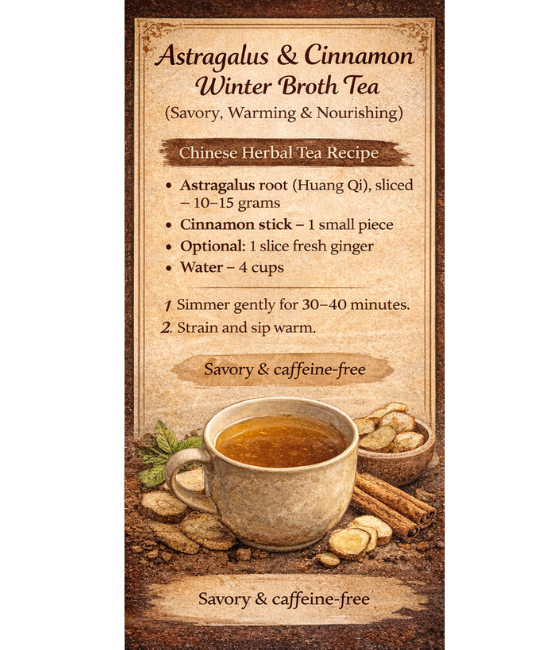
3. Astragalus & Cinnamon Winter Broth Tea
(On a personal note: though I do the other teas on occasion, this one with Astragalus and Cinnamon is the one I do until the primroses are blooming in the garden)
Savory, Warming, and Deeply Nourishing
This is the tea for people who prefer savory over sweet.
Why this tea works
Astragalus (Huang Qi) is traditionally simmered during colder months and often used in soups and broths. Cinnamon adds warmth and familiarity.
Ingredients (2–3 cups)
-
Astragalus root (Huang Qi), sliced — 10–15 grams
-
Cinnamon stick — 1 small piece
-
Optional: 1 slice fresh ginger
-
Water — 4 cups
How to prepare
-
Simmer gently for 30–40 minutes.
-
Strain and sip warm.
What it tastes like
Earthy, lightly sweet, and savory—similar to a light herbal broth.
Best time to drink: Morning or early evening.
Flavor Comparison Table
| Tea | Flavor Profile | Sweet or Savory | Best Time |
|---|---|---|---|
| Licorice–Ginger | Sweet & spicy | Sweet | Morning |
| Red Date & Chen Pi | Light & citrusy | Sweet | Afternoon |
| Astragalus–Cinnamon | Earthy & warming | Savory | Evening |
Tips for Making Winter Herbal Teas Taste Better
-
Drink teas warm, not cold
-
Simmer roots longer for fuller flavor
-
Start with smaller amounts and adjust to taste
-
Store herbs where you can see them—unused herbs don’t help anyone
A Note on Personalization & Safety
Chinese herbal teas are traditionally chosen based on individual needs. Start with small amounts, adjust to taste, and consult a qualified professional if you are pregnant, nursing, have a medical condition, or take medications.
Final Thoughts: Why These Teas Work Year After Year
Winter teas don’t need to be bitter or complicated. With the right Chinese herbs, they can become a simple daily ritual—one that brings warmth, comfort, and enjoyment to cold days.
Save this guide, revisit it each winter, and adjust the recipes to suit your taste. The best tea is always the one you enjoy enough to keep drinking.