
Bai Shao vs Chi Shao: White Peony Root vs Red Peony Root
If you have ever compared Bai Shao and Chi Shao, it is easy to understand why they are often confused.
Both are respected peony roots used in Traditional Chinese Herbal Medicine. Both come from the peony family. Both are commonly sold as dried root slices. Yet they are not the same herb.
The difference comes down to the part used, processing style, appearance, flavor, and traditional herbal use.
Let's Make This Easy
This guide explains the difference between Bai Shao and Chi Shao in a clear, beginner-friendly way so you can better understand how these two classic peony roots compare.
Quick Answer: What Is the Difference Between Bai Shao and Chi Shao?
| Feature | Bai Shao | Chi Shao |
|---|---|---|
| Common Name | White Peony Root | Red Peony Root |
| Pin Yin Name | Bai Shao | Chi Shao |
| Appearance | Pale cream, white, or beige slices | Reddish-brown or darker root slices |
| Processing | Traditionally boiled, peeled, and dried | Usually dried with less processing |
| Flavor | Bitter, sour, slightly mild | Bitter, earthy, more robust |
| Traditional Nature | Slightly cool | Slightly cool |
| Best Known For | Its prepared white root appearance | Its red, raw-style root appearance |
What Is Bai Shao?
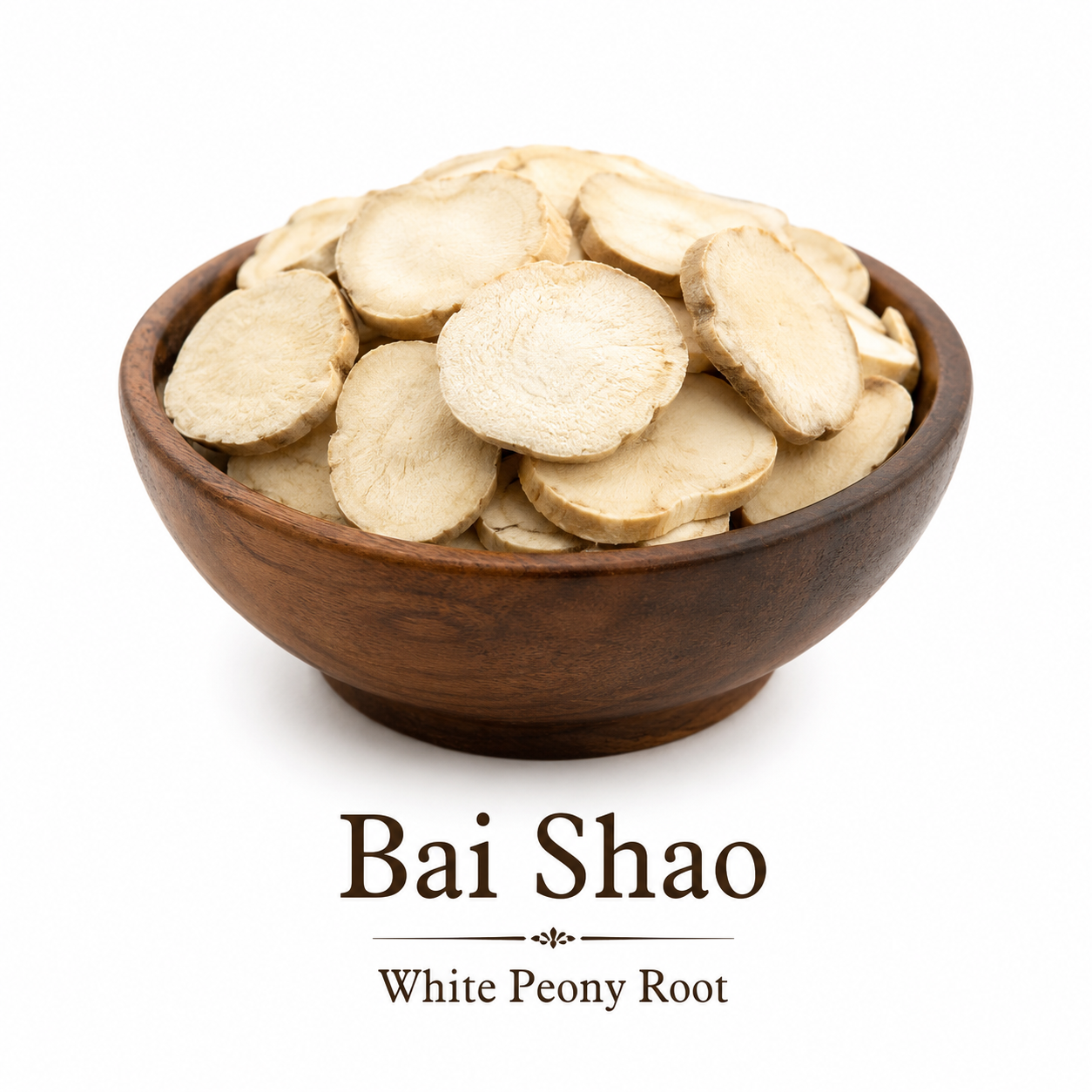
Bai Shao, commonly called White Peony Root, is one of the most recognized herbs in traditional Chinese herbal practice.
Its name means “white peony,” which refers to the pale color of the prepared root. Bai Shao is traditionally processed by boiling, peeling, and drying the root. This gives it a smoother texture and lighter appearance than Chi Shao.
Bai Shao at a Glance
- Common Name: White Peony Root
- Pin Yin Name: Bai Shao
- Botanical Source: Commonly associated with Paeonia lactiflora
- Traditional Flavor: Bitter and sour
- Traditional Nature: Slightly cool
- Typical Appearance: Pale, smooth, round or oval root slices
What Is Chi Shao?
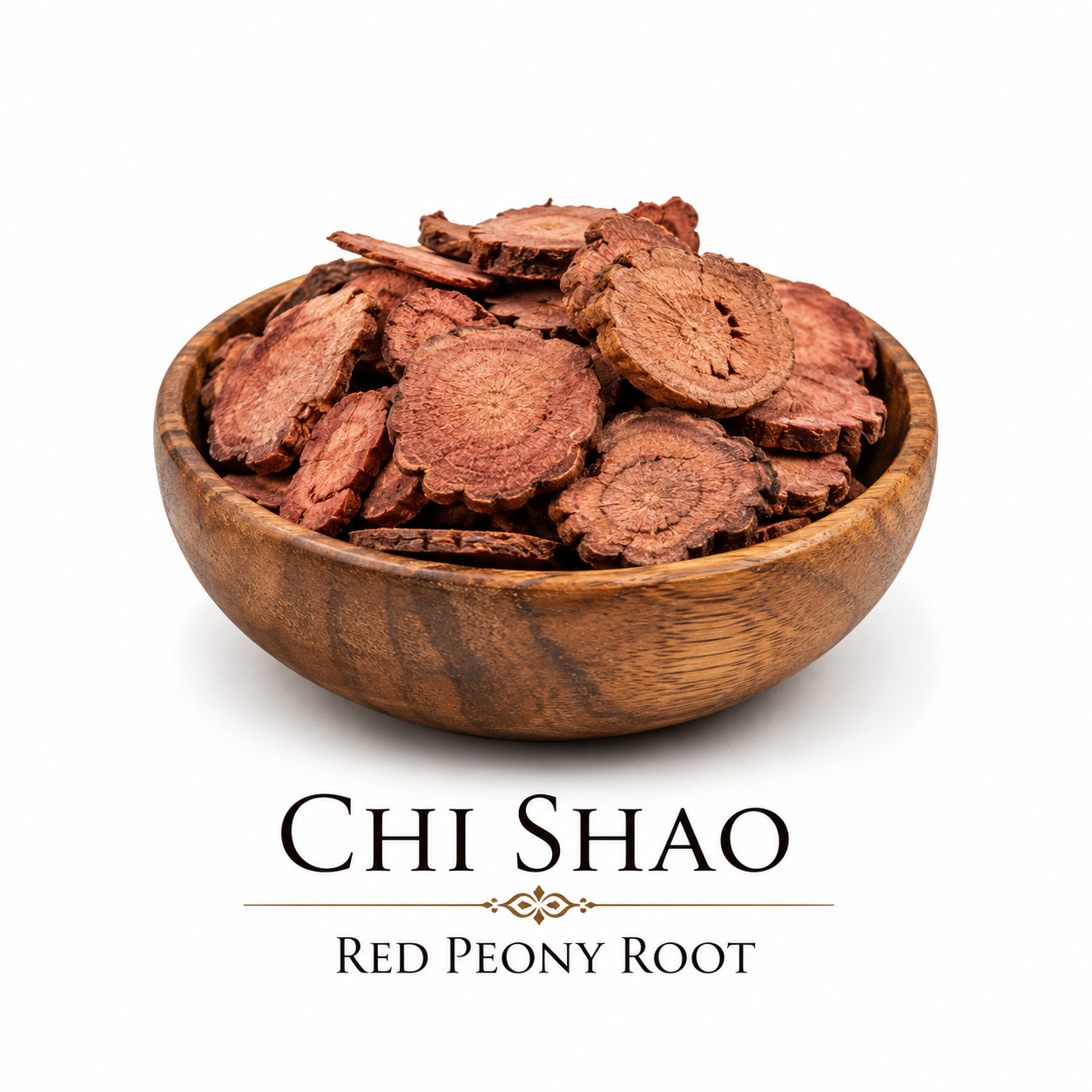
Chi Shao, commonly called Red Peony Root, is another important peony root used in traditional Chinese herbal practice.
Unlike Bai Shao, Chi Shao is usually less processed. It often keeps more of its reddish-brown outer color, giving it a darker and more rustic appearance.
Chi Shao at a Glance
- Common Name: Red Peony Root
- Pin Yin Name: Chi Shao
- Botanical Source: Commonly associated with Paeonia lactiflora or related peony species
- Traditional Flavor: Bitter
- Traditional Nature: Slightly cool
- Typical Appearance: Reddish-brown, darker, more textured root slices
Bai Shao vs Chi Shao: Simple Comparison Chart
| Category | Bai Shao | Chi Shao |
|---|---|---|
| Color | White, cream, pale beige | Red-brown, tan, darker brown |
| Processing | Prepared through boiling and peeling | Usually dried with less preparation |
| Texture | Smoother and more uniform | Rougher and more rustic |
| Taste | Bitter, sour, slightly mild | Bitter, stronger, earthy |
| Tea Color | Pale golden to light amber | Amber to deeper brown |
| Aroma | Mild, root-like | Earthier and stronger |
| Beginner Friendly? | Often considered milder | More bitter and bold |
Why Do Bai Shao and Chi Shao Look So Different?
The main reason Bai Shao and Chi Shao look different is processing.
Bai Shao is traditionally prepared by boiling the root, removing the outer bark, and drying it. This creates a pale, smooth root slice.
Chi Shao is usually dried with less processing. Because the outer layer is often retained, the slices appear darker, redder, and more textured.
Traditional Bai Shao Processing
- The peony root is harvested.
- The root is cleaned.
- It is traditionally boiled.
- The outer bark is removed.
- The root is dried.
- The dried root is sliced for use.
Traditional Chi Shao Processing
- The peony root is harvested.
- The root is cleaned.
- It is usually dried with less processing.
- The root keeps more of its natural reddish-brown color.
- The dried root is sliced for use.
How to Identify Bai Shao
Good Bai Shao is usually easy to recognize once you know what to look for.
- Pale cream, white, or light beige color
- Smooth surface
- Round or oval slices
- Firm, dense texture
- Mild root aroma
- Clean appearance without mold or excess dust
High-quality Bai Shao should not smell musty, sour in a spoiled way, or heavily chemical. The slices should look clean, dry, and properly stored.
How to Identify Chi Shao
Chi Shao has a more natural and earthy look compared with Bai Shao.
- Reddish-brown or tan color
- More visible outer root texture
- Earthier aroma
- Firmer, rougher slices
- Darker tea color when brewed
- More bitter taste profile
Good Chi Shao should look dry, clean, and naturally colored. Avoid roots that appear damp, moldy, excessively dusty, or stale.
Traditional Characteristics of Bai Shao and Chi Shao
| Traditional Characteristic | Bai Shao | Chi Shao |
|---|---|---|
| Flavor | Bitter, sour | Bitter |
| Nature | Slightly cool | Slightly cool |
| Appearance | White or pale | Red-brown or darker |
| Processing Style | Prepared | Less processed or raw-style |
| Traditional Use Style | Often selected for formulas where a milder prepared root is desired | Often selected for formulas where a stronger red peony root is desired |
These descriptions reflect traditional herbal classification and are provided for educational purposes only.
How to Make Bai Shao Tea
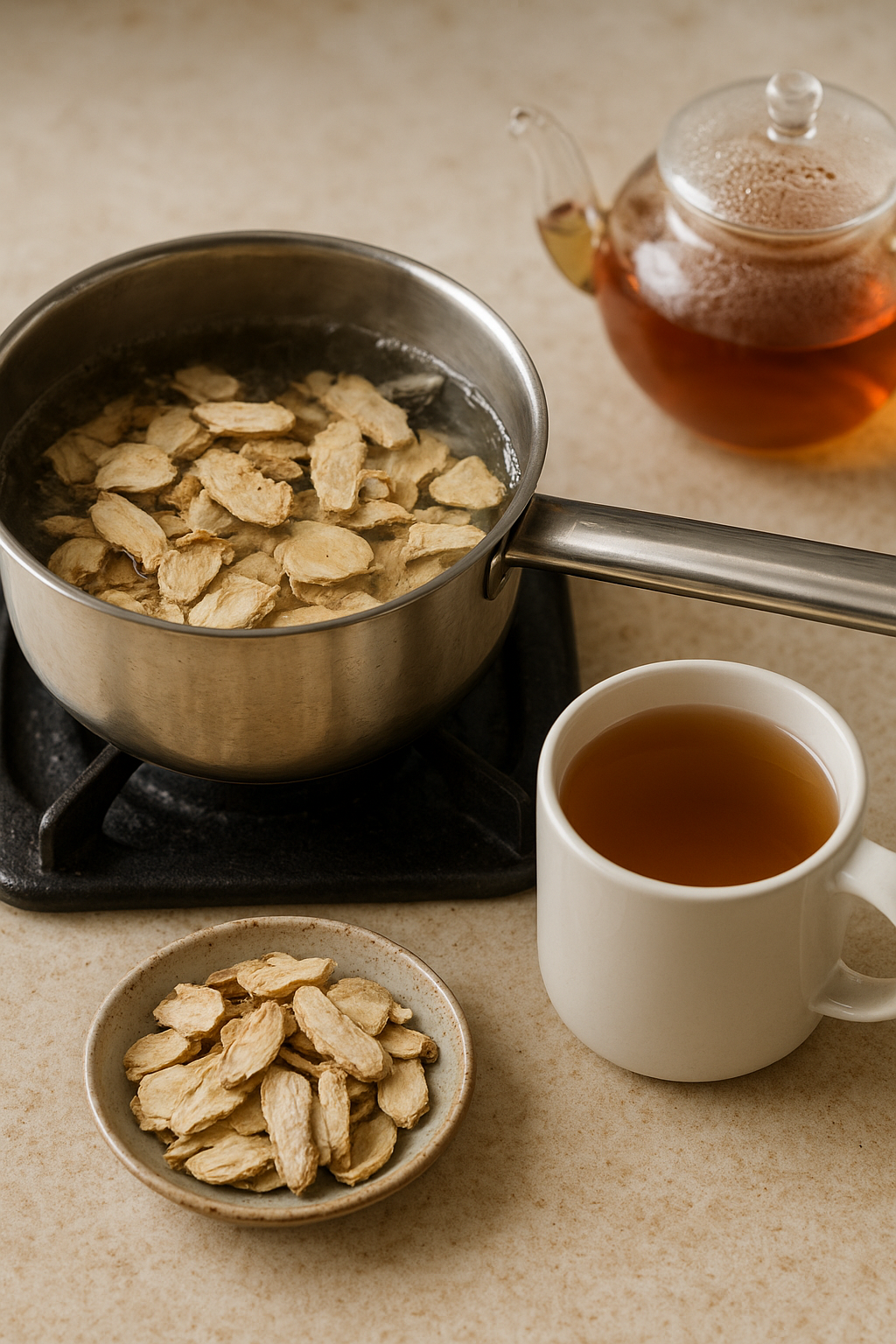
Bai Shao is a root, so it is usually prepared by decoction rather than a quick steep.
Basic Bai Shao Decoction Method
- Add the dried Bai Shao slices to a small pot.
- Add water.
- Bring to a gentle boil.
- Reduce heat and simmer for 20 to 30 minutes.
- Strain and enjoy as a traditional herbal tea.
The taste is usually mild, slightly bitter, and slightly sour.
How to Make Chi Shao Tea
Chi Shao can also be prepared as a decoction.
Basic Chi Shao Decoction Method
- Add dried Chi Shao slices to a pot.
- Add water.
- Bring to a gentle boil.
- Lower the heat and simmer for 20 to 30 minutes.
- Strain before drinking.
Chi Shao tea is usually more bitter and earthy than Bai Shao tea.
Bai Shao vs Chi Shao Tea Comparison
| Tea Feature | Bai Shao Tea | Chi Shao Tea |
|---|---|---|
| Color | Pale gold to light amber | Amber to darker brown |
| Taste | Mild, bitter, sour | Bitter, earthy, stronger |
| Aroma | Light root aroma | Earthier root aroma |
| Preparation | Decoction | Decoction |
| Simmer Time | 20 to 30 minutes | 20 to 30 minutes |
Can Bai Shao and Chi Shao Be Used Together?
Yes, Bai Shao and Chi Shao may appear together in traditional herbal formulas depending on the formula style and the practitioner’s purpose.
Because they have different processing styles and traditional characteristics, they are not always interchangeable. A trained practitioner may choose one, the other, or both depending on the full formula.
If you are following a traditional formula, it is best to use the specific herb listed rather than substituting one for the other.
Traditional Pairings
In traditional Chinese herbal formulas, peony roots are often combined with other herbs. These pairings depend on the formula and the intended traditional use.
Bai Shao Is Traditionally Paired With:
- Dang Gui
- Gan Cao
- Chai Hu
- Shu Di Huang
- Fu Ling
Chi Shao Is Traditionally Paired With:
- Dan Shen
- Mu Dan Pi
- Hong Hua
- Tao Ren
- Sheng Di Huang
These combinations are part of traditional herbal theory and are not intended as medical advice.
How to Choose Between Bai Shao and Chi Shao
Choose Bai Shao if you want:
- White Peony Root
- A prepared peony root
- A milder taste profile
- Pale, smooth root slices
- An herb commonly used in classic Chinese formulas
Choose Chi Shao if you want:
- Red Peony Root
- A less processed peony root
- A stronger, more bitter taste
- Darker, red-brown root slices
- An herb with a more rustic appearance
The best choice depends on the formula, tradition, and purpose. When in doubt, follow the exact herb listed in your formula or consult a qualified herbal practitioner.
Buying Guide: What Makes Good Bai Shao?
When buying Bai Shao, look for root slices that are clean, pale, and properly dried.
- Light cream or pale beige color
- Uniform slices
- Firm texture
- Minimal dust or broken pieces
- No mold
- No musty odor
- Proper botanical identification
Premium Bai Shao should look fresh, clean, and carefully handled.
Buying Guide: What Makes Good Chi Shao?
Good Chi Shao should have a natural reddish-brown color and a clean earthy aroma.
- Red-brown or tan root slices
- Firm, dry texture
- Earthy aroma
- Clean appearance
- No dampness
- No visible mold
- Proper species authentication
Chi Shao should not smell stale, sour, or overly chemical.
Common Beginner Mistakes
- Assuming Bai Shao and Chi Shao are the same herb
- Substituting one for the other without understanding the formula
- Expecting both to taste the same
- Using a quick steep instead of a decoction
- Buying herbs without checking quality
- Storing roots in heat, moisture, or direct sunlight
- Ignoring the difference between processed and less processed roots
How to Store Bai Shao and Chi Shao
Both Bai Shao and Chi Shao should be stored carefully to protect freshness.
- Keep in an airtight container.
- Store in a cool, dry place.
- Keep away from direct sunlight.
- Avoid moisture and humidity.
- Do not store near strong-smelling spices.
- Check regularly for freshness.
Proper storage helps preserve color, aroma, and quality.
Why Buy Peony Root From 1st Chinese Herbs?
At 1st Chinese Herbs, we believe buying herbs should feel simple, trustworthy, and clear.
- Trusted since 1994
- Carefully sourced herbs
- Species-authenticated botanicals
- Quality-focused suppliers
- Bulk herbs for tea, decoctions, and traditional formulas
- Helpful customer service from real herbal professionals
Whether you are learning about Bai Shao, Chi Shao, or any other Chinese herb, our goal is to help you feel confident about what you are buying and how it is traditionally used.
Frequently Asked Questions About Bai Shao and Chi Shao
Are Bai Shao and Chi Shao the same herb?
No. They are both peony roots, but they differ in appearance, processing, flavor, and traditional use.
What is Bai Shao called in English?
Bai Shao is commonly called White Peony Root.
What is Chi Shao called in English?
Chi Shao is commonly called Red Peony Root.
Why is Bai Shao white?
Bai Shao is pale because it is traditionally boiled, peeled, and dried.
Why is Chi Shao red?
Chi Shao keeps more of its natural reddish-brown root color because it is usually less processed.
Do Bai Shao and Chi Shao taste the same?
No. Bai Shao is usually bitter and sour with a milder profile. Chi Shao is usually more bitter and earthy.
Can Bai Shao and Chi Shao be substituted?
They should not be casually substituted. If a formula lists one specifically, it is best to use the herb named in the formula.
Can Bai Shao be made into tea?
Yes. Bai Shao is usually prepared as a decoction by simmering the dried root slices.
Can Chi Shao be made into tea?
Yes. Chi Shao may also be prepared as a decoction.
How long should Bai Shao or Chi Shao be simmered?
Most root decoctions are simmered for about 20 to 30 minutes.
Which one is milder?
Bai Shao is often considered milder in taste than Chi Shao.
Which one is more bitter?
Chi Shao is usually more bitter and earthy.
Can both herbs be used together?
Yes, they may appear together in traditional formulas, depending on the formula design.
Which one should beginners choose?
Beginners should choose the herb listed in their formula or consult a qualified herbal practitioner.
How should I store Bai Shao and Chi Shao?
Store both herbs in airtight containers away from heat, moisture, light, and strong odors.
Final Thoughts: Bai Shao vs Chi Shao
Bai Shao and Chi Shao may both be peony roots, but they are not identical.
Bai Shao is known as White Peony Root. It is traditionally prepared through boiling, peeling, and drying, which gives it a pale color and smoother appearance.
Chi Shao is known as Red Peony Root. It is usually less processed, darker in color, earthier in aroma, and more bitter in taste.
Understanding the difference between Bai Shao and Chi Shao helps you recognize quality, follow traditional formulas more accurately, and appreciate why both herbs have remained important in Chinese herbal practice for generations.
When choosing between them, remember this simple rule: Bai Shao is the white prepared peony root. Chi Shao is the red, more rustic peony root.
Scientific Research & Further Reading
If you would like to learn more about the botany, processing, quality control, and phytochemistry of Bai Shao (White Peony Root) and Chi Shao (Red Peony Root), the following peer-reviewed studies from PubMed provide additional scientific information.
- A Review of the Ethnopharmacology, Phytochemistry, Pharmacology, Pharmacokinetics and Quality Control of Paeonia lactiflora
A comprehensive review covering the history, botanical identification, traditional uses, chemical constituents, and quality evaluation of White Peony Root.
- LC Determination of Albiflorin and Paeoniflorin in Bai Shao (Paeonia lactiflora)
Describes laboratory methods used to identify and measure two of the major naturally occurring compounds found in Bai Shao.
- Effect of Different Processing Methods on the Major Chemical Components of Wild and Cultivated Paeonia lactiflora
Examines how traditional processing methods influence the chemical composition of Bai Shao and Chi Shao.
- Study on Quality Control of Paeonia lactiflora
Discusses quality assessment methods for prepared White Peony Root and compares different production methods.