

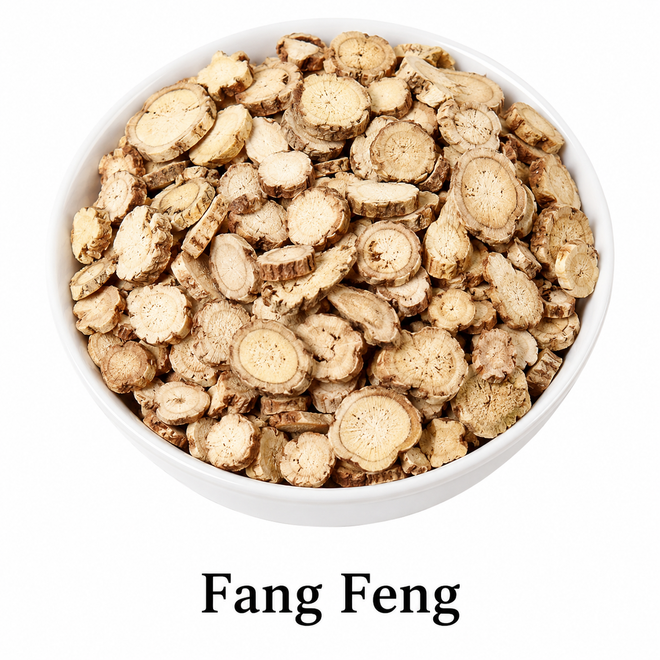
Organic Fang Feng Root (Siler Root) Cut – 1 lb
Organic Fang Feng (Saposhnikovia divaricata) Root Cut
Traditional Wind Herb • Organic • Lab-Tested • Pure Cut Root
For hundreds of years, Fang Feng has been one of the most respected herbs in traditional Chinese herbalism. Its name literally means "Guard Against Wind," a fitting description for an herb that appears in some of the most famous classical formulas ever created.
Unlike many herbs that are known only by practitioners, Fang Feng has remained a staple of Chinese herbal traditions because of its versatility. It has traditionally been selected when herbalists wanted an herb associated with Wind, Dampness, seasonal changes, and exterior patterns while maintaining a balanced nature that works well with many other herbs.
Today, Organic Fang Feng remains one of the most commonly stocked herbs in professional herbal dispensaries, traditional wellness clinics, and home herbal pantries.
Whether you are studying traditional Chinese herbalism, creating custom formulas, brewing decoctions, or building a collection of foundational herbs, Fang Feng is considered one of the classic herbs worth knowing.
Quick Product Information
| Feature | Details |
|---|---|
| Common Name | Siler Root |
| Pin Yin Name | Fang Feng |
| Botanical Name | Saposhnikovia divaricata Radix |
| Other Names | Ledebouriella Root |
| Form | Cut Root |
| Package Size | 1 Pound |
| Origin | China |
| Nature | Slightly Warm |
| Flavor | Sweet, Pungent |
| Meridians | Lung, Liver, Spleen |
| Brand | Nuherbs Organic |
| Organic | Yes |
| Testing | Lab-Tested |
| Additives | None |
What Is Fang Feng?
If you've spent any time studying Chinese herbs, you've probably noticed one thing:
Certain herbs appear over and over again in traditional formulas.
Fang Feng is one of those herbs.
Traditional herbal texts have referenced Fang Feng for centuries, and it continues to be used by practitioners throughout the world today.
Its Chinese name translates to "Protect Against Wind" or "Guard Against Wind."
In traditional Chinese herbal theory, Wind was considered one of the most important external influences affecting health. Because of this, herbalists developed entire categories of herbs associated with Wind patterns.
Among those herbs, Fang Feng became one of the most famous.
Many practitioners consider it a foundational herb because it appears in formulas associated with:
-
Seasonal wellness
-
Exterior patterns
-
Wind-Cold patterns
-
Wind-Damp patterns
-
Traditional mobility formulas
-
Classical herbal combinations
This long history is one reason Fang Feng remains one of the most widely recognized herbs in traditional Chinese medicine.
Why Herbalists Value Fang Feng
One reason Fang Feng has survived centuries of herbal practice is its flexibility.
Unlike some herbs that have a very narrow traditional role, Fang Feng appears in many different types of formulas.
Traditionally, Fang Feng is valued because it is associated with:
✔ Releasing the exterior
✔ Dispelling Wind
✔ Addressing Wind-Cold patterns
✔ Addressing Wind-Damp patterns
✔ Supporting traditional mobility formulas
✔ Balancing multi-herb formulas
✔ Seasonal wellness preparations
Many herbalists appreciate Fang Feng because it can be combined with both warming and cooling herbs depending on the formula being created.
Why Is Fang Feng Called "Guard Against Wind"?
This is one of the most interesting stories in Chinese herbalism.
Traditional Chinese medicine viewed Wind differently than modern medicine.
Wind was considered one of the primary external influences that could affect the body's balance.
In classical texts, Wind was often described as:
-
Moving quickly
-
Changing rapidly
-
Affecting different areas of the body
-
Appearing during seasonal transitions
Because Fang Feng became associated with formulas used for these patterns, it eventually earned the name:
"Guard Against Wind."
Even today, this nickname remains one of the easiest ways to remember the herb.
What Does Fang Feng Taste Like?
Many people are surprised that Fang Feng is not especially bitter.
Compared with herbs such as:
-
Huang Qin
-
Qing Hao
-
Yin Chen Hao
Fang Feng has a relatively mild flavor.
Most people describe it as:
-
Earthy
-
Slightly aromatic
-
Mildly sweet
-
Lightly pungent
Because of its balanced taste, it combines well with many traditional tea and decoction formulas.
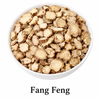
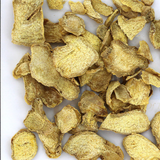
What Does Quality Fang Feng Look Like?
Not all Fang Feng is equal.
High-quality Fang Feng generally displays:
-
Cleanly cut root pieces
-
Light tan coloration
-
Pleasant herbal aroma
-
Dense root structure
-
Consistent sizing
-
Minimal dust
Our Organic Fang Feng is carefully sourced and lab-tested for identity and quality.
No fillers.
No additives.
No hidden ingredients.
Just pure organic root.
Fang Feng vs Other Traditional Wind Herbs
Fang Feng vs Jing Jie
Both herbs are traditionally associated with releasing the exterior.
Jing Jie is frequently selected for early-stage exterior formulas.
Fang Feng is often viewed as more versatile because it also appears in numerous Wind-Damp formulas.
Fang Feng vs Qiang Huo
Qiang Huo is traditionally associated with upper-body Wind-Cold patterns.
Fang Feng tends to appear in a broader variety of traditional formulas.
Fang Feng vs Du Huo
Du Huo is commonly found in traditional lower-body mobility formulas.
Fang Feng is frequently chosen when herbalists want a more general Wind herb.
Traditional Herbs Commonly Paired With Fang Feng
One reason Fang Feng remains popular is that it works well with other classic herbs.
Huang Qi (Astragalus)
A famous traditional pairing found in Yu Ping Feng San.
Bai Zhu
Frequently combined with Fang Feng in traditional formulas.
Gan Cao (Licorice Root)
Used to harmonize and balance herbal formulas.
Jing Jie
Often paired in traditional exterior formulas.
Qiang Huo
A classic companion herb in Wind-Cold combinations.
Dang Gui
Appears alongside Fang Feng in some traditional herbal formulas.
Famous Traditional Formulas That Contain Fang Feng
Some of the best-known Chinese herbal formulas contain Fang Feng.
Yu Ping Feng San (Jade Windscreen Powder)
One of the most famous formulas in Chinese herbalism.
Xiao Feng San
A classic formula that helped establish Fang Feng's reputation.
Tong Xie Yao Fang
Another well-known traditional formula containing Fang Feng.
Xiao Huo Luo Dan
Frequently referenced in traditional Chinese herbal literature.
The appearance of Fang Feng in these respected formulas highlights its importance in traditional herbal practice.
Why Choose Organic Fang Feng?
Many customers specifically seek organic herbs.
Organic cultivation emphasizes growing practices designed to support soil health and avoid prohibited synthetic pesticides and fertilizers.
Benefits include:
-
Greater transparency
-
Cleaner sourcing standards
-
Consumer confidence
-
Traditional herbal preparation compatibility
For many herbal enthusiasts, organic herbs are simply worth the investment.
Building Your Traditional Chinese Herbal Pantry
If you're beginning your herbal journey, Fang Feng is often considered a foundational herb.
Many customers who purchase Fang Feng also keep:
-
Astragalus Root (Huang Qi)
-
Atractylodes Root (Bai Zhu)
-
Licorice Root (Gan Cao)
-
Goji Berries
-
Red Dates
-
Hawthorn Berries
-
Reishi Mushroom
-
Dang Gui
Together, these herbs create the foundation of many traditional Chinese herbal collections.
Why Customers Trust 1st Chinese Herbs
Since 1994, we have helped customers discover authentic herbs from around the world.
When you order from us, you receive:
✔ Trusted since 1994
✔ Lab-tested herbs
✔ Organic options
✔ No fillers or additives
✔ Carefully sourced ingredients
✔ Bulk herb specialists
✔ Fast shipping
✔ Knowledgeable customer support
We believe quality herbs should be exactly what they claim to be.
Nothing more.
Nothing less.
Important Cautions
Do not use if pregnant or nursing unless directed by your healthcare professional.
Use caution in cases of Yin deficiency, Blood deficiency, heat signs, or deficiency-related spasms.
Consult your healthcare provider before using any herbal product.
Keep out of reach of children.
California Proposition 65 Warning applies.
FDA Disclaimer
These statements have not been evaluated by the Food and Drug Administration. This product is not intended to diagnose, treat, cure, or prevent any disease.
Trusted Since 1994. Get Real Herbs. Feel the Difference.
References
- Kreiner J, Pang E, Lenon GB, Yang AWH. Saposhnikoviae divaricata: A Phytochemical, Pharmacological and Pharmacokinetic Review. Chinese Journal of Natural Medicines. 2017. PubMed ID: 28361725.
- Yang M, Cao L, et al. Saposhnikovia divaricata—An Ethnopharmacological, Phytochemical and Pharmacological Review. Chinese Medicine. 2020. PubMed ID: 32328867.
- Erdenebileg S, et al. Saposhnikovia divaricata Root and Its Major Components Exhibit Anti-Inflammatory Activity in Experimental Models. 2023. PubMed ID: 38024289.
- Gao JW, et al. Advances in Phytochemistry and Modern Pharmacology of Saposhnikovia divaricata. 2023. PubMed ID: 37733271.
- Xu A, et al. Aqueous Extract of Saposhnikovia divaricata Root Alleviates Rheumatoid Arthritis by Acting on TNF-α and RAGE Signaling Pathways. 2025. PubMed ID: 40688514.