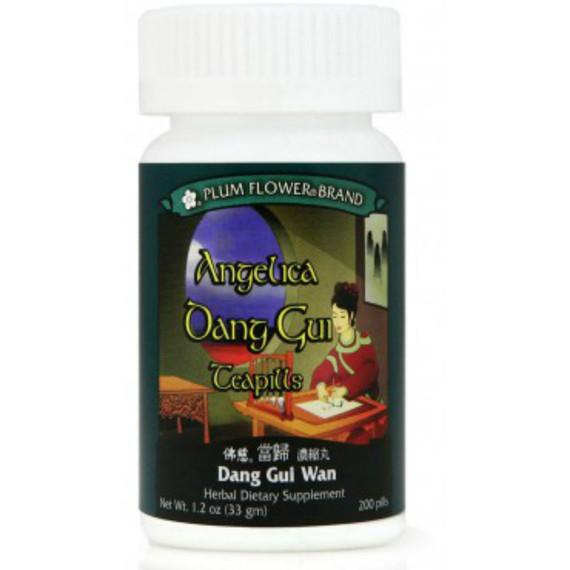



Nourish the Surface Teapills – Dang Gui Yin Zi Wan
Traditional Chinese Herbal Formula for Nourishing Blood, Supporting the Surface & Maintaining Traditional Balance
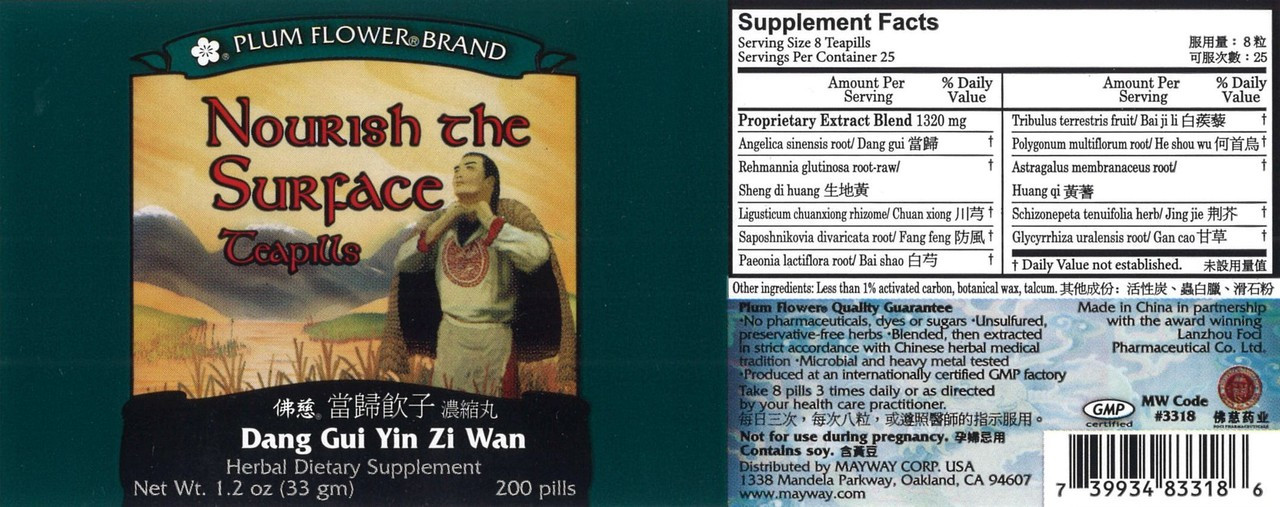
Dang Gui Yin Zi Wan (當歸飲子丸), sold as Nourish the Surface Teapills, is a traditional Chinese herbal formula combining ten herbs, including Dang Gui, Sheng Di Huang, Bai Shao, Huang Qi, He Shou Wu, Fang Feng, and Jing Jie.
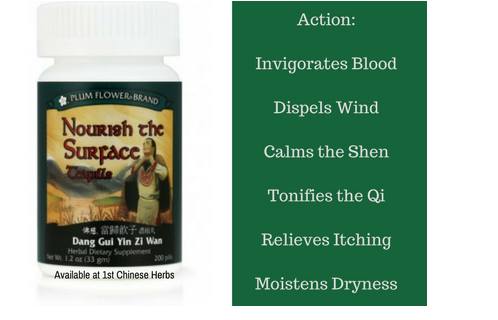
Within Traditional Chinese Medicine (TCM), the formula is traditionally associated with nourishing Blood while supporting the body's exterior, or “surface.” It also includes herbs traditionally described as helping address Wind and Dryness within the TCM system.
Terms such as Blood, Wind, Dryness, Qi, and the Surface have specific meanings within Traditional Chinese Medicine. They should not be interpreted as modern medical diagnoses.
Nourish The Surface Quick Summary
- Traditional Name: Dang Gui Yin Zi Wan (當歸飲子丸)
- English Name: Dang Gui Decoction Pills
- Product Name: Nourish the Surface Teapills
- Brand: Plum Flower
- Bottle Size: 200 teapills
- Form: Small traditional herbal teapills
- Traditional TCM Focus: Nourishing Blood and supporting the Surface within traditional TCM theory
- Suggested Use: 8 teapills, 3 times daily
- Important: Contraindicated during pregnancy
 What Is Dang Gui Yin Zi Wan?
Dang Gui Yin Zi Wan is a ten-herb traditional Chinese formula. Its ingredients include nourishing herbs alongside herbs traditionally associated with Qi, Blood, Wind, and the body's exterior.
The name Dang Gui Yin Zi is sometimes translated into English as “Dang Gui Decoction.” The word Wan generally indicates that the formula has been prepared in pill form.
Like many traditional Chinese formulas, Dang Gui Yin Zi Wan is best understood as a combination rather than as a collection of unrelated individual herbs. Each ingredient has a traditional role within the overall formula.
Nourish the Surface Teapills Product Details
| Product | Nourish the Surface Teapills |
| Traditional Name | Dang Gui Yin Zi Wan (當歸飲子丸) |
| Alternate Name | Dang Gui Decoction Pills |
| Brand | Plum Flower |
| Bottle Size | 200 teapills |
| Suggested Use | 8 teapills, 3 times daily |
| Origin | China |
| Contraindication | Contraindicated during pregnancy |
Ingredients in Dang Gui Yin Zi Wan
| Pin Yin | Botanical Ingredient | Traditional TCM Role |
|---|---|---|
| Dang Gui | Angelica sinensis root | Traditionally used to nourish and harmonize Blood |
| Sheng Di Huang | Rehmannia glutinosa root | Traditionally associated with nourishing Yin and supporting traditional balance |
| Chuan Xiong | Ligusticum chuanxiong rhizome | Traditionally associated with the movement of Qi and Blood |
| Fang Feng | Saposhnikovia divaricata root | Traditionally associated with dispelling Wind and supporting the exterior |
| Bai Shao | Paeonia lactiflora root | Traditionally used to nourish Blood and support balance |
| Bai Ji Li | Tribulus terrestris fruit | Traditionally associated with the movement of Qi and dispelling Wind |
| He Shou Wu (Zheng) | Polygonum multiflorum root, steamed | Traditionally used as a nourishing herb within TCM formulas |
| Huang Qi | Astragalus membranaceus root | Traditionally used to support Qi and the exterior |
| Jing Jie | Schizonepeta tenuifolia herb | Traditionally associated with dispersing Wind and supporting the exterior |
| Gan Cao | Glycyrrhiza uralensis root | Traditionally used to harmonize herbal formulas |
Complete Botanical Ingredient List
Angelica sinensis root, Rehmannia glutinosa root, Ligusticum chuanxiong rhizome, Saposhnikovia divaricata root, Paeonia lactiflora root, Tribulus terrestris fruit, Polygonum multiflorum root (steamed), Astragalus membranaceus root, Schizonepeta tenuifolia herb, Glycyrrhiza uralensis root.
Other Ingredients
Dextrin (maltose), hydrated magnesium silicate, activated carbon, China wax.
Why Are These Herbs Used Together?
Dang Gui Yin Zi Wan illustrates one of the central ideas behind traditional Chinese herbal formulas: different herbs are combined to perform complementary traditional roles.
Dang Gui, Sheng Di Huang, Bai Shao, and prepared He Shou Wu contribute to the formula's nourishing character. Huang Qi traditionally supports Qi and the exterior. Fang Feng, Jing Jie, and Bai Ji Li contribute herbs traditionally associated with Wind, while Chuan Xiong is traditionally associated with movement.
Gan Cao is traditionally used to help harmonize the overall herbal combination.
These descriptions explain how the herbs are understood within traditional Chinese herbal theory. They do not mean that the finished product has been demonstrated to treat a modern medical condition.
What Does “Nourish the Surface” Mean?
The product name can be confusing if you're unfamiliar with Traditional Chinese Medicine.
The word “Surface” refers to a traditional TCM concept sometimes called the exterior. It is part of the traditional framework practitioners use when describing the relationship between the body's internal nourishment and its exterior.
Likewise, TCM terms such as Blood, Wind, Dryness, and Qi have meanings within this traditional system that do not directly correspond to modern medical diagnoses.
Dang Gui Yin Zi Wan combines nourishing herbs with herbs traditionally associated with Qi, movement, Wind, and the body's exterior. “Nourish the Surface” describes the traditional theory behind the formula rather than a modern medical treatment claim.
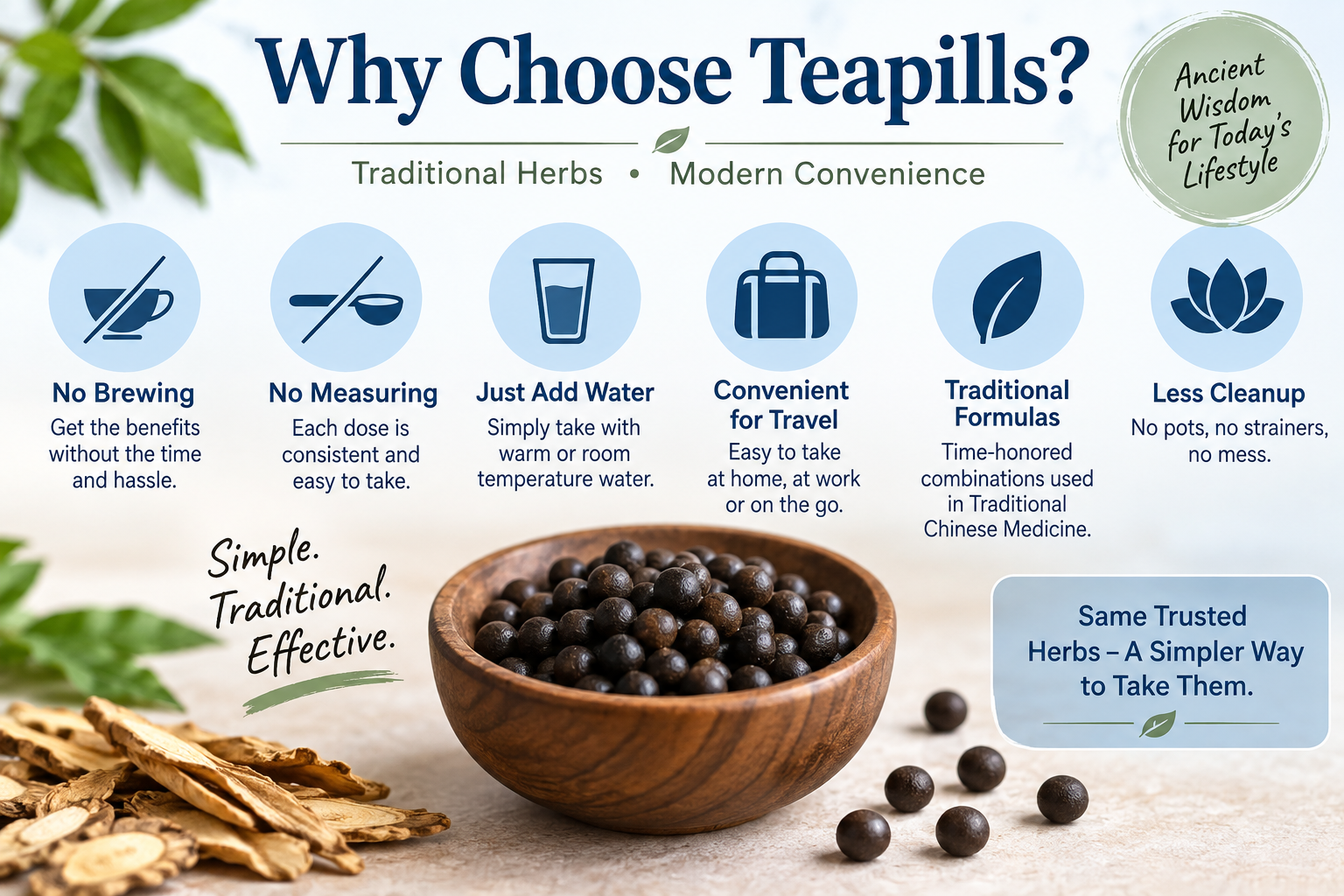
Why Choose Teapills?
Traditional Chinese herbal formulas were historically often prepared as herbal decoctions. Teapills provide a convenient alternative when you don't want to prepare loose herbs every day.
- No brewing
- No measuring loose herbs
- Easy to take with water
- Convenient for home, work, or travel
- Little preparation or cleanup
How Do I Take Dang Gui Yin Zi Wan?
The standard suggested use is:
Take 8 teapills, 3 times per day.
Follow the product label and the guidance of a qualified healthcare practitioner when appropriate.
Why Does the Label Say 8 Teapills?
Eight pills may sound like a large serving if you're accustomed to Western tablets or capsules. Traditional teapills are much smaller.
The serving therefore consists of several small pills rather than one large tablet.
How Long Will a 200-Teapill Bottle Last?
At the standard suggested use of 8 teapills three times daily, you would take 24 teapills per day.
A bottle containing 200 teapills therefore provides approximately 8 days at the standard suggested use.
Who Might Be Looking for Dang Gui Yin Zi Wan?
Someone may encounter Dang Gui Yin Zi Wan while researching traditional Chinese herbal formulas associated with:
- Traditional Blood nourishment
- Traditional Qi support
- The traditional TCM concept of the exterior or Surface
- Traditional Wind and Dryness patterns
- Classical Chinese herbal formula combinations
These descriptions refer exclusively to traditional Chinese herbal theory and are not intended to diagnose, treat, cure, or prevent a medical condition.
Important Safety Information
Contraindicated during pregnancy.
Consult a qualified healthcare professional before use if you are nursing, taking prescription medications, have a medical condition, or are preparing for surgery.
Because this is a multi-herb formula, people taking medications should review the complete ingredient list with their healthcare professional or pharmacist before use.
Stop use and seek medical advice if you experience an unexpected reaction.
Keep out of reach of children.
Frequently Asked Questions
What is Dang Gui Yin Zi Wan?
Dang Gui Yin Zi Wan is a traditional ten-herb Chinese formula. It combines nourishing herbs with herbs traditionally associated with Qi, Blood, Wind, and the body's exterior within Traditional Chinese Medicine.
What does Dang Gui Yin Zi Wan mean?
Dang Gui Yin Zi is sometimes translated as “Dang Gui Decoction.” The word Wan generally refers to a pill form, which is why this product is sold as small traditional teapills.
Why is it called Nourish the Surface?
“Nourish the Surface” is an English product name reflecting traditional TCM concepts associated with the formula. The “Surface” or exterior is part of the traditional Chinese medical framework and should not be interpreted as a modern medical diagnosis.
Is Dang Gui the only herb in this formula?
No. Despite Dang Gui appearing in the formula's name, this product contains ten botanical ingredients that are traditionally used together as a complete formula.
Does this formula contain He Shou Wu?
Yes. The formula contains steamed Polygonum multiflorum root, traditionally known as He Shou Wu (Zheng).
Can I use Dang Gui Yin Zi Wan during pregnancy?
No. The current product information states that this formula is contraindicated during pregnancy.
Do I need to brew these herbs?
No. These are prepared teapills and are taken with water. There is no need to prepare an herbal decoction.
How many teapills are taken per day?
The standard suggested use is 8 teapills three times daily, which equals 24 teapills per day.
How long does one bottle last?
A 200-teapill bottle lasts approximately 8 days when taken according to the standard suggested use of 8 teapills three times daily.
Understanding Traditional Chinese Herbal Formulas
Traditional Chinese herbal formulas generally combine multiple botanicals selected for complementary roles within the traditional system.
Dang Gui Yin Zi Wan contains ten herbs. Rather than viewing one ingredient as responsible for the entire formula, traditional Chinese herbal practice considers how the complete group of herbs fits together.
TCM terminology describes a historical system of herbal practice and should not be interpreted as equivalent to modern medical diagnoses, laboratory findings, or medical treatments.
Educational Research
The following PubMed searches provide general educational information about selected botanical ingredients in Dang Gui Yin Zi Wan. Research involving an individual botanical ingredient does not establish that the finished formula treats or prevents a disease.
- PubMed – Angelica sinensis
- PubMed – Rehmannia glutinosa
- PubMed – Paeonia lactiflora
- PubMed – Astragalus membranaceus
- PubMed – Polygonum multiflorum
- PubMed – Saposhnikovia divaricata
Traditional Use Notice
The traditional uses described on this page are based on principles and terminology from Traditional Chinese Medicine. Traditional concepts such as Qi, Blood, Wind, Dryness, and the Surface or exterior are part of the historical TCM system and are not equivalent to modern medical diagnoses.
Information concerning individual botanical ingredients and links to scientific literature are provided for educational purposes and should not be interpreted as evidence that this finished herbal formula treats or prevents a disease.
FDA Disclaimer: These statements have not been evaluated by the Food and Drug Administration. This product is not intended to diagnose, treat, cure, or prevent any disease.