


Organic Apricot Seed (You Ji Ku Xing Ren): Benefits, Uses & Traditional Chinese Medicine Guide
Some herbs warm.
Some herbs move.
Some herbs moisten.
Xing Ren does all three.
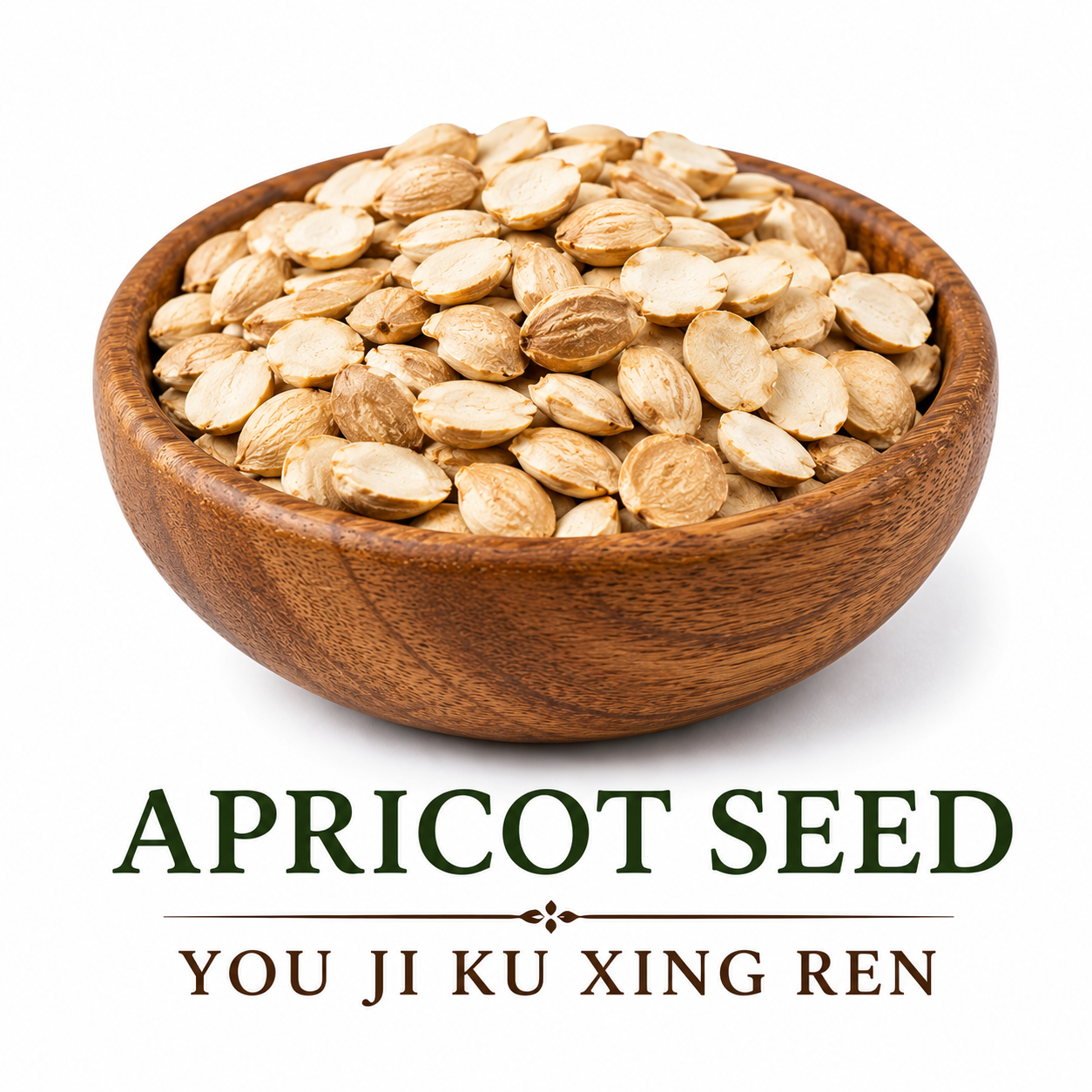
For centuries, Apricot Seed (Xing Ren) has been one of the most respected herbs in Traditional Chinese Medicine for supporting healthy breathing, moistening dryness, and promoting natural elimination.
What makes Xing Ren especially unique is its dual action.
Most herbs focus on one body system.
Xing Ren supports both the lungs and intestines.
That rare combination makes it one of the most versatile herbs used in traditional formulas for dryness-related patterns.
Quick Product Summary
| Common Name | Apricot Seed, Bitter Apricot Seed |
| Pin Yin Name | You Ji Ku Xing Ren |
| Botanical Name | Armeniaca amarum Semen |
| Channels | Lung, Large Intestine |
| Package Size | 1 lb |
| Form | Cut / sliced |
| Origin | China |
| Brand | Nuherbs Organics |
| Taste | Bitter |
| Nature | Warm, slightly toxic |
| Other Ingredients | None |
What Is Xing Ren?
Xing Ren is the dried seed of the bitter apricot. In Traditional Chinese Medicine, it has long been used to support healthy lung function, moisten dryness, and promote normal bowel movement.
Unlike sweet apricot kernels used in food, bitter apricot seed has a stronger traditional medicinal role.
Why Xing Ren Is Special
Xing Ren stands out because it works in two major systems:
- Lungs → supports healthy breathing and moistens dryness
- Large Intestine → supports natural elimination
That dual action is what makes this herb so respected.
When dryness affects both breathing and digestion, Xing Ren becomes especially valuable.
Traditional TCM Patterns for Xing Ren
Xing Ren is traditionally used when dryness becomes the main issue.
- Dry cough
- Lung dryness
- Stubborn phlegm
- Dry intestines
- Constipation from dryness
Top Benefits of Apricot Seed
Supports Healthy Breathing
Xing Ren is traditionally used to support the lungs and maintain comfortable breathing.
Moistens Dryness
Traditionally used when dryness affects the lungs or intestines.
Supports Natural Elimination
Supports healthy bowel movement when dryness is present.
Supports Digestive Movement
Often included in formulas that support digestive flow and moisture balance.
What Does Apricot Seed Taste Like?
Xing Ren has a bold bitter taste with earthy, nutty notes and a slightly oily finish.
Taste Profile: Bitter, earthy, nutty, warming.
Xing Ren vs Other Lung Herbs
| Herb | Best For | Why Choose Xing Ren? |
|---|---|---|
| Xing Ren | Lungs + Dry Intestines | Best dual-purpose herb |
| Loquat Leaf | Lung heat, cough | Xing Ren offers bowel support too |
| Licorice Root | Soothing throat | Xing Ren is more direct for dryness |
| Mulberry Leaf | Wind heat | Xing Ren better for dry patterns |
| Chuan Bei Mu | Dry cough | Xing Ren adds intestinal support |
How to Use Apricot Seed
- Tea
- Decoction
- Tincture
- Traditional formulas
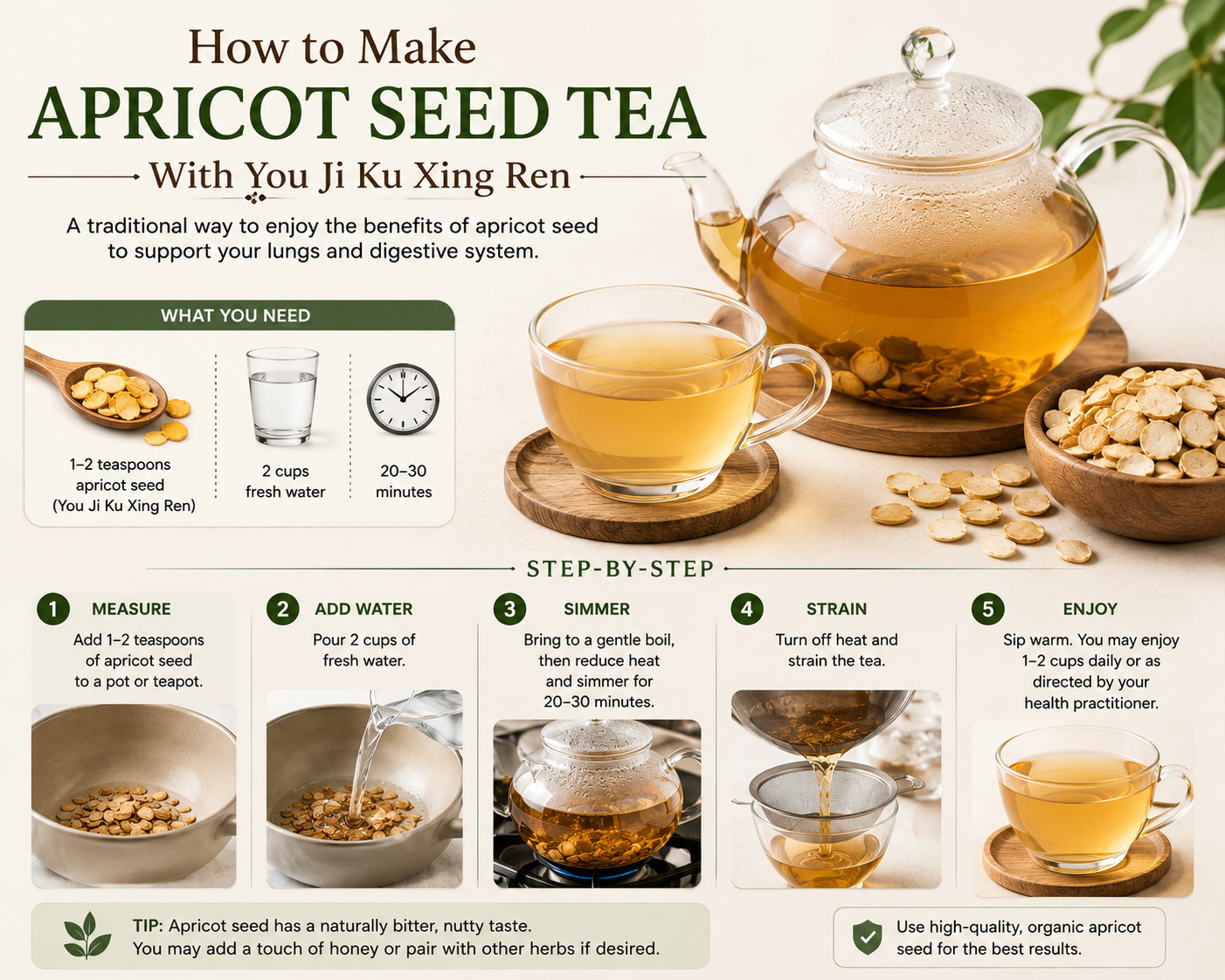
How to Make Apricot Seed Tea
- Use 1–2 teaspoons
- Add 2 cups water
- Simmer 20–30 minutes
- Strain and drink warm
Best Herb Pairings with Xing Ren
- Xing Ren + Licorice Root
- Xing Ren + Chen Pi
- Xing Ren + Loquat Leaf
- Xing Ren + Chuan Bei Mu
Who Uses Apricot Seed?
- TCM practitioners
- Herbalists
- Tea makers
- Traditional formula builders
- Customers seeking traditional lung support
PubMed Research on Apricot Seed
Research on apricot seed has explored amygdalin, phytochemicals, fatty acids, and antioxidant compounds. Research helps explain plant chemistry, though traditional use differs from disease treatment claims.
- Amygdalin compound research
- Apricot seed phytochemical studies
- Antioxidant compound analysis
- Traditional herbal reviews
Why Buy from 1st Chinese Herbs Instead of Amazon?
| Feature | 1st Chinese Herbs | Amazon Sellers |
|---|---|---|
| Herb Expertise | Since 1994 | Often limited |
| Lab Testing | Yes | Varies widely |
| Product Knowledge | Deep TCM expertise | Usually limited |
| Customer Support | Herb-focused guidance | Generic |
Get Real Herbs. Feel the Difference.
Frequently Asked Questions
What is Xing Ren used for?
Xing Ren is traditionally used to support the lungs, moisten dryness, and promote healthy elimination.
Is Xing Ren warming or cooling?
Xing Ren is traditionally considered warm.
Can Apricot Seed be used as tea?
Yes, it is commonly prepared as a decoction.
What herbs pair well with Xing Ren?
Licorice Root, Chen Pi, Loquat Leaf, and Chuan Bei Mu are common pairings.
Who should avoid Apricot Seed?
Do not use if pregnant or nursing. Contraindicated in Qi or Yin deficiency cough and general debility.
Cautions
Do not use if pregnant or nursing.
Use only under guidance from a qualified healthcare provider.
Disclaimer: These statements have not been evaluated by the FDA. This product is not intended to diagnose, treat, cure, or prevent any disease.