

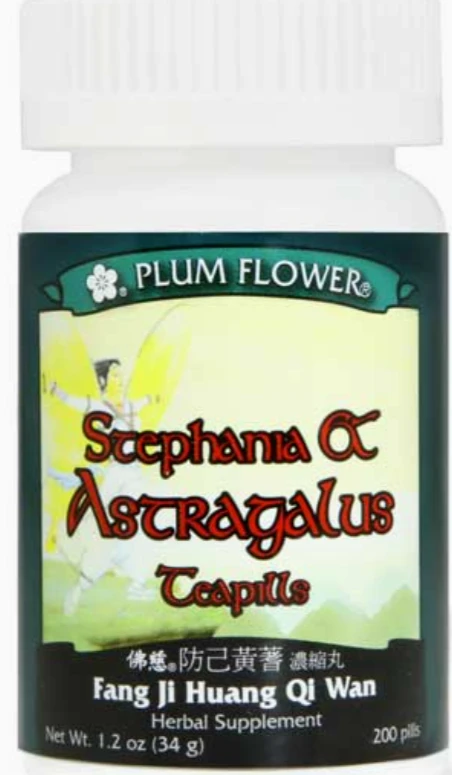
Stephania & Astragalus Teapills – Plum Flower, 200 Teapills
Traditional Chinese Herbal Formula | 6 Botanical Ingredients | Convenient Prepared Teapills
What are the traditional benefits of Stephania & Astragalus Teapills?
A Traditional Formula Rooted in Chinese Herbal Practice
Looking for Fang Ji Huang Qi Wan in a convenient, easy-to-use teapill form? This traditional Chinese herbal formula combines six carefully selected ingredients, including Astragalus root (Huang Qi), Stephania root (Fang Ji), Atractylodes rhizome (Bai Zhu), and Jujube fruit (Da Zao).
In Traditional Chinese Medicine (TCM), Fang Ji Huang Qi Wan is associated with the classical principles of tonifying Qi, strengthening Spleen Qi, dispelling Wind-Dampness, and supporting the movement of body fluids. These terms describe traditional Chinese herbal patterns and principles, not medically diagnosed conditions or proven effects of the finished product.
Plum Flower Stephania & Astragalus Teapills provide this traditional formula in convenient, premeasured pills without the preparation required for loose-herb decoctions.
Product Details at a Glance
|
Product Information |
Details |
|---|---|
|
Product name |
Stephania & Astragalus Teapills |
|
Brand |
Plum Flower |
|
Traditional formula |
Fang Ji Huang Qi Wan |
|
Form |
Small, round herbal teapills |
|
Package size |
200 teapills |
|
Number of listed botanical ingredients |
6 |
|
Origin |
China |
|
Suggested use |
8 teapills, 3 times daily, according to the supplied bottle directions |
|
Other ingredients |
Talcum, activated carbon, botanical wax |
|
Important caution |
Do not use if pregnant or nursing |
Complete Ingredient List and Traditional Roles
|
Pinyin Name |
Botanical Ingredient |
Why It Is Traditionally Included |
|---|---|---|
|
Huang Qi |
Astragalus membranaceus root |
Traditionally classified as tonifying Qi and supporting defensive Qi. One of the two principal herbs named in the formula. |
|
Fang Ji |
Stephania tetrandra root |
Traditionally classified as dispelling Wind-Dampness and promoting fluid movement. The second principal herb named in the formula. |
|
Bai Zhu |
Atractylodes macrocephala rhizome |
Traditionally used to strengthen Spleen Qi and support the transformation and movement of fluids within TCM theory. |
|
Da Zao |
Ziziphus jujuba fruit |
Traditionally included to support Qi and harmonize the properties of other ingredients. |
|
Sheng Jiang |
Zingiber officinale fresh rhizome |
Traditionally associated with warming and harmonizing the formula and supporting its overall balance. |
|
Gan Cao |
Glycyrrhiza uralensis root |
Commonly used in Chinese herbal formulas to harmonize the combination and moderate the traditional properties of other ingredients. |
These descriptions explain the ingredients' traditional classifications and possible roles in the formula. They are not evidence that the finished product produces these effects or treats any medical condition.
How the Ingredients Work Together in Traditional Chinese Herbal Theory
Rather than relying on a single botanical, Fang Ji Huang Qi Wan combines ingredients traditionally grouped by complementary functions:
Principal herbs: Fang Ji and Huang Qi establish the formula's traditional character. Fang Ji is associated with dispelling Wind-Dampness and promoting fluid movement, while Huang Qi is traditionally used to tonify Qi.
Spleen Qi and fluid-related herbs: Bai Zhu complements the principal herbs through its traditional association with strengthening Spleen Qi and supporting fluid transformation.
Supporting and harmonizing herbs: Da Zao, Sheng Jiang, and Gan Cao help complete the combination according to traditional formula principles.
These are historical TCM concepts, not descriptions of clinically established effects.
Other Ingredients
The supplied product information identifies the following additional ingredients:
Talcum, activated carbon, and botanical wax.
These are non-botanical or processing ingredients used in the prepared teapill formulation. Their exact manufacturing functions should be confirmed with the manufacturer rather than assumed.
Important Ingredient Information
Ingredient precautions: Gan Cao (licorice root) may affect blood pressure, potassium balance, and medication safety. Customers who are pregnant, nursing, taking medications, or managing a medical condition should consult a qualified healthcare professional before use.
Stephania & Astragalus Ingredients: Understanding the 6-Herb Formula
Why does Fang Ji Huang Qi Wan combine these particular herbs?
In Traditional Chinese Medicine, herbal formulas combine ingredients with complementary roles. Some herbs form the foundation of the formula, while others support its traditional properties, harmonize the combination, or contribute to the overall formula strategy.
Fang Ji Huang Qi Wan contains six botanical ingredients. Each has a distinct place in traditional Chinese herbal practice.
What Is Fang Ji Huang Qi Wan?
Fang Ji Huang Qi Wan (防己黃耆丸) is a traditional Chinese herbal preparation associated with the classical Fang Ji Huang Qi formula.
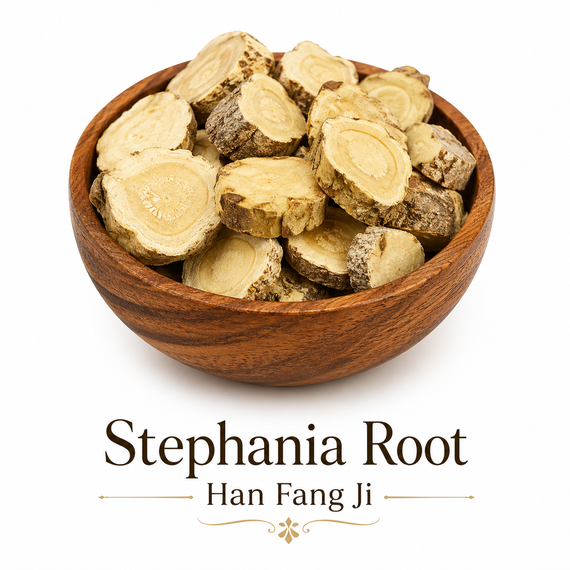
The name highlights two important ingredients: Fang Ji, referring here to Stephania root, and Huang Qi, referring to Astragalus root. The term Wan refers to a pill preparation.
The formula brings together botanical ingredients traditionally classified according to their properties, flavors, meridian associations, and roles within a larger herbal combination.
Traditional TCM Context
Traditional references associate this formula with the following concepts:
Tonifying Qi: A traditional principle associated with supporting Qi, particularly in patterns described as Qi deficiency.
Strengthening Spleen Qi: In TCM theory, the Spleen is associated with the transformation and transportation of nutrients and fluids. This concept is not identical to the anatomical spleen's functions in Western medicine.
Dispelling Wind-Dampness: A classical TCM principle used in the interpretation of certain traditional patterns. It is not a claim to treat arthritis, inflammation, or other diagnosed medical conditions.
Supporting fluid transformation: Traditional terminology describing the movement and distribution of fluids within the TCM framework, not a claim to treat edema, kidney disease, or urinary disorders.
The formula is traditionally associated with the Lung, Spleen, Bladder, Kidney, and Stomach channels.
These traditional descriptions are provided for educational purposes. They do not establish clinical effectiveness for any disease or symptom.
How to Use Teapills
Why Choose Plum Flower Stephania & Astragalus Teapills?
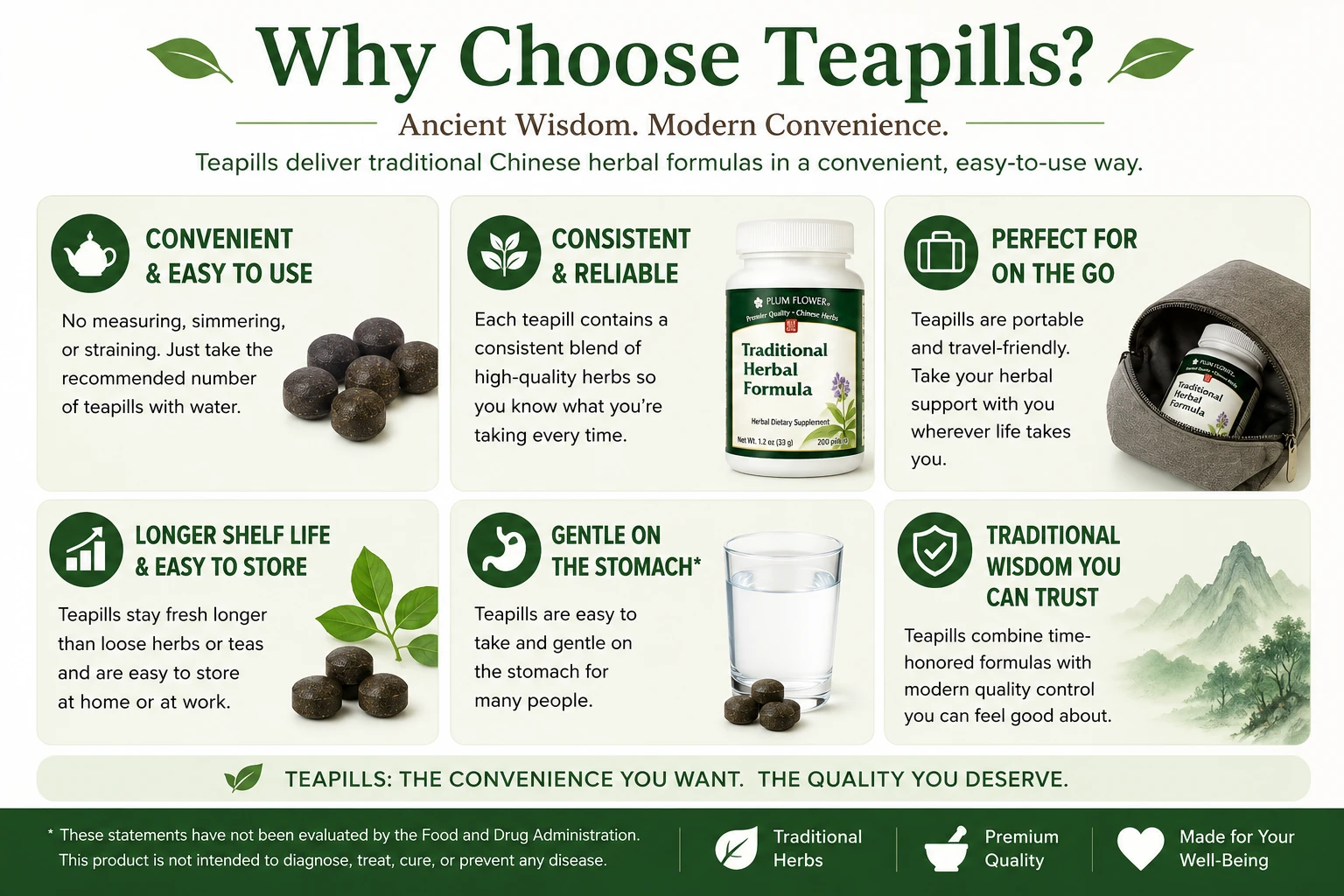
Traditional multi-herb formula: Combines six listed botanical ingredients in a single prepared formula.
Convenient teapills: No simmering, straining, or measuring individual herbs.
Manufacturer-listed directions: Provides specific teapill-count instructions on the product labeling.
Established herbal brand: Plum Flower is known for traditional Chinese herbal preparations.
For customers seeking this particular traditional formula, teapills offer a practical alternative to sourcing and preparing the individual herbs.
How to Take Stephania & Astragalus Teapills
Manufacturer's directions provided: Take 8 teapills, 3 times daily, or follow the advice of a qualified healthcare professional.
Swallow with water and follow the current bottle instructions. Do not substitute general teapill dosage recommendations for this product's specific directions.
At the supplied directions of 24 teapills daily, one 200-teapill bottle contains approximately eight days of servings.
Important Safety Information
Do not use if pregnant or nursing.
Consult your healthcare professional before use if you take prescription medications, have a medical condition, or use other herbal supplements.
This formula contains Gan Cao (licorice root), which may be unsuitable for some people with blood pressure, heart, kidney, or electrolyte concerns.
The correct botanical identity of Fang Ji is particularly important.
Keep out of reach of children.
Traditional Chinese herbal formulas are not substitutes for appropriate medical evaluation or treatment.
Frequently Asked Questions
What is Fang Ji Huang Qi Wan?
It is a traditional Chinese herbal formula containing six listed botanical ingredients, including Stephania root, Astragalus root, Atractylodes rhizome, jujube fruit, fresh ginger rhizome, and licorice root. Plum Flower offers this preparation as small, round teapills.
What does Fang Ji Huang Qi Wan mean?
Fang Ji refers to Stephania root in this product, while Huang Qi refers to Astragalus root. The term Wan indicates a pill preparation. The name reflects the formula's traditional Chinese herbal identity.
Are Stephania & Astragalus Teapills the same as a loose-herb decoction?
Both are prepared forms associated with the traditional Fang Ji Huang Qi formula, but manufacturing methods, ingredient proportions, and dosage may differ. Teapills should not automatically be considered dose-equivalent to a traditional decoction.
How many teapills are in a bottle?
Each bottle contains 200 teapills.
What is the suggested use?
The supplied bottle information states 8 teapills, three times daily. Consult a qualified healthcare professional before use and follow the current manufacturer's label.
Why is the botanical identity of Fang Ji important?
The name Fang Ji has historically been used for different botanical materials. Some substitutions involving Aristolochia species can introduce aristolochic acids, which are associated with serious kidney damage and cancer risk. Correct species authentication and appropriate product-specific verification are essential.
Can I take this formula if I have kidney disease?
People with kidney disease should not self-prescribe this formula. Consult a qualified healthcare professional familiar with your medical history and medications. Botanical identification and product safety are particularly important for products containing Fang Ji.
Scientific Research and References
Research on traditional Chinese herbal formulas includes studies of botanical identification, traditional formula composition, and the chemical constituents of individual herbs.
Published research can be explored through these resources:
Fang Ji Huang Qi Tang — Formula Research
Search PubMed for Fang Ji Huang Qi Tang
Research involving related classical preparations should not be interpreted as evidence that this specific Plum Flower product produces the same effects.
Stephania tetrandra — Botanical Research
Search PubMed for Stephania tetrandra
Research includes investigations of botanical constituents and identification.
Astragalus membranaceus — Botanical Research
Search PubMed for Astragalus membranaceus
Studies of Astragalus constituents do not establish the effectiveness of the complete teapill formula.
Aristolochic Acid — Botanical Safety
Search PubMed for aristolochic acid and herbal product safety
This research addresses the importance of botanical authentication and avoiding harmful substitutions.
Research on individual herbs should not be interpreted as proof that the complete formula treats a disease or produces the same results.
California Proposition 65
California Proposition 65 concerns exposure to certain chemicals identified by the State of California. For additional information, visit:
Understanding Proposition 65 – 1st Chinese Herbs
California Proposition 65 Warning – 1st Chinese Herbs
Official California Proposition 65 Website
Any legally required product-specific warning should be displayed according to the verified product information and applicable requirements.
Explore Traditional Chinese Herbal Formulas
Looking for the convenience of a prepared traditional Chinese herbal formula? Explore the Plum Flower teapills and tablets available at 1st Chinese Herbs to compare traditional formulas, package sizes, ingredient lists, and preparation types.
FDA Disclaimer: These statements have not been evaluated by the Food and Drug Administration. This product is not intended to diagnose, treat, cure, or prevent any disease.