ActiveHerb
Cordyceps Extract Granules Dong Chong Xia Cao ActiveHerb 100 g
Cordyceps Mushroom Extract Granules — ActiveHerb 0.9×, 100 Grams Convenient Cordyceps mycelium extract granules for customers seeking a

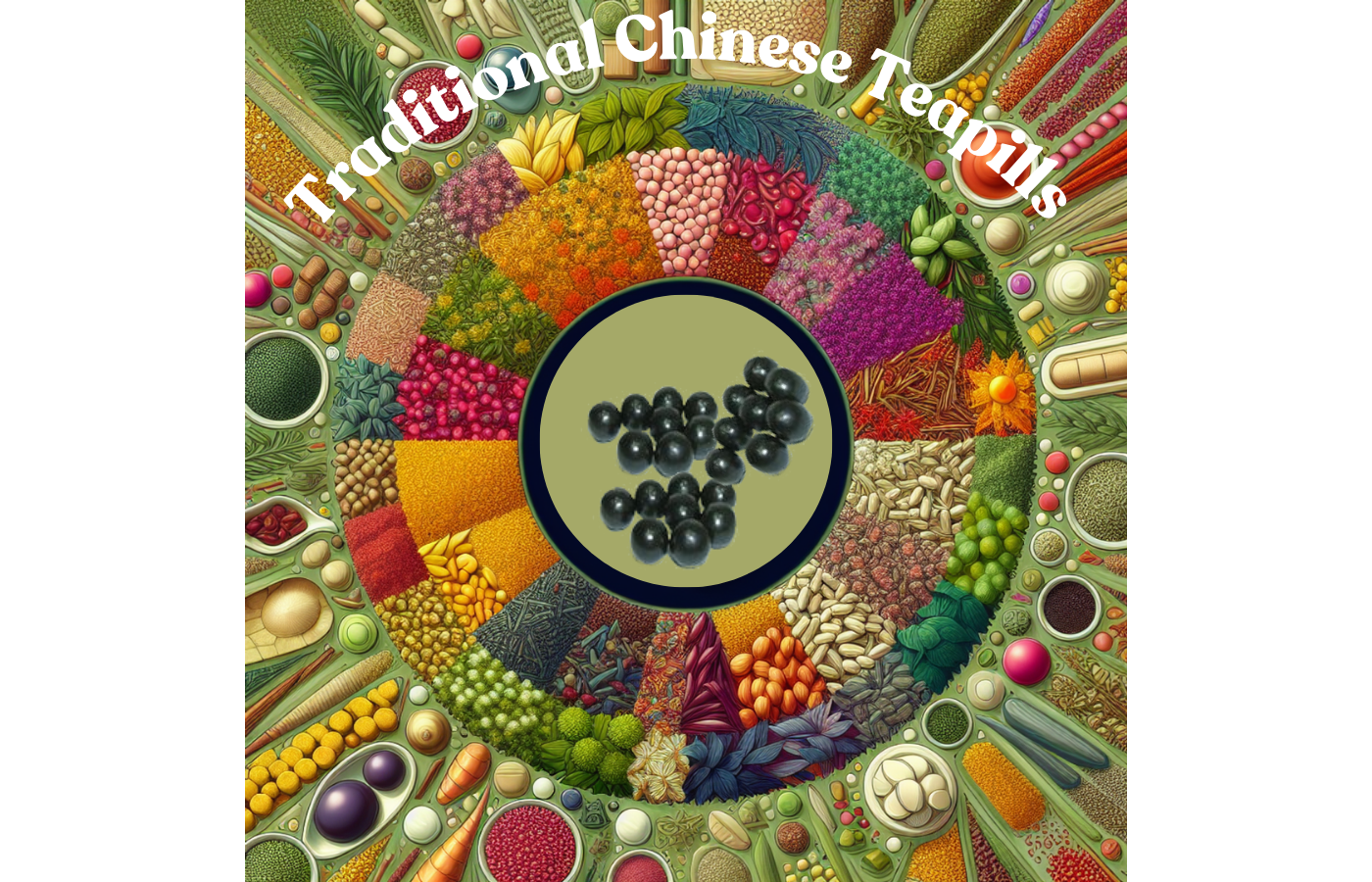
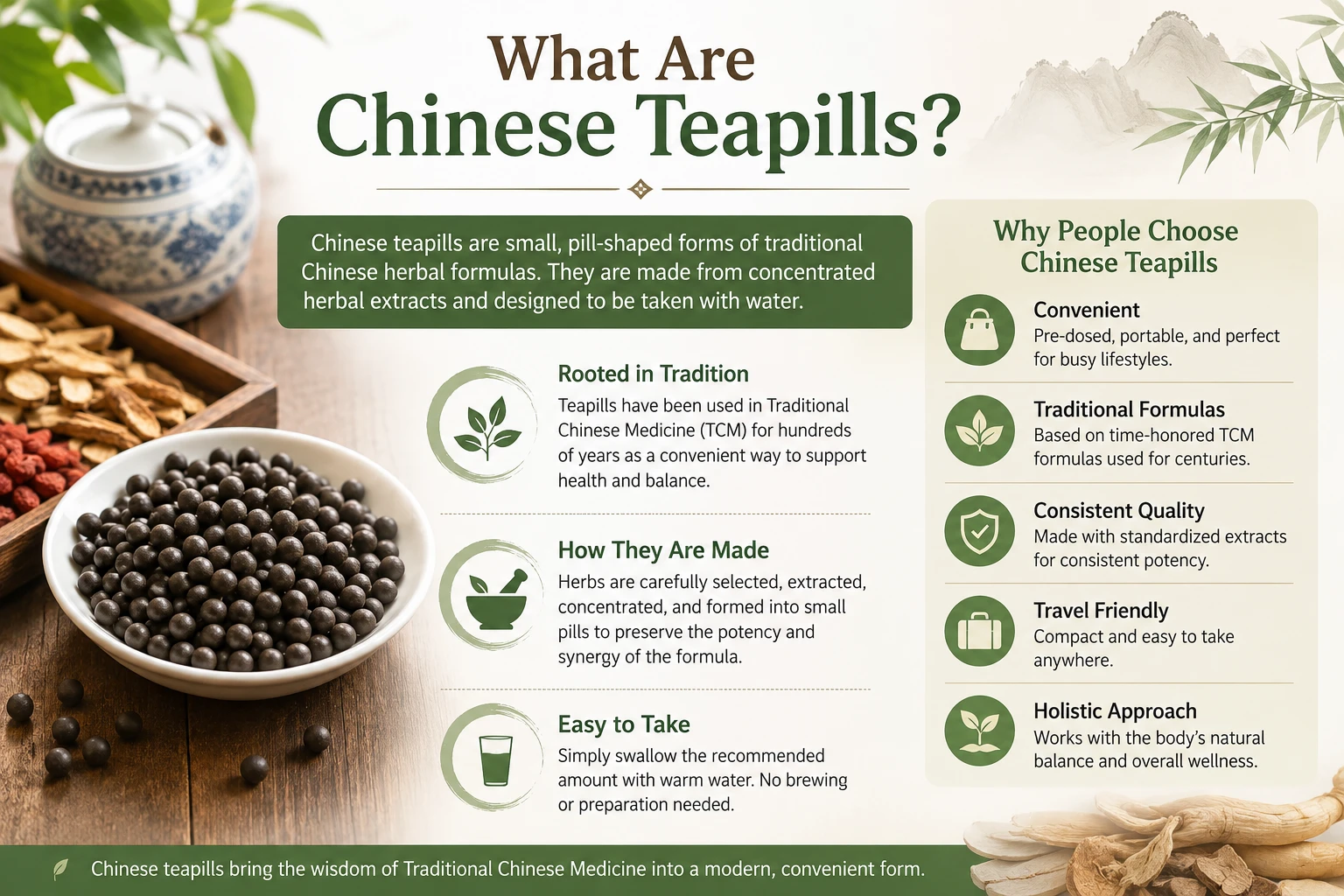
Chinese teapills are a convenient, time-tested herbal remedy rooted in Traditional Chinese Medicine (TCM). These small, pre-dosed pills are made from concentrated herbal extracts, offering a practical solution to support your health and balance your body’s energy, or qi.
Chinese teapills are a convenient way to use traditional Chinese herbal formulas without preparing a raw-herb decoction each day. These small, prepared herbal pills are based on formulas used within Traditional Chinese Medicine (TCM) and are easy to store, carry, and take with water.
There are hundreds of Chinese herbal formulas, each created for a different purpose within traditional Chinese medicine. Rather than simply matching a teapill to a Western health condition, TCM traditionally selects formulas according to an individual's TCM pattern.
Understanding what teapills are, how they are traditionally used, and how formulas differ can help you make a more informed choice.

Chinese teapills are prepared forms of traditional Chinese herbal formulas.
Traditional Chinese herbal medicine uses several methods of preparation, including raw-herb decoctions, powders, extracts, tablets, capsules, and pills. Teapills provide another option for people who want traditional herbal formulas without having to measure, simmer, and strain raw herbs every day.
Depending upon the manufacturer and formula, herbs may be processed, extracted, concentrated, powdered, combined with other ingredients, and formed into small pills or tablets.
Because manufacturing methods differ, always check the individual product information for ingredients, serving directions, concentration, and other details.
One of the most important things to understand about Chinese teapills is that traditional formulas are generally associated with TCM patterns, not simply Western medical conditions.
Traditional Chinese Medicine (TCM) uses patterns to describe groups of characteristics observed together. These terms are part of the traditional TCM system and do not represent Western medical diagnoses.
Qi Deficiency — Traditionally describes a pattern of insufficient Qi, often associated in TCM with low energy, weakness, reduced stamina, or feeling easily tired.
Blood Deficiency — A traditional pattern associated with insufficient nourishment from Blood. TCM descriptions may include paleness, occasional lightheadedness, dry skin, or a general feeling of weakness. TCM "Blood" is a broader concept than the Western medical definition of blood.
Yin Deficiency — Traditionally describes insufficient Yin, the cooling, nourishing, and moistening aspect of the body in TCM. The pattern may be associated with feelings of internal warmth, dryness, or restlessness.
Yang Deficiency — Traditionally describes insufficient Yang, associated in TCM with warmth, activity, and transformation. Characteristics may include feeling cold, low vitality, or a preference for warmth.
Liver Qi Stagnation — Describes Qi that is not moving freely according to TCM theory. It is traditionally associated with feelings of tension, constraint, frustration, or emotional uneasiness. The TCM "Liver" is a traditional functional system and does not mean liver disease.
Food Stagnation — A traditional pattern associated with food not moving or transforming properly after eating. TCM descriptions may include uncomfortable fullness, heaviness, or digestive discomfort, particularly following overeating.
Wind-Cold — A traditional exterior pattern associated with exposure to what TCM describes as Wind and Cold. Traditional characteristics may include feeling chilled, an aversion to cold, and other early exterior-pattern signs.
Wind-Heat — A traditional exterior pattern involving what TCM describes as Wind and Heat. It is distinguished from Wind-Cold by the presence of traditional Heat characteristics.
Dampness — In TCM, Dampness describes a pattern characterized by heaviness, sluggishness, or a sensation of being weighed down. It does not refer simply to excess water in the body.
Phlegm — TCM uses the term Phlegm more broadly than everyday Western usage. It can describe a traditional pattern of accumulated or poorly transformed fluids and is not limited to visible respiratory mucus.
Blood Stasis — Traditionally describes Blood that is not circulating smoothly according to TCM theory. It is associated with characteristic signs used by TCM practitioners when identifying a pattern. It should not be interpreted as a Western diagnosis involving blood clots or vascular disease.
These patterns help explain why two people with similar concerns may traditionally be given different Chinese herbal formulas. In TCM, the goal is to identify the overall pattern and select a formula traditionally associated with that pattern.
These terms belong to the traditional Chinese medicine system.
For example, the TCM concept of the Liver includes traditional functions and relationships that should not be interpreted as identical to the anatomical liver in Western medicine. Likewise, Kidney deficiency is a traditional pattern description and does not mean that someone has been diagnosed with kidney disease.
This distinction is important when reading about Chinese herbal formulas.
The following examples demonstrate how different teapill formulas are traditionally associated with different TCM patterns.
Traditional Pattern: Food Stagnation
Bao He Wan is a classic Chinese herbal formula traditionally associated with Food Stagnation, particularly following overindulgence in rich or heavy foods.
The formula contains herbs such as Shan Zha (hawthorn fruit), Lai Fu Zi (radish seed), and Chen Pi (tangerine peel).
Within traditional Chinese medicine, these herbs are combined to harmonize digestion and address the traditional pattern of Food Stagnation.
Traditional Pattern: Liver Qi Stagnation
Chai Hu Shu Gan Wan is traditionally associated with the TCM pattern known as Liver Qi Stagnation.
This traditional pattern may include feelings of emotional constraint or tension along with other characteristic TCM signs.
The formula contains Chai Hu (bupleurum) and other herbs traditionally used to regulate the movement of Qi.
"Moving Liver Qi" describes a traditional Chinese medicine concept rather than an effect on the anatomical liver.
Traditional Pattern: Wei Qi Deficiency
Yu Ping Feng San is commonly known as Jade Screen.
The formula traditionally includes Huang Qi (astragalus), Bai Zhu (atractylodes), and Fang Feng (siler) and is associated with supporting Wei Qi.
Wei Qi is frequently translated as Defensive Qi and represents a traditional TCM concept concerning the body's exterior defenses.
The poetic name "Jade Screen" reflects this traditional concept of a protective screen.
Traditional Pattern: Wind-Damp with Underlying Deficiency
Du Huo Ji Sheng Wan is a traditional multi-herb formula associated with patterns involving Wind-Dampness together with underlying deficiency.
In traditional Chinese medicine, this pattern may include characteristics such as heaviness, stiffness, or difficulty moving comfortably.
The formula contains numerous herbs, including Du Huo, Dang Gui, and Du Zhong.
TCM traditionally associates the Kidney system with the bones and the Liver system with the sinews. These are traditional relationships within Chinese medicine and should not be interpreted as Western physiological descriptions.
Traditional Pattern: Qi and Blood Deficiency
Ren Shen Yang Rong Wan is traditionally associated with patterns of Qi and Blood deficiency.
It combines herbs traditionally categorized as Qi-tonifying and Blood-nourishing herbs.
In TCM, "Qi" and "Blood" have specific traditional meanings that do not correspond directly to Western medical diagnoses.
Traditional Pattern: Kidney Yin Deficiency
Liu Wei Di Huang Wan is one of the best-known traditional Chinese herbal formulas.
Its English name, Six Flavor Rehmannia, reflects its six-herb composition.
Within traditional Chinese medicine, the formula is associated with the pattern known as Kidney Yin deficiency.
Again, Kidney Yin deficiency is a traditional TCM pattern and does not mean kidney disease.
Traditional Pattern: Spleen Qi and Heart Blood Deficiency
Gui Pi Wan is another widely recognized traditional formula. It is traditionally associated with patterns involving Spleen Qi and Heart Blood deficiency.
As with the Liver and Kidney systems, TCM uses "Spleen" and "Heart" within a broader traditional framework that should not be interpreted as equivalent to Western anatomical diagnoses.

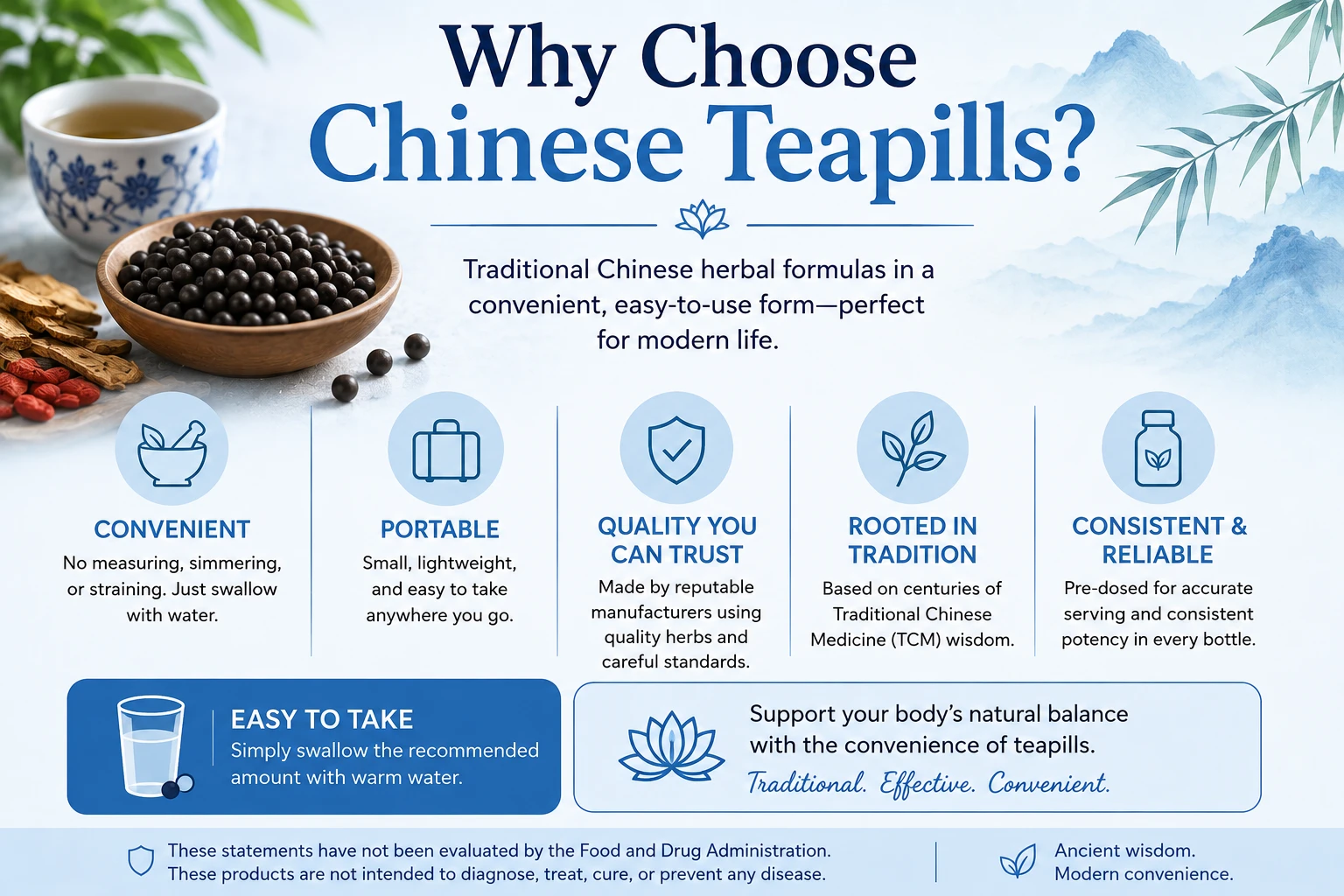
The greatest advantage of teapills for many people is convenience.
Preparing a traditional raw-herb decoction can involve measuring herbs, adding water, simmering them for an extended period, straining the liquid, and repeating the process regularly.
Teapills eliminate most of that preparation.
They are:
Easy to take with water
Portable
Convenient for work or travel
Easy to store
Already prepared
Available in many traditional formulas
Free from daily simmering and straining
This makes traditional formulas more accessible for people who don't have the time or desire to prepare a decoction every day.
There is no universal dosage for Chinese teapills.
Serving size can vary according to the formula, manufacturer, pill size, concentration, and method of preparation.
Some products use tiny traditional-style teapills, while others are larger tablets or concentrated herbal products.
Always follow the directions on the individual product label unless your qualified healthcare professional has instructed you differently.
Teapills are generally swallowed with water and do not need to be brewed into tea.

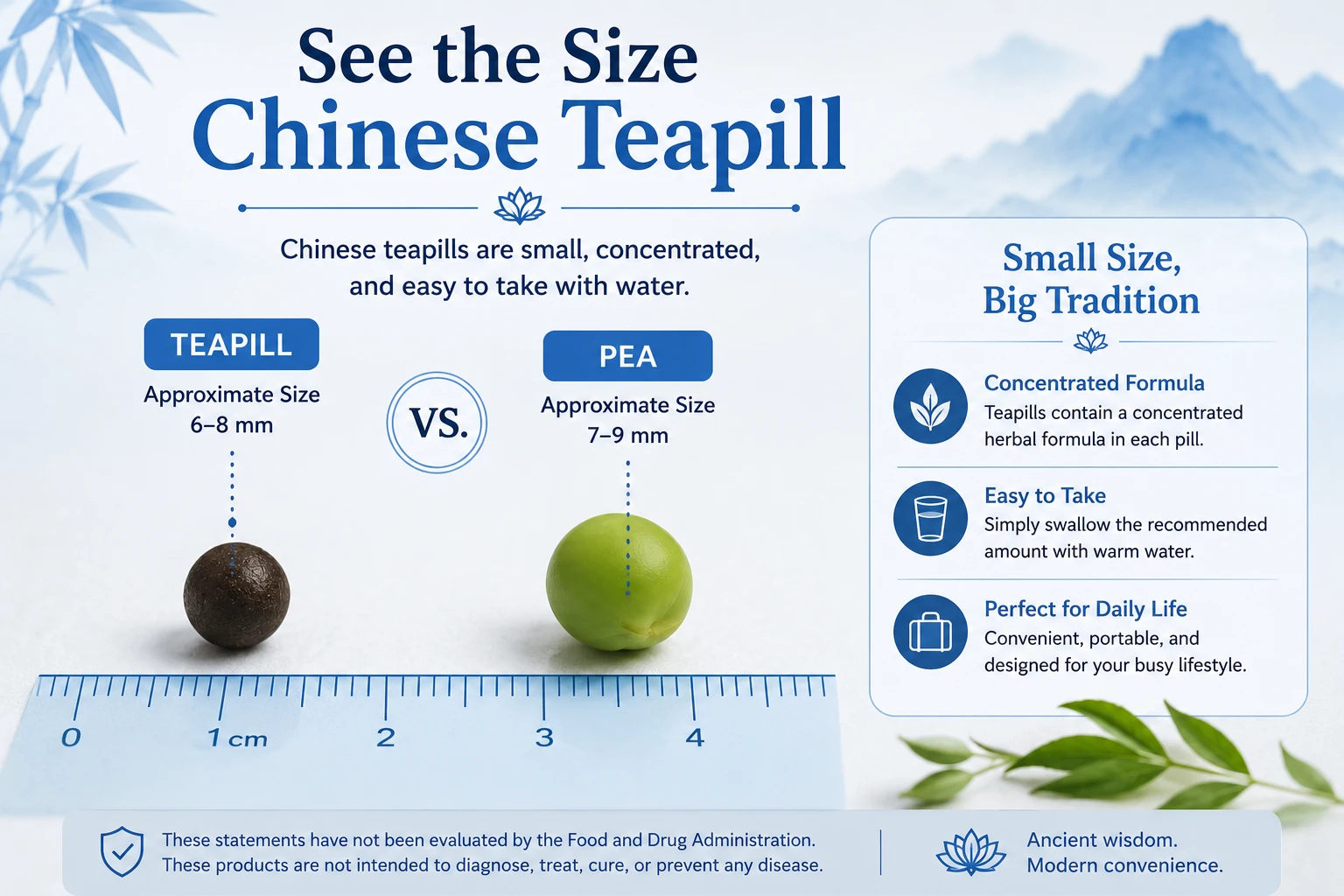
People opening their first bottle of traditional teapills are sometimes surprised by their size.
Many traditional-style teapills are considerably smaller than conventional Western tablets or capsules. Because they are small, an individual serving may contain several pills.
Small size does not mean that every teapill has the same concentration. Formula strength, extraction, serving size, and manufacturing methods can differ.
Check the individual product label rather than comparing formulas simply by the number or size of pills.
Manufacturing varies by company and product.
Depending upon the formula, manufacturers may process herbs into powders or extracts before forming the finished product. Other ingredients may also be used during manufacturing.
Modern manufacturing makes it possible to produce traditional herbal formulas in a convenient, standardized format.
For exact information about a particular product, check its ingredient panel and manufacturer's specifications.
Not every Chinese herbal product is manufactured in exactly the same way.
When comparing teapills, look for clearly identified ingredients, manufacturer information, serving directions, warnings, lot or batch information, and available quality-control information.
Depending upon the brand and product, quality programs may include testing for:
Heavy metals
Microbial contamination
Pesticide residues
Identity and purity
Testing practices vary, so consumers should review the information available for the particular brand or product they are considering.
Chinese herbs and traditional formulas continue to be studied by researchers around the world.
Research may examine individual herbs, botanical compounds, traditional formulas, laboratory activity, pharmacology, safety, or other areas of interest.
For example, commonly used herbs such as Astragalus (Huang Qi), Hawthorn (Shan Zha), Bupleurum (Chai Hu), Rehmannia (Shu Di Huang), and Ginseng (Ren Shen) have all been subjects of scientific investigation.
It is important, however, to distinguish scientific research from product claims.
Research involving an individual herb, isolated compound, laboratory model, or particular formulation does not automatically establish that a different finished teapill product will produce the same result.
Traditional use and modern scientific research provide different types of information, and both should be presented in their proper context.
Chinese teapills contain active botanical ingredients and should be selected thoughtfully.
Talk with your healthcare professional before using herbal supplements if you:
Take prescription medications
Have an existing medical condition
Are preparing for surgery
Are pregnant or breastfeeding
Are considering herbal supplements for a child
Some herbs can interact with medications, and individual formulas may have specific warnings or contraindications.
Do not assume that because a formula is traditional or herbal it is appropriate for everyone.
No. Despite the name "teapill," these products are generally swallowed with water rather than brewed as tea.
Usually not. One of their primary advantages is that the herbal formula has already been prepared into a convenient pill or tablet form.
Follow the individual product label. There is no universal teapill dosage because formulas, concentrations, pill sizes, and manufacturers differ.
That depends upon the specific formula and the individual using it. Some traditional formulas are used differently from others. Follow the product directions and seek professional guidance when appropriate, particularly for extended use.
Herbal ingredients can potentially interact with prescription and over-the-counter medications. Consult your healthcare professional if you take medications or are receiving medical treatment.
Start by learning the formula's traditional TCM pattern and traditional use, rather than selecting it solely by the name of a Western health condition.
If you're uncertain which formula is appropriate, consider consulting a qualified practitioner familiar with Chinese herbal medicine.
Chinese teapills combine the long tradition of Chinese herbal formulas with a convenient modern format.
Their biggest advantage is simple: the formula is already prepared.
There is no daily measuring, simmering, or straining of raw herbs. You can take the prepared formula according to its label directions with water.
At the same time, understanding the traditional Chinese medicine pattern behind a formula is important. Terms such as Qi deficiency, Blood deficiency, Kidney Yin deficiency, Liver Qi Stagnation, and Wei Qi describe concepts within the traditional Chinese medicine system and should not be confused with Western medical diagnoses.
Learning about the formula, ingredients, traditional pattern, directions, manufacturer, quality, and precautions can help you make a more informed choice when shopping for Chinese teapills.
Traditional Use Notice: References to traditional Chinese medicine patterns and uses describe historical and traditional practices and are not intended to represent Western medical diagnoses.
FDA Disclaimer: These statements have not been evaluated by the Food and Drug Administration. These products are not intended to diagnose, treat, cure, or prevent any disease.
Research Note: These links are provided for educational purposes. Research on an individual herb, traditional formula, preparation, or specific study population does not establish that a dietary supplement will diagnose, treat, cure, or prevent a disease.