


Bi Yan Pian Sugar-Free Tablets – Plum Flower – 120 Tablets
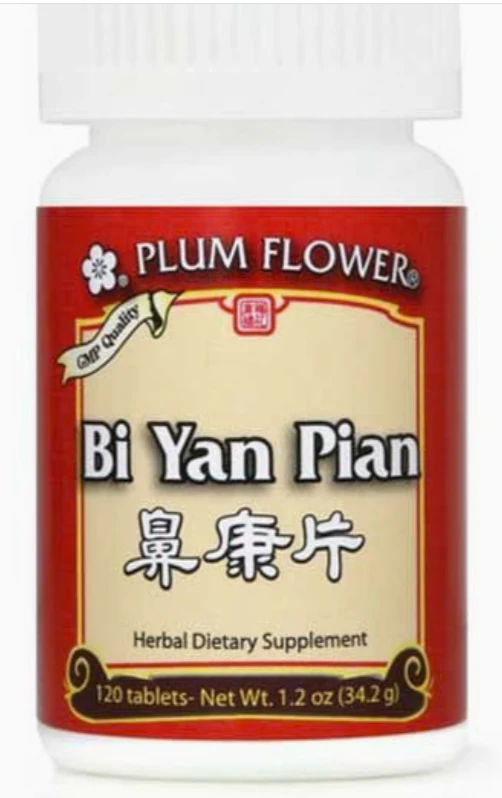
Traditional Chinese Herbal Support for Nasal Wellness
Discover a time-honored approach to nasal wellness with Plum Flower Bi Yan Pian.
Featuring Magnolia Flower, Xanthium Fruit, Forsythia and eight complementary Chinese botanicals, Bi Yan Pian brings traditional Chinese herbal knowledge into a convenient, ready-to-use tablet.
Why Choose Bi Yan Pian?
-
Traditionally associated with nasal wellness and seasonal balance.
-
Combines 11 Chinese botanicals in one formula.
-
Available in a sugar-free tablet formulation.
-
Convenient preparation without brewing or simmering.
-
Complete ingredient information for informed purchasing.
Shop with confidence at 1st Chinese Herbs — a family-owned herbal retailer trusted since 1994.
Bi Yan Pian at a Glance
- Traditional Focus: Nasal wellness and seasonal balance.
- Formula Type: Traditional Chinese multi-herb formula.
- Key Botanicals: Xin Yi Hua, Cang Er Zi, Bai Zhi and Lian Qiao.
- Product Form: Ready-to-use herbal tablets.
- Product Version: Sugar-free.
- Package Size: 120 tablets.
- Preparation Required: None.
What Is Bi Yan Pian?
Bi Yan Pian is a traditional Chinese herbal formula associated with nasal wellness. Its distinctive botanical combination brings together aromatic flowers, roots, fruits, rhizomes and aerial plant parts selected according to traditional Chinese herbal principles.
In Traditional Chinese Medicine (TCM), the nose is associated with the Lung system. Traditional herbal practitioners consider the relationship between the nasal passages, Lung Qi, environmental influences and the body's overall pattern of balance.
Bi Yan Pian incorporates botanicals traditionally classified as dispersing Wind, clearing Heat, supporting the movement of Lung Qi and maintaining balance within the nasal passages.
Unlike single-herb preparations, Bi Yan Pian combines multiple botanical characteristics within one convenient tablet formula.
These descriptions reflect traditional Chinese herbal theory rather than modern medical diagnoses or clinically established effects of the finished product.
The Traditional Herbal Philosophy Behind Bi Yan Pian
Chinese herbal formulas are traditionally developed by combining botanicals with complementary characteristics. Bi Yan Pian illustrates this approach through its combination of aromatic, dispersing, cooling and harmonizing herbs.
Aromatic Botanicals and Nasal Wellness
Xin Yi Hua (Magnolia Flower), Cang Er Zi (Xanthium Fruit) and Bai Zhi (Dahurian Angelica Root) are traditionally associated with the nasal passages in Chinese herbal literature. These three botanicals contribute significantly to the formula's traditional identity.
Balancing Wind and Heat
Fang Feng, Jing Jie, Lian Qiao and Ye Ju Hua contribute traditional Wind-dispersing and Heat-clearing characteristics.
Within Traditional Chinese Medicine, Wind and Heat describe traditional patterns of imbalance. These concepts should not be confused with modern medical conditions or physiological processes.
Supporting Formula Harmony
Gan Cao, Wu Wei Zi, Zhi Mu and Jie Geng introduce additional traditional characteristics associated with harmonization, Yin, body fluids and Lung Qi.
Together, these ingredients demonstrate the traditional Chinese herbal practice of combining botanicals according to their complementary characteristics.
Bi Yan Pian Product Details
| Product Specification | Details |
|---|---|
| Product Name | Bi Yan Pian Tablets |
| Pinyin Name | Bi Yan Pian |
| Brand | Plum Flower |
| Product Form | Herbal Tablets |
| Package Size | 120 Tablets |
| Formula Type | Traditional Chinese Multi-Herb Formula |
| Botanical Ingredients | 11 |
| Product Version | Sugar-Free |
| Standard Serving | 4 Tablets |
| Servings Per Bottle | 30 |
| Country of Origin | China |
| Storage | Store tightly closed in a cool, dry location. |
Complete Bi Yan Pian Herbal Ingredient Guide
Plum Flower Bi Yan Pian contains 11 traditional Chinese botanical ingredients. Each botanical contributes distinct characteristics within traditional Chinese herbal theory.
The following chart identifies each ingredient by its Pinyin name, common name, botanical name and traditional herbal role.
| Pinyin Name | Common Name | Botanical Name | Traditional Herbal Role |
|---|---|---|---|
| Cang Er Zi | Xanthium Fruit | Xanthium sibiricum fruit | Traditionally disperses Wind and is associated with the nasal passages. |
| Xin Yi Hua | Magnolia Flower | Magnolia biondii flower | Aromatic botanical traditionally associated with nasal wellness. |
| Lian Qiao | Forsythia Fruit | Forsythia suspensa fruit | Traditionally classified as a Heat-clearing botanical. |
| Fang Feng | Saposhnikovia Root | Saposhnikovia divaricata root | Traditionally disperses Wind and supports Exterior balance. |
| Bai Zhi | Dahurian Angelica Root | Angelica dahurica root | Aromatic root associated with traditional Wind and Dampness patterns. |
| Zhi Mu | Anemarrhena Rhizome | Anemarrhena asphodeloides rhizome | Traditionally clears Heat and nourishes Yin. |
| Gan Cao | Chinese Licorice Root | Glycyrrhiza uralensis root | Traditionally harmonizes herbal combinations. |
| Jing Jie | Schizonepeta Herb | Schizonepeta tenuifolia herb | Traditionally associated with releasing the Exterior and dispersing Wind. |
| Ye Ju Hua | Wild Chrysanthemum Flower | Chrysanthemum indicum flower | Traditionally classified as a cooling, Heat-clearing botanical. |
| Wu Wei Zi | Schisandra Fruit | Schisandra chinensis fruit | Traditionally associated with conserving body fluids and Lung Qi. |
| Jie Geng | Balloon Flower Root | Platycodon grandiflorum root | Traditionally associated with the movement of Lung Qi. |
Traditional herbal roles are provided for educational purposes and do not represent clinically established effects of the finished product.
Other Ingredients
Microcrystalline cellulose, hypromellose, polyethylene glycol and magnesium stearate (botanically sourced).
These ingredients serve formulation purposes, including tablet structure, coating and manufacturing consistency.
Sugar-Free Bi Yan Pian vs. Sugar-Coated Bi Yan Pian
Plum Flower Bi Yan Pian is available in sugar-free and sugar-coated versions. Understanding the difference helps customers identify the product they intend to purchase.
| Feature | Sugar-Free Version | Sugar-Coated Version |
|---|---|---|
| Botanical Ingredients | 11 | 11 |
| Sucrose Listed | No | Yes |
| Package Size | 120 Tablets | 120 Tablets |
This product listing is for the sugar-free version of Bi Yan Pian.
The sugar-free designation does not establish suitability for individuals with diabetes or other medical conditions.
Why Proper Herbal Processing Matters
Botanical identity, plant part selection, preparation methods and manufacturing controls are important considerations when selecting Chinese herbal products.
Cang Er Zi is a particularly important example. Scientific research on Xanthium fruits has identified potentially toxic naturally occurring constituents. Appropriate processing, dosage and professional guidance are therefore important considerations.
Raw Xanthium fruit should not be substituted for a commercially prepared herbal formula or added to Bi Yan Pian to increase its strength.
Specific processing methods and constituent levels should be confirmed through the manufacturer's product specifications and applicable batch documentation.
How Does Bi Yan Pian Compare With Other Chinese Herbal Formulas?
Although several traditional Chinese herbal formulas share botanical ingredients, their compositions and traditional purposes differ.
| Formula | Traditional Formula Characteristics |
|---|---|
| Bi Yan Pian | An 11-herb combination incorporating aromatic, Wind-dispersing and Heat-clearing botanicals associated with nasal wellness. |
| Cang Er Zi San | A classical formula typically centered on Xanthium Fruit, Magnolia Flower, Dahurian Angelica Root and Mint. |
| Yin Qiao San | A traditional formula associated with Exterior Wind-Heat patterns, featuring Honeysuckle Flower and Forsythia Fruit. |
These formulas should not be considered interchangeable. A qualified Chinese herbal practitioner can help determine which traditional formulation is appropriate for an individual's circumstances.
Why Choose Bi Yan Pian Tablets Instead of Bulk Herbs?
Preparing traditional Chinese bulk herbs may require weighing individual ingredients, measuring water, simmering and straining. Prepared herbal tablets provide a convenient alternative for customers who prefer a ready-to-use format.
- No weighing individual botanical ingredients.
- No brewing or decoction preparation.
- No straining or specialized equipment.
- Convenient for storage and travel.
- Consistent tablet serving format.
- Clearly identified botanical ingredients.
- Sugar-free tablet formulation.
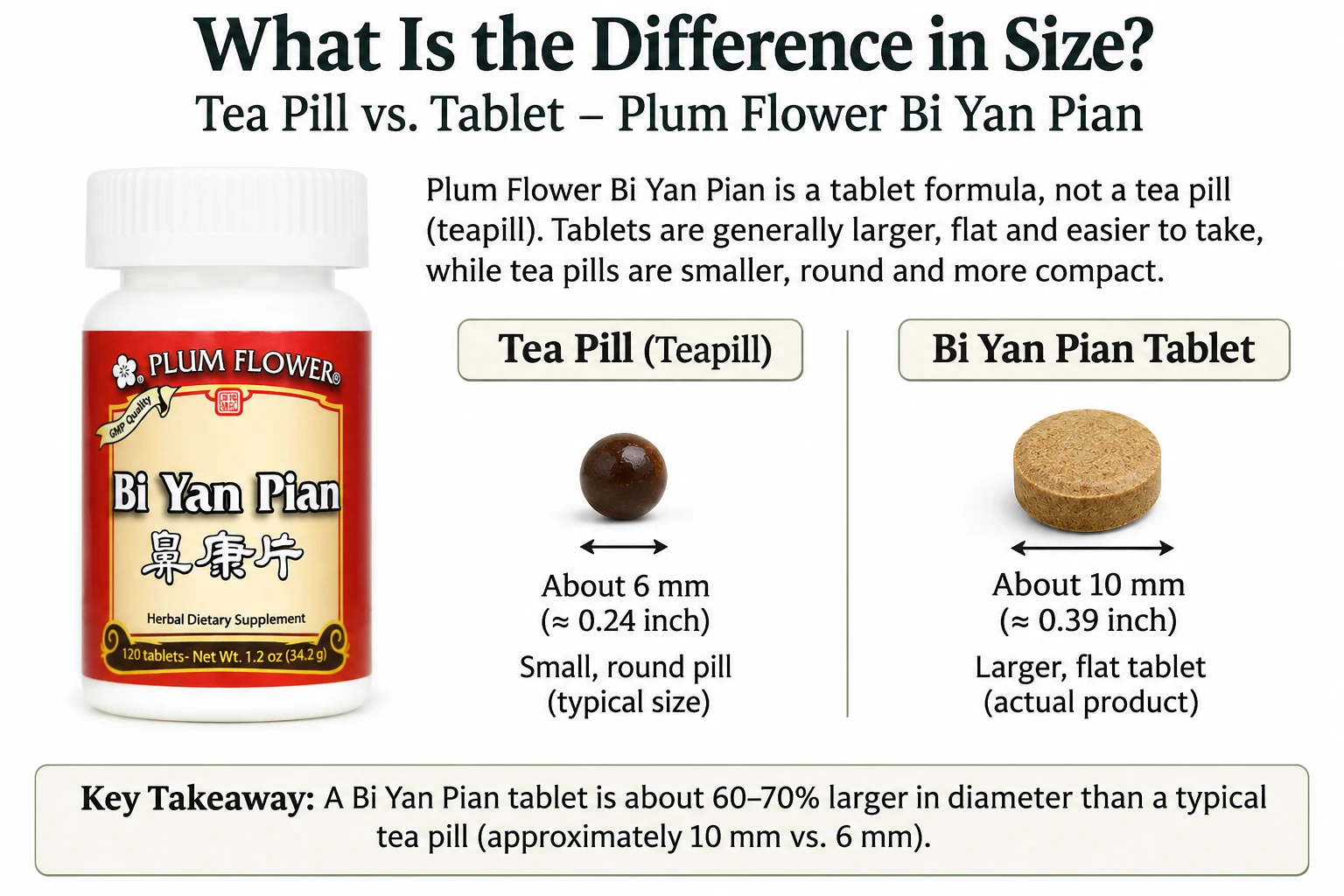
Herbal tablets, teapills, concentrated extracts and bulk herbs are not automatically interchangeable on a tablet-for-tablet or gram-for-gram basis.
How to Take Bi Yan Pian Tablets
Manufacturer's Standard Directions: 4 tablets, 3 times daily.
Follow the current product label or the instructions of a qualified healthcare professional. Do not exceed the recommended amount or combine this formula with additional Xanthium-containing products without professional guidance.
Understanding the Bottle Quantity
| Quantity Information | Amount |
|---|---|
| Tablets Per Bottle | 120 |
| Tablets Per Standard Serving | 4 |
| Total Servings Per Bottle | 30 |
| Tablets Per Day Under Standard Directions | 12 |
| Calculated Bottle Duration | 10 Days |
Bottle duration is a mathematical calculation for purchasing information only and is not a recommended treatment duration.
Bi Yan Pian Safety, Allergens and Precautions
Please review the following information before purchasing or using Bi Yan Pian.
Pregnancy and Breastfeeding: The manufacturer advises caution during pregnancy. Consult a qualified healthcare professional before use during pregnancy or breastfeeding.
Cang Er Zi (Xanthium Fruit): Xanthium species contain naturally occurring constituents associated with toxicity, including potential liver injury. Do not exceed label directions or combine this formula with additional Xanthium-containing preparations without professional supervision.
Gan Cao (Chinese Licorice Root): Licorice containing glycyrrhizin may affect blood pressure, potassium levels and fluid balance. Individuals with high blood pressure, heart disease, kidney disease, fluid retention or low potassium should consult a healthcare professional before use.
Wu Wei Zi (Schisandra Fruit): Schisandra constituents may influence enzymes and transport proteins involved in medication metabolism. Consult a pharmacist before combining this formula with prescription medications.
Botanical Allergies: This formula contains botanicals belonging to the Asteraceae family, including Xanthium and Wild Chrysanthemum. Individuals with known sensitivities to plants in this family should seek professional guidance before use.
Medication Considerations: Professional review is particularly important for individuals taking diuretics, cardiovascular medications, immunosuppressants, anticoagulants or medications requiring carefully controlled blood levels.
Additional Precautions: Consult your healthcare professional if you have liver or kidney disease, are preparing for surgery or take other dietary supplements.
Do not use this product as a substitute for medical evaluation or prescribed treatment. Discontinue use and seek medical advice if adverse reactions occur.
Keep out of reach of children.
Manufacturer Testing and Product Traceability
Its published quality control program addresses areas including:
- Botanical identity and ingredient authentication.
- Microbiological quality.
- Heavy metal testing.
- Applicable pesticide residue testing.
- Manufacturing consistency.
- Batch identification and product traceability.
Frequently Asked Questions About Bi Yan Pian
What is Bi Yan Pian traditionally used for?
Bi Yan Pian is a traditional Chinese herbal formula associated with nasal wellness and traditional herbal principles involving Wind, Heat and Lung Qi. These descriptions reflect traditional Chinese herbal theory rather than established clinical effects.
How many herbs are in Bi Yan Pian?
This Plum Flower formulation contains 11 botanical ingredients, including Xanthium Fruit, Magnolia Flower, Forsythia Fruit, Chinese Licorice Root and Schisandra Fruit.
How many servings are in a bottle?
Each bottle contains 120 tablets, equivalent to 30 standard servings of four tablets each.
How long does one bottle of Bi Yan Pian last?
At the manufacturer's standard directions of four tablets three times daily, one bottle contains a calculated 10-day supply. This calculation does not establish an appropriate duration of use.
Is Bi Yan Pian a teapill or a tablet?
This Plum Flower product is manufactured in tablet form. Pian refers to a tablet, while Wan commonly refers to a traditional pill preparation.
Does Bi Yan Pian contain licorice?
Yes. Gan Cao, or Chinese Licorice Root, is one of the 11 botanical ingredients. Individuals with cardiovascular or kidney conditions should consult a healthcare professional before use.
Can I take Bi Yan Pian with prescription medications?
Consult your pharmacist or healthcare professional before combining Bi Yan Pian with prescription medications. Its ingredients include licorice and Schisandra, which have documented interaction considerations.
Does Bi Yan Pian require brewing?
No. Bi Yan Pian is supplied as prepared herbal tablets and does not require brewing, steeping, simmering or straining.
What is the difference between Bi Yan Pian and Cang Er Zi San?
Both are associated with traditional Chinese herbal approaches to nasal wellness. Classical Cang Er Zi San typically centers on four botanicals, while this Plum Flower Bi Yan Pian formulation contains 11. Their compositions and preparation methods differ and should not be assumed to be interchangeable.
Where can I buy authentic Plum Flower Bi Yan Pian?
Plum Flower Bi Yan Pian is available from 1st Chinese Herbs, a family-owned online herbal retailer established in 1994. Orders ship from Washington State, USA.
Why Purchase Bi Yan Pian From 1st Chinese Herbs?
Shop With Confidence
Authentic Plum Flower Product
Trusted Herbal Retailer Since 1994
Normally Ships Within One Business Day
Secure Credit Card Checkout
Pay Directly With Your Credit or Debit Card — No PayPal Login Needed.
Questions? Call 360-970-1550
Herbal Research and Scientific References
Scientific research provides additional information about botanical identity, processing methods, naturally occurring constituents and safety considerations.
Research involving individual herbs, related botanical species or isolated compounds does not establish the clinical effectiveness or safety of the finished Bi Yan Pian formula.
1. Xanthium Botanical Research and Toxicology
Traditional Uses, Botany, Phytochemistry, Pharmacology, Pharmacokinetics and Toxicology of Xanthium strumarium L.: A Review. 2019. PMID: 30669496.
Read the published review on PubMed.
Research Relevance: Reviews Xanthium-related botanical research, chemical constituents and toxicity considerations. It does not evaluate the finished Plum Flower Bi Yan Pian product.
2. Xanthium Processing and Liver Safety
A UPLC-MS/MS application for comparisons of the hepatotoxicity of raw and processed Xanthii Fructus by energy metabolites. RSC Advances. 2019. DOI: 10.1039/C8RA08272C. PMID: 35520491.
Read the published research on PubMed.
Research Relevance: Examines differences between processed and unprocessed Xanthium material in experimental research. The findings do not establish the processing method or safety of this commercial formula.
3. Licorice, Blood Pressure and Potassium
Penninkilampi R, Eslick EM, Eslick GD. The association between consistent licorice ingestion, hypertension and hypokalaemia: a systematic review and meta-analysis. Journal of Human Hypertension. 2017;31(11):699-707. PMID: 28660884.
Read the systematic review on PubMed.
Research Relevance: Supports the importance of cardiovascular and electrolyte-related precautions when consuming glycyrrhizin-containing licorice preparations.
4. Schisandra and Medication Interactions
Zhang F, Zhai J, Weng N, Gao J, Yin J, Chen W. A Comprehensive Review of the Main Lignan Components of Schisandra chinensis and Schisandra sphenanthera and the Lignan-Induced Drug-Drug Interactions Based on the Inhibition of Cytochrome P450 and P-Glycoprotein Activities. Frontiers in Pharmacology. 2022;13:816036. PMID: 35359848.
Read the published review on PubMed.
Research Relevance: Explores how Schisandra constituents may influence medication metabolism and transport. The magnitude of any interaction involving the finished formula has not been established.
5. Manufacturer Product Specifications
Mayway: Plum Flower Bi Yan Pian Tablets.
Manufacturer reference for product identification, ingredients and standard directions.
6. Manufacturer Quality Documentation
Mayway Quality Assurance and Control.
Manufacturer reference for published quality control, testing and traceability procedures.
California Proposition 65
California customers should review our California Proposition 65 information
Disclaimer: These statements have not been evaluated by the Food and Drug Administration. This product is not intended to diagnose, treat, cure or prevent any disease. Traditional herbal descriptions are provided for educational purposes and should not replace professional medical advice. Consult your healthcare professional before using dietary supplements.
4 Reviews
-
My recent purchase
I am so happy with my purchase. It a great help throughout seasonal changes. Thanks for all you do.
-
Review
Thanks for product. Good for seasonal allergies. Especially for spring time.
-
Review
Thanks for product. Good for seasonal allergies. Especially for spring time.
-
Products review
Thanks....it works well