

Shou Wu Pian Tablets – Prepared He Shou Wu – Plum Flower
A traditional single-herb Chinese formula made with prepared He Shou Wu root.
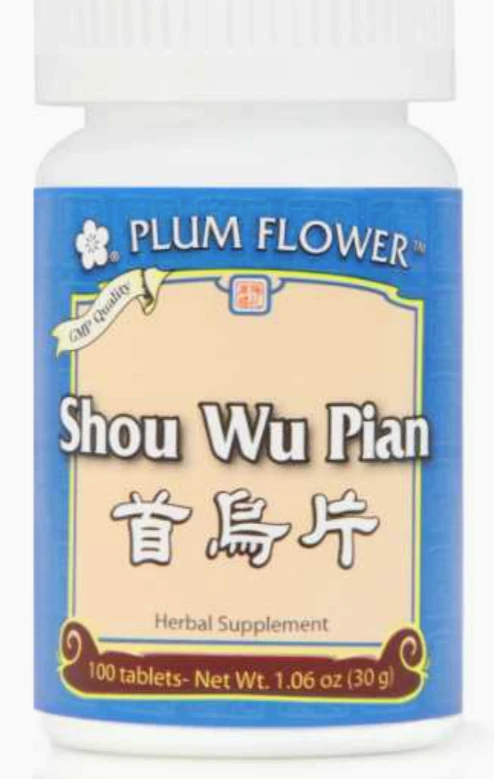 Shou Wu Pian Tablets by Plum Flower contain prepared Polygonum multiflorum root, traditionally known as He Shou Wu (Dou).
Unlike multi-herb Chinese formulas, Shou Wu Pian features one primary botanical ingredient. The root is traditionally processed with black soybean juice before being prepared into tablets.
In Traditional Chinese Medicine (TCM), prepared He Shou Wu has historically been classified as an herb that nourishes Blood and Essence. These traditional concepts describe its place in Chinese herbal practice and are not claims of established medical effectiveness.
Each bottle contains 100 prepared tablets with manufacturer-provided ingredient information and directions.
Product Details
| Product Name | Shou Wu Pian Tablets |
|---|---|
| Chinese Name | 首烏片 |
| Pin Yin Name | Shou Wu Pian |
| Main Herb | He Shou Wu (Dou) |
| Botanical Name | Polygonum multiflorum root (prepared) |
| Brand | Plum Flower |
| Package Size | 100 tablets per bottle |
| Product Form | Prepared herbal tablets |
| Standard Dosage | 3 tablets, 3 times daily |
| Allergen | Contains soy |
Shou Wu Pian Ingredients & Traditional Uses
Shou Wu Pian is a single-herb preparation. Its botanical ingredient is prepared He Shou Wu root, traditionally processed using black soybean juice.
| Pin Yin Name | Botanical Ingredient | Traditional TCM Role |
|---|---|---|
| He Shou Wu (Dou) | Polygonum multiflorum root (prepared) | Traditionally classified as an herb that nourishes Blood and Essence and supports traditional Liver and Kidney patterns in TCM theory. |
Other Ingredients
Dextrin, Hypromellose, Polyethylene glycol, Magnesium stearate.
Allergen Information
Contains soy. The botanical ingredient is processed with black soybean juice. Do not use if you have a soy allergy unless your allergist has specifically determined it is safe for you.
What Is Shou Wu Pian?
Shou Wu Pian is a traditional Chinese herbal tablet preparation featuring He Shou Wu, a botanical also known as Fo-Ti or Chinese fleeceflower root.
The name "Shou Wu" is closely associated with the traditional herb He Shou Wu. "Pian" refers to the tablet form.
The plant has been used in Chinese herbal traditions for centuries, with different preparations described for different traditional purposes.
This Plum Flower product uses the prepared root, rather than an unprocessed raw root preparation.
What Does Prepared He Shou Wu Mean?
In traditional Chinese herbal processing, He Shou Wu root may be prepared with black soybean juice. The manufacturer identifies the botanical ingredient in this product as prepared Polygonum multiflorum root.
This processing method is traditionally associated with the herb's use as a tonic in TCM practice.
Prepared and unprepared He Shou Wu are not interchangeable in traditional herbal theory. Processing may change the chemical composition of the root.
Traditional Chinese Medicine Uses
Prepared He Shou Wu has historically been described in TCM as an herb that nourishes Blood and Essence.
Traditional descriptions include:
- Nourishing Blood
- Supporting Essence (Jing)
- Tonifying traditional Liver and Kidney patterns
- Supporting traditional concepts of vitality and healthy aging
- Traditional associations with hair nourishment and pigmentation
These are descriptions of historical herbal practice. They do not demonstrate that Shou Wu Pian restores hair color, prevents hair loss, reverses aging, or treats liver, kidney, or other diseases.
What Does "Nourishing Blood" Mean in TCM?
In Traditional Chinese Medicine, Blood is part of a traditional system of functional concepts. It is not identical to modern laboratory measurements such as hemoglobin or red blood cell count.
What Does "Essence" Mean?
Essence, or Jing, is a traditional TCM concept associated with constitution, development, and the life cycle. It should not be confused with a measurable hormone, nutrient, or biological substance.
What Do Liver and Kidney Mean in TCM?
TCM Liver and Kidney patterns are traditional theoretical categories. They do not directly describe the function or health of the anatomical liver or kidneys.
Because Polygonum multiflorum can cause liver injury, traditional references to "Liver nourishment" must not be interpreted as evidence that this product protects the liver.
How to Use Shou Wu Pian Tablets
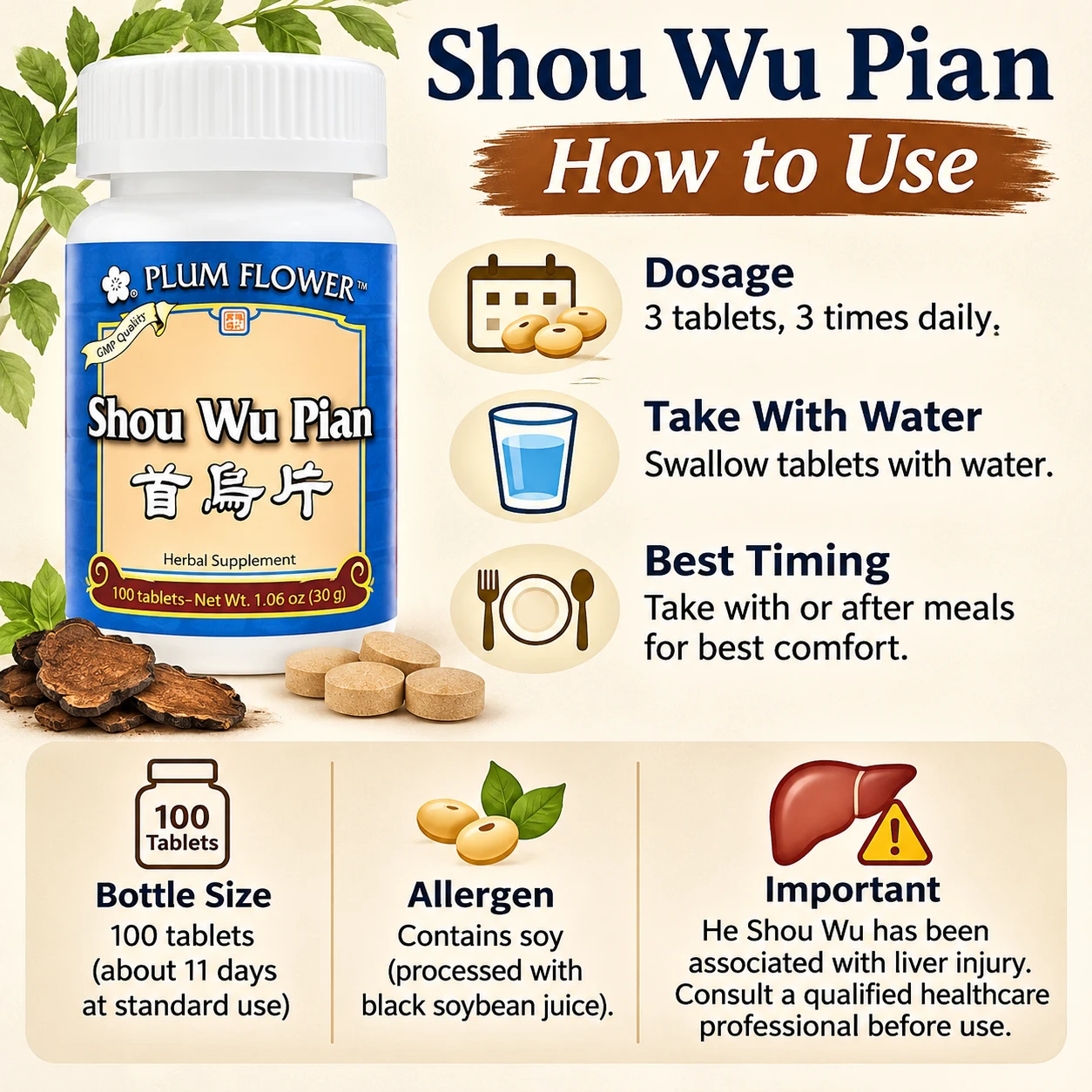
Manufacturer's standard dosage: 3 tablets, 3 times daily.
Swallow the tablets with water according to the product label and the directions of your qualified healthcare practitioner.
At the manufacturer's standard dosage of 9 tablets per day, a 100-tablet bottle contains approximately 11 days of tablets.
This calculation describes the package quantity and is not a recommendation about treatment duration.
Consult a qualified healthcare professional before use. Because of the documented liver-injury risk associated with Polygonum multiflorum, do not begin taking this product without medical guidance.
Important Safety Information
Liver Safety Warning
People with liver disease, abnormal liver tests, or a previous reaction to He Shou Wu should avoid this product. Do not restart it after suspected He Shou Wu-related liver injury.
Before use, discuss the risks with a qualified healthcare professional, including whether liver-function testing and monitoring are appropriate.
Stop taking the product and seek prompt medical attention if you experience unusual fatigue, loss of appetite, nausea, vomiting, abdominal pain, dark urine, or yellowing of the skin or eyes.
Allergy Warning
Contains soy. The root is processed with black soybean juice. People with soy allergies should avoid this product unless cleared by their allergist.
Pregnancy and Nursing
Avoid use during pregnancy or breastfeeding because adequate safety information is not established.
Medications and Medical Conditions
Consult your healthcare professional before use if you take prescription medications, use other herbal supplements, have liver or kidney disease, or have another ongoing medical condition.
Keep out of reach of children. Do not exceed the manufacturer's labeled directions.
California Proposition 65
California Proposition 65 requires warnings for certain exposures to chemicals known to the State of California to cause cancer, birth defects, or other reproductive harm.
Proposition 65 Information: For additional information about California's chemical exposure warning requirements, consult these official resources:
- California Proposition 65 Warnings
- Proposition 65 Frequently Asked Questions
- Proposition 65 Fact Sheets
Why Buy from 1st Chinese Herbs?
Serving Chinese herbal customers online since 1994.
At 1st Chinese Herbs, we believe that informed shopping begins with accurate ingredient information and clear explanations of traditional herbal products.
Our product descriptions identify botanical ingredients, explain traditional terminology, and provide important preparation and safety information.
Whether you are familiar with Chinese herbal traditions or researching a product for the first time, our goal is to make the information easier to understand before you purchase.
Frequently Asked Questions About Shou Wu Pian
What is Shou Wu Pian?
Shou Wu Pian is a prepared traditional Chinese herbal tablet product made with Polygonum multiflorum root, commonly known as He Shou Wu.
Is Shou Wu Pian a single-herb formula?
Yes. The primary botanical ingredient is prepared Polygonum multiflorum root. The tablets also contain the manufacturer's listed non-botanical ingredients.
What is the difference between prepared and raw He Shou Wu?
Prepared He Shou Wu undergoes traditional processing, often using black soybean juice. Raw and prepared forms have different traditional classifications. Processing does not eliminate the potential for liver injury.
Does Shou Wu Pian contain soy?
Yes. The manufacturer states that the product contains soy because the root is processed with black soybean juice.
What are the other ingredients?
Dextrin, Hypromellose, Polyethylene glycol, and Magnesium stearate.
How many tablets are in a bottle?
Each bottle contains 100 tablets.
What is the manufacturer's standard dosage?
The manufacturer lists 3 tablets, 3 times daily. Consult a qualified healthcare professional before use because of the known liver-injury risk associated with the herb.
Does Shou Wu Pian require brewing?
No. It is supplied as prepared tablets intended to be swallowed with water.
Is Shou Wu Pian traditionally associated with hair health?
He Shou Wu has historical associations with hair nourishment and pigmentation in TCM. Reliable clinical evidence has not established that this particular product reverses gray hair or treats hair loss.
Can prepared He Shou Wu cause liver injury?
Yes. Published reports associate Polygonum multiflorum with liver injury, including serious cases. Traditional processing does not guarantee safety.
Can I take Shou Wu Pian if I have liver disease?
People with liver disease or abnormal liver tests should avoid this product. Consult a healthcare professional about safer alternatives.
Can I use Shou Wu Pian during pregnancy?
Use during pregnancy or breastfeeding is not recommended because adequate safety information is unavailable.
Scientific Research & PubMed References
The following research is provided for educational purposes. It examines Polygonum multiflorum, its preparation, and reported safety concerns. These studies do not establish the clinical effectiveness or safety of this particular Plum Flower tablet product.
1. Polygonum multiflorum and Reported Liver Injury
Dong H. and colleagues (2014).
Eighteen cases of liver injury following ingestion of Polygonum multiflorum.
This case series examined reported liver injury associated with use of the herb and highlights the importance of careful safety evaluation.
2. Effects of Preparation on Botanical Components and Toxicity
Lv GP and colleagues (2015).
Effect of sample preparation on components and liver toxicity of Polygonum multiflorum.
This laboratory study investigated how different preparations affect the herb's chemical composition and liver-related toxicity findings. It does not establish that prepared tablets are safe for human consumption.
3. Clinical Analysis of Polygonum multiflorum-Associated Liver Injury
Published clinical research (2016).
Clinical Analysis of Drug-induced Liver Injury Caused by Polygonum multiflorum and its Preparations.
This publication examined clinical characteristics of liver injury associated with the herb and its preparations.
Additional Medical Safety Reference
The National Institutes of Health LiverTox resource summarizes documented liver injury associated with Polygonum multiflorum, including cases involving Shou Wu Pian.
Learn More About Chinese Herbal Tablets and Teapills
Explore our Guide to Buying Chinese Teapills Online to learn about prepared herbal formulas, product ingredients, and important shopping considerations.
FDA Disclaimer: These statements have not been evaluated by the Food and Drug Administration. This product is not intended to diagnose, treat, cure, or prevent any disease.
The information provided is for educational purposes only and is not a substitute for professional medical advice, diagnosis, or treatment.