
The Essential Herbal Pantry After 50: 8 Traditional Chinese Herbs Every Beginner Should Know
Reaching your 50s often changes the way you think about your health. I know it did for me, and now I am 67 years old and still updating my pantry to meet my needs.
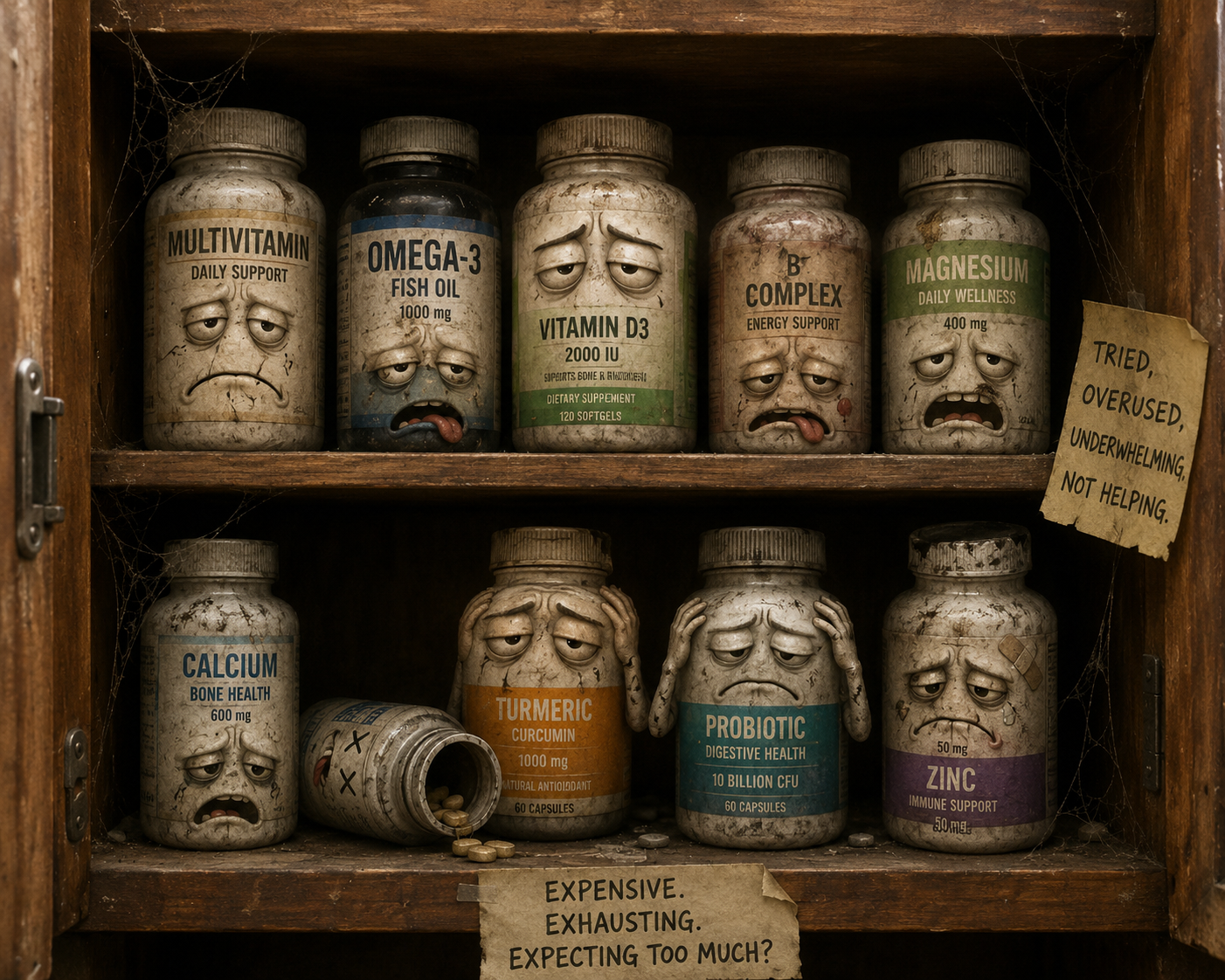
I am done chasing the latest wellness trend or filling a cabinet with dozens of supplements. There comes a time when you begin looking for simpler, more natural ways to support your everyday routine.
That is one reason Traditional Chinese herbalism continues to attract people around the world. For thousands of years, herbs have been selected not because they served only one purpose, but because many could be prepared in different ways and used as part of everyday life. A small collection of carefully chosen herbs could be simmered into soups, brewed as teas, added to recipes, or included in traditional herbal formulas.
If you're just beginning your herbal journey after 50, resist the temptation to buy everything at once. The best approach is to start with a handful of versatile herbs that are easy to prepare, enjoyable to use, and have long histories within Traditional Chinese Medicine (TCM).
This guide introduces eight of the best Chinese herbs for beginners over 50. Rather than focusing on dozens of specialized botanicals, these herbs were selected because they have multiple traditional uses, are widely available, and can become the foundation of a practical herbal pantry.
What You'll Learn
- Why many adults over 50 are exploring traditional Chinese herbs.
- How to start slowly without becoming overwhelmed.
- What makes an herb a good beginner choice.
- Eight versatile herbs that belong in many traditional herbal pantries.
- Simple preparation methods used for each herb.
- Important safety considerations before adding herbs to your routine.
Why Many Adults Begin Exploring Herbs After 50
As we get older, our priorities often change. Instead of searching for quick fixes, many people become interested in long-term wellness habits such as preparing healthier meals, drinking more herbal teas, spending time outdoors, and learning traditional practices that have been passed down for generations.
Traditional Chinese herbalism fits naturally into this philosophy. Rather than depending on dozens of different products, it encourages understanding individual herbs, learning how they are traditionally prepared, and selecting quality botanicals that fit your lifestyle.
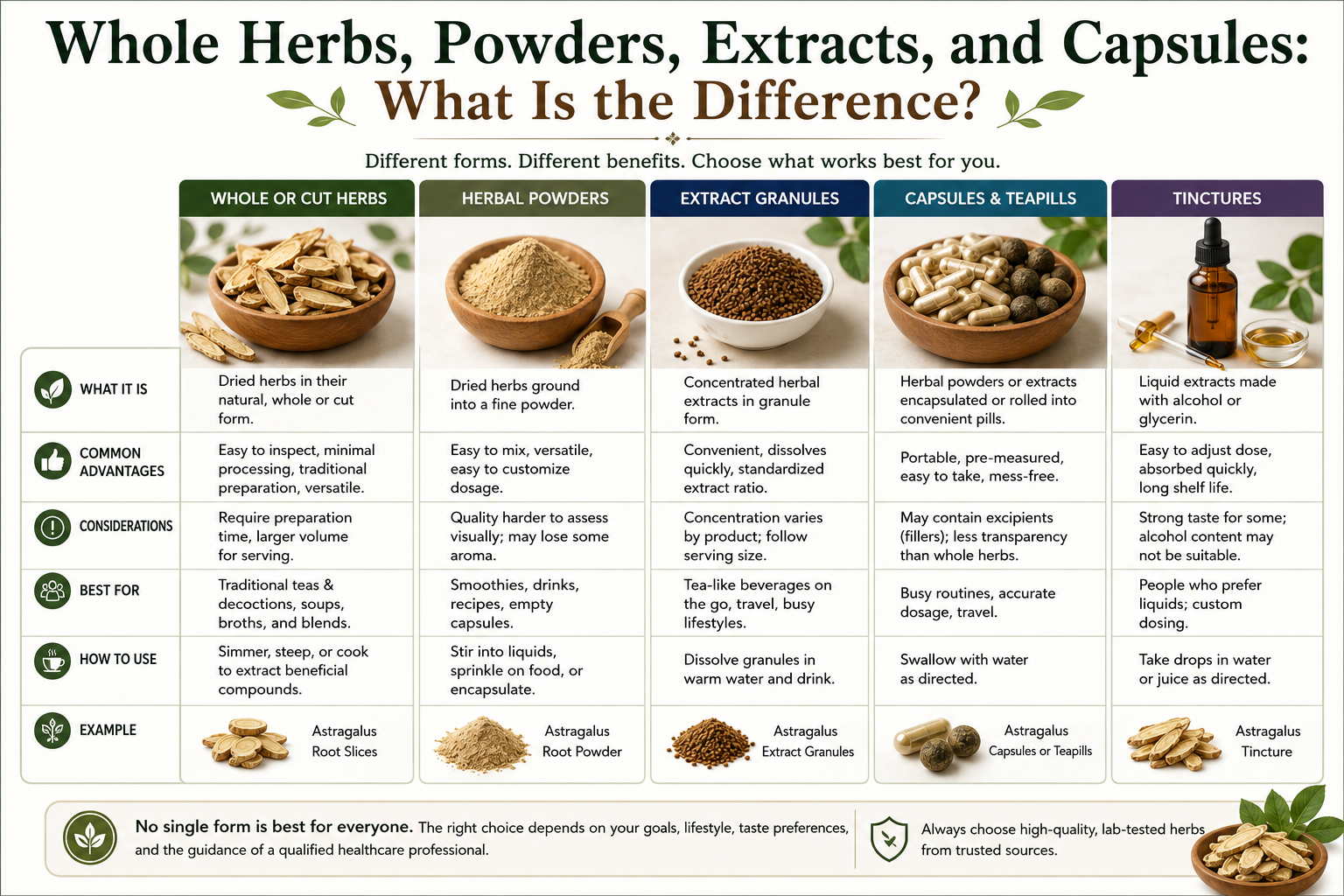
Many people also appreciate that Chinese herbs come in several forms. Some enjoy preparing traditional decoctions from whole herbs, while others prefer powders, granules, or capsules for convenience. There is no single "right" choice—the best preparation is the one that you'll actually use consistently and correctly.
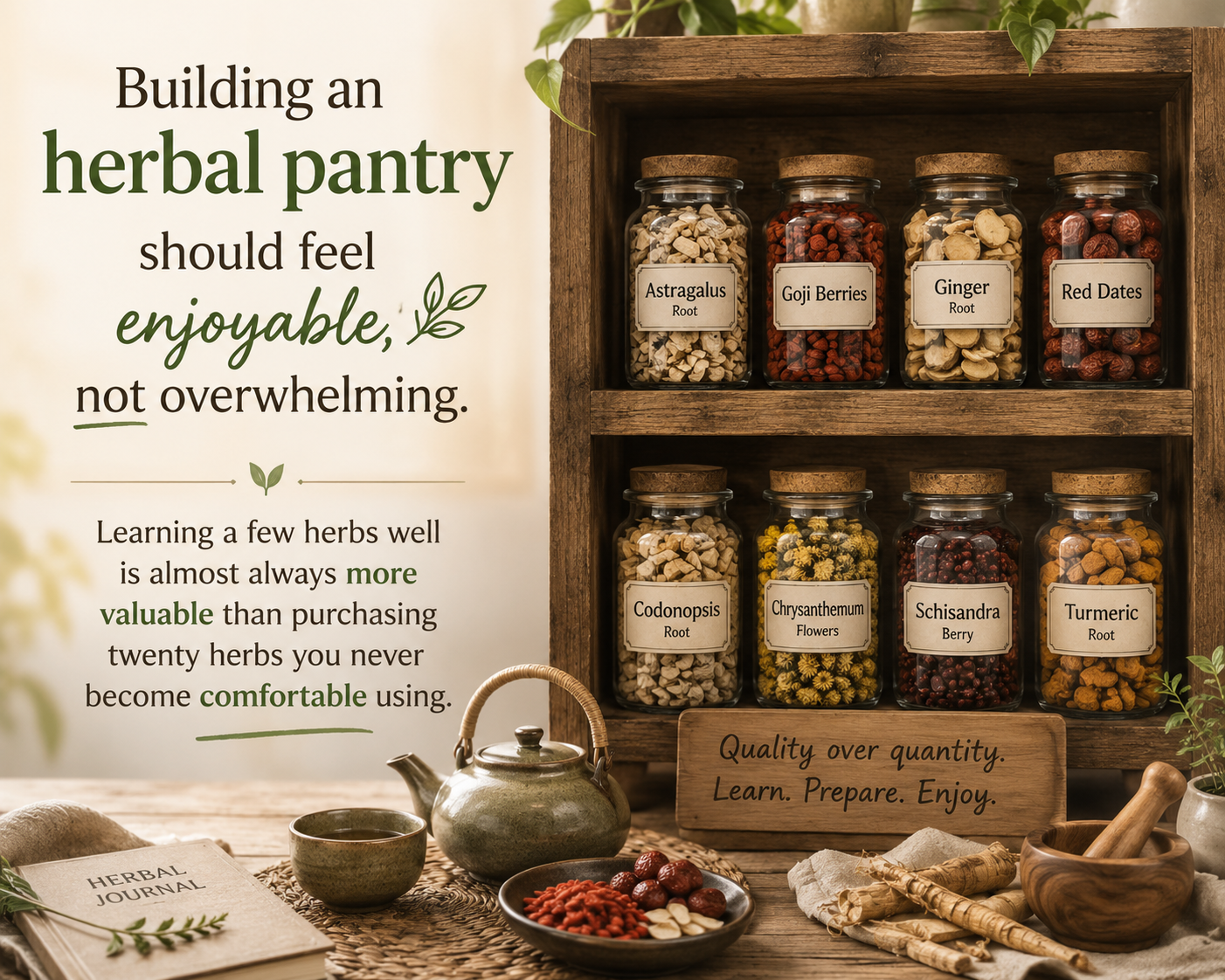
Building an herbal pantry should feel enjoyable, not overwhelming. Learning a few herbs well is almost always more valuable than purchasing twenty herbs you never become comfortable using.
Why Start with Multipurpose Herbs?
One of the biggest mistakes beginners make is buying an herb for every possible wellness goal. Before long, they have shelves full of products and no idea when or how to use them.
Traditional Chinese herbal practice often takes a different approach. Many herbs have been appreciated because they can be prepared in several ways and incorporated into everyday life. A single herb may be suitable for herbal teas, soups, broths, porridges, or traditional decoctions depending on the preparation.
Starting with versatile herbs offers several advantages:
- They're easier to learn and remember.
- Many can be incorporated into everyday cooking.
- You purchase fewer products while learning.
- You become familiar with each herb before expanding your collection.
- Your pantry stays organized instead of becoming cluttered.
Think of your herbal pantry the same way you would a kitchen pantry. Most cooks don't begin with every spice available—they start with a few reliable ingredients and gradually build their collection over time.
Before You Begin: A Few Important Safety Tips
If you're over 50, there's a good chance you may already take prescription medications or dietary supplements. While many herbs have long histories of traditional use, they are still biologically active plants and deserve the same thoughtful consideration as any wellness product.
Before adding a new herb to your routine, especially if you have an existing medical condition or take prescription medications, consult your healthcare provider or a qualified herbal practitioner. This is particularly important if you take medications for:
- Blood pressure
- Blood sugar
- Blood clotting
- Heart conditions
- Autoimmune disorders
- Bottom line all medications
It's also wise to introduce only one new herb at a time. This allows you to become familiar with its traditional preparation methods and makes it easier to recognize how it fits into your personal wellness routine.
Our Philosophy at 1st Chinese Herbs
We've been helping customers choose quality herbs since 1994, and one piece of advice has remained consistent: start simple. Learning how to prepare and appreciate a few high-quality herbs is often more rewarding than purchasing dozens of unfamiliar products all at once.
How We Chose These Eight Herbs
Not every Chinese herb is an ideal starting point. Some are traditionally used only in complex formulas, while others require careful preparation or are best selected under the guidance of an experienced practitioner.
The herbs in this guide were chosen because they share several qualities that make them especially beginner-friendly.
- They have long histories of traditional use.
- Many are easy to prepare at home.
- They can be used in more than one way, such as teas, soups, broths, or recipes.
- Most are available as whole herbs, powders, granules, extracts, or capsules.
- They represent different categories of traditional Chinese herbs without becoming overwhelming.
Most importantly, these herbs provide an excellent foundation for learning. As your confidence grows, you can gradually expand your pantry with additional botanicals that match your interests and wellness goals.
Whole Herbs, Powders, Granules, or Capsules?
One of the first decisions you'll make is choosing the preparation form. Fortunately, there isn't a single correct answer.
| Preparation | Best For | Why People Choose It |
|---|---|---|
| Whole or Cut Herbs | Traditional preparation | Ideal for decoctions, soups, and authentic herbal cooking. |
| Powders | Smoothies and recipes | Mix easily into foods and beverages. |
| Granules | Convenience | Dissolve quickly in hot water with no lengthy simmering. |
| Extract Powders | Concentrated preparations | Popular for those seeking a convenient traditional preparation. |
| Capsules | Travel and busy schedules | Simple, portable, and easy to take. |
Many experienced herbal enthusiasts keep more than one preparation form in their pantry. Whole herbs may be preferred for traditional recipes, while granules or capsules offer convenience during busy days.
Next, let's look at the eight herbs that make the best foundation for a traditional herbal pantry after 50 and why each one has earned its place.
The 8 Essential Chinese Herbs for Adults Over 50
The herbs below weren't chosen because they're the most popular or expensive. They were selected because they are among the most versatile herbs in Traditional Chinese Medicine, are available in several forms, and are approachable for someone just beginning their herbal journey.
Remember, the goal isn't to use every herb. It's to learn a few quality herbs well and build your knowledge over time.
1. Astragalus Root (Huang Qi)
Botanical Name: Astragalus membranaceus
Why It Makes a Great First Herb
If there is one herb that many herbalists recommend beginners become familiar with, Astragalus Root is often near the top of the list. It has been used in Traditional Chinese Medicine for centuries, has a naturally mild flavor, and is easy to prepare.
Unlike herbs that are traditionally used only in specialized formulas, Astragalus fits naturally into everyday cooking. Many people enjoy simmering the sliced root in soups and broths, making it an easy introduction to traditional herbal preparation.
Traditional Uses
Within Traditional Chinese Medicine, Huang Qi is traditionally classified as a Qi tonic and has long been included in formulas intended to support overall vitality and balance.
Simple Ways to Use It
- Add sliced root to homemade soup or broth.
- Prepare a traditional decoction.
- Choose powder or granules for convenience.
- Available as capsules and extracts.
Why It's Beginner Friendly
- ✓ Mild flavor
- ✓ Easy to prepare
- ✓ Multiple preparation options
- ✓ One of the most recognized Chinese herbs
Important Considerations
If you have an autoimmune condition, have received an organ transplant, are pregnant, or take prescription medications, speak with your healthcare provider before adding Astragalus to your routine.
2. Goji Berries (Gou Qi Zi)
Botanical Name: Lycium barbarum
Why They Make a Great First Herb
Goji Berries are one of the easiest Chinese herbs to enjoy because they are also a traditional food. Their naturally sweet flavor means they require almost no learning curve, making them ideal for adults who want to begin with something familiar.
Unlike many herbs that require simmering, Goji Berries can simply be added to tea, oatmeal, soups, trail mix, or enjoyed on their own.
Traditional Uses
In Traditional Chinese Medicine, Gou Qi Zi has been used for centuries and frequently appears in traditional recipes and herbal formulas.
Simple Ways to Use Them
- Add to herbal tea.
- Mix into oatmeal.
- Include in soups.
- Use in trail mix.
- Enjoy as a snack.
Why They're Beginner Friendly
- ✓ Naturally sweet
- ✓ Ready to eat
- ✓ No complicated preparation
- ✓ Excellent culinary herb
Important Considerations
Individuals taking blood-thinning medications, including warfarin, should consult their healthcare provider before regularly consuming Goji Berries.
3. Ginger Root (Sheng Jiang)
Botanical Name: Zingiber officinale
Why It Makes a Great First Herb
Few herbs are as familiar as Ginger. Long appreciated in both cooking and traditional herbal practice, it is likely already part of your kitchen. That familiarity makes it an excellent bridge into Chinese herbalism.
Fresh, dried, sliced, powdered, or granulated, Ginger offers exceptional flexibility and is one of the easiest herbs to use every day.
Traditional Uses
Sheng Jiang has traditionally been incorporated into teas, soups, decoctions, and numerous classic Chinese herbal formulas.
Simple Ways to Use It
- Brew as tea.
- Add to soups.
- Cook with vegetables.
- Blend powder into recipes.
Why It's Beginner Friendly
- ✓ Already familiar to most people
- ✓ Easy to purchase
- ✓ Very versatile
- ✓ Excellent culinary ingredient
Important Considerations
If you take blood-thinning medication or have gallbladder disease, ask your healthcare provider whether larger amounts of Ginger are appropriate for you.
4. Red Dates (Da Zao)
Botanical Name: Ziziphus jujuba
Why They Make a Great First Herb
Red Dates are another traditional food herb that blends naturally into everyday meals. Their mild sweetness makes them popular in soups, teas, porridges, and slow-cooked dishes.
Because they pair well with many other herbs, Red Dates often become a staple once someone begins building a traditional herbal pantry.
Traditional Uses
Da Zao has long been included in traditional Chinese recipes and herbal formulas, where it is valued for its versatility and pleasant flavor.
Simple Ways to Use Them
- Herbal tea
- Soup
- Rice porridge
- Slow cooker recipes
Why They're Beginner Friendly
- ✓ Pleasant flavor
- ✓ Easy to prepare
- ✓ Food-like herb
- ✓ Pairs well with many recipes
Important Considerations
Because Red Dates are naturally sweet, individuals managing blood sugar should consider them as part of their overall dietary plan.
Four More Herbs to Explore as Your Experience Grows
Once you've become comfortable preparing Astragalus Root, Goji Berries, Ginger, and Red Dates, you may want to expand your herbal pantry. The following herbs have also played important roles in Traditional Chinese Medicine for centuries and offer additional ways to experience traditional herbal preparation.
Rather than buying all of them at once, consider adding one new herb at a time. This allows you to learn its flavor, traditional preparation methods, and how it fits into your growing herbal collection.
5. Codonopsis Root (Dang Shen)
Botanical Name: Codonopsis pilosula
Why It's Worth Adding
Codonopsis Root is often recommended as one of the next herbs to explore because of its mild flavor and versatility. It has traditionally been used in soups, broths, and decoctions, making it an easy transition for people who already enjoy preparing Astragalus Root.
Traditional Uses
Within Traditional Chinese Medicine, Dang Shen has traditionally been used as a Qi-supporting herb and has appeared in numerous classic herbal formulas.
Simple Ways to Use It
- Simmer in soups and broths.
- Prepare as a traditional decoction.
- Use powder in recipes.
- Choose granules for convenience.
Why Many People Like It
- ✓ Mild flavor
- ✓ Easy to prepare
- ✓ Versatile in cooking
- ✓ Available in several preparation forms
Important Considerations
If you have a medical condition or take prescription medications, discuss any new herbal product with your healthcare provider before regular use.
6. Chrysanthemum Flowers (Ju Hua)
Botanical Name: Chrysanthemum morifolium
Why It's Worth Adding
If you enjoy herbal teas, Chrysanthemum Flowers are one of the easiest traditional Chinese herbs to prepare. The dried flowers simply steep in hot water, creating a pleasant floral infusion that has been enjoyed for generations.
Traditional Uses
Ju Hua has long been included in Traditional Chinese Medicine and remains one of the most widely enjoyed herbal teas throughout China.
Simple Ways to Use It
- Steep as an herbal tea.
- Blend with Goji Berries.
- Enjoy hot or chilled.
Why Many People Like It
- ✓ Extremely easy to prepare
- ✓ Attractive whole flowers
- ✓ Naturally pleasant flavor
- ✓ Excellent introduction to floral teas
Important Considerations
Individuals with allergies to plants in the daisy family should use caution and consult a healthcare professional before trying Chrysanthemum Flowers.
7. Schisandra Berry (Wu Wei Zi)
Botanical Name: Schisandra chinensis
Why It's Worth Adding
Schisandra is often called the "Five-Flavor Berry" because traditional descriptions include sweet, sour, bitter, pungent, and salty flavors. Its unique taste and long history make it an interesting herb to explore once you've gained confidence preparing simpler botanicals.
Traditional Uses
Wu Wei Zi has been used in Traditional Chinese Medicine for centuries and is traditionally prepared as teas, decoctions, and as part of multi-herb formulas.
Simple Ways to Use It
- Prepare as a decoction.
- Brew into herbal tea.
- Combine with other traditional herbs.
Why Many People Like It
- ✓ Distinctive flavor
- ✓ Long traditional history
- ✓ Interesting herbal tea
- ✓ Available whole or as extracts
Important Considerations
Schisandra may not be appropriate for everyone. If you are pregnant, nursing, have a chronic medical condition, or take prescription medications, seek guidance from your healthcare provider before use.
8. Turmeric Root (Jiang Huang)
Botanical Name: Curcuma longa
Why It's Worth Adding
Although Turmeric is commonly associated with Indian cuisine, it also has a long history within Traditional Chinese herbal practice. Because many people already cook with turmeric, it can be a familiar way to continue expanding your herbal pantry.
Traditional Uses
Jiang Huang has traditionally been included in herbal preparations and culinary recipes throughout Asia for centuries.
Simple Ways to Use It
- Add to soups.
- Blend into smoothies.
- Use in cooking.
- Prepare as an herbal beverage.
Why Many People Like It
- ✓ Familiar culinary ingredient
- ✓ Easy to find
- ✓ Multiple preparation options
- ✓ Excellent pantry staple
Important Considerations
Individuals taking blood-thinning medications, those with gallbladder disease, or anyone preparing for surgery should discuss turmeric supplements or concentrated herbal products with their healthcare provider before use.
If You Only Buy Three Herbs, Start Here
If you're building your first Chinese herbal pantry after 50, you don't need to purchase all eight herbs immediately. In fact, starting with just three herbs is often the best approach.
- Astragalus Root – A traditional pantry staple that is easy to add to soups, broths, and decoctions.
- Goji Berries – Naturally sweet, simple to use, and just as comfortable in your breakfast oatmeal as in an herbal tea.
- Ginger Root – Familiar, versatile, and already found in many kitchens, making it one of the easiest herbs to incorporate into everyday cooking.
Once you're comfortable preparing these three herbs, adding Red Dates, Codonopsis Root, Chrysanthemum Flowers, Schisandra Berry, or Turmeric will feel much less intimidating.
A Simple Philosophy for Building Your Herbal Pantry
Traditional Chinese herbalism isn't about collecting the largest number of herbs. It's about understanding the herbs you choose and using them with confidence and respect for their traditional history.
As your knowledge grows, your pantry will naturally grow with it. Over time you'll discover which herbs you enjoy preparing, which flavors you appreciate, and which traditional preparation methods best fit your lifestyle.
The best herbal pantry isn't the one with the most jars on the shelf—it's the one filled with herbs you understand, trust, and enjoy using.
Frequently Asked Questions
I'm over 50 and completely new to Chinese herbs. Where should I begin?
Start with just two or three versatile herbs instead of purchasing a large collection. Astragalus Root, Goji Berries, and Ginger are excellent starting choices because they are easy to prepare, widely available, and fit naturally into soups, teas, and everyday cooking. Once you're comfortable using those herbs, you can gradually expand your pantry.
Do I need to prepare traditional decoctions?
No. While decoctions are one of the traditional preparation methods used in Chinese herbalism, they're not your only option. Many herbs are available as powders, granules, extracts, and capsules. Choose the preparation that best fits your lifestyle. The most beneficial routine is one that you can prepare consistently.
How should I store my herbs?
Store herbs in airtight containers away from direct sunlight, heat, and moisture. Glass jars with tight-fitting lids work well for most dried herbs. Label each container with the herb's common name and the date it was opened to help maintain freshness.
Can I combine several herbs together?
Traditional Chinese Medicine often combines herbs into formulas, but if you're just getting started, it's usually easier to become familiar with one herb at a time. Learning how each herb looks, smells, and is traditionally prepared will build your confidence before experimenting with more complex combinations.
Are whole herbs better than powders or capsules?
Not necessarily. Whole herbs are ideal for traditional teas, soups, and decoctions, while powders, granules, extracts, and capsules offer convenience. Each preparation has advantages, so choose the one that fits your schedule and preferred way of using herbs.
Should I talk with my healthcare provider before using herbs?
Yes. This is especially important if you take prescription medications, have a chronic medical condition, are pregnant or nursing, or are preparing for surgery. Your healthcare provider can help determine whether a particular herb is appropriate for your individual situation.
Building Your Herbal Pantry One Herb at a Time
One of the greatest lessons Traditional Chinese herbalism teaches is patience. You don't need dozens of herbs to begin learning. A small collection of carefully chosen botanicals can provide years of opportunities to explore traditional preparation methods and discover new recipes.
Think of your herbal pantry as a long-term investment rather than a one-time purchase. As your confidence grows, so will your understanding of the herbs themselves. Over time, you'll naturally discover which herbs you enjoy preparing, which flavors you prefer, and which preparation methods best fit your daily routine.
There is no finish line. Building an herbal pantry is a journey that develops with experience, curiosity, and a willingness to continue learning.
Why Choose 1st Chinese Herbs?
Since 1994, 1st Chinese Herbs has helped customers explore traditional Chinese herbs with confidence. Whether you're purchasing your very first herb or expanding an established herbal pantry, our goal is to provide carefully selected products supported by dependable information and friendly customer service.
Why Customers Trust 1st Chinese Herbs
- Trusted source for Chinese herbs since 1994.
- Large selection of whole herbs, powders, granules, extracts, teas, and capsules.
- Many lab-tested and species-authenticated products.
- Sulfur-free options available on many herbs.
- Premium brands, including Plum Flower, Nuherbs, and ActiveHerb.
- Fast shipping from Washington State.
- Knowledgeable customer support when you have questions.
Final Thoughts
Beginning your herbal journey after 50 doesn't have to be confusing or expensive. Instead of filling your shelves with products you may never use, focus on learning a few versatile herbs that have stood the test of time.
Astragalus Root, Goji Berries, Ginger, and Red Dates provide an excellent foundation because they're approachable, easy to prepare, and naturally fit into everyday life. As your confidence grows, adding herbs like Codonopsis Root, Chrysanthemum Flowers, Schisandra Berry, and Turmeric allows you to continue exploring the rich traditions of Chinese herbalism at your own pace.
The goal isn't to own every herb—it's to understand the ones you choose. By starting slowly, selecting quality botanicals, and learning traditional preparation methods, you'll build a practical herbal pantry that can serve you for years to come.
Ready to Start Your Herbal Journey?
Explore our collection of premium Chinese herbs, herbal teas, powders, granules, extracts, and traditional botanicals. Whether you're preparing your first cup of herbal tea or stocking a complete herbal pantry, we're here to help you choose quality herbs with confidence.
FDA Disclaimer: The information in this article is provided for educational purposes only and is not intended to diagnose, treat, cure, or prevent any disease. Statements regarding herbal products have not been evaluated by the U.S. Food and Drug Administration. Always consult a qualified healthcare professional before using herbal products, particularly if you are pregnant, nursing, have a medical condition, or take prescription medications.
Scientific References & Further Reading
Astragalus Root (Huang Qi)
https://pubmed.ncbi.nlm.nih.gov/29344421/
Goji Berry (Gou Qi Zi)
https://pubmed.ncbi.nlm.nih.gov/26047789/
Ginger Root (Sheng Jiang)
https://pubmed.ncbi.nlm.nih.gov/31935866/
Red Dates (Da Zao)
https://pubmed.ncbi.nlm.nih.gov/32065642/
Codonopsis Root (Dang Shen)
https://pubmed.ncbi.nlm.nih.gov/29501674/
Chrysanthemum Flowers (Ju Hua)
https://pubmed.ncbi.nlm.nih.gov/30891572/
Schisandra Berry (Wu Wei Zi)
https://pubmed.ncbi.nlm.nih.gov/31169943/
Turmeric Root (Jiang Huang)
https://pubmed.ncbi.nlm.nih.gov/35623903/