

Four Pillars Teapills – Si Ni Wan – Plum Flower, 200 Count
Traditional Four-Herb Chinese Formula | Si Ni San Tradition | Convenient Teapills
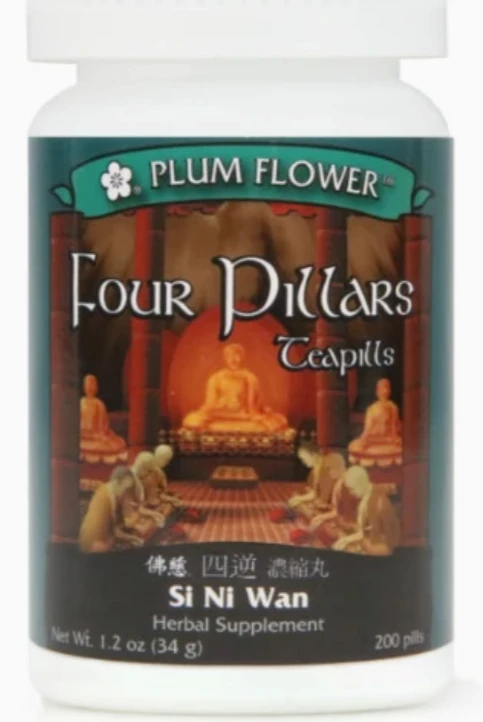 Four Traditional Herbs. One Time-Honored Formula.
Discover the simplicity of Four Pillars Teapills (Si Ni Wan), a traditional Chinese herbal formula built around four carefully selected ingredients: White Peony root (Bai Shao), Bupleurum root (Chai Hu), Immature Bitter Orange fruit (Zhi Shi), and Prepared Licorice root (Zhi Gan Cao).
Also known as Si Ni San or Frigid Extremities Powder in classical Chinese herbal literature, this formula has a long history in Traditional Chinese Medicine (TCM).
In TCM, the combination is traditionally associated with moving Liver Qi and harmonizing the relationship between the Liver and Spleen systems. These are traditional Chinese herbal concepts, not claims that the finished product treats a medical condition.
Plum Flower Four Pillars Teapills provide this four-ingredient formula in small, ready-to-take pills, eliminating the need to measure herbs or prepare a decoction.
Product Details at a Glance
| Product Information | Details |
|---|---|
| Product name | Four Pillars Teapills |
| Pinyin name | Si Ni Wan |
| Traditional formula | Si Ni San |
| Alternate name | Frigid Extremities Powder Pills |
| Brand | Plum Flower |
| Form | Small, round herbal teapills |
| Package size | 200 teapills per bottle |
| Herbal ingredients | 4 |
| Origin | China |
| Manufacturer's suggested use | 8 teapills, 3 times daily |
| Pregnancy precaution | Consult the current label; avoid use during pregnancy unless specifically advised by a qualified healthcare professional |
Complete Four Pillars Ingredients and Their Traditional Roles
Four Pillars contains four herbs, each selected for a complementary role within the classical formula.
| Pinyin Name | Botanical Ingredient | Why It Is Traditionally Included |
|---|---|---|
| Bai Shao | Paeonia lactiflora root (White Peony) | Traditionally classified as nourishing Blood and preserving Yin. In Si Ni San, it complements Chai Hu and contributes to the formula's harmonizing character. |
| Chai Hu | Bupleurum chinense root (Bupleurum) | Traditionally associated with spreading Liver Qi and addressing constrained Qi patterns. It is a central ingredient in the formula's traditional design. |
| Zhi Shi | Citrus aurantium immature fruit (Immature Bitter Orange) | Traditionally classified as moving Qi and addressing stagnation. It complements Chai Hu by contributing a descending aspect to the combination. |
| Zhi Gan Cao | Glycyrrhiza uralensis root, honey-fried (Prepared Licorice) | Traditionally used to harmonize herbal formulas, moderate the properties of other ingredients, and support Qi within TCM theory. |
The ingredient roles above describe historical TCM classifications. They are not evidence that this finished product produces particular physiological effects or treats a disease.
How the Four Ingredients Complement One Another
The traditional design of Si Ni San is based on complementary herbal properties:
-
Chai Hu and Zhi Shi: Traditionally paired to support the movement and regulation of Qi in different directions.
-
Bai Shao: Contributes the traditional nourishing and harmonizing properties of White Peony.
-
Zhi Gan Cao: Completes the combination with the harmonizing properties of prepared Licorice root.
This four-herb structure is one of the distinguishing features of Si Ni San. Rather than combining a large number of ingredients, the formula uses a concise combination with defined roles in traditional Chinese herbal theory.
Other Ingredients
The manufacturer lists the following non-herbal ingredients:
-
Hydrated magnesium silicate (talc)
-
Activated carbon
-
China wax
These ingredients are used in the preparation of the finished teapills. Refer to the current bottle label for the complete ingredient declaration.
What Is Si Ni San (Four Pillars)?
Si Ni San is a classical four-herb formula traditionally attributed to Zhang Zhongjing's Shang Han Lun, an influential text in Chinese herbal medicine.
The name is often translated as Frigid Extremities Powder. In historical TCM literature, it describes a traditional pattern involving constrained Qi and the body's distribution of warmth.
Although its name refers to cold extremities, Si Ni San is not simply a warming formula. Its traditional design focuses on balancing Qi movement and harmonizing the Liver and Spleen systems.
Important: Si Ni San is different from Si Ni Tang, another classical formula with a similar name but different ingredients. They should not be used interchangeably.
Why Choose Plum Flower Four Pillars Teapills?
A traditional formula in a convenient modern form.
-
Four-herb composition: A straightforward combination based on the Si Ni San tradition.
-
Convenient 200-count bottle: Premeasured teapills without weighing individual herbs.
-
No brewing required: An alternative to preparing a traditional herbal powder or decoction.
-
Clearly identified ingredients: Both Pinyin and botanical names are provided for easier comparison.
Four Pillars is particularly useful to customers seeking the specific Si Ni San formula rather than a more complex multi-herb preparation.

How to Take Four Pillars Teapills
Manufacturer's suggested use: Take 8 teapills, 3 times daily, or as directed by a qualified healthcare professional.
Swallow with water and follow the directions on the current product label. Do not exceed the recommended amount without professional guidance.
Important Safety Information
Pregnancy and nursing: Avoid use during pregnancy or while nursing unless specifically advised by a qualified healthcare professional. The manufacturer advises caution during pregnancy.
Consult a healthcare professional before use if you have a medical condition, take prescription medications, or use other herbal supplements.
This formula contains prepared Licorice root (Gan Cao), which may affect blood pressure, potassium balance, and certain medications. It also contains Bupleurum root (Chai Hu) and Immature Bitter Orange (Zhi Shi), which warrant additional attention for individuals with liver conditions, cardiovascular concerns, or medication interactions.
Keep out of reach of children.
Traditional Chinese herbal preparations should not replace appropriate medical evaluation or treatment.
Frequently Asked Questions
What are Four Pillars Teapills?
Four Pillars Teapills are Plum Flower's prepared version of the traditional Si Ni San herbal formula, containing White Peony, Bupleurum, Immature Bitter Orange, and Prepared Licorice root.
What is the difference between Si Ni San and Si Ni Wan?
Si Ni San is the classical name of the traditional powder formula. Si Ni Wan refers to a prepared pill form associated with that formula. Ingredient composition and preparation should always be checked on the specific product label.
What does Frigid Extremities Powder mean?
It is a traditional English translation of Si Ni San, referring to a classical TCM pattern. The name does not mean the product has been clinically proven to treat cold hands, cold feet, or circulation disorders.
Is Si Ni San the same as Si Ni Tang?
No. Although their names sound similar, Si Ni San and Si Ni Tang are different classical Chinese herbal formulas with different ingredients.
How many teapills are in each bottle?
Each bottle contains 200 teapills.
How do I take Four Pillars Teapills?
The manufacturer's listed directions are 8 teapills, 3 times daily. Follow the current label and consult your healthcare professional for individualized guidance.
Does Four Pillars contain Licorice root?
Yes. The formula contains Zhi Gan Cao, a traditionally prepared form of Chinese Licorice root (Glycyrrhiza uralensis).
Scientific Research and Traditional Formula References
Si Ni San has been discussed in scientific literature concerning traditional formula history, botanical constituents, and experimental research.
Published research:
This review examines research involving Si Ni San and its constituents. It does not establish that Plum Flower Four Pillars Teapills treat any medical condition or that results from other preparations apply to this finished product.
Research findings should be interpreted in the context of the specific preparation, study design, and available clinical evidence.
California Proposition 65
California Proposition 65 provides information about exposure to certain chemicals identified by the State of California.
For additional information, visit:
Explore More Traditional Chinese Herbal Formulas
Looking for another traditional herbal preparation? Browse our Plum Flower Teapills and Tablets collection to compare ingredients, formula names, and package sizes.
FDA Disclaimer: These statements have not been evaluated by the Food and Drug Administration. This product is not intended to diagnose, treat, cure, or prevent any disease.