
How to Make Chinese Herbal Tea
A Beginner's Guide to Bulk Chinese Herbs
New to Chinese herbs? You are in the right place.
Maybe you found Huang Qi, Chen Pi or Gou Qi Zi while searching our store.
You read the description. You were intrigued. Then you looked at the actual herb and thought:
“Okay...but what am I supposed to DO with this?” Boil? Steep? Eat Raw?
That is one of the most common questions when someone first discovers bulk Chinese herbs.
The answer is surprisingly simple.
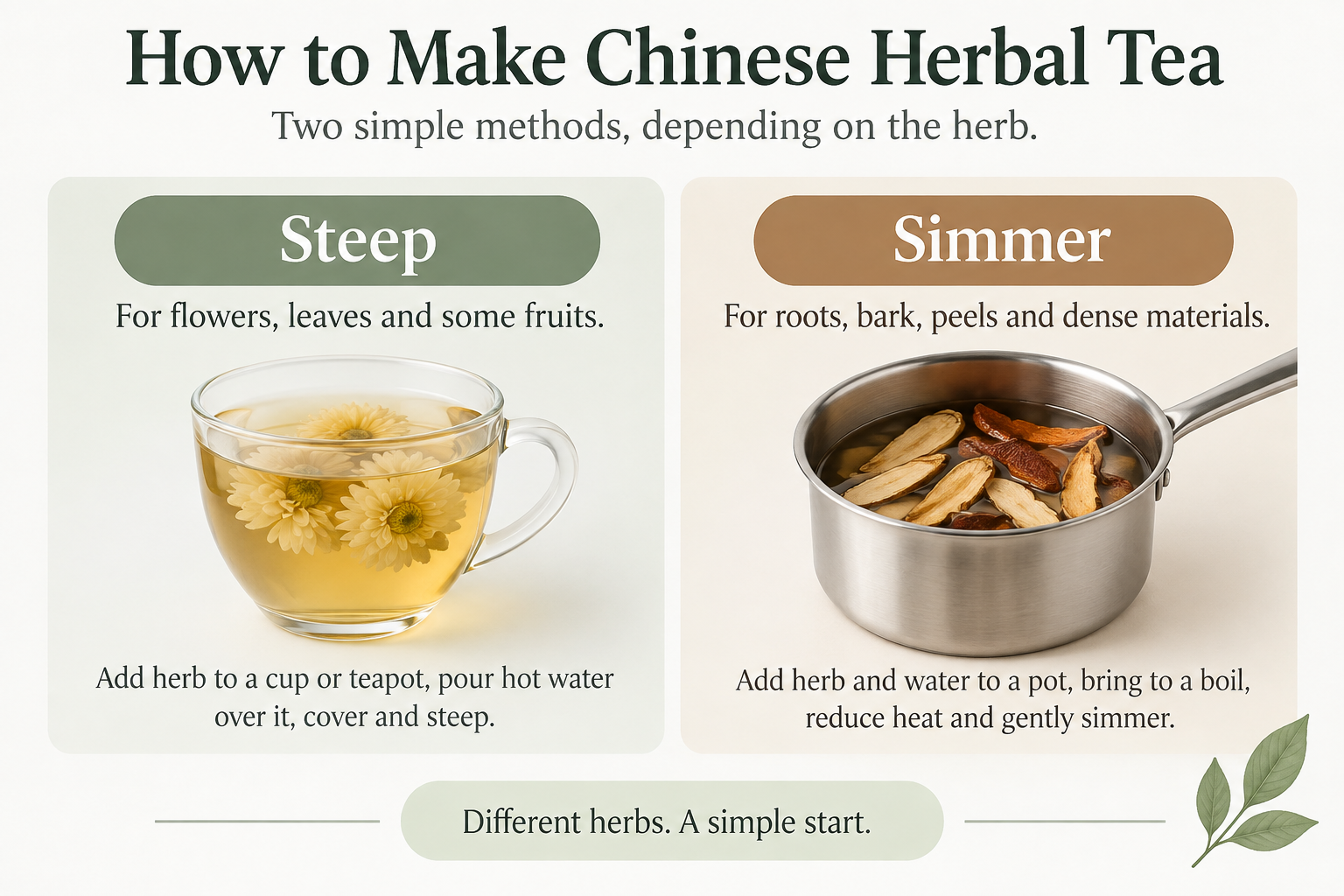
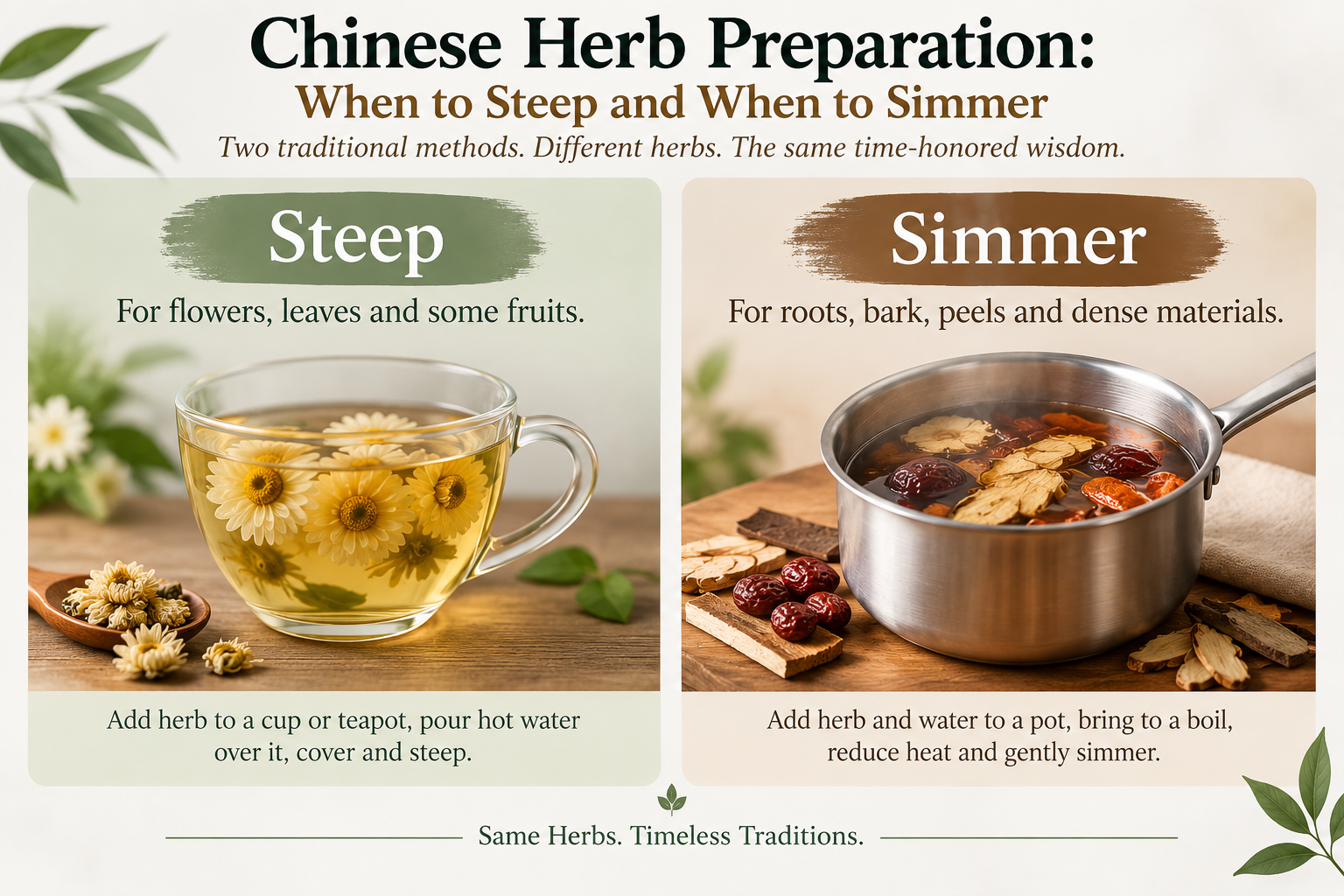
Some Chinese herbs are traditionally steeped in hot water. Others—particularly dense roots, bark and harder plant materials—are traditionally gently simmered in water to make what is called a decoction.
You don't need a special kitchen. You don't need to memorize hundreds of Chinese names. And you certainly don't need to become an expert in Traditional Chinese Medicine before you can learn about the plants.
Start with one herb.
Learn what it is, which part of the plant you're holding and how it has traditionally been prepared.
Then try another.
That's how Chinese herbs stop looking mysterious and start making sense.
Want to Try Something Simple First?
Here are three easy combinations to explore as traditional-style herbal beverages chosen primarily for their flavors, rather than as TCM formulas.
Goji Berry + Chrysanthemum
Gou Qi Zi + Ju Hua
Mildly fruity goji berries meet the light, floral character of chrysanthemum.
Chen Pi + Ginger
Mature Tangerine Peel + Ginger
Aromatic citrus peel combined with the distinctive spicy flavor of ginger.
Goji Berry + Chen Pi
Gou Qi Zi + Chen Pi
Mildly sweet fruit with aromatic citrus peel.
These aren't intended as therapeutic TCM formulas. They're simply an approachable way to become familiar with the appearance, aroma and flavor of individual Chinese herbal ingredients.
And that's a great place for a beginner to start.
Why Use Bulk Chinese Herbs?
There's something very different about opening a bag of actual dried herbs instead of swallowing a capsule.
You can see the plant material.
You can smell it.
You can examine the root, berry, flower or peel.
You learn what the herb actually looks like and how it has traditionally been prepared.
And when you prepare bulk herbs yourself, you control how much you make at one time.
For many people, that's part of what makes learning about traditional Chinese herbs so interesting.
You're not simply reading the name Huang Qi.
You're holding the sliced root in your hand.
Chinese Herb Preparation: When to Steep and When to Simmer
Here's the easiest place to start.
| What Did You Buy? | Common Traditional Preparation |
|---|---|
| Flowers | Often steep |
| Leaves | Often steep |
| Fruits/Berries | Depends on the herb |
| Peels | May be steeped or simmered |
| Roots | Often simmer |
| Bark | Often simmer |
| Dense seeds/materials | Often simmer |
| Fine powder | Check individual product directions |
| Extract powder | Check individual product directions |
Important: This is a general learning guide, not a universal preparation rule. Individual Chinese herbs have their own traditional preparation methods and recommended amounts.
Always check the information for the specific herb you're using.
Meet 5 Chinese Herbs That Are Easy to Understand
Let's remove some of the mystery.
These names may look unfamiliar at first, but look at what the herbs actually are.
| Chinese Name | Common Name | Plant Part | General Flavor Character |
|---|---|---|---|
| Gou Qi Zi | Goji Berry/Wolfberry | Fruit | Mildly sweet/fruity |
| Ju Hua | Chrysanthemum | Flower | Floral/herbal |
| Chen Pi | Mature Tangerine Peel | Peel | Aromatic/citrusy |
| Huang Qi | Astragalus | Root | Mild/earthy |
| Gan Cao | Licorice Root | Root | Distinctively sweet |
Suddenly they don't seem quite as mysterious.
They're fruits, flowers, peels and roots.
They're plants.
“Did I Just Buy a Bag of Sticks?”
Your first look at Huang Qi (Astragalus Root) may produce exactly that thought.
You didn't buy sticks.
You're looking at pieces of dried, sliced root.
Huang Qi is a good example of why understanding the plant part matters. A dense slice of root is very different from a delicate chrysanthemum flower.
That helps explain why Chinese herbs aren't all prepared in exactly the same way.
Flowers, Leaves & Delicate Herbs: Just Add Hot Water
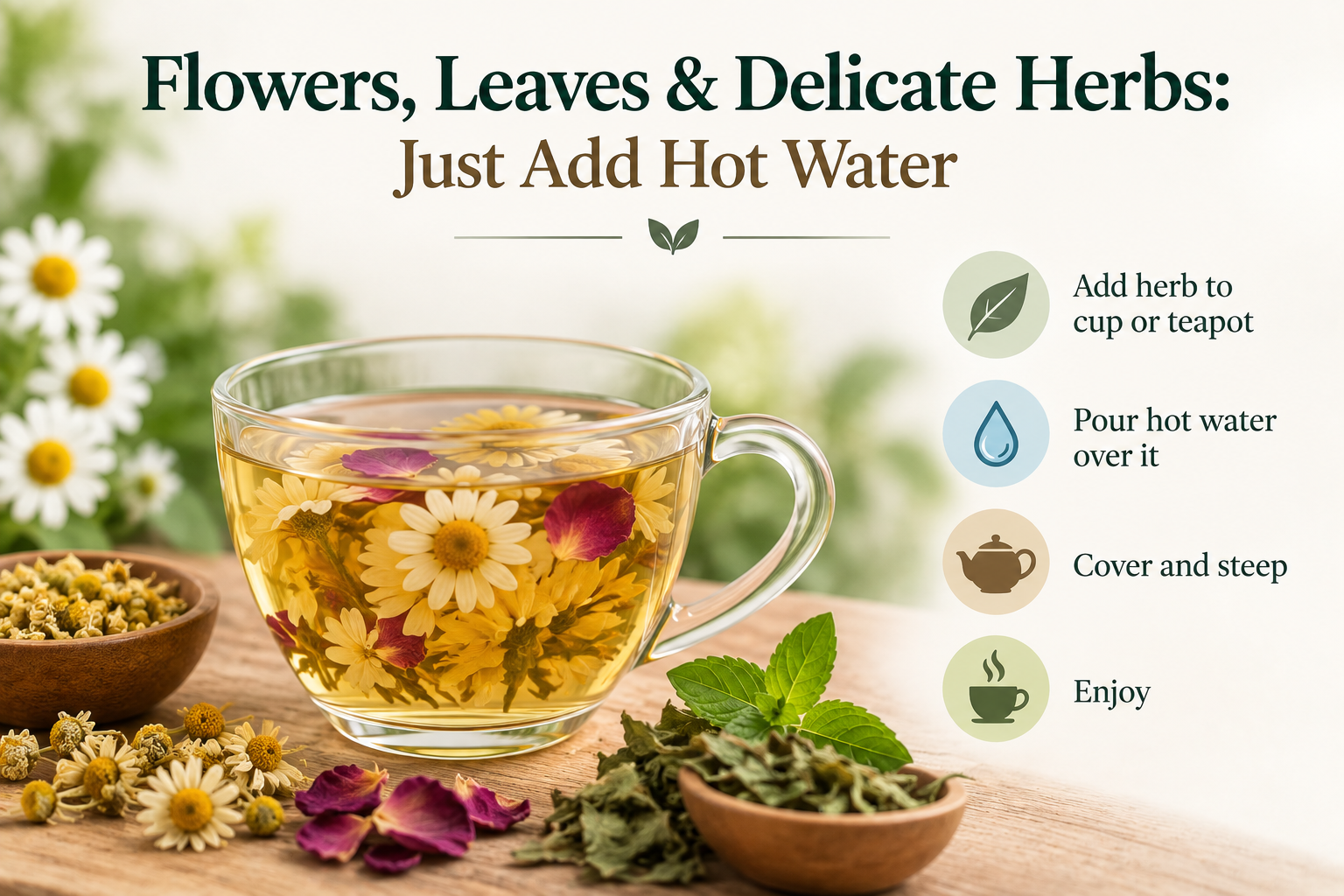
Some Chinese herbs don't need a long simmer. Delicate flowers, leaves, and certain other herbal materials have traditionally been prepared by steeping them in hot water—much like making a familiar cup of tea.
This method is called an infusion, but don't let the name make it sound complicated. If you've ever made loose-leaf tea, you already know how to do it.
Step 1
Place the appropriate amount of the herb into your cup, teapot, infuser or reusable muslin brewing bag.
Step 2
Pour hot water over the herb.
Step 3
Cover the cup or pot.
Step 4
Allow it to steep according to the recommendations for that particular herb.
Step 5
Strain and enjoy.
That's it.
Herb + hot water + time + strain.
You just made an herbal infusion.
Roots, Bark & Hardy Herbs: Give Them a Little More Time
Here's the word that sometimes scares beginners:
Decoction.
It sounds complicated.
It isn't.
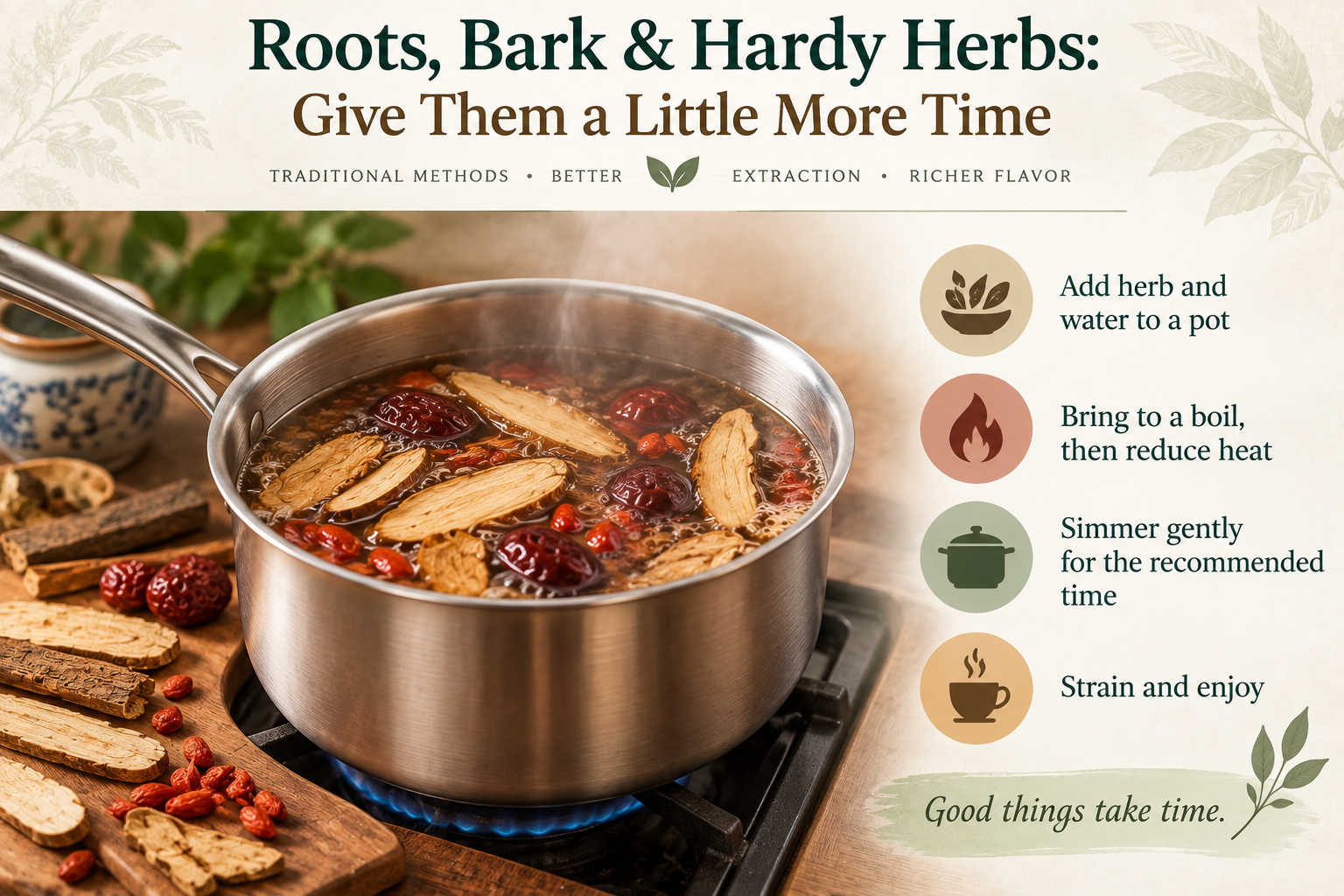
A decoction is basically a method of gently simmering herbs in water.
This method has traditionally been used with many Chinese roots, bark and other dense herbal materials.
How to Make a Simple Decoction
Preparation times and amounts depend upon the individual herb, so check the information for the particular Chinese herb you're using.
The basic process, however, is easy to understand.
1. Measure
Measure the appropriate amount of your herb.
2. Add Water
Place the herb and recommended amount of water into a suitable cooking pot.
3. Heat
Bring the water toward a boil and then reduce the heat.
4. Simmer
Gently simmer according to the preparation recommendations for the particular herb.
5. Strain
Pour the liquid through a fine strainer.
The strained liquid is your decoction.
Measure → Water → Simmer → Strain.
That's the mysterious decoction everyone was talking about.
What If I Have Both a Root AND a Flower?
Here's where it gets interesting.
Suppose a traditional-style beverage contains a dense root plus a delicate flower.
They don't necessarily need the same amount of cooking.
One simple approach is to prepare the harder material first and add the delicate ingredient later.
For example:
1. Simmer the dense material according to its preparation directions.
2. Remove it from the heat.
3. Add the delicate flower or leaf if appropriate for that preparation.
4. Cover and allow it to steep.
5. Strain.
Again, when following an established TCM formula or practitioner recommendation, follow those specific preparation instructions instead.
Do Chinese Herbs Taste Terrible?
Some do have challenging flavors.
But certainly not all of them.
Chinese herbal ingredients can be:
Sweet • Tart • Floral • Citrusy • Earthy • Aromatic • Spicy • Bitter
Goji berries have a very different character from chrysanthemum flowers.
Chen Pi smells and tastes nothing like Huang Qi.
Gan Cao (licorice root) is distinctly different again.
Learning the flavor and aroma of an individual herb is actually one of the enjoyable parts of exploring bulk herbs.
And if you don't love everything you taste?
That's normal.
These plants weren't all developed to win a beverage popularity contest.
Can I Make My Own Chinese Herbal Formula?
This is where we need to make an important distinction.
A simple herbal beverage is NOT the same thing as a TCM formula.
Traditional Chinese Medicine formulas are carefully constructed combinations of herbs with particular roles, proportions and traditional purposes.
So don't open eight bags of Chinese herbs and think:
“These are all herbs, so I'll put some of everything in the pot.”
More isn't automatically better.
For a beginner, learning one individual herb at a time can be much more useful.
Learn:
What does it look like?
What does it smell like?
What does it taste like?
Which plant part is it?
How has it traditionally been prepared?
If you're using an established Chinese herbal formula for a particular traditional purpose, follow the product directions or the guidance of an appropriately qualified practitioner rather than casually changing the ingredients.
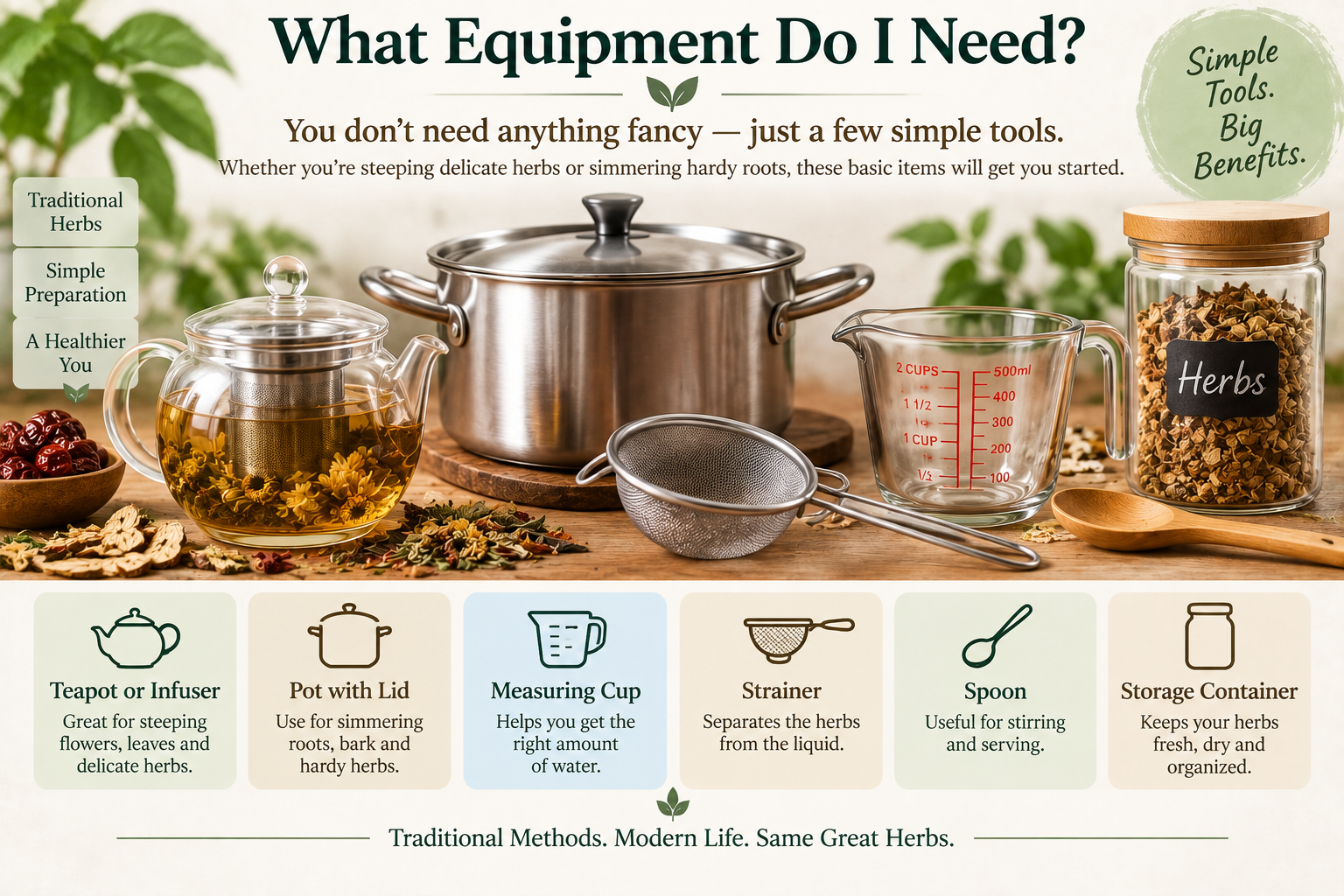
What Equipment Do I Need?
Probably less than you think.
For many basic preparations, you may only need:
A cup or teapot
A saucepan or suitable cooking pot
A measuring spoon or kitchen scale
A fine-mesh strainer
For appropriate loose herbs, a stainless-steel tea ball, infuser or reusable muslin brewing bag can make cleanup considerably easier.
You don't need to turn your kitchen into an herbal pharmacy before trying your first herb.
Start simple.
Cut Herb, Powder or Extract: What's the Difference?
This is another common source of confusion when you're shopping for Chinese herbs.
Cut or Sliced Herb
You're looking at recognizable pieces of dried plant material—perhaps sliced root, pieces of peel, berries or flowers.
Whole-Herb Powder
The dried plant material has been ground into powder.
Extract Powder
This isn't simply an herb ground into smaller pieces.
An extract has undergone an extraction process and may be offered in concentrations such as 5:1, 10:1 or 20:1, depending upon the product.
These forms should not automatically be measured or prepared as though they are interchangeable.
If you'd like to understand them better, continue to our Cut Herbs vs. Powders vs. Extract Powders Start Here guide.
How Much Chinese Herb Do I Use?
This is another place where simple but inaccurate advice can cause confusion.
There is no single measurement that works for every Chinese herb.
Different herbs have traditionally been prepared in different quantities.
So instead of assuming:
“One tablespoon per cup.”
check the preparation information for the specific herb you're using.
And if you're following an established formula or practitioner recommendation, follow those directions.
Get to Know the Herb Before You Mix It
One of the most interesting things about buying bulk Chinese herbs is that you can actually see, smell and experience the plant itself.
So before you immediately combine a new herb with five others, spend a minute getting acquainted with it.
Pick it up.
What does it look like?
Is it a root, berry, flower, peel or seed?
Smell it.
Is it earthy? Sweet? Citrusy? Floral? Strong? Surprisingly mild?
Then learn its names.
For example:
Huang Qi
Astragalus Root
Astragalus membranaceus
Now that unfamiliar Chinese name has a face.
If the herb is appropriate for preparation as a beverage, prepare it according to its individual directions and notice its flavor and aroma.
You don't need to write a report about it.
Just remember the things that surprised you.
“Chen Pi really does smell like citrus.”
“Gou Qi Zi is much sweeter than I expected.”
“So THAT'S what Huang Qi looks like.”
Those little discoveries are how unfamiliar bags of Chinese herbs gradually turn into plants you recognize.
And once you know the individual herbs, exploring Chinese herbal traditions becomes a lot more interesting.
Before Trying an Unfamiliar Chinese Herb
Don't choose an herb solely because someone on social media said everybody needs it.
Take a minute and investigate what you're actually buying.
Check:
What is the botanical name?
Which part of the plant is used?
Is this cut herb, powder or extract?
How has it traditionally been prepared?
Are there important cautions?
Could it interact with medications?
Herbs contain naturally occurring compounds and aren't automatically appropriate for every person simply because they're plants.
If you take prescription medications, have a medical condition, are pregnant or breastfeeding, are preparing herbs for a child, or aren't sure whether a particular herb is appropriate for you, consult an appropriately qualified healthcare professional.
Traditional-use information is provided for educational purposes and is not intended to diagnose, treat, cure or prevent disease.
Ready to Meet Your First Chinese Herb?
You don't have to understand hundreds of Chinese herbs before you begin.
Pick one.
Here are four very different places to start exploring:
Gou Qi Zi — Goji Berry
Fruit • Mildly sweet/fruity • Familiar and easy to recognize
See what an actual Chinese herbal fruit looks and tastes like.
Explore Gou Qi Zi →
Ju Hua — Chrysanthemum Flower
Flower • Floral/herbal • Traditionally enjoyed as a beverage
A simple way to discover a Chinese herb that looks exactly like what it is—a dried flower.
Explore Ju Hua →
Chen Pi — Mature Tangerine Peel
Peel • Aromatic • Distinctive citrus character
A particularly approachable example of how familiar everyday plant materials also appear within Chinese herbal traditions.
Explore Chen Pi →
Huang Qi — Astragalus Root
Root • Mild/earthy • An introduction to sliced Chinese roots
Ready to move beyond steeping? Huang Qi gives you an opportunity to learn what a traditional root preparation looks like.
Explore Huang Qi →
Where Would You Like to Go Next?
This is only the beginning.
Continue learning in our Start Here: Chinese Herbs collection.
What Is a Chinese Herbal Decoction?
See the entire process step by step and learn why many roots and dense plant materials have traditionally been simmered.
Learn About Decoctions →
Cut Chinese Herbs vs. Powder vs. Extract Powder
Not sure which form to buy? See the differences before you order.
Compare Herbal Forms →
What Do 5:1, 10:1 and 20:1 Extract Ratios Mean?
Finally understand those numbers without needing a chemistry textbook.
Understand Extract Ratios →
How Much Bulk Chinese Herb Should I Buy?
Learn the difference between common package sizes and determine which amount makes sense for you.
Compare Bulk Herb Sizes →
Why Does One Chinese Herb Have So Many Names?
Pinyin name? Common name? Botanical name? Learn why one plant can appear under several names—and how to make sure you're looking at the correct herb.
Learn About Chinese Herb Names →
How to Store Bulk Chinese Herbs
Learn how to protect dried herbs from moisture, excessive heat, direct light and unnecessary exposure to air.
Learn How to Store Herbs →
Chinese Herbs Don't Have to Be Complicated
The Chinese name may be unfamiliar.
The preparation method may be new.
And yes, the first bag of sliced root may look suspiciously like something you could use to start a campfire.
But underneath all of those unfamiliar names are plants:
Roots. Flowers. Fruits. Seeds. Peels. Bark. Leaves.
Start with one.
Learn its name.
Look at the plant part.
Learn how it has traditionally been prepared.
Smell it.
Taste it when appropriate.
Then explore another.
Before long, you'll stop looking at Huang Qi, Gou Qi Zi, Chen Pi and Ju Hua as mysterious names.
You'll know what they actually are.
And that's a wonderful place to begin exploring Chinese herbs.
Start Exploring Bulk Chinese Herbs →
Trusted Since 1994 • Ships from Washington State