


Lian Qiao Bai Du Tablets – Plum Flower, 120 Tablets
Traditional Chinese Herbal Formula | 18 Ingredients | Convenient Coated Tablets

A Traditional Formula Rooted in Chinese Herbal Practice
Looking for Lian Qiao Bai Du Pian in an easy-to-use tablet form? This traditional Chinese herbal formula combines 18 carefully selected ingredients, including Forsythia fruit (Lian Qiao), Honeysuckle flower (Jin Yin Hua), Dandelion herb (Pu Gong Ying), and Chinese Skullcap root (Huang Qin).
In Traditional Chinese Medicine (TCM), Lian Qiao Bai Du is associated with the classical principles of clearing Heat, resolving Toxicity, and cooling the Blood. These terms describe traditional patterns and treatment principles, not medically diagnosed conditions or proven effects of the finished product.
Plum Flower Lian Qiao Bai Du Tablets provide the traditional formula in convenient, premeasured tablets, without the preparation required for loose-herb decoctions.
Product Details at a Glance
| Product Information | Details |
|---|---|
| Product name | Lian Qiao Bai Du Pian |
| Brand | Plum Flower |
| Traditional formula | Lian Qiao Bai Du |
| Form | Coated herbal tablets |
| Package size | 120 tablets |
| Number of listed formula ingredients | 18 |
| Origin | China |
| Suggested use | 4 tablets, 3 times daily, according to the manufacturer's listed directions |
Lian Qiao Bai Du Ingredients: Understanding the 18-Herb Formula
Why does Lian Qiao Bai Du contain so many ingredients?
In Traditional Chinese Medicine (TCM), herbal formulas combine ingredients with complementary roles. Some herbs form the foundation of the formula, while others support its traditional properties, balance the combination, or help guide its overall action.
Lian Qiao Bai Du Pian contains 18 traditional ingredients. Each has a distinct place in Chinese herbal practice.
Complete Ingredient List and Traditional Roles
| Pinyin Name | Botanical Ingredient | Why It Is Traditionally Included |
|---|---|---|
| Lian Qiao | Forsythia suspensa fruit | Traditionally classified as clearing Heat and resolving Toxicity. One of the principal herbs associated with the formula's name and traditional character. |
| Jin Yin Hua | Lonicera japonica flower | Traditionally paired with Lian Qiao for its complementary Heat-clearing and Toxicity-resolving properties. |
| Da Huang | Rheum palmatum root and rhizome | Traditionally used to drain Heat and support downward movement through the digestive system. Contains naturally occurring compounds with laxative activity. |
| Pu Gong Ying | Taraxacum mongolicum herb | Traditionally categorized as clearing Heat and resolving Toxicity, complementing other herbs in this group. |
| Zi Hua Di Ding | Viola yedoensis herb | Traditionally included for its Heat-clearing and Toxicity-resolving classifications. |
| Bai Xian Pi | Dictamnus dasycarpus root bark | Traditionally classified as clearing Heat and drying Dampness, particularly in TCM descriptions involving the skin. |
| Huang Qin | Scutellaria baicalensis root | Traditionally associated with clearing Heat and drying Dampness, contributing to the formula's overall TCM character. |
| Chi Shao | Paeonia lactiflora root | Traditionally classified as cooling the Blood and moving Blood within TCM theory. |
| Fang Feng | Saposhnikovia divaricata root | Traditionally used to disperse Wind and complement other herbs in formulas addressing external TCM patterns. |
| Zhe Bei Mu | Fritillaria thunbergii bulb | Traditionally classified as clearing Heat and transforming Phlegm, adding another dimension to the formula's traditional composition. |
| Jie Geng | Platycodon grandiflorus root | Traditionally associated with the Lung meridian and used to guide or direct the actions of other herbs upward in a formula. |
| Bai Zhi | Angelica dahurica root | Traditionally classified as dispersing Wind and addressing Dampness, complementing the formula's other Wind-related ingredients. |
| Xuan Shen | Scrophularia ningpoensis root | Traditionally used to clear Heat, cool the Blood, and nourish Yin in Chinese herbal theory. |
| Mu Tong (San Ye) | Akebia trifoliata stem | Traditionally classified as clearing Heat and promoting the movement of fluids through the body's water pathways in TCM theory. Botanical identity is especially important for this ingredient. |
| Gan Cao | Glycyrrhiza uralensis root | Commonly used to harmonize herbal combinations and moderate the traditional properties of other ingredients. |
| Tian Hua Fen | Trichosanthes kirilowii root | Traditionally classified as clearing Heat and generating fluids, complementing the formula's cooling ingredients. |
| Zhi Zi | Gardenia jasminoides fruit | Traditionally used to drain Heat and address Damp-Heat patterns within Chinese herbal theory. |
| Chan Tui | Cryptotympana pustulata cicada slough | Traditionally classified as dispersing Wind-Heat and associated with skin-related TCM patterns. This is an insect-derived ingredient. |
These descriptions explain the ingredients' traditional classifications and possible roles in the formula. They are not evidence that the finished product produces these effects or treats any medical condition.
How the Ingredients Work Together in Traditional Chinese Herbal Theory
Rather than relying on a single botanical, Lian Qiao Bai Du combines ingredients traditionally grouped by complementary functions:
-
Heat-clearing herbs: Lian Qiao, Jin Yin Hua, Pu Gong Ying, Zi Hua Di Ding, and Huang Qin form an important part of the formula's traditional identity.
-
Wind-related herbs: Fang Feng, Bai Zhi, and Chan Tui contribute properties traditionally associated with dispersing Wind.
-
Blood- and fluid-related herbs: Chi Shao, Xuan Shen, Tian Hua Fen, and Zhi Zi contribute additional traditional classifications.
-
Supporting and harmonizing herbs: Gan Cao, Jie Geng, and other ingredients help complete the combination according to traditional formula principles.
These are historical TCM concepts, not descriptions of clinically established effects.
Other Ingredients
The manufacturer's published ingredient listing identifies the following tablet-processing ingredients:
Microcrystalline cellulose, hypromellose, polyethylene glycol, and magnesium stearate.
These ingredients may serve functions such as tablet binding, coating, manufacturing, and maintaining tablet consistency. Confirm the current ingredient declaration on the bottle before publication.
Important Ingredient Information
Not vegetarian: This formula contains Chan Tui, a traditional ingredient derived from cicada slough.
Ingredient precautions: Da Huang may produce laxative effects, while Gan Cao (licorice root) may affect blood pressure, potassium balance, and medication safety. Customers who are pregnant, nursing, taking medications, or managing a medical condition should consult a qualified healthcare professional before use.
Quality documentation: Contact 1st Chinese Herbs for batch COA.
What Is Lian Qiao Bai Du Pian?
Lian Qiao Bai Du Pian (連翹敗毒片) is a multi-ingredient traditional Chinese herbal preparation.
The name includes Lian Qiao, referring to Forsythia fruit, a prominent ingredient in the formula. Bai Du is part of the formula's traditional name and should not be interpreted as a promise to eliminate toxins or treat an infection.
The formula brings together botanical ingredients traditionally classified in TCM according to their properties, flavors, and roles within a larger herbal combination.
Traditional TCM Context
Traditional references associate this formula with the following concepts:
-
Clearing Heat: A classical TCM principle used in the interpretation of certain herbal patterns.
-
Resolving Toxicity: Traditional terminology describing a TCM treatment approach, not a claim of detoxification or antimicrobial activity.
-
Cooling the Blood: A traditional pattern-based concept, not a statement about changing blood temperature or treating a blood disorder.
These traditional descriptions are provided for educational purposes. They do not establish clinical effectiveness for any disease or symptom.
Why Choose Plum Flower Lian Qiao Bai Du Tablets?
-
Traditional multi-herb formula: Combines 18 listed ingredients in a single preparation.
-
Convenient tablets: No simmering, straining, or measuring individual herbs.
-
Manufacturer-listed directions: Clear tablet-count instructions on the product labeling.
-
Established herbal brand: Plum Flower is known for traditional Chinese herbal preparations.
For customers seeking this specific traditional formula, tablets offer a practical alternative to sourcing and preparing the individual ingredients.
How to Take Lian Qiao Bai Du Tablets
Manufacturer's listed directions: Take 4 tablets, 3 times daily, or as directed by a qualified healthcare professional.
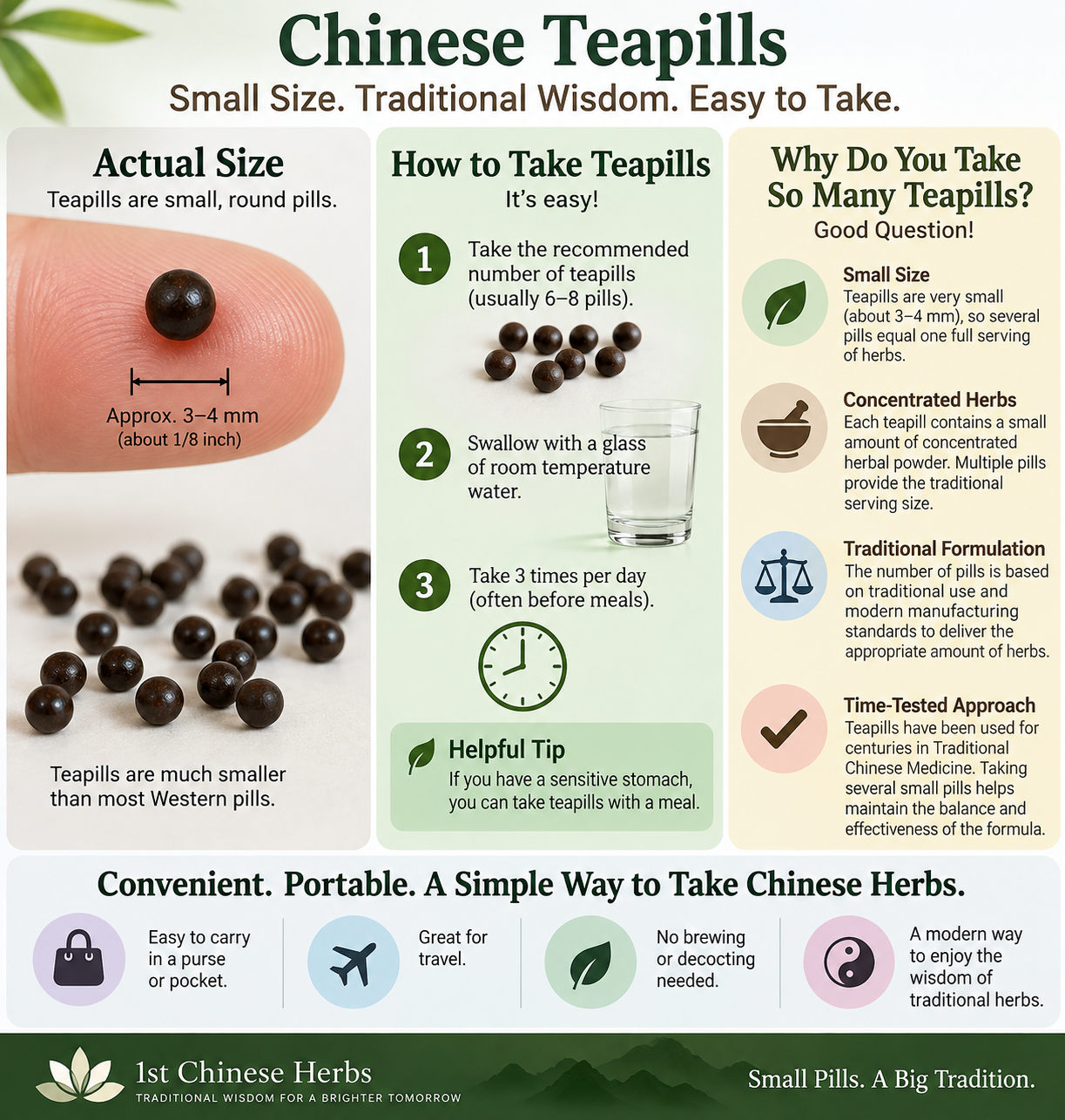
Take with water and follow the current bottle instructions. Do not substitute general teapill dosage recommendations for this product's specific directions.
Important safety information
-
Do not use during pregnancy. Avoid use while nursing unless a qualified healthcare professional specifically advises otherwise.
-
Consult your healthcare professional before use if you take prescription medications, have a medical condition, or use other herbal supplements.
-
This formula contains Da Huang (rhubarb root and rhizome), which may have laxative effects, and Gan Cao (licorice root), which may be unsuitable for some people with blood pressure, heart, kidney, or electrolyte concerns.
-
Confirm the botanical identity of Mu Tong with the supplier. Products containing aristolochic-acid-associated substitutions must not be used.
-
Keep out of reach of children.
Traditional Chinese herbal formulas are not substitutes for appropriate medical evaluation or treatment.
Frequently Asked Questions
What is Lian Qiao Bai Du Pian?
It is a traditional Chinese herbal formula containing 18 listed ingredients, including Forsythia fruit, Honeysuckle flower, Chinese Skullcap root, and other botanicals. Plum Flower offers this preparation as coated tablets.
What does Lian Qiao Bai Du mean?
Lian Qiao refers to Forsythia fruit. The full name reflects traditional Chinese herbal terminology. It should not be interpreted as a medical claim that the tablets remove toxins or cure an illness.
Are Lian Qiao Bai Du tablets the same as teapills?
Both are prepared forms of traditional Chinese herbal formulas, but tablet size, formulation, and dosing can differ. This product contains 120 tablets and has its own manufacturer-specific directions.
How many tablets are in a bottle?
Each bottle contains 120 tablets.
Is Lian Qiao Bai Du vegetarian?
No. The listed formula contains Chan Tui, a traditional ingredient derived from cicada slough.
Scientific Research and References
Research on traditional Chinese herbal formulas includes botanical authentication, ingredient identification, and investigation of individual plant constituents.
Published research:
Cui et al. — Molecular identification of raw materials from Lian Qiao Bai Du Wan (PubMed, 2013)
This study investigated DNA-based methods for identifying botanical raw materials in a related Lian Qiao Bai Du preparation. It addresses ingredient authentication, not clinical effectiveness or the performance of these specific Plum Flower tablets.
Research on individual herbs should not be interpreted as proof that the complete formula treats a disease or produces the same results.
California Proposition 65
California Proposition 65 concerns exposure to certain chemicals identified by the State of California. For additional information, visit:
Explore Traditional Chinese Herbal Formulas
Looking for the convenience of a prepared traditional herbal formula? Explore our Plum Flower Teapills and Tablets collection to compare available formulas, package sizes, and ingredient lists.
FDA Disclaimer: These statements have not been evaluated by the Food and Drug Administration. This product is not intended to diagnose, treat, cure, or prevent any disease.