Functional Mushrooms Explained

Functional Mushrooms Explained: Reishi, Cordyceps, Lion's Mane & More

Quick Answers:   Functional mushrooms are mushrooms and fungi commonly used in foods, teas, powders, extracts and supplements. Popular examples include Reishi, Lion's Mane, Cordyceps, Maitake, Chaga and Turkey Tail. Products can differ considerably by species, fungal material and preparation.

Mushrooms are suddenly everywhere—coffee, tea, powders, capsules, drink mixes and extracts. Names like Reishi, Cordyceps, Lion's Mane, Maitake and Chaga are appearing on products that look very different from one another.

But here's the part that can get confusing:

Two products labeled "functional mushrooms" may contain completely different ingredients and preparations.

One might contain dried mushroom pieces. Another may be mushroom powder. Another could contain mycelium grown on a substrate, while another is a concentrated extract.

So before asking which mushroom to buy, start with a simpler question:

What am I actually buying?

This guide explains the major functional mushrooms, the difference between whole mushrooms, powders and extracts, what fruiting body and mycelium mean, and what to look for on a mushroom label.


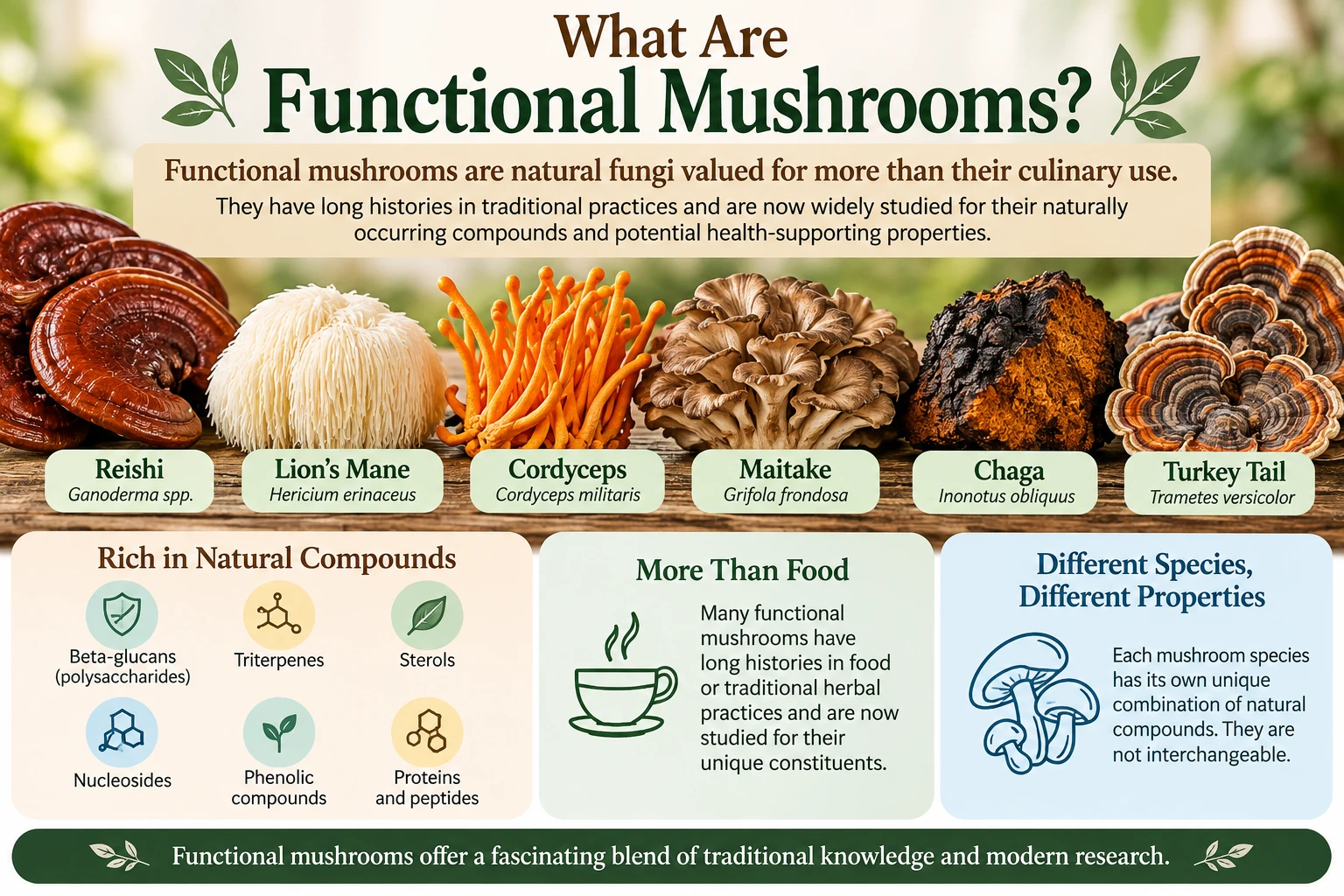
Functional mushrooms including Reishi, Lion's Mane, Cordyceps, Maitake, Chaga and Turkey Tail, with examples of naturally occurring mushroom compounds.

What Are Functional Mushrooms?

"Functional mushroom" is a popular marketplace term rather than a precise medical or botanical classification.

It generally refers to mushrooms and other fungi valued for more than conventional culinary use. Many have long histories in food or traditional herbal practices and are now being studied for their naturally occurring compounds.

Researchers have identified mushroom constituents including:

Beta-glucans and other polysaccharides

Triterpenes

Sterols

Nucleosides

Phenolic compounds

Proteins and peptides

The important thing to remember is that mushrooms are not interchangeable.

Reishi isn't Cordyceps. Cordyceps isn't Lion's Mane. And mushroom powder isn't necessarily the same thing as mushroom extract.


Why Are Functional Mushrooms So Popular?

Mushrooms themselves aren't new. What's changed is how they're being packaged and marketed.

Today you'll find functional mushrooms in:

Coffee

Tea

Cocoa

Powders

Capsules

Gummies

Drink mixes

Concentrated extracts

This has made mushrooms easier to find—but also harder to compare.

A package that says "mushroom coffee" still doesn't tell you which species is included, what fungal material was used, whether it is powder or extract, or how much mushroom is actually present.


Major Functional Mushrooms and why

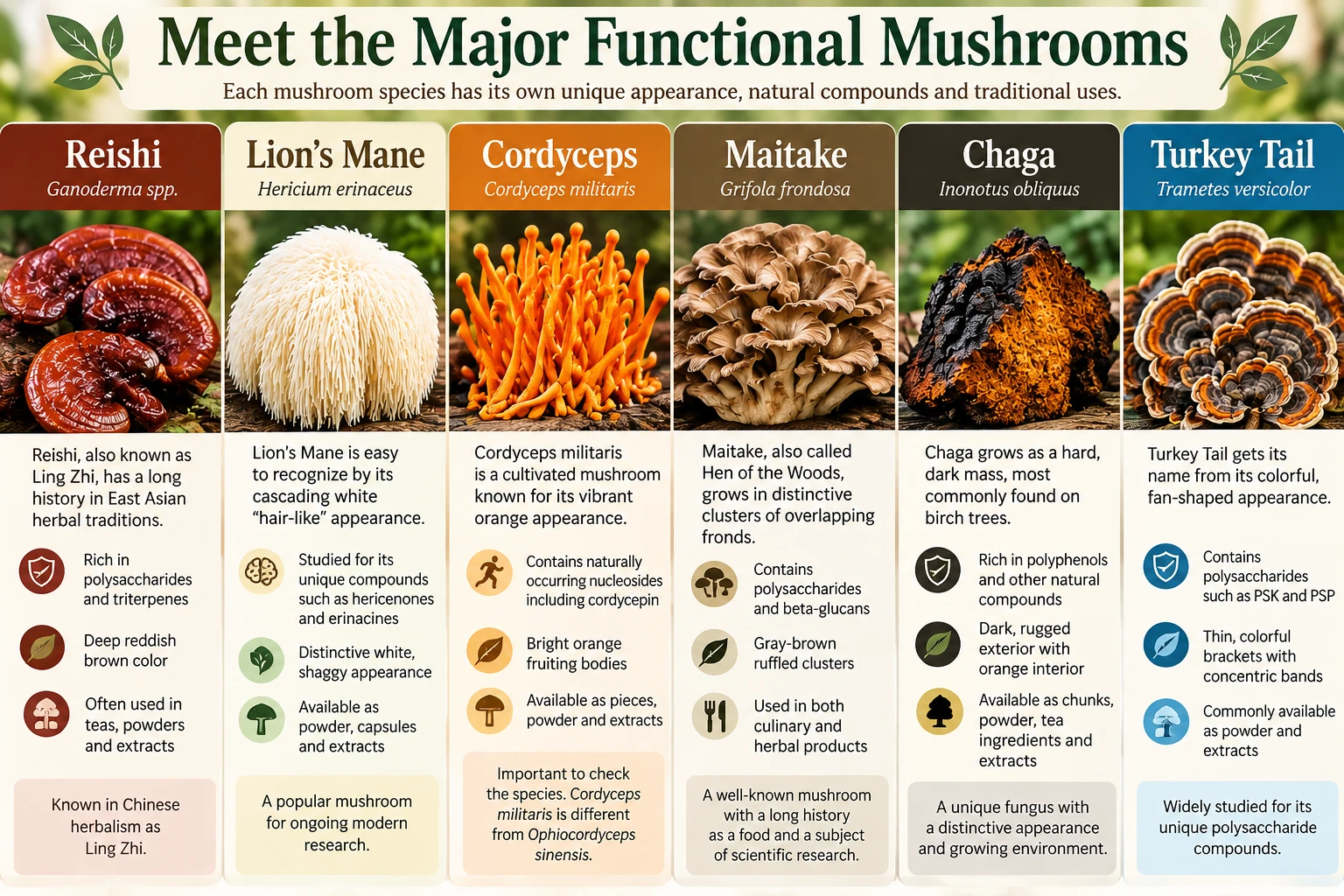
Meet the Major Functional Mushrooms

Lion's Mane – Hericium erinaceus

Hericium erinaceus is one of the easiest mushrooms to recognize. Instead of a traditional cap and stem, Lion's Mane develops cascading white structures that resemble shaggy hair.

Researchers have investigated Lion's Mane and naturally occurring compounds associated with its fruiting body and mycelium, including compounds commonly discussed as hericenones and erinacines.

When comparing Lion's Mane products, check whether you're purchasing fruiting body, mycelium, powder or extract.

Reishi – Ling Zhi

Reishi has a long history in East Asian herbal traditions and is known in Chinese herbalism as Ling Zhi.

Reishi is associated with Ganoderma species and contains naturally occurring compounds including polysaccharides and triterpenoids that continue to receive scientific attention.

When shopping for Reishi, look beyond the common name. Check the species, fungal material and whether the product is whole, powdered or extracted.

Cordyceps

Cordyceps is particularly important because "Cordyceps" does not describe one single commercial product.

Two names consumers frequently encounter are:

Cordyceps militaris

Ophiocordyceps sinensis

They are different fungal species.

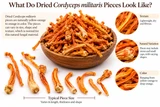
Cordyceps militaris can be cultivated and is recognizable for its characteristic orange appearance. Researchers have investigated naturally occurring compounds in C. militaris, including cordycepin, nucleosides and polysaccharides.

If a product simply says "Cordyceps", keep reading the label. Look for the actual species and product form.

Maitake – Grifola frondosa

Maitake, also known as Hen of the Woods, grows in distinctive clusters of overlapping fronds.

Unlike some functional mushrooms, Maitake is also well established as a culinary mushroom. Researchers have studied its naturally occurring polysaccharides and beta-glucan-containing fractions.

Shiitake – Lentinula edodes

Most people first encounter Shiitake as food, but it is also frequently included in discussions of functional mushrooms.

Shiitake is a useful reminder that the line between a "culinary mushroom" and a "functional mushroom" isn't always clear. A mushroom can have a long history as food while also attracting scientific interest.

Chaga – Inonotus obliquus

Chaga looks very different from a typical cap-and-stem mushroom. It forms a hard, dark growth most commonly associated with birch trees.

Commercial Chaga is commonly available as chunks, powder, tea ingredients and extracts.

Turkey Tail – Trametes versicolor

Turkey Tail gets its name from its colorful, fan-shaped appearance.

Its scientific name is Trametes versicolor. It has attracted considerable scientific interest, particularly for specific polysaccharide-containing preparations.


Whole Mushroom vs. Powder vs. Extract

This is one of the most useful distinctions to understand when shopping for mushrooms.

Form What It Means
Dried Pieces Recognizable dried fungal material.
Mushroom Powder Dried fungal material that has been ground into powder.
Mushroom Extract Fungal material that has undergone an extraction process.
Extract Powder An extracted preparation that has been concentrated and dried into powder.

Grinding a mushroom into powder does not automatically make it an extract.


What Does 10:1 Mushroom Extract Mean?

You may see mushroom extracts labeled with ratios such as 5:1, 10:1 or 20:1.

An extract ratio generally describes the relationship between the amount of starting material and finished extract according to the manufacturer's extraction process.

However, a larger ratio doesn't automatically mean a better product.

Starting material, extraction method, finished specifications and laboratory testing all matter.


Fruiting Body vs. Mycelium

These two terms cause a lot of confusion.

Fruiting Body

The fruiting body is the reproductive structure most people recognize as the mushroom.

Mycelium

Mycelium is the network of microscopic fungal threads called hyphae from which fungal structures develop.

Commercial mycelium may be cultivated on substrates such as grain.

Rather than assuming one form is always superior, ask:

What fungal material is actually in this product, and does the manufacturer clearly identify it?


What Are Beta-Glucans?

Beta-glucans are naturally occurring polysaccharides found in fungal cell walls and are among the most frequently discussed constituents of functional mushrooms.

Some mushroom manufacturers provide a measured beta-glucan percentage on their products.

This can provide more specific information than simply listing "polysaccharides," although testing methods and product specifications still matter.


What Is Cordycepin?

Cordycepin is one of the compounds strongly associated with Cordyceps militaris research.

Its chemical name is 3'-deoxyadenosine.

There is an important distinction, however:

Research involving isolated cordycepin is not the same thing as research involving ordinary dried Cordyceps.

Unless a product has been quantitatively tested for cordycepin, consumers should not assume a particular cordycepin concentration.


Mushroom Coffee, Why does it work

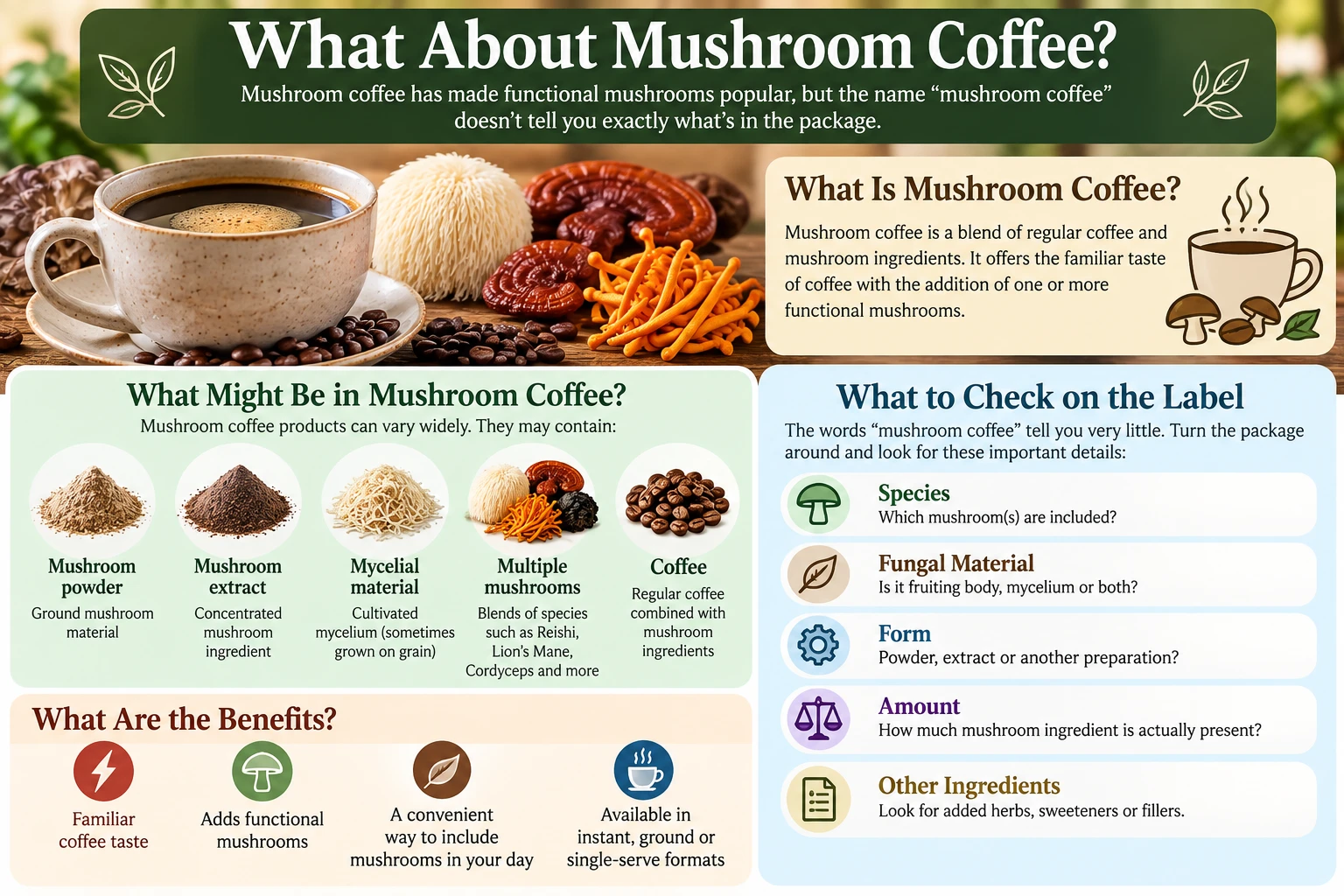
What About Mushroom Coffee?

Mushroom coffee has helped introduce functional mushrooms to a much wider audience.

But "mushroom coffee" is a product category—not an ingredient specification.

A mushroom coffee might contain mushroom powder, mushroom extract, mycelial material or a blend of several mushroom ingredients.

Turn the package around and look for:

Species → Fungal Material → Form → Amount

Those four pieces of information tell you much more than the words "mushroom coffee" on the front.


How to Read a Functional Mushroom Label

Look For Why It Matters
Scientific Name Helps identify the actual species.
Fungal Material Tells you whether you're buying fruiting body, mycelium or another material.
Product Form Distinguishes pieces, powder and extracts.
Extract Information Helps explain how an extract was prepared.
Serving Size Shows how much product you're actually receiving per serving.
Other Ingredients Identifies carriers and additional ingredients.
Testing Provides information about the manufacturer's quality controls.

What Does the Research Really Tell Us?

There is legitimate scientific research involving functional mushrooms, but not all research answers the same question.

A study might involve:

Whole mushroom material

A concentrated extract

Mycelium

An isolated compound

Laboratory cells

Animals

A specific preparation tested in humans

These are not interchangeable.

For example, finding an interesting effect from purified cordycepin in laboratory research doesn't establish that eating dried Cordyceps militaris will produce the same result.

When reading mushroom research, always ask:

What exactly did the researchers study?


How to Choose a Functional Mushroom

Instead of choosing the mushroom with the longest list of advertised benefits, ask these questions:

  1. What species is it?
  2. What fungal material am I buying?
  3. Is it whole, powdered or extracted?
  4. If it's an extract, what does the manufacturer tell me about the extraction?
  5. How much am I actually getting?
  6. What other ingredients are present?
  7. What quality testing has been performed?

Those questions are much more useful than relying on impressive claims printed on the front of a package.


Functional Mushroom FAQs

Are functional mushrooms psychedelic?

No. Common functional mushrooms such as Reishi, Lion's Mane, Maitake, Shiitake and Cordyceps militaris are not the same as mushrooms containing psilocybin.

Is mushroom powder the same as mushroom extract?

No. Plain mushroom powder may simply be dried fungal material that has been ground. An extract has undergone an extraction process.

Is fruiting body always better than mycelium?

Not automatically. They are different fungal materials. What matters is knowing what the product contains and whether it is clearly identified.

Is Cordyceps militaris the same as Ophiocordyceps sinensis?

No. They are different fungal species.

Is a 10:1 extract automatically better?

No. An extract ratio alone does not establish overall quality.

Does a mushroom containing a researched compound prove the product has the same effect?

No. Research on isolated compounds or specialized extracts cannot automatically be applied to every product containing that mushroom.


The Bottom Line: Know What Is in the Package

Functional mushrooms are fascinating. They have histories in food and traditional herbal practices, contain interesting natural compounds and continue to attract scientific research.

But their growing popularity has also created a confusing marketplace.

The words "functional mushroom" alone don't tell you the species, fungal material, product form, concentration or quality.

Whether you're considering Reishi, Lion's Mane, Cordyceps, Maitake, Shiitake, Chaga or Turkey Tail, remember one simple principle:

Know what is actually in the package.

Clear identification and transparent product information are more useful than spectacular promises.


Research & Further Reading

Medicinal Mushrooms – Bioactive Components, Nutritional Value and Functional Foods
PMID: 37513265
https://pubmed.ncbi.nlm.nih.gov/37513265/

Clinical Research on Medicinal Mushrooms
PMID: 34823005
https://pubmed.ncbi.nlm.nih.gov/34823005/

Lion's Mane Research Review
PMID: 40959699
https://pubmed.ncbi.nlm.nih.gov/40959699/

Reishi Clinical Evidence Review
PMID: 40510787
https://pubmed.ncbi.nlm.nih.gov/40510787/

Cordyceps militaris Research
PMID: 41432716
https://pubmed.ncbi.nlm.nih.gov/41432716/


Safety & Important Information

Functional mushrooms and mushroom supplements may not be appropriate for everyone. Consult a qualified healthcare professional before using dietary supplements if you have a medical condition, take medications, are pregnant or nursing, are preparing for surgery, or have mushroom or fungal allergies.

Research discussed on this page may involve extracts, isolated compounds, cultured fungal material, laboratory studies, animal studies or specialized preparations. These findings should not automatically be interpreted as establishing the effects of commercially available mushroom products.

These statements have not been evaluated by the Food and Drug Administration. This information is not intended to diagnose, treat, cure, or prevent any disease.

There are no products listed under this category.

Recommended For You View all