

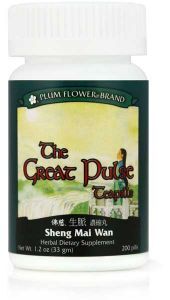
The Great Pulse – Sheng Mai Wan Teapills – 200 Pills – Plum Flower
Sheng Mai Wan is a classic three-herb Chinese formula traditionally used to tonify Qi, nourish Yin, generate fluids, and help conserve Qi and fluids according to Traditional Chinese Medicine (TCM) theory.
Sometimes a traditional formula does not need a long list of herbs to have a clearly defined purpose. Sheng Mai Wan, also known as Sheng Mai San and Generate the Pulse Pills, contains just three traditional ingredients: Dang Shen (Codonopsis), Mai Men Dong (Ophiopogon), and Wu Wei Zi (Schisandra).
Each herb has a distinct traditional role. Dang Shen supports Qi, Mai Men Dong nourishes Yin and generates fluids, and Wu Wei Zi helps conserve Qi and fluids. Together, they create a well-known traditional formula associated with patterns involving Qi and Yin deficiency with depletion of body fluids.
Plum Flower prepares the complete three-herb formula as small teapills, giving you the traditional combination without having to purchase, measure, simmer, and strain the individual bulk herbs.
What Is Sheng Mai Wan?
Sheng Mai Wan (生脈丸) is the prepared pill form of the traditional Chinese herbal formula also known as Sheng Mai San, Generate the Pulse Pills, and The Great Pulse Generator Decoction.
The formula has a long history in Traditional Chinese Medicine and is built around a remarkably simple three-part strategy:
- Tonify Qi
- Nourish Yin and generate fluids
- Help conserve Qi and fluids
In TCM, Qi refers broadly to the body's functional energy and activity, while Yin is associated with nourishment, moisture, and cooling functions. When both Qi and Yin are considered deficient, a traditional practitioner may look for signs of weakness together with insufficient body fluids.
Sheng Mai Wan combines herbs that traditionally address both sides of this pattern rather than functioning simply as an “energy formula.”
Product Details at a Glance
Traditional Name: Sheng Mai Wan (生脈丸)
Also Known As: Sheng Mai San; Generate the Pulse Pills; The Great Pulse Generator Decoction
Brand: Plum Flower
Form: Prepared Chinese herbal teapills
Bottle Size: 200 teapills
Formula Size: 3 traditional ingredients
Label Directions: 8 teapills, 3 times daily
Approximate Supply: Approximately 8 days when taking 24 teapills per day
Origin: China
Preparation Required: None — swallow the prepared teapills with water
What Herbs Are in Sheng Mai Wan?
Sheng Mai Wan contains only three traditional herbs, but each performs a different role within the formula. This straightforward combination is one of the features that makes Sheng Mai Wan easy to understand.
| Pin Yin | Botanical Ingredient | Traditional Role |
|---|---|---|
| Dang Shen | Codonopsis pilosula root | Traditionally tonifies Qi and supports the Spleen and Lung systems according to TCM theory. |
| Mai Men Dong | Ophiopogon japonicus tuber | Traditionally nourishes Yin, generates fluids, moistens dryness, and supports the Lung and Stomach Yin systems. |
| Wu Wei Zi | Schisandra chinensis fruit | Traditionally helps secure and conserve Qi and body fluids while supporting Lung Qi according to TCM theory. |
Other Ingredients
Maltose, hydrated magnesium silicate, activated carbon, China wax.
Why These Three Herbs?
The simplicity of Sheng Mai Wan is one of its strengths. Rather than combining many herbs with overlapping functions, the formula uses three ingredients with complementary traditional roles.
Dang Shen provides the Qi-supporting foundation of the formula. In Traditional Chinese Medicine, it is used when the body's functional energy is considered depleted or insufficient.
Mai Men Dong addresses the Yin and fluid side of the pattern. It traditionally nourishes Yin, generates fluids, and moistens dryness.
Wu Wei Zi completes the traditional strategy by helping conserve what remains. Its astringent traditional action is used to help secure Qi and prevent excessive loss of body fluids.
An easy way to understand the traditional structure is:
Dang Shen supports Qi. Mai Men Dong replenishes Yin and fluids. Wu Wei Zi helps conserve Qi and fluids.
That three-part relationship is the heart of Sheng Mai Wan.
What Does Qi and Yin Deficiency Mean?
Traditional Chinese Medicine uses patterns rather than selecting formulas based solely on the name of a symptom.
Qi deficiency traditionally describes a state in which the body's functional energy is considered insufficient. Traditional signs may include weakness, reduced stamina, or becoming easily tired.
Yin deficiency traditionally involves insufficient nourishing and moistening resources. Traditional descriptions may include dryness, thirst, or other signs interpreted by a TCM practitioner as insufficient Yin and body fluids.
Sheng Mai Wan is distinctive because it traditionally addresses Qi and Yin together while Wu Wei Zi helps conserve Qi and fluids.
This is why describing Sheng Mai Wan simply as an “energy supplement” misses an important part of the traditional formula. Its traditional strategy involves supporting, nourishing, generating, and conserving.
Why Is It Called “Generate the Pulse”?
The English names Generate the Pulse Pills and The Great Pulse Generator Decoction come from the traditional Chinese name Sheng Mai.
In traditional Chinese medical theory, the pulse is evaluated as part of the person's overall pattern. The name reflects the formula's traditional relationship to restoring depleted Qi and Yin rather than suggesting that the product directly changes heart rate or treats an abnormal heartbeat.
That distinction is important. The word “pulse” in the traditional formula name should not be interpreted as a claim that Sheng Mai Wan treats heart disease, arrhythmias, or another cardiovascular condition.
Why Teapills & How Do I Use Them?
Sheng Mai Wan contains only three herbs, so it can be prepared traditionally from individual bulk ingredients. However, doing so still requires obtaining the correct herbs, measuring them, simmering a decoction, straining the herbs, and cleaning up afterward.
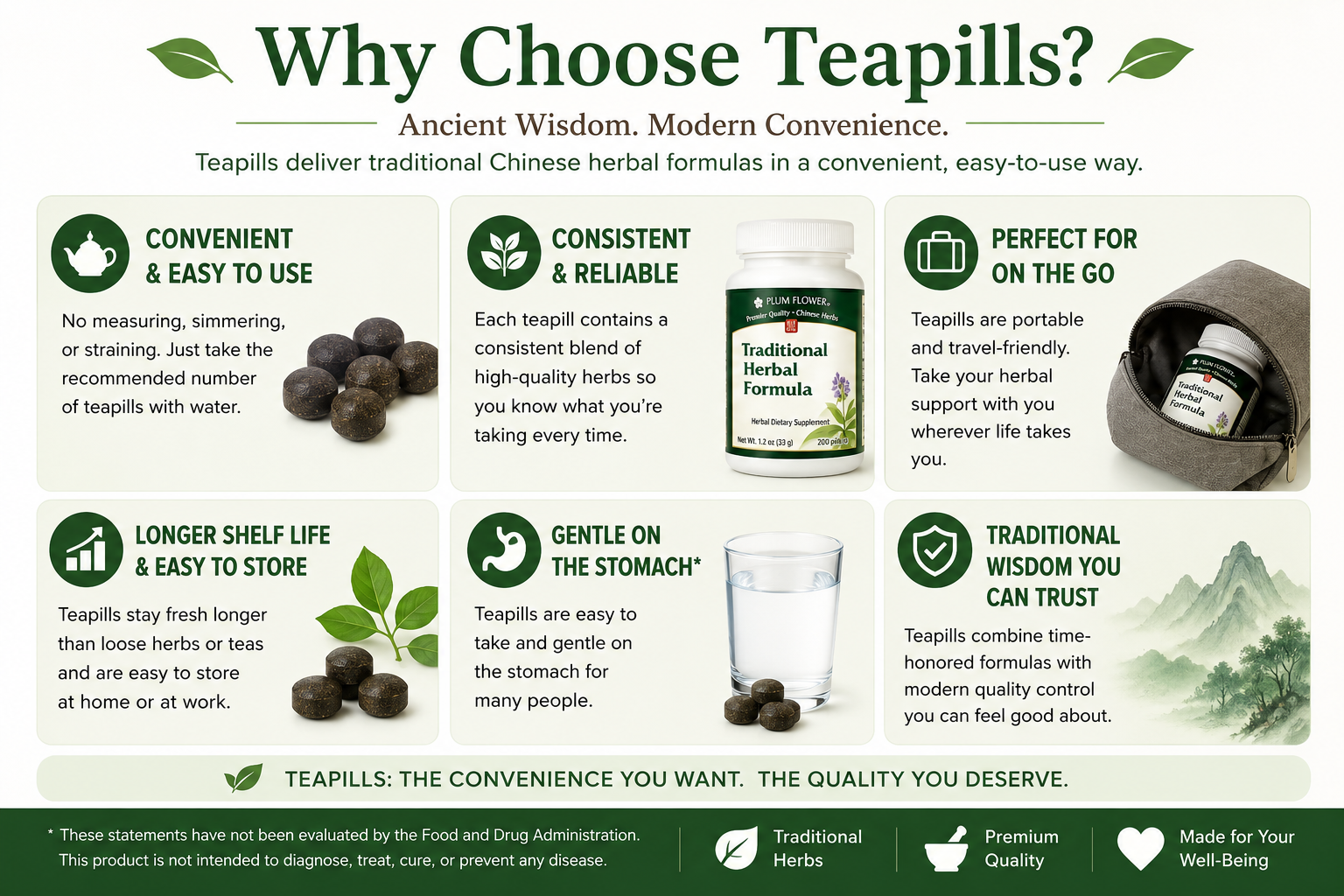
Teapills make the traditional formula much easier to use. The three herbs have already been combined and prepared into small pills, so there is no brewing, no measuring individual bulk herbs, no straining, and no herbal preparation cleanup.
Simply swallow the prepared teapills with water according to the product directions.
Manufacturer's standard dosage: 8 teapills, 3 times per day.
At 24 teapills per day, a 200-count bottle provides approximately 8 days of use.
Follow the directions on the product you receive unless your qualified healthcare practitioner has provided different instructions.
Is Sheng Mai Wan the Right Traditional Formula?
Sheng Mai Wan is traditionally associated with a pattern involving deficiency of both Qi and Yin, particularly when depletion of body fluids is also part of the traditional presentation.
It is therefore better understood as a pattern-specific traditional formula rather than simply a general product for energy, the heart, or the lungs.
This distinction matters because fatigue, weakness, dryness, thirst, shortness of breath, or other complaints can have many possible causes in both traditional Chinese Medicine and Western medicine.
For customers who already know that Sheng Mai Wan matches the traditional pattern they are addressing, Plum Flower teapills provide the complete three-herb formula in a convenient prepared form.
How Does Sheng Mai Wan Compare With Other Qi-Supporting Formulas?
Many Chinese herbal formulas support Qi, but they do not all address the same traditional pattern.
| Formula | Traditional Focus | What Makes It Different? |
|---|---|---|
| Sheng Mai Wan | Qi and Yin deficiency with depletion of fluids | Combines Qi support with Yin nourishment, fluid generation, and an astringent herb traditionally used to conserve Qi and fluids. |
| Bu Zhong Yi Qi Wan | Spleen Qi deficiency with sinking Qi | Has a stronger traditional emphasis on tonifying and raising Qi. |
| Si Jun Zi Wan | Basic Spleen Qi deficiency | A foundational Qi-tonifying formula with greater emphasis on the digestive system in TCM theory. |
The formulas are not interchangeable simply because each contains herbs that support Qi. The complete traditional pattern is important when choosing among them.
Research on Sheng Mai & Its Herbs
Sheng Mai formulas and their individual herbs have been the subject of modern scientific research. These links are provided for customers who would like to explore published research and should not be interpreted as evidence that this Plum Flower product treats a disease or medical condition.
- Sheng Mai San Research – PubMed
- Shengmai Formula Research – PubMed
- Dang Shen (Codonopsis pilosula) Research – PubMed
- Mai Men Dong (Ophiopogon japonicus) Research – PubMed
- Wu Wei Zi (Schisandra chinensis) Research – PubMed
Research note: Scientific research may examine Sheng Mai San, Shengmai preparations, decoctions, injections, extracts, isolated botanical compounds, or dosages that differ substantially from this Plum Flower teapill product. Research is provided for educational purposes and does not establish that this product diagnoses, treats, cures, or prevents a disease.
Safety & Important Considerations
Traditional herbal formulas should be selected according to the individual and the traditional pattern rather than simply by matching a formula to one symptom.
Pregnancy and Nursing: If pregnant or nursing, consult your qualified healthcare professional before using herbal products.
Prescription Medications: Consult your physician or pharmacist before use if you take prescription medications. This is particularly important because herbs such as Schisandra have been studied for potential effects on drug metabolism.
Medical Conditions: If you have a diagnosed cardiovascular, respiratory, kidney, liver, or other significant medical condition, discuss herbal supplement use with your healthcare professional.
Persistent Symptoms: Unexplained fatigue, shortness of breath, weakness, palpitations, chest discomfort, or significant changes in thirst or fluid balance should be medically evaluated rather than assumed to represent a TCM deficiency pattern.
Important: The traditional terms “Generate the Pulse,” Qi deficiency, and Yin deficiency do not represent Western medical diagnoses. Sheng Mai Wan should not be used as a substitute for medical evaluation or treatment of heart, lung, or other diagnosed medical conditions.
California Proposition 65 Warning
Why Buy Plum Flower Sheng Mai Wan?
Sheng Mai Wan is appealing in part because of its simplicity. Rather than a long ingredient list, the formula contains just three traditional herbs with three complementary functions: Dang Shen to support Qi, Mai Men Dong to nourish Yin and generate fluids, and Wu Wei Zi to help conserve Qi and fluids.
Frequently Asked Questions About Sheng Mai Wan
What is Sheng Mai Wan?
Sheng Mai Wan is a traditional three-herb Chinese formula also known as Sheng Mai San, Generate the Pulse Pills, and The Great Pulse Generator Decoction.
What does Sheng Mai Wan traditionally do?
According to Traditional Chinese Medicine theory, Sheng Mai Wan traditionally tonifies Qi, nourishes Yin, generates body fluids, and helps conserve Qi and fluids.
What herbs are in Sheng Mai Wan?
This Plum Flower formula contains three traditional ingredients: Dang Shen (Codonopsis pilosula root), Mai Men Dong (Ophiopogon japonicus tuber), and Wu Wei Zi (Schisandra chinensis fruit).
Does this Sheng Mai Wan contain ginseng?
No. This Plum Flower formula contains Dang Shen (Codonopsis pilosula), not Panax ginseng. The current manufacturer ingredient listing identifies Codonopsis pilosula root as the Qi-tonifying ingredient.
What does Qi and Yin deficiency mean?
Qi and Yin deficiency is a traditional Chinese Medicine pattern involving insufficient functional energy together with insufficient nourishing and moistening resources according to TCM theory. It is not a Western medical diagnosis.
Why is Wu Wei Zi included?
Wu Wei Zi, or Schisandra fruit, is traditionally used for its astringent properties. Within Sheng Mai Wan, it helps complete the traditional strategy by conserving Qi and body fluids.
How do I take Sheng Mai Wan Teapills?
The manufacturer's standard dosage is 8 teapills, 3 times per day. Follow the directions on the product you receive or instructions provided by your qualified healthcare practitioner.
Do Sheng Mai Wan Teapills need to be brewed?
No. The herbs have already been prepared into teapills. There is no need to measure the individual herbs, brew or simmer a decoction, strain the herbs, or clean up afterward.
How long does a 200-count bottle last?
At the manufacturer's standard dosage of 24 teapills per day, a 200-count bottle provides approximately 8 days of use.
What other ingredients are in the teapills?
The manufacturer lists maltose, hydrated magnesium silicate, activated carbon, and China wax as the other ingredients.
Sheng Mai Wan — Three Herbs With a Clear Traditional Purpose
Sheng Mai Wan demonstrates that a traditional formula does not have to contain a long list of ingredients to have a carefully constructed strategy.
Dang Shen supports Qi. Mai Men Dong nourishes Yin and generates fluids. Wu Wei Zi helps conserve Qi and fluids. Together, these three herbs form the classic traditional combination known as Sheng Mai.
If you already know that Sheng Mai Wan is the traditional formula you are looking for, Plum Flower teapills provide the complete three-herb combination without the work involved in preparing the individual bulk herbs.
No measuring. No brewing. No straining. Take the prepared teapills with water according to the label directions.
Important Disclaimer
These statements have not been evaluated by the Food and Drug Administration (FDA). This product is not intended to diagnose, treat, cure, or prevent any disease. Traditional uses described on this page refer to Traditional Chinese Medicine theory and are provided for educational purposes.