
Why Am I Not Sleeping Well? What Your Sleep Pattern May Be Telling You
A Traditional Chinese Medicine Guide to Night Waking,
Racing Thoughts, Restless Sleep & Choosing the Right Herbal Approach
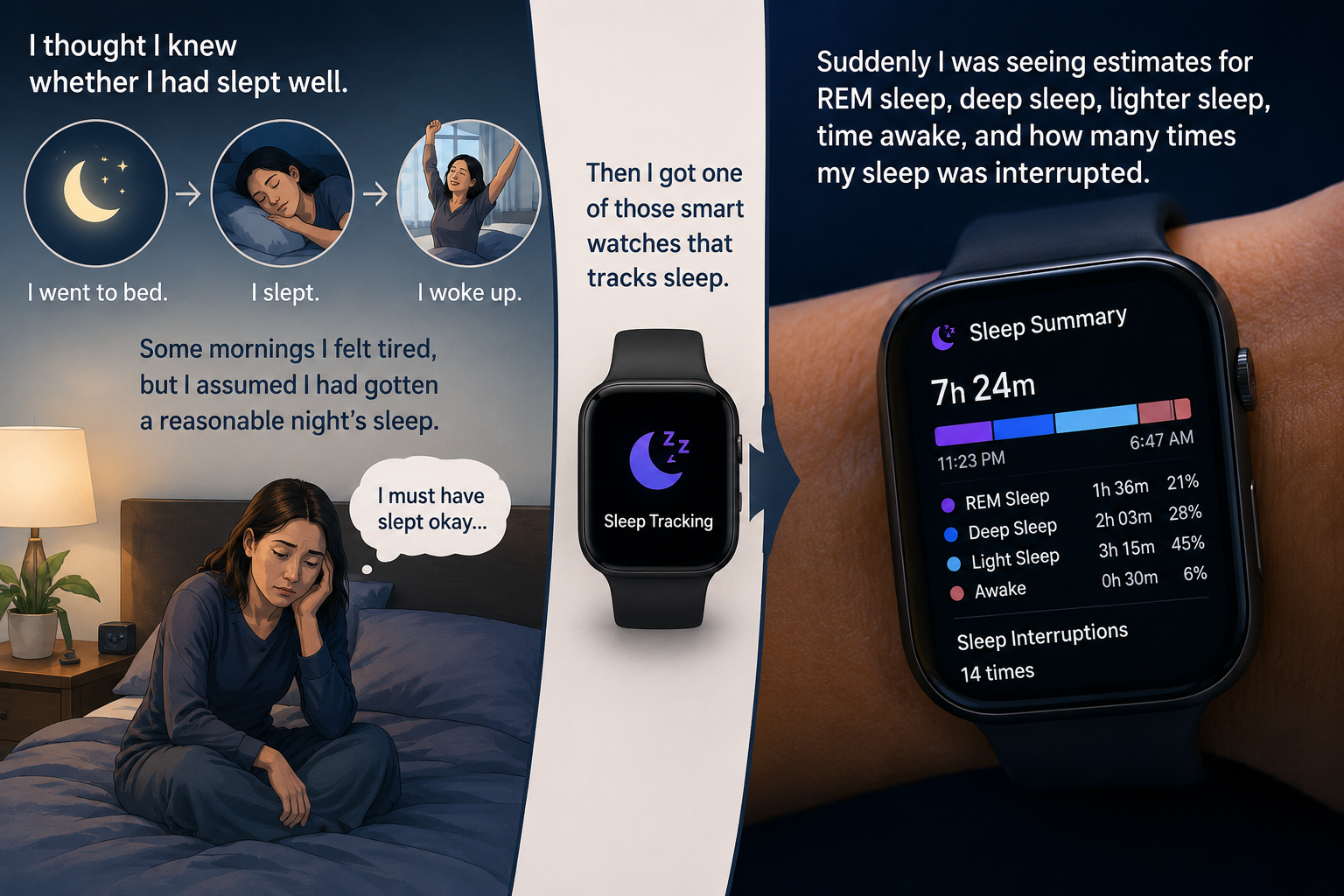
I thought I knew whether I had slept well.
I went to bed. I slept. I woke up. Some mornings I felt tired, but I assumed I had gotten a reasonable night's sleep.
Then I got one of those smart watches that tracks sleep.
Suddenly I was seeing estimates for REM sleep, deep sleep, lighter sleep, time awake, and how many times my sleep was interrupted.
And I was surprised.
I had no idea I was sleeping so poorly.
I could spend plenty of time in bed and still wake up feeling as though I hadn't truly rested.
The watch couldn't tell me why. Consumer sleep trackers aren't medical sleep studies, and they cannot diagnose a health condition or a Traditional Chinese Medicine pattern.
But mine did something valuable:
It made me start paying attention to what my nights actually looked like.
And that led to a much better question than simply:
“What can I take to help me sleep?”
The better question became:
Why Am I Not Sleeping Well?
Traditional Chinese Medicine approaches occasional poor sleep differently than simply looking for one universal “sleep herb.”
TCM looks at the whole traditional pattern.
Two people can both say, “I didn't sleep last night,” while describing completely different experiences.
One person cannot get to sleep.
Another falls asleep immediately but wakes repeatedly.
Another sleeps for hours but never feels restored.
Someone else sleeps reasonably well until stress enters the picture.
Those differences matter in Traditional Chinese Medicine.
Is This You? “My Body Is Exhausted, but My Mind Won't Shut Off.”
You were tired on the sofa.
You were tired brushing your teeth.
Then your head hits the pillow and suddenly your brain decides it is time to review your entire life.
Tomorrow.
Money.
Family.
Cleaning the cat box.
What lunches need packing.
The clothes that still need folding.
Something someone said three days ago.
Really, just about anything as your mind jumps from one topic to another.
You aren't trying to think about these things.
They simply won't stop coming.
Then you look at the clock:
“If I fall asleep right now, I can still get six hours.”
Then five.
Then four.
Then you start wondering whether you should just get up.
Within Traditional Chinese Medicine, a practitioner may consider traditional relationships involving the Heart, Shen (Mind/Spirit), Blood, Yin, Qi, Spleen, Liver and other characteristics depending on the complete presentation.
Chinese Formula to Learn About: An Shen Bu Xin Wan
An Shen Bu Xin Wan is traditionally associated with calming the Shen and supporting the Heart within its appropriate TCM pattern.
This may be a formula worth learning about when mental restlessness and difficulty settling are part of a broader traditional Heart/Shen presentation.
Learn About An Shen Bu Xin Wan Teapills
Recognizing one characteristic does not mean this formula is automatically appropriate. Compare your entire traditional pattern, ingredients and cautions.
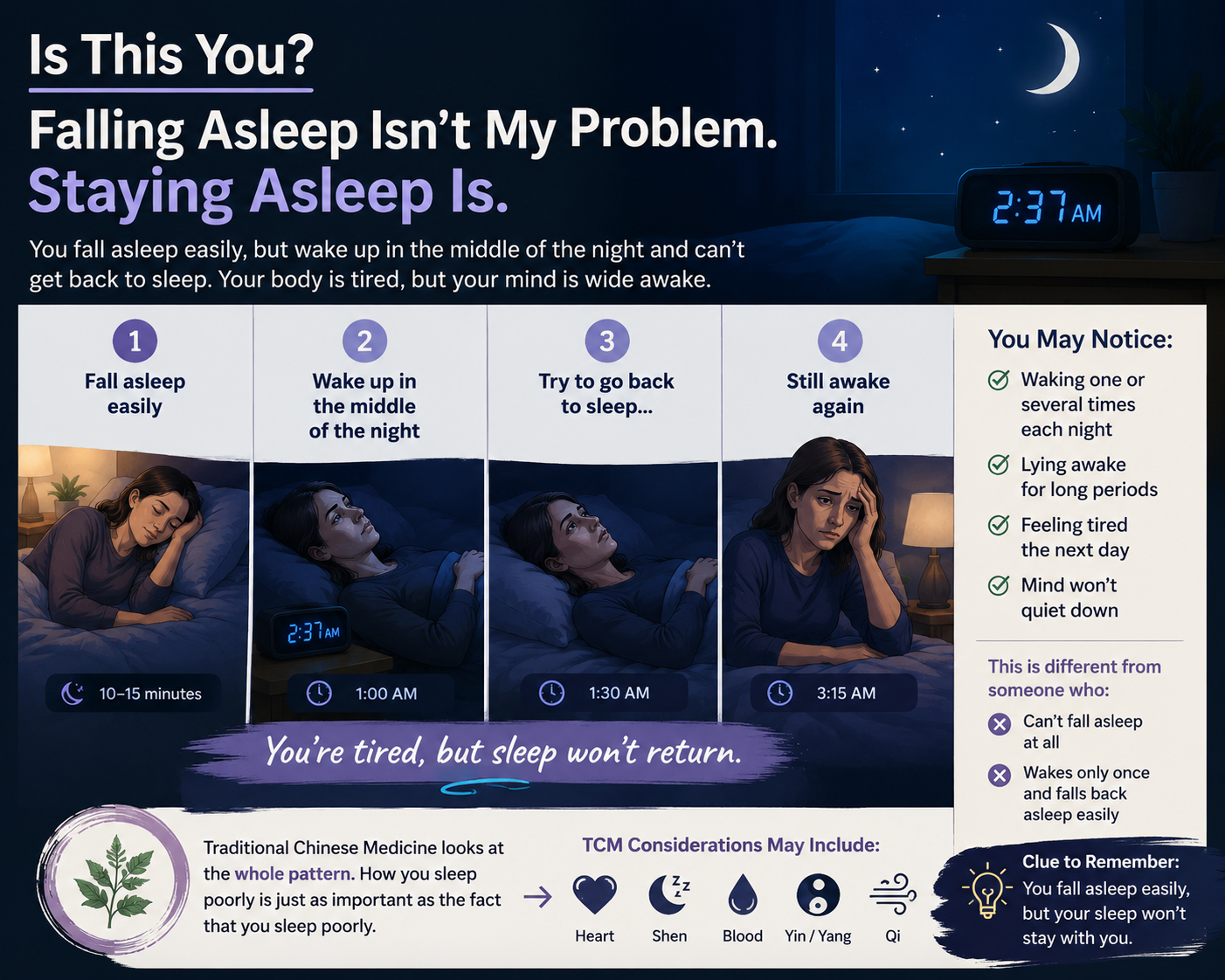
Is This You? “Falling Asleep Isn't My Problem. Staying Asleep Is.”
This was something my smart watch made much easier to see.
You may be asleep within 10 or 15 minutes.
But then you're awake.
You go back to sleep.
You're awake again.
Or perhaps you wake once in the middle of the night and that's it.
Your body is tired, but sleep simply won't return.
You lie there wondering:
“Why am I completely awake? I was exhausted yesterday.”
This is very different from the person who cannot fall asleep in the first place.
How you sleep poorly can be just as important as the fact that you're sleeping poorly.
Chinese Formula to Learn About: Suan Zao Ren Tang
Suan Zao Ren Tang is a well-known traditional Chinese formula built around Suan Zao Ren (Ziziphus seed). It is traditionally associated with nourishing the Liver and Heart, calming the Shen, and clearing deficient Heat within the appropriate traditional pattern.
It may be worth investigating when restless or interrupted sleep occurs alongside characteristics that fit its broader traditional pattern.
Is This You? “I'm Tired, but I Feel Restless and Can't Settle.”
You're tired enough to want sleep, but you don't feel settled enough to actually enjoy it.
You may toss and turn.
Your thoughts may wander.
You may feel internally restless or as though your body and mind never completely shift into nighttime mode.
Sometimes this is less about being wide awake and more about feeling that your Shen simply isn't settling.
Chinese Formula to Learn About: An Shui Wan
An Shui Wan is traditionally known as a Calm Sleep or Peaceful Sleep formula. Within Traditional Chinese Medicine, it is associated with traditional patterns involving restlessness and unsettled sleep.
Learn About An Shui Wan Teapills
Again, the important question is not simply:
“Did I sleep badly?”
It is:
“Does the complete traditional description of this formula sound like my pattern?”
Is This You? “I'm Tired, but My Mind Keeps Thinking and I Feel Depleted.”
This person doesn't necessarily describe feeling agitated.
Instead, they say things like:
“I am exhausted, but I still can't switch my brain off.”
“I feel completely drained.”
“I worry about everything.”
“Even when I sleep, I don't feel restored.”
Within Traditional Chinese Medicine, when mental overactivity occurs alongside the appropriate deficiency characteristics, a practitioner may examine traditional relationships among the Heart, Spleen, Qi, Blood and Shen.
Chinese Formula to Learn About: Gui Pi Wan
Gui Pi Wan, often translated as Return the Spleen Formula, is traditionally associated with tonifying Qi and Blood and nourishing the Heart and Spleen within the appropriate traditional pattern.
That makes it very different from simply choosing something because it says “calming” on the bottle.
If the only thing you recognize is “I don't sleep well,” keep reading. The deficiency pattern behind Gui Pi Wan is what makes the formula distinctive.
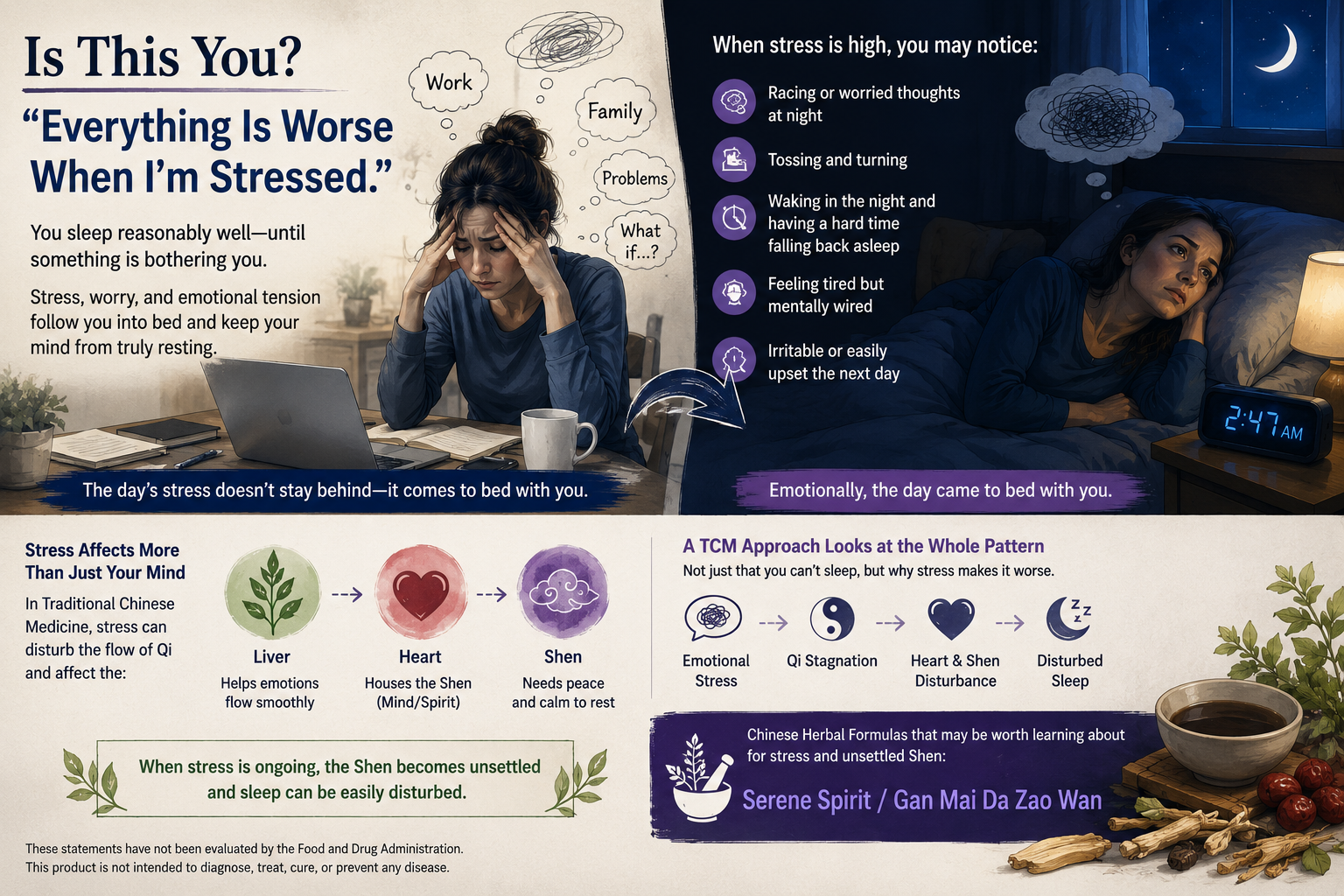
Is This You? “Everything Is Worse When I'm Stressed.”
Think about your best nights.
Now think about your worst ones.
Is there a connection?
Maybe you sleep reasonably well until something is bothering you.
An argument.
Money worries.
Work.
Family problems.
Something you cannot control.
Your body went to bed.
Emotionally, the day came to bed with you.
Traditional Chinese Medicine pays close attention to relationships among emotions, Qi, Liver, Heart and Shen when assessing the overall pattern.
The useful clue isn't simply that you are awake.
It's that your sleep changes when your emotional state changes.
Chinese Formula to Learn About: Serene Spirit – Gan Mai Da Zao Wan
Gan Mai Da Zao Wan, also sold as Serene Spirit, is traditionally used within patterns involving emotional restlessness and a disturbed Shen.
This is the type of formula to investigate when the traditional description includes emotional sensitivity or restlessness—not merely because you had a stressful Tuesday.
Explore Serene Spirit – Gan Mai Da Zao Wan
Is This You? “I Sleep, but I Never Feel Restored.”
This one can be especially frustrating.
Technically, you slept.
Your watch may even show several hours of sleep.
Yet when morning comes, your first thought is:
“I could sleep another five hours.”
You don't necessarily remember lying awake all night.
You simply don't feel restored by the sleep you got.
This is where I would be particularly careful about trying to pick a teapill from one symptom.
Traditional Chinese Medicine may consider patterns involving Qi, Blood, Yin, Yang, Heart, Spleen, Kidney, Liver or other systems depending upon the entire presentation.
Ask more questions:
Do I feel weak or wired?
Do I feel hot or cold?
Am I mentally exhausted?
Do I fall asleep easily?
Do I wake repeatedly?
How is my digestion?
What else changed when my sleep changed?
Feeling unrefreshed is important information, but it is not enough by itself to choose a traditional Chinese formula.
Is This You? “I'm Warm, Dry or Restless at Night.”
You want to sleep, but comfort never seems to arrive.
Covers on.
Covers off.
You may feel warmer at night, dry, restless, or simply unable to completely settle.
Now compare that person with someone who says:
“I'm always cold. I'm exhausted and feel completely depleted.”
Both want better sleep.
But from a Traditional Chinese Medicine perspective, those presentations may represent very different patterns.
Traditional concepts involving Yin, Yang, Heat and deficiency help distinguish among them.
Another Formula Category to Understand: Heart Yin / Shen Formulas
Traditional formulas such as Tian Wang Bu Xin Wan are associated with nourishing Heart Yin and Blood and calming the Shen in an appropriate Yin-deficiency pattern.
However, formula availability changes, and recognizing “I feel warm at night” is not sufficient reason by itself to select it.
Learn About the Traditional Tian Wang Bu Xin Wan Pattern
Sometimes the Biggest Clue Isn't in the Bedroom
This is one of the parts of Traditional Chinese Medicine that I find most interesting.
A practitioner may ask questions that initially seem unrelated to sleep.
How is your digestion?
Do you feel hot or cold?
Do you dream excessively?
Are you worried or mentally preoccupied?
Are you irritable?
Do you feel physically depleted?
Do you wake repeatedly?
Do you feel refreshed in the morning?
Did your sleep change as you got older?
The purpose isn't to collect random symptoms.
It is to see whether they form a recognizable traditional pattern.
Your poor sleep may be one piece of a much larger picture.
Which Traditional Sleep Pattern Sounds Most Like You?
| What You Notice | TCM Areas to Investigate | Formula to Learn About |
|---|---|---|
| Mind won't settle; mentally restless | Heart / Shen / Yin / Blood depending on full pattern | An Shen Bu Xin Wan |
| Restless or interrupted sleep | Liver / Heart / Shen / deficient Heat depending on full pattern | Suan Zao Ren Tang |
| Difficulty settling into peaceful sleep | Shen-focused traditional pattern | An Shui Wan |
| Depleted, worried, mentally overactive | Heart / Spleen / Qi / Blood pattern | Gui Pi Wan |
| Emotional stress and restlessness | Shen / Heart / emotional traditional pattern | Serene Spirit – Gan Mai Da Zao Wan |
| Warm, dry or restless with Yin-deficiency characteristics | Heart Yin / Blood / Shen pattern | Tian Wang Bu Xin Wan – learn about the pattern |
Important: This chart is an educational starting point, not a self-diagnosis tool. One characteristic does not identify a TCM pattern or determine which formula is appropriate.
Try This Tonight: Stop Looking Only at the Sleep Score
Your smart watch can be useful, but don't let one number decide whether you had a “good” or “bad” night.
For several nights, notice:
- Did I have trouble falling asleep or staying asleep?
- Was my mind racing?
- Did stress follow me into bed?
- Did I feel hot and restless or cold and depleted?
- Did I have lots of dreams?
- Did I wake repeatedly?
- Did I actually feel restored in the morning?
- What else was happening physically or emotionally that day?
Then look for repetition.
You may suddenly realize:
“Wait. I don't actually have trouble falling asleep. My problem is staying asleep.”
Or:
“I never noticed that my worst nights happen when I'm worried.”
Or:
“I'm sleeping, but I'm never waking refreshed.”
Or:
“My body is exhausted, but my mind simply will not shut down.”
Those observations are much more useful than simply saying:
“I need something for sleep.”
One Symptom Shouldn't Choose Your Teapill
This may be the most important thing to take away from this article.
If you recognize yourself in one of the descriptions above, don't immediately assume the formula listed beneath it is automatically the right product for you.
Use that formula as a place to start learning.
Click through and ask:
- What traditional pattern is this formula associated with?
- What other characteristics usually occur with that traditional pattern?
- What herbs are in the formula?
- What are the cautions?
- Does the complete traditional description sound like me—or did I recognize only one sentence?
That's a much more useful way to shop for Chinese herbal formulas.
Before You Buy Another Chinese Herbal Formula
Read beyond words such as “sleep,” “calm,” “peaceful,” or “relaxation.”
Look at the traditional pattern.
Look at the ingredients.
Look at the accompanying traditional characteristics.
Read the cautions.
And if you're uncertain, work with a qualified practitioner who can help identify the appropriate traditional pattern.
The goal isn't to find the strongest Chinese herb for sleep.
The goal is to understand why your sleep looks the way it does.
Once I started looking at sleep that way, the numbers on my watch became much more useful.
They weren't giving me a diagnosis.
They were making me ask better questions.
And sometimes asking the right question is where finding the right traditional approach begins.
Important Safety Information
Consumer smart watches and sleep trackers provide estimates and are not substitutes for medical sleep testing or diagnosis.
Persistent or worsening sleep problems, significant daytime sleepiness, loud snoring or gasping during sleep, or other concerning symptoms should be discussed with an appropriate healthcare professional.
Terms such as Heart Blood, Shen, Qi, Yin, Yang, Liver, Spleen and deficiency describe traditional concepts within Traditional Chinese Medicine. They are not Western medical diagnoses.
Chinese herbal formulas should be selected with attention to their ingredients, cautions, traditional pattern and individual circumstances. Consult an appropriate healthcare professional before using herbal supplements if you take medications, have an ongoing medical condition, are preparing for surgery, or are pregnant or nursing.
PubMed Research & Further Reading
- TCM Pattern Classification and Sleep
- Chinese Herbal Medicine for Sleep – Systematic Review
- Suan Zao Ren Tang and Sleep Quality
- Chinese Herbal Medicine for Sleep – Updated Clinical Evidence
- Zao Ren An Shen – Systematic Review and Meta-Analysis
- Zao Ren An Shen – Randomized Controlled Trial
- Traditional Chinese Medicine and Sleep – 2025 Umbrella Review
These statements have not been evaluated by the Food and Drug Administration. Herbal products are not intended to diagnose, treat, cure, or prevent any disease.