Clean Herbs Explained: How to Know What You’re Really Buying
Posted by 1st Chinese Herbs Research Team on Apr 15th 2026
The 2026 Guide to Sourcing Clean TCM: How to Read a Lab Report Before You Buy
Not every herb sold online is tested the same way.
And when you are buying botanicals for your wellness routine, that matters.
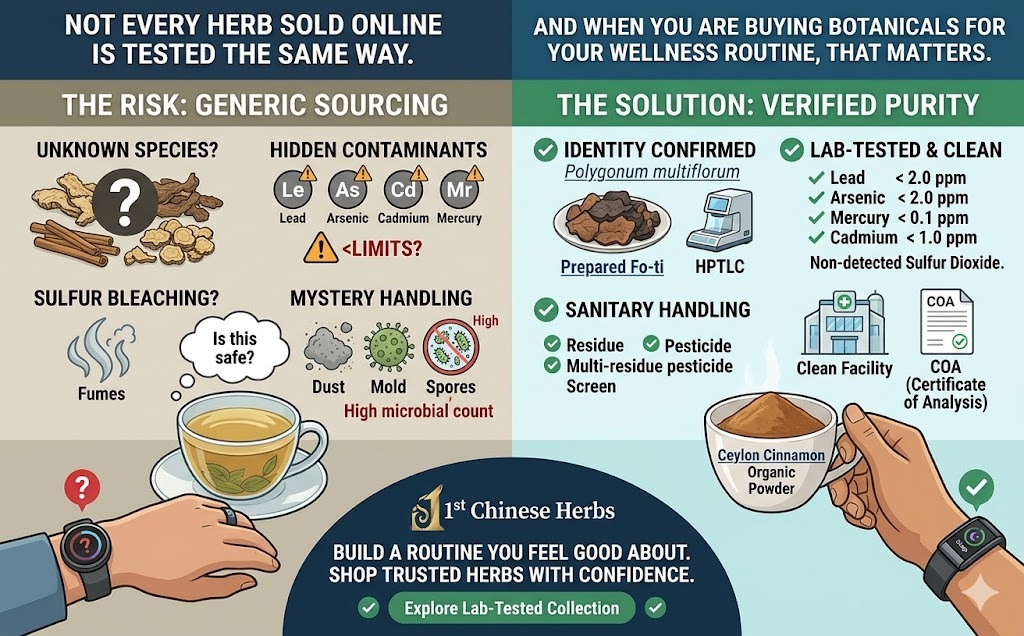
In today’s herbal market, words like natural, premium, and organic sound reassuring—but they do not always tell you what you really need to know. The clearest proof of quality is often found in one document: the Certificate of Analysis (COA).
Quick Answer: What Is a COA?
A Certificate of Analysis is a lab report that helps verify an herb’s identity, purity, and safety. It can show whether a product matches the correct plant species and whether it has been screened for contaminants such as heavy metals, microbes, and pesticide residues. View a sample Certificate Of Analysis
If you have ever wondered how to tell the difference between a carefully sourced herb and one that only looks good on the label, this guide will walk you through what to look for, what to avoid, and how to shop with more confidence.
that is an important signal to slow down and ask more questions.
Why “Organic” Is Only the Starting Point
Organic certification can be meaningful, but it does not answer every quality question a customer should ask. Herbs are agricultural products. They are grown, harvested, dried, processed, packed, and stored—and every one of those steps affects quality.
That means an herb can be marketed as high quality and still leave out important details about identity testing, contamination screening, or post-harvest handling.
In other words: organic growing practices are helpful, but lab verification gives you a deeper look at what you are actually buying.
The 3 Pillars of a Clean TCM Herb
1. Identity
First, the herb needs to be the correct species and plant part. This matters because similar-looking herbs can be mistaken for one another, and substitutions can happen if sourcing is not carefully controlled.
2. Safety
The herb should be screened for common contaminants such as heavy metals, microbial activity, and pesticide residues. This is one of the most important reasons customers ask for a COA.
3. Purity
Purity includes whether the herb has been handled properly after harvest and whether anything unwanted has been introduced during processing, storage, or transport.
Simple rule: a clean herb should be correctly identified, responsibly handled, and supported by testing that helps verify safety and purity.
How to Read a Herbal Lab Report Step by Step
You do not need to be a practitioner or lab technician to understand the basics. Start with these checkpoints.
Step 1: Confirm the Herb Name
Look for the common name, pinyin name if relevant, and botanical name. The lab report should clearly identify what is being tested so there is no confusion about the product.
Step 2: Look for a Lot Number
A useful COA is tied to a specific batch. If there is no lot number or traceable batch information, it is harder to know whether the report actually matches the herb being sold.
Step 3: Review the Safety Panel
Look for screening categories such as heavy metals, microbiological testing, and pesticide residue. These are key quality markers customers care about most.
Step 4: Check the Result Style
Good reports are usually specific. They may list numeric values, acceptable limits, pass/fail against a stated specification, or terms such as non-detected where appropriate.
Step 5: Watch for Missing Information
If the report is vague, incomplete, outdated, or does not appear connected to a batch, ask for clarification before you buy.
What a COA Commonly Screens For
| Testing Area | Why It Matters |
|---|---|
| Identity Verification | Helps confirm the herb matches the correct species and plant material. |
| Heavy Metals | Helps assess contamination risk from soil, water, or processing environments. |
| Microbiological Testing | Provides insight into sanitation, drying, and storage conditions. |
| Pesticide Screening | Helps identify unwanted agricultural residues. |
| Processing Residues | Can help reveal treatments that may affect quality or customer preference. |
4 Red Flags to Watch for Before You Buy
1. A Supplier Says “Tested” but Cannot Show the Report
Marketing language is not the same as documentation. If testing is important enough to mention, it should be possible to discuss what was tested and how.
2. The Report Looks Generic
If the COA has no lot number, no product identification, or no clear date, it may not give you meaningful batch-level confidence.
3. Only One Category Is Tested
A single safety check does not tell the whole story. Comprehensive quality comes from looking at multiple areas, not just one.
4. Everything Is Hidden Behind Vague Language
Phrases like “meets standards” are less helpful when no standards are named. Better information is specific, traceable, and easy to explain.
Helpful buying mindset: when a company is proud of its quality, it usually becomes easier—not harder—to understand how that quality is verified.
What You Should Know Before Ordering
Most shoppers are not trying to become lab experts. They simply want confidence that the herbs they bring into their home are thoughtfully sourced and responsibly handled.
These are the real questions customers ask:
- Is this actually the herb listed on the label?
- Has it been screened for contaminants?
- Can the seller explain the quality process clearly?
- Does the company sound transparent or vague?
If your supplier can answer those questions with clarity, that is a very strong sign.
The 1st Chinese Herbs Difference
At 1st Chinese Herbs, we believe trust is built through clarity, not confusion. That is why we focus on carefully sourced botanicals, quality-centered relationships, and educational support that helps customers feel more confident in their choices.
We are not interested in simply listing herbs online and hoping people figure it out on their own. We want customers to understand what they are buying, why quality matters, and how to build a routine they feel good about.
Why customers shop with us
✔ Family-owned since 1994
✔ Carefully sourced herbs
✔ Lab-tested quality focus
✔ Education-first customer support
How to Shop Smarter From This Point Forward
If you are buying herbs online, do not stop at the product title or the phrase “premium quality.” Look deeper.
Ask:
- Can I identify the exact herb clearly?
- Does the company explain how quality is verified?
- Is there traceability tied to batches or lot numbers?
- Does the overall presentation inspire confidence?
Customers who learn how to ask better questions often make better buying decisions. That matters not only for peace of mind, but for long-term trust in the supplier they choose.
Shop Trusted Herbs With More Confidence
If purity, traceability, and transparency matter to you, start with herbs from suppliers who take quality seriously.
- Shop Hu Zhang (Japanese Knotweed)
- Shop Reishi Mushroom
- Shop Cordyceps Mushroom
- Explore Herbal Wellness Routines
Shop Trusted Herbs
Frequently Asked Questions
What is a Certificate of Analysis for herbs?
A Certificate of Analysis is a lab document used to help verify an herb’s identity, purity, and safety for a specific batch.
Why should I care about a COA when buying herbs?
A COA can give you more confidence that the product has been reviewed for important quality markers rather than relying on claims alone.
Does organic certification replace lab testing?
Not necessarily. Organic standards and lab testing answer different questions. Both can be helpful, but they are not the same thing.
What if a supplier will not provide much detail?
That does not automatically mean the product is poor, but it does mean you have less information to evaluate. When quality matters, clarity matters too.
The Bottom Line
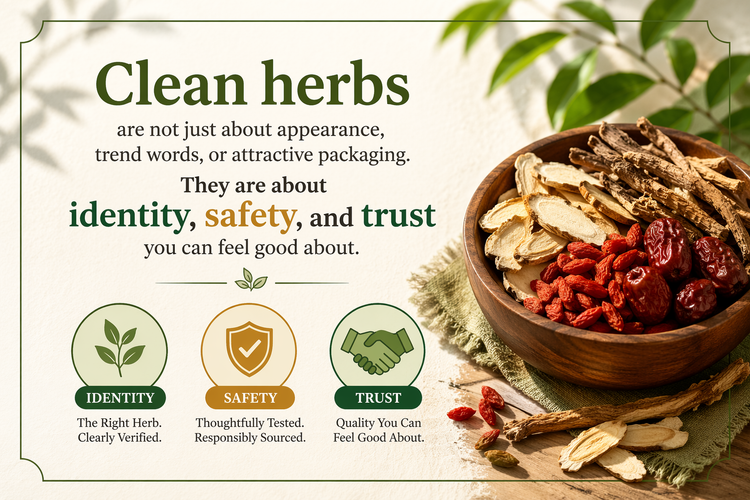
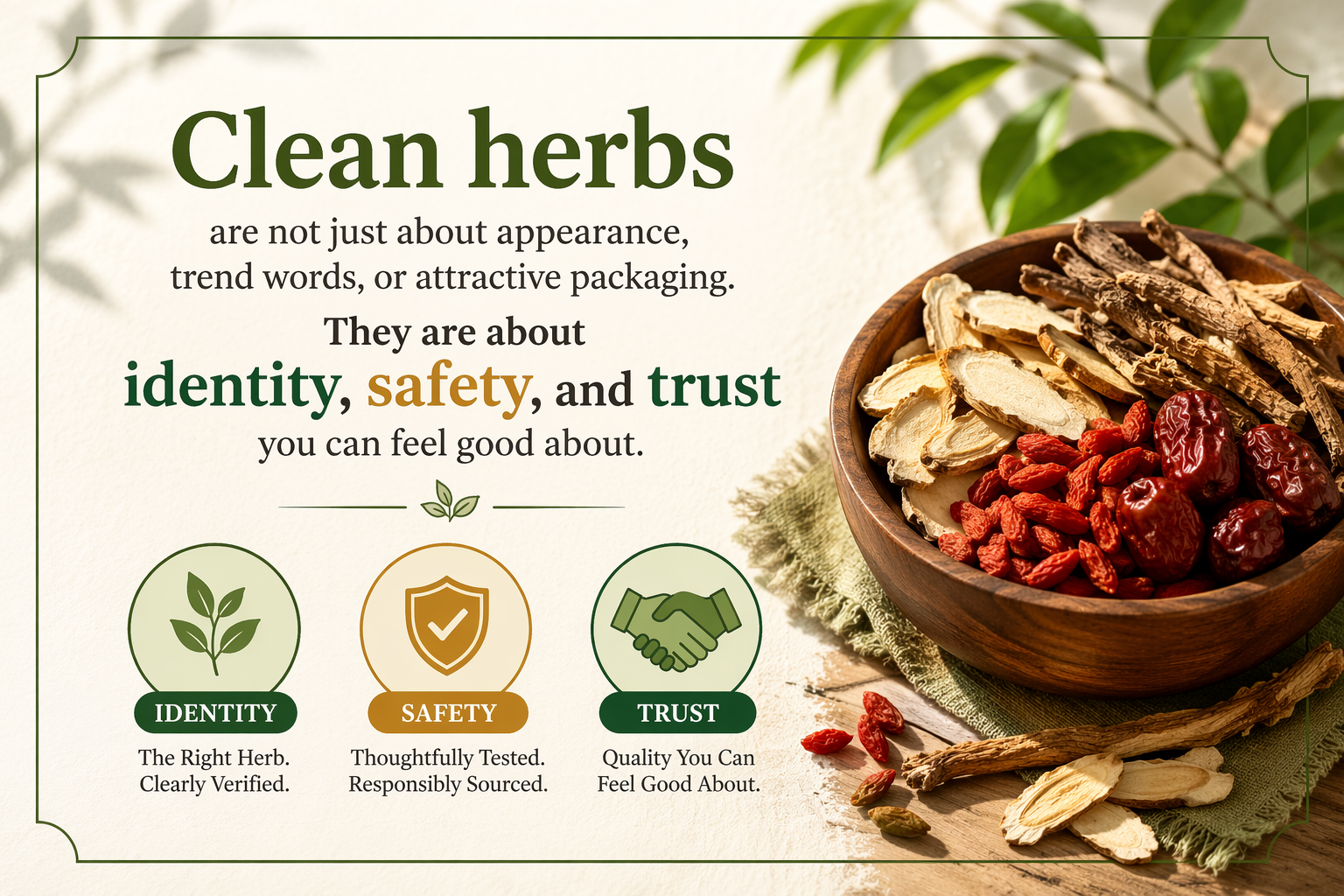
Clean herbs are not just about appearance, trend words, or attractive packaging. They are about identity, safety, and trust you can feel good about.
Once you understand what a lab report is meant to show, you are in a stronger position to choose herbs more wisely and buy from suppliers with greater confidence.
Do not guess. Learn what to look for, ask better questions, and choose herbs from sources you trust.
These statements have not been evaluated by the Food and Drug Administration. Products sold by 1st Chinese Herbs are not intended to diagnose, treat, cure, or prevent any disease. This content is provided for educational purposes only.