

The Great Rabbit Heist: How My Kitchen Herbs Saved the Garden (And Nearly Started a Backyard Spice War)
Posted by Sarah Johnson on May 28th 2026
The Great Rabbit Heist: How My Kitchen Herbs Saved the Garden (And Nearly Started a Backyard Spice War)
There is a very specific type of heartbreak only gardeners understand.
It usually happens early in the morning.
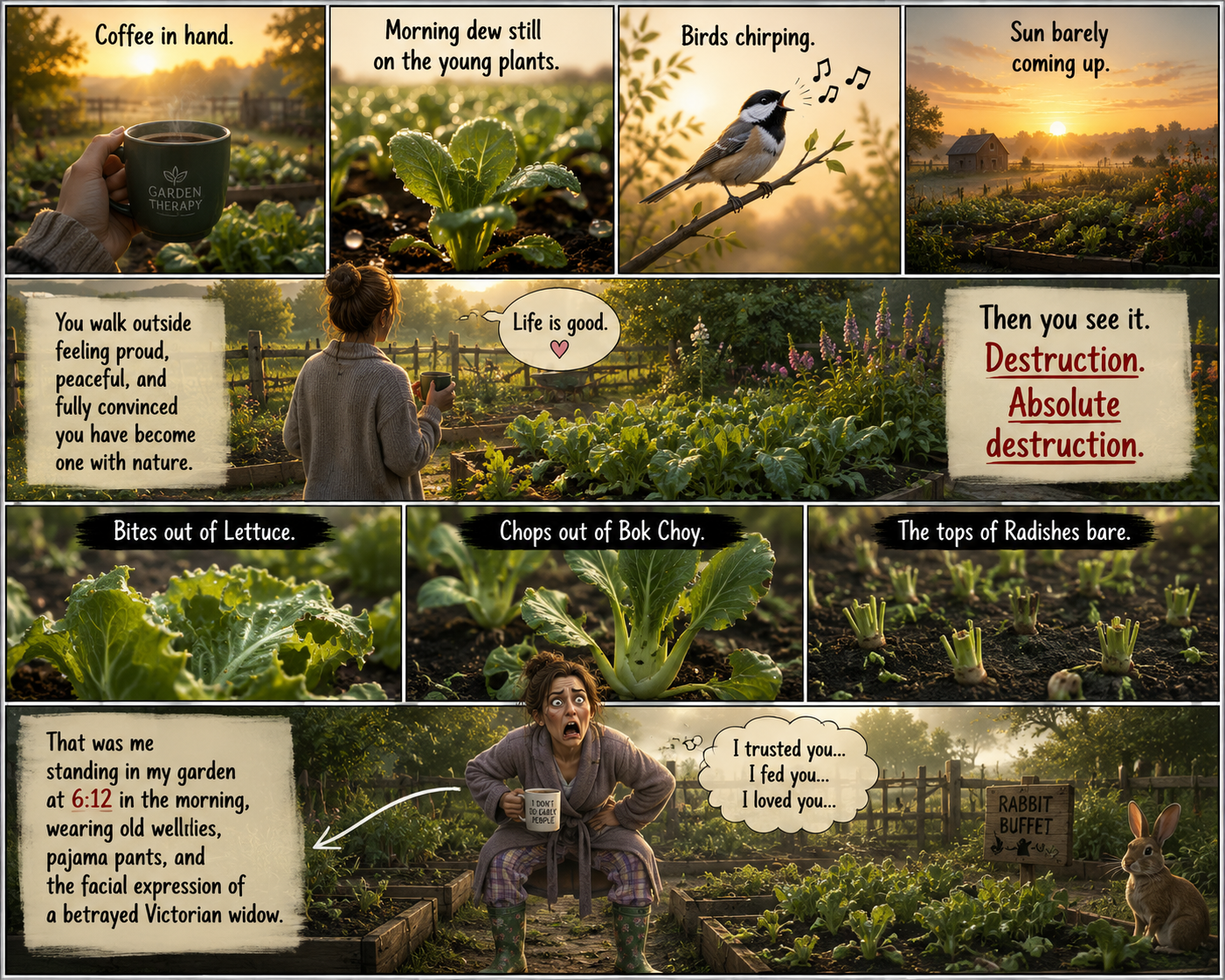
Coffee in hand. Morning dew still on the young plants. Birds chirping. Sun barely coming up.
You walk outside feeling proud, peaceful, and fully convinced you have become one with nature.
Then you see it. Destruction.Absolute destruction. Bites out of lettuce, Chops out of Bok Choy, and the tops of Radishes bare.
That was me standing in my garden at 6:12 in the morning, wearing old wellies (boots), pajama pants, and the facial expression of a betrayed Victorian widow.
Just 24 hours earlier, my raised beds looked incredible.
The lettuce was thick and buttery.
The bok choy looked like it belonged in an expensive organic grocery store.
The radish greens were thriving so aggressively I was mentally preparing to brag about them to strangers.
I was basically the king of tiny vegetable kingdom. Then came the rabbits.
The Morning I Realized Nature Is Rude
At first, I honestly thought something bizarre had happened overnight.
The lettuce looked shaved down with surgical precision. The radishes had been stripped to emotional
support stems. And the bok choy, which is my all time favorite....Gone. Not damaged. Not nibbled. Gone.
It looked like a tiny furry lawnmower with anger issues had rolled through the garden at midnight.
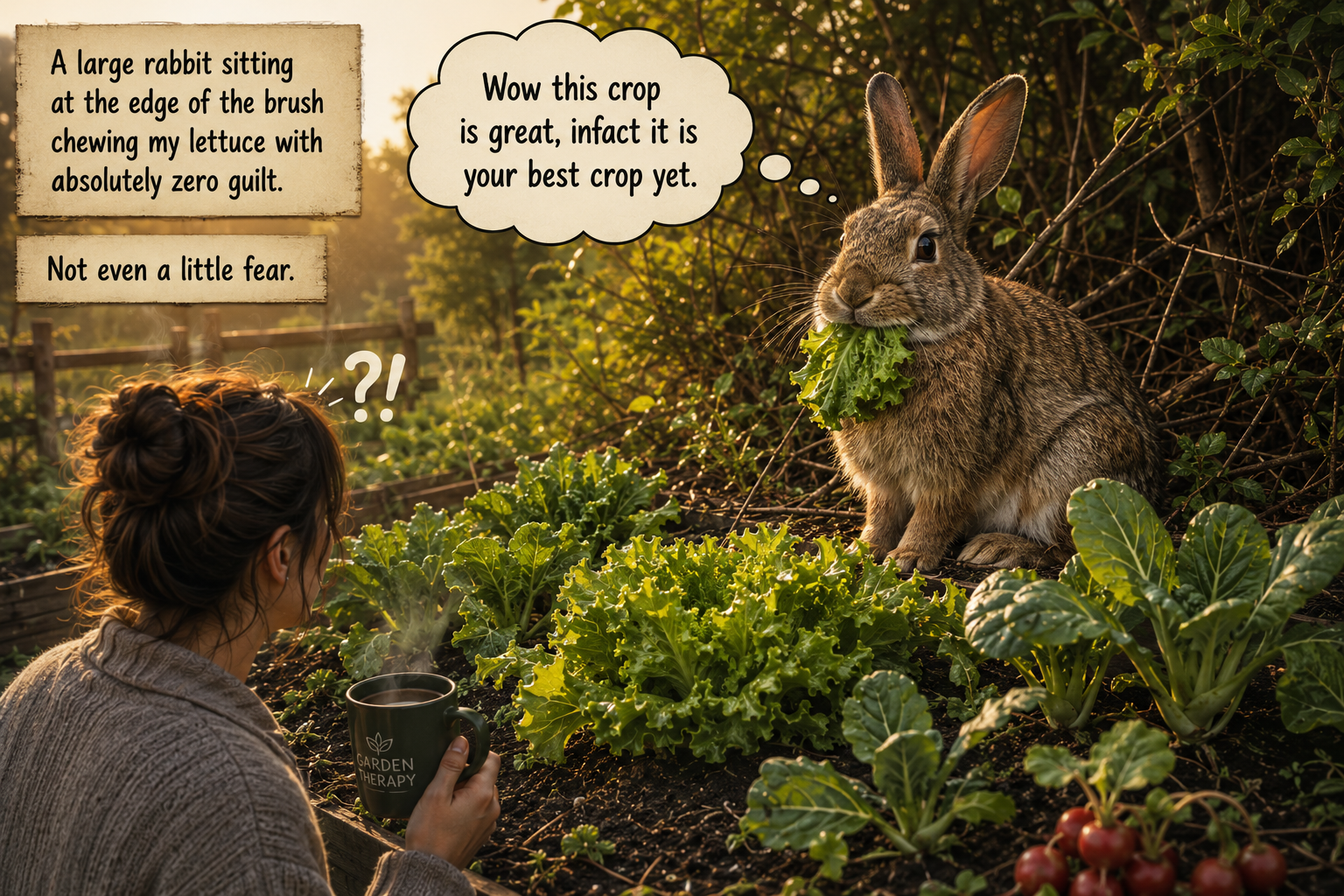
Then I saw him. A large rabbit sitting at the edge of the brush chewing my lettuce with absolutely zero guilt.
Not even a little fear. He looked directly at me while chewing as if to say:
“Wow this crop is great, infact it is your best crop yet.”
I have never felt so disrespected by wildlife in my entire life.
Why I Refused to Use Harsh Chemicals
Now, most people in this situation jump into the truck and head straight to the garden center.
But here is the problem with living deep in the country: A “quick trip into town” is not quick.
It is: a 1.5 hour drive, a quarter tank of gas, a quick stop into the local coffee shop, and three hours of your life disappearing into the void.
All for one bottle of chemical rabbit spray with a label that sounds vaguely threatening.
Yeah, that just isn't me, can't do it. I did not want toxic chemicals around food I planned to eat.
I also did not want to hurt the rabbits. Annoy them? You Betcha! Absolutely. Offend them spiritually?
Hopefully. But hurt them? No.
I simply wanted them to stop treating my garden like an all-you-can-eat organic buffet.
So instead of driving into town, I did what any frustrated country gardener with too many herbs would do:
I became an herbal mad scientist.
The Real Reason Rabbits Hate Certain Herbs
Rabbits survive because their senses are ridiculously sensitive.
Especially:
-
smell
-
taste
-
environmental awareness
They LOVE:
-
tender greens
-
mild flavors
-
sweet young vegetables
They HATE:
-
spicy scents
-
pungent oils
-
sharp aromatics
-
overwhelming smells
That was my opening. Instead of poisoning the rabbits, I decided to create the worst dining experience they had ever encountered.
The Herbal “Absolutely Not” Blend
After digging through my pantry and herb shelves like a slightly sleep-deprived mad woman, I landed on four powerhouse ingredients.
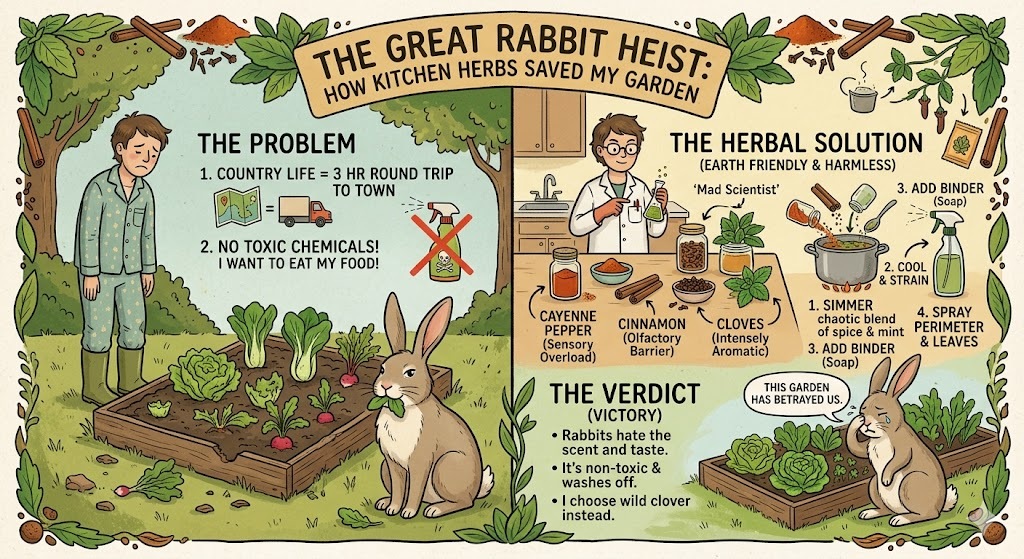
Cayenne Pepper
The heavy hitter. Cayenne contains capsaicin, which creates a spicy sensation rabbits absolutely hate on their noses and mouths. Humans call it “spicy.” Rabbits call it: “This garden has betrayed us.”
Cinnamon
Strong, warming, and intensely aromatic.
Cinnamon disrupts a rabbit’s ability to comfortably sniff around your vegetables.
Plus your garden briefly smells like:
-
Christmas cookies
-
emotional support tea
-
and mild vengeance
Which is honestly delightful.
Cloves
Cloves smell powerful to humans. To rabbits? They smell like danger wrapped in confusion.
Cloves create a strong aromatic barrier many critters simply avoid altogether.
Mint
Humans: “Mint smells fresh and relaxing.”
Rabbits: “Something is deeply wrong here.”
Peppermint and spearmint contain strong volatile oils that many garden pests dislike intensely.
The Goal Was Never To Kill Anything
This part matters.
I was not trying to poison wildlife.
I was simply trying to convince rabbits:
-
my lettuce was no longer enjoyable
-
my garden had become emotionally exhausting
-
and wild clover somewhere else looked much safer
And surprisingly? It worked.
How To Make The Herbal Rabbit Spray
If your backyard currently resembles a rabbit-owned salad franchise, here is the recipe.
Ingredients
-
2 tablespoons cayenne pepper
-
2 tablespoons ground cinnamon
-
1 tablespoon ground cloves
-
large handful fresh mint leaves
(or 2 tablespoons dried mint) -
1 quart water
-
a few drops biodegradable dish soap
Step 1: Simmer The Chaos
Bring the water to a boil.
Add:
-
cayenne
-
cinnamon
-
cloves
-
mint
Reduce heat and simmer 10–15 minutes.
At this point your kitchen will smell like:
-
holiday cookies
-
spicy noodles
-
and herbal warfare
Step 2: Cool Completely
Turn off the heat and let everything cool down fully.
This allows the aromatic oils to continue infusing into the liquid.
Step 3: Strain Carefully
Do NOT skip this step unless your dream is permanently clogging spray bottles.
Use:
-
cheesecloth
-
fine mesh strainer
-
coffee filter
Anything that removes spice particles.
Step 4: Add Dish Soap
Just a few drops.
This helps the herbal mixture stick to plant surfaces instead of instantly sliding off.
Step 5: Spray The Garden
Mist:
-
garden borders
-
soil edges
-
raised bed frames
-
surrounding vegetation
Avoid soaking edible leaves immediately before harvest.
Garden Safety Note: This homemade garden spray is intended as a natural deterrent only. Always test on a small plant area first, avoid spraying right before harvest, wash vegetables well before eating, and reapply after rain or heavy watering.
The Rabbit’s Reaction Was Better Than Television
The next morning I walked outside fully prepared for more destruction. Instead, What Did I See?
The rabbit was sitting near the lettuce bed looking deeply offended.
He sniffed the air.
His ears twitched.
He rubbed his nose dramatically.
Then he turned around and left.
Not a single bite taken.
I am not saying the rabbit held a grudge afterward…
…but he definitely looked like he was considering filing a formal complaint.
Why This Herbal Spray Actually Works
One of the biggest misconceptions about natural gardening is that everything needs to:
-
kill pests
-
poison insects
-
destroy wildlife
That is not always necessary.
Sometimes the smartest solution is simply making your plants:
-
less appealing
-
more confusing
-
too aromatic
-
too irritating to bother with
Nature usually chooses the easiest meal available.
You simply want your garden removed from the menu.
Other Animals That Often Dislike Aromatic Herbs
Many gardeners report strong-smelling herbs may help discourage:
-
rabbits
-
squirrels
-
chipmunks
-
deer
-
raccoons
Especially herbs with:
-
spicy oils
-
menthol
-
clove oils
-
pungent aromatics
What You Need To Know
Commercial deterrent sprays are often:
-
overpriced
-
heavily diluted
-
filled with mystery ingredients
-
washed away quickly
Meanwhile many people already have effective aromatic herbs sitting:
-
in kitchen cabinets
-
tea drawers
-
spice racks
-
herbal pantries
The solution may literally already be in your house.
Bonus Tip: Reapply After Rain
Rain weakens almost every natural deterrent.
For best results:
-
reapply after storms
-
spray during dry evenings
-
refresh weekly during heavy rabbit season
Final Thoughts From One Very Tired Gardener
There is something oddly satisfying about solving a garden problem without:
-
harsh chemicals
-
expensive sprays
Stock Your Herbal Garden Cabinet
Whether you are brewing tea, making natural garden sprays, or building a more self-reliant home apothecary, quality herbs matter. Keep useful pantry herbs like mint, cloves, cinnamon, and aromatic botanicals on hand so you are ready before the rabbits discover your lettuce.