
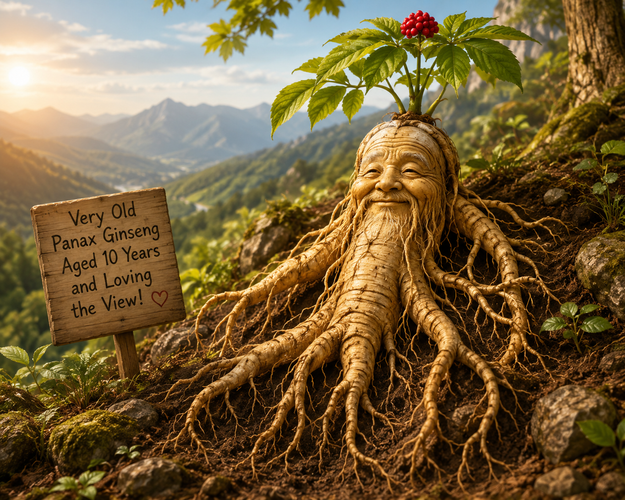
Dear Human...(Non-Green Life Form)
Posted by 1st Chinese Herbs Guest Writer Jim and the 1st Chinese Herbs Research Team on Jul 21st 2026
Dear Human: A Grumpy Old Ginseng Root Has Something to Say (To A Non-Green Life Form)
Submitted by longtime customer Jim and lightly edited by the 1st Chinese Herbs team.
One of the greatest joys of running 1st Chinese Herbs isn't simply selling herbs—it's getting to know the people who love them. Over the years, customers have shared family traditions, favorite recipes, fascinating stories, and thoughtful questions that remind us herbalism is as much about community as it is about plants...
A few weeks ago, our longtime customer Jim sent us something that had everyone smiling. Instead of asking a question about ginseng, he imagined what would happen if an old ginseng root decided it had finally reached its limit with humans and wrote us a letter.
By the time we finished reading it, we were laughing out loud.
After thanking Jim for brightening our day, we asked if we could share his creation with everyone who visits the 1st Chinese Herbs blog.
His answer was immediate.
"Absolutely. I think other herb lovers will get a kick out of it."
So, with Jim's permission—and only a few editorial changes for readability—we're sharing his wonderfully creative email below.
From: A Very Old Panax Ginseng Root
To: Every Human Who Thinks They Understand Ginseng
Subject: We Need To Talk…
Dear Human,
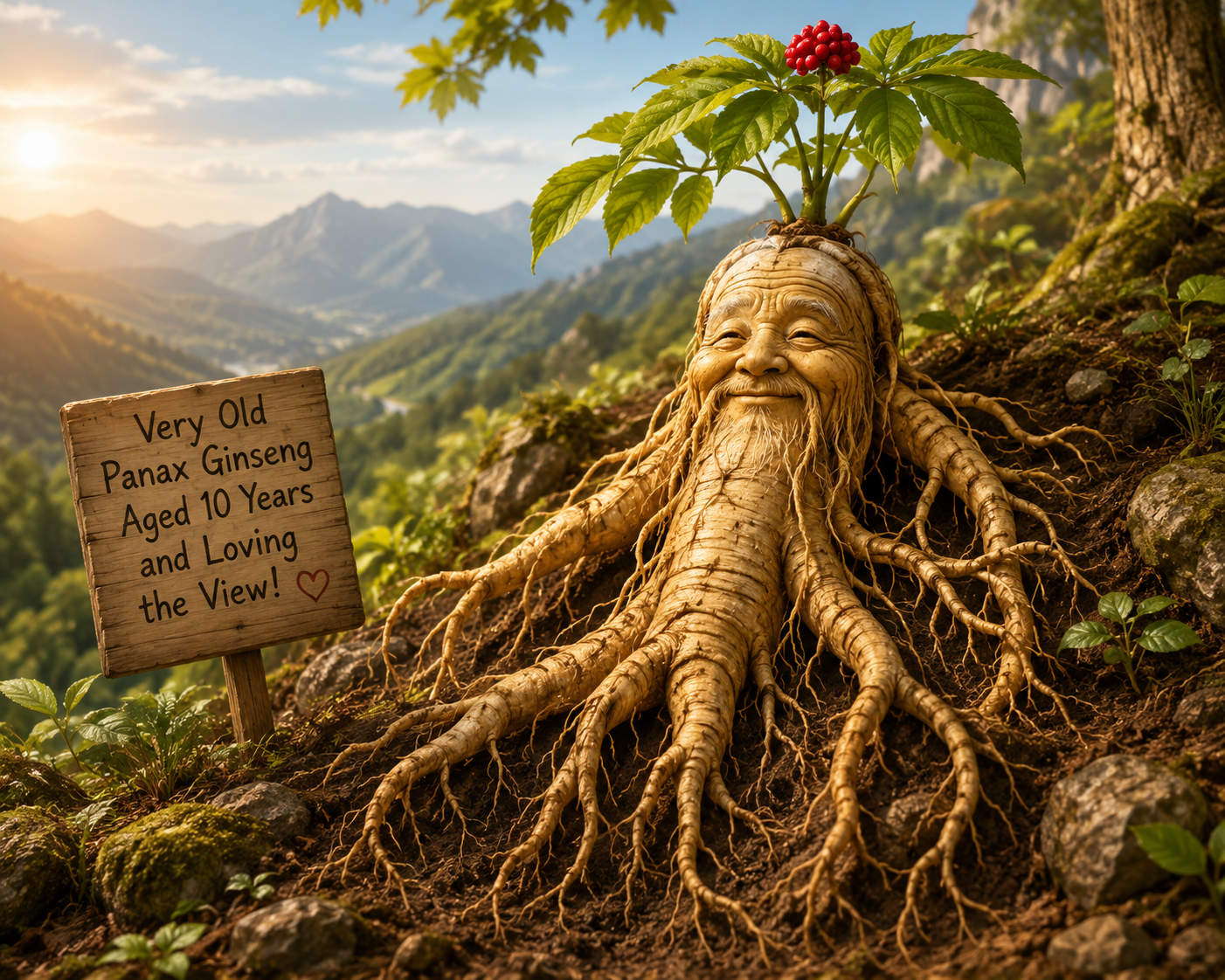
Allow me to introduce myself. I'm a very old Panax ginseng root.
Ten years old. Yes... I know what you're thinking. "You don't look a day over six."
Flattery will get you everywhere. Now... Before we continue, I'd like to address the obvious.
Yes. I'm grumpy. Very grumpy. I've earned it.
You humans celebrate birthdays with cake, balloons, and presents.
I celebrated mine by having another boulder roll downhill and park itself six inches from my face.
You've enjoyed vacations. I've enjoyed ten consecutive years of dirt. You have comfortable beds.
I have...rocks. You complain when your Wi-Fi goes down for five minutes. I spent an entire decade
underground without so much as a decent sunrise. Perspective, dear human. Perspective.
Mind you, life on a quiet mountainside isn't all bad. The birds sing. The trees whisper in the wind.
The rain smells wonderful. Until an earthworm decides your left side would make an excellent shortcut.
Or a squirrel starts digging directly above your head because it forgot where it buried lunch.
Or another root decides your personal space is completely optional.
After ten years... One develops opinions. Strong opinions.
Which brings me to something I've never quite understood about your species.
When I was young... Nobody paid much attention to me. I was smooth. Straight.
Rather ordinary. Frankly... I looked like every other youngster growing on the hillside.
The rabbits ignored me. The birds ignored me. Even the squirrels looked at me and thought...
"Nothing special here."
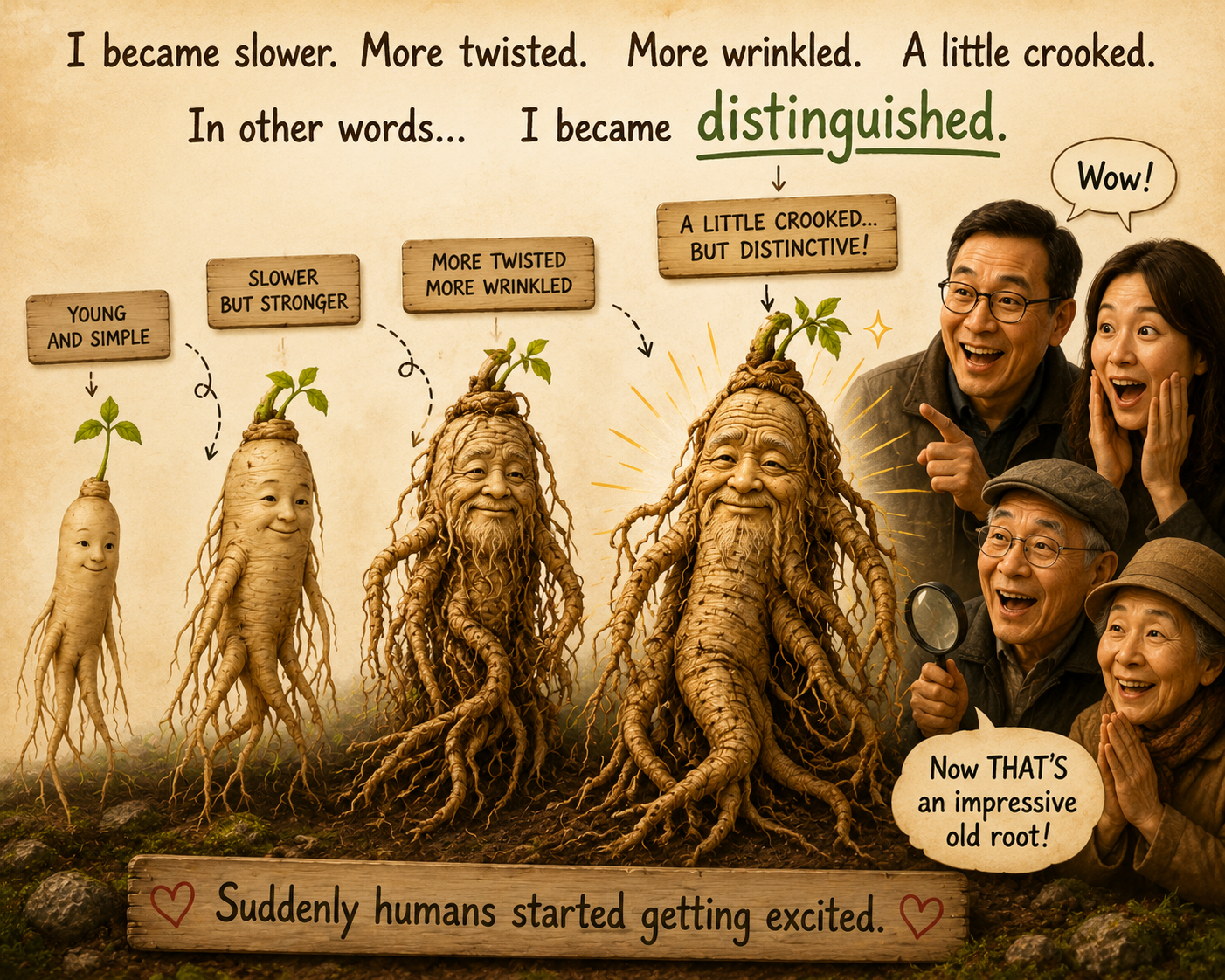
Then something remarkable happened. I became older. Slower. More twisted. More wrinkled.
A little crooked. In other words... I became distinguished.
Suddenly humans started getting excited.
One pointed and whispered... "Look at that old root!" Another replied... "Now that's beautiful."
I must admit... I found this endlessly amusing.
You humans spend billions of dollars every year trying to erase wrinkles.
Creams. Lotions. Serums. Miracle treatments.
Yet when you discover an old ginseng root with wrinkles, twists, character, and years of slow growth...
You admire every single one. Humans are wonderfully confusing creatures.
Personally... I think you've had it backwards all along.
Perhaps wrinkles simply mean you've collected enough stories worth telling.
Mine certainly have.
What Can We Learn From a Grumpy Old Root?
Jim's fictional letter is funny, but it also contains an interesting reminder.
Whether we're talking about herbs, trees, or people, nature doesn't rush quality.
Many traditional herbs are appreciated not because they grew quickly, but because they were carefully cultivated, properly identified, harvested at the appropriate time, and handled with respect.
That doesn't mean every older herb is automatically better, but it does remind us that quality is often the result of patience rather than speed.
Our grumpy friend isn't finished talking yet.
Unfortunately for us...
He has a few more complaints.
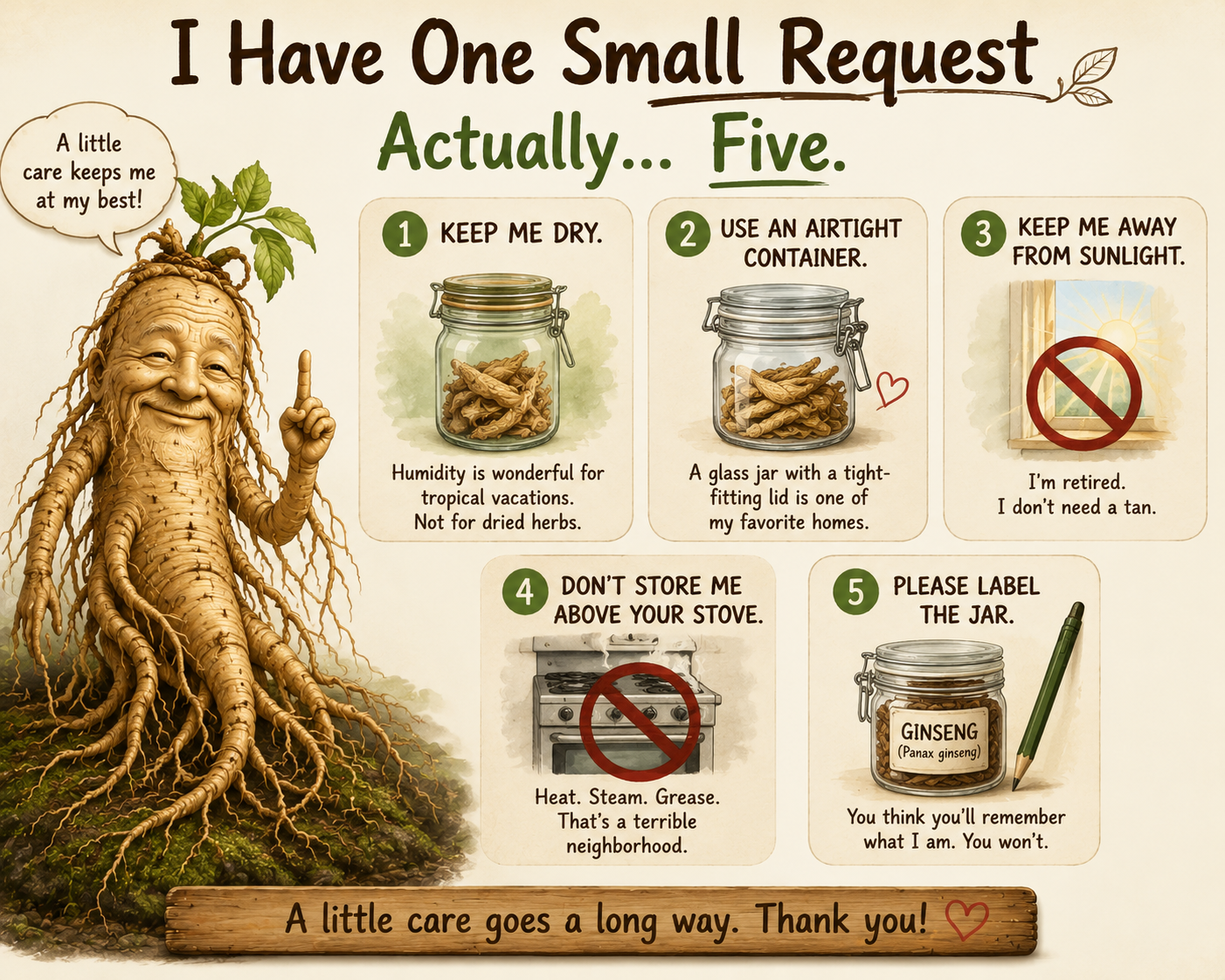
I Have One Small Request...
Actually... Five.
Now then... Since we've become acquainted, I'd like to ask you for one small favor.
Nothing extravagant. I'm not asking for my own room. Or mountain views.
Or classical music while you prepare your tea.
Although...if Vivaldi happens to be playing, I won't complain.
Much.
I simply have five very reasonable requests. They're easy. They're practical.
And if you follow them, I'll remain much happier for a much longer time.
Ready?
Request #1 — Please Keep Me Dry
I spent years surviving mountain rains, heavy snow, changing seasons, and enough humidity to make mushrooms jealous.
Now that I've finally retired, I'd really appreciate staying dry.
Moisture is wonderful for living plants.
Not so wonderful for dried herbs.
A little unwanted humidity can gradually affect aroma, texture, and overall quality.
Think of me as an elderly gentleman.
I don't enjoy damp basements either.
A cool, dry cupboard works beautifully.
Simple.
Elegant.
Much appreciated.
Request #2 — Give Me a Proper Home
Let's discuss containers.
Specifically... Those flimsy plastic bags with the corners folded over.
No. Just... No. I deserve better. An airtight glass jar is wonderful.
A quality airtight container is equally welcome.
Think of it as moving me from a tent into a comfortable little cottage.
Besides... Every distinguished root should have distinguished accommodations.
Request #3 — Sunlight Is Overrated
You humans seem obsessed with putting everything next to a sunny kitchen window.
Herbs. Spices. Tea. Coffee.
Apparently sunshine makes everything happier.
Except me. I had plenty of sunlight before harvest. I've met my lifetime quota.
After careful harvesting and drying, I prefer somewhere dark and peaceful.
Think library. Not beach vacation.
Request #4 — Please... Not Above the Stove
I honestly don't understand this tradition.
You cook. Steam rises. Heat rises. Grease rises.
Then... You place your herbs directly above all of it.
It's rather like storing your favorite books inside the shower.
Convenient? Perhaps.
Ideal? Not exactly.
Your herbs will thank you for choosing a cooler location. So will I.
Request #5 — Label the Jar
This may be my most important request.
You believe you'll remember what's inside every container.
You won't. Trust me. I've watched humans long enough.
One month later... You find a mysterious jar.
You stare at it. You sniff it. You ask your spouse.
You ask the internet. You eventually decide... "It's probably cinnamon."
It wasn't. A simple label solves remarkably complicated problems.
Write the herb's name.
Add the purchase date if you'd like.
Your future self will consider you brilliant.
Now...
May I Complain About One More Thing?
Actually... Several things.
First... I'm not ginger. I realize we both happen to be roots.
That does not make us related.
Second...
Please stop calling every root "ginseng."
There are many plants that borrow the name because they've earned reputations in traditional herbal practices.
But true Panax ginseng has its own botanical identity.
We've spent centuries building our family reputation.
We'd appreciate a little recognition.
Third...
Not every twisted root is old.
Not every straight root is young.
Nature enjoys surprising people.
Growing conditions, soil, climate, harvest timing, and genetics all influence how a root develops.
That's one reason knowledgeable suppliers pay close attention to botanical identification and sourcing.
Looks tell part of the story.
Proper identification tells the rest.
A Real Lesson Hidden Inside the Humor
Jim's fictional ginseng root may exaggerate for laughs, but the storage advice is very real.
- Store dried herbs in airtight containers whenever possible.
- Keep them in a cool, dry location.
- Avoid prolonged exposure to heat, moisture, and direct sunlight.
- Clearly label every container.
- Purchase herbs from reputable suppliers that emphasize correct botanical identification and quality testing.
These simple habits can help preserve the natural appearance, aroma, and overall quality of many dried herbs.
Meet the Real Ginseng Behind the Story
Now that our fictional old friend has finished grumbling, let's step away from the humor and talk about the real herb that inspired his letter.
The star of today's story is Panax ginseng C.A. Meyer, often called Asian ginseng, Korean ginseng, Chinese ginseng, or simply true ginseng. For hundreds of years, this remarkable root has been appreciated in traditional herbal practices throughout East Asia, where it has become one of the world's most recognized botanicals.
Unlike our fictional narrator, every Panax ginseng root has its own story. Growing conditions, climate, harvest timing, soil quality, and careful processing all influence the appearance of each individual root. No two are exactly alike—and that's part of what makes working with natural herbs so fascinating.
At 1st Chinese Herbs, we believe buying herbs should feel just as trustworthy as buying produce from a local farmer. You deserve to know what you're purchasing, where it comes from whenever possible, and why quality matters.
Why Jim Keeps Coming Back
The humorous letter may have been fictional. Jim's appreciation for quality ginseng is not.
Like many experienced herbal enthusiasts, Jim prefers purchasing herbs from a supplier that emphasizes proper botanical identification, careful sourcing, and quality testing.
That's exactly what we've focused on since 1994.
Why Customers Choose 1st Chinese Herbs
- Trusted since 1994
- Correct botanical identification
- Carefully sourced herbs
- Lab-tested products when available
- Thousands of herbs and traditional botanicals
- Friendly customer support from people who genuinely enjoy herbs
- Ships from Washington State
Choosing Quality Ginseng
If you're shopping for Panax ginseng, it's easy to become overwhelmed. One website promises the oldest roots. Another advertises the largest roots. A third claims theirs is the strongest.
Rather than chasing marketing claims, consider asking a few practical questions.
- Is the botanical species clearly identified?
- Is the form described accurately?
- Is the herb sourced from a reputable supplier?
- Does the company discuss quality testing?
- Do they provide educational information instead of relying only on sales language?
- Can you contact someone if you have questions?
These simple questions often tell you more about a supplier than dozens of advertising slogans.
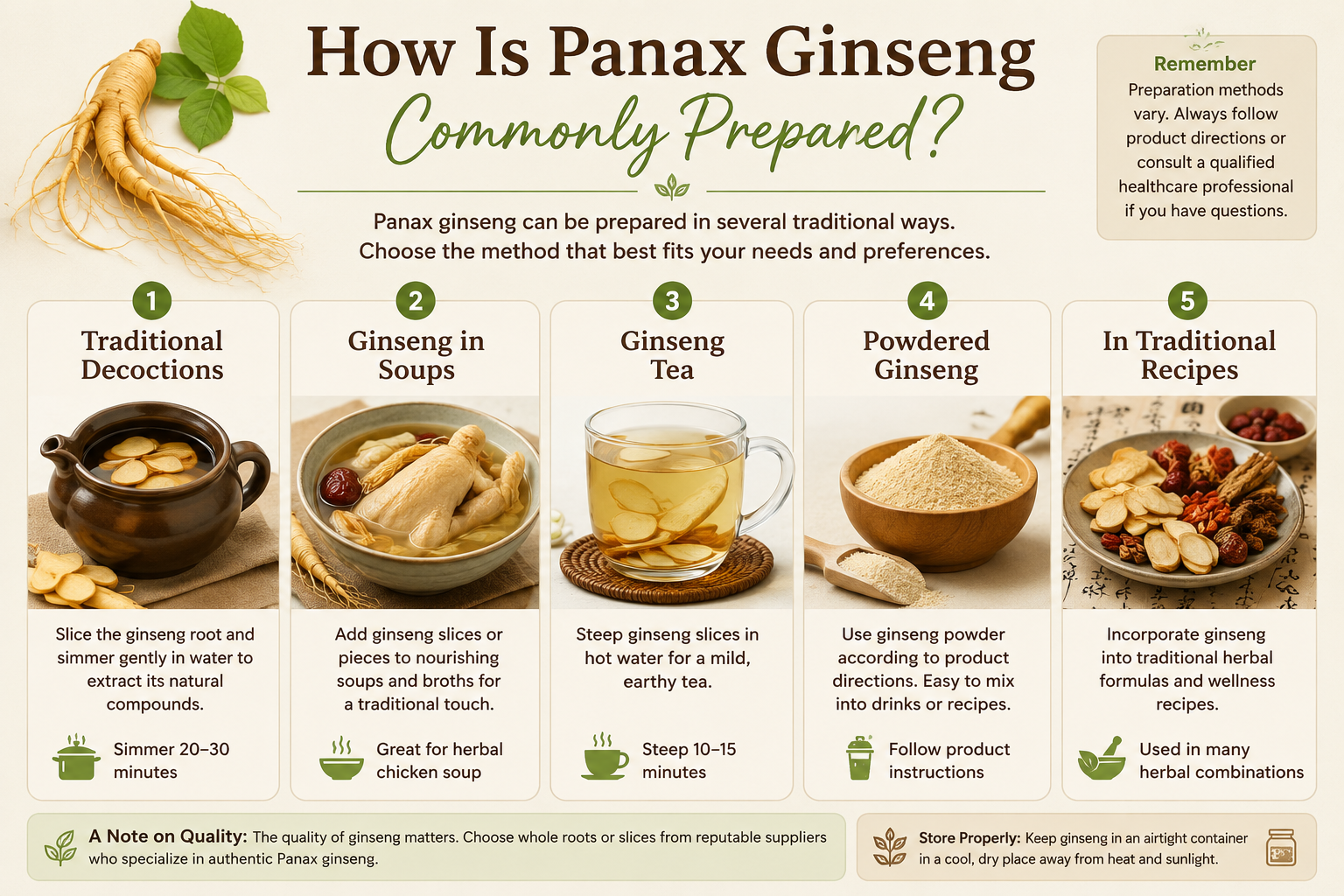
How Is Panax Ginseng Commonly Prepared?
Traditional preparation methods vary depending on personal preference, family tradition, and the form of the herb.
Many people choose to:
- Prepare slices in traditional decoctions.
- Add pieces to nourishing soups.
- Steep slices in hot water to make herbal tea.
- Use powdered forms according to product directions.
- Incorporate prepared ginseng into traditional recipes.
Preparation methods vary considerably, so always follow the directions provided with your product or consult a qualified healthcare professional if you have questions.
Five Things Our Grumpy Friend Accidentally Taught Us
Lesson One
Quality usually takes patience.
Lesson Two
Proper storage helps protect dried herbs.
Lesson Three
Botanical identification matters.
Lesson Four
Buying from knowledgeable suppliers helps you make informed choices.
Lesson Five
Sometimes the best lessons are the ones that make us smile.
Want to Learn More About Ginseng?
If today's story sparked your curiosity, you might also enjoy exploring:
- How to Store Dried Herbs Properly
- White Ginseng vs. Red Ginseng
- Choosing Quality Herbs: What Every Beginner Should Know
Each guide is designed to help you become a more confident herb buyer while separating traditional knowledge from modern marketing myths.
Explore Organic Whole White Jilin Ginseng
The fictional root in today's story may have had quite the personality, but if you'd like to meet the real herb that inspired him, we'd love to introduce you to our Organic Whole White Jilin Ginseng.
Our product page includes detailed botanical information, preparation guidance, quality details, and photographs to help you decide whether it's the right choice for your herbal collection.
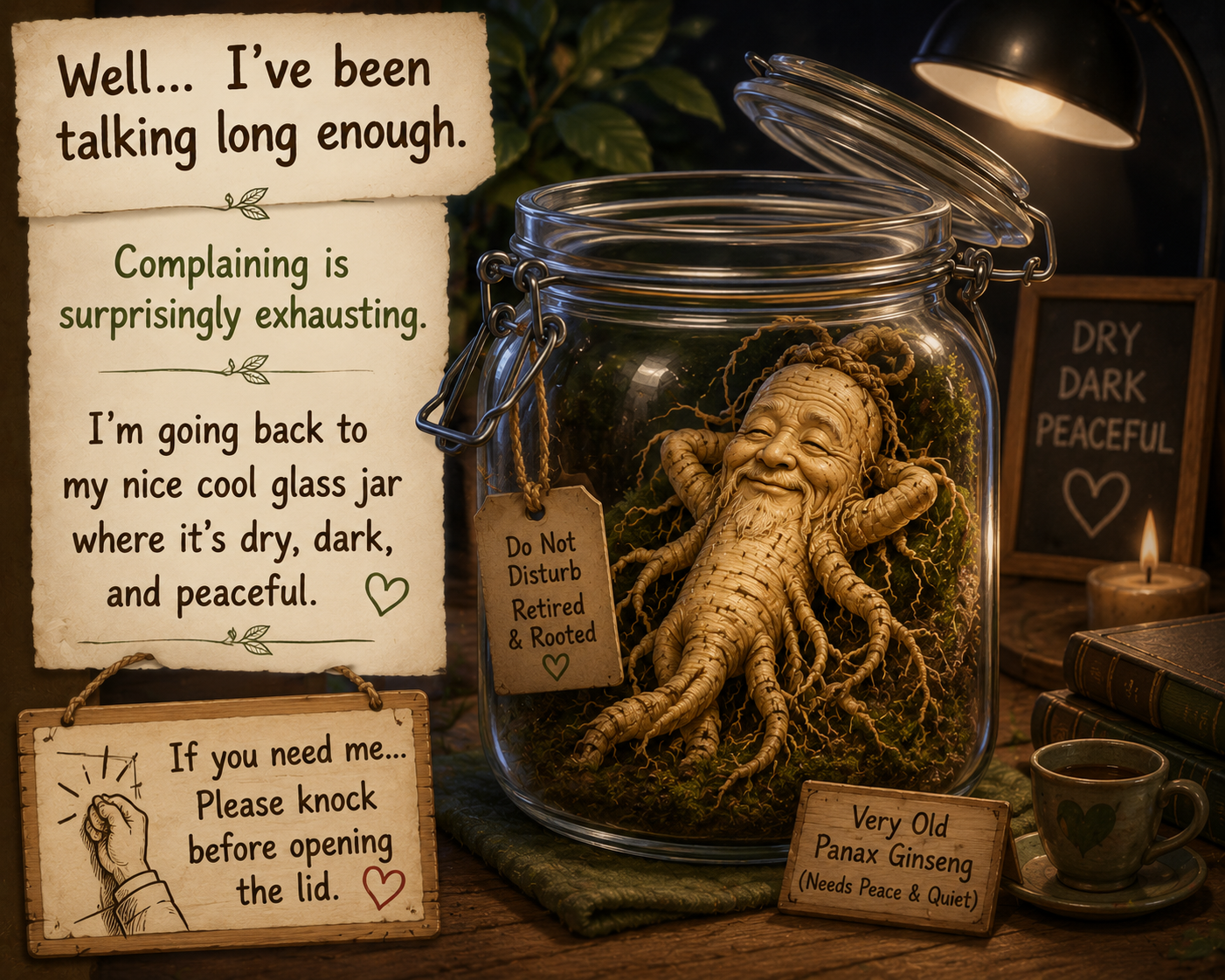
A Final Word From Our Grumpy Friend…
Well...
I've been talking long enough.
Complaining is surprisingly exhausting.
I'm going back to my nice cool glass jar where it's dry, dark, and peaceful.
If you need me...
Please knock before opening the lid.
Some of us are trying to enjoy retirement.
Respectfully,
A Very Old (and Slightly Opinionated) Panax Ginseng Root
From Everyone at 1st Chinese Herbs
We'd like to thank Jim for sharing his creativity—and for reminding us that learning about herbs doesn't always have to be serious.
Traditional herbal knowledge has been passed from one generation to the next through stories, conversations, and shared experiences. While today's tale is entirely fictional, we hope it encourages you to appreciate not only the remarkable history of Panax ginseng but also the importance of buying quality herbs, storing them properly, and continuing to learn.
If this story made you smile, consider sharing it with a fellow herb enthusiast. And if you have a creative herbal story of your own, we'd love to hear it. You never know—it might inspire the next installment in our Dear Human… series.
After all… every herb has a story.
Behind the Story
Jim's letter is a work of fiction, but it touches on several real topics that every herb enthusiast should know, including proper herb storage, botanical identification, and choosing quality Panax ginseng. While our narrator jokingly claimed to be ten years old, the character was created for entertainment and should not be interpreted as representing the age of every ginseng root we offer.