
Winter Blues and Seasonal Affective Disorder
Posted by Sarah Johnson on Oct 29th 2026
Winter Blues and Seasonal Affective Disorder: Can Chinese Herbs Help?
Feeling tired, unmotivated, or a little down when winter arrives? Discover why shorter days affect our mood, what Traditional Chinese Medicine says about winter, and five herbs worth knowing.
Updated October 29, 2026 | 1st Chinese Herbs
When Winter Arrives, Everything Feels a Little Different
Here in Republic, Washington, winter has a way of announcing itself. Snow begins to fall, daylight disappears earlier, and suddenly those warm, sunny afternoons seem far away.
For some people, winter feels peaceful and cozy. For others, it brings fatigue, low motivation, increased appetite, and a desire to stay under the blankets.
Sound familiar?
Sometimes these feelings are simply called the winter blues. But when seasonal mood changes become more severe, they may be signs of Seasonal Affective Disorder (SAD), a form of depression that follows a seasonal pattern.
The good news? There are proven ways to manage SAD, along with traditional wellness practices that can complement a healthy winter routine.
Why Do Shorter Days Affect Our Mood?
Sunlight helps regulate our internal body clock, influencing when we feel awake and when we feel sleepy.
As daylight decreases, some people experience changes in sleep, energy, appetite, and mood.
Common signs of winter-pattern SAD include:
- Feeling tired even after sleeping
- Losing interest in favorite activities
- Craving carbohydrates or eating more
- Having trouble concentrating
- Feeling sad, withdrawn, or unusually irritable
Occasional low-energy days are common. However, persistent depression deserves medical attention.
What Does Traditional Chinese Medicine Say About Winter?
Traditional Chinese Medicine (TCM) views winter as a season of rest, nourishment, and conserving energy.
In TCM theory, winter is associated with the Kidney system and the Water element. These are traditional concepts, not descriptions of modern kidney function.
Rather than pushing ourselves at full speed year-round, traditional seasonal living encourages slowing down, eating nourishing foods, maintaining gentle movement, and getting adequate rest.
Chinese herbs have also been used for centuries as part of these seasonal traditions.
Five Chinese Herbs Traditionally Associated With Winter Wellness
These herbs have traditional uses related to vitality, balance, or nourishment. None has been proven to treat Seasonal Affective Disorder.
1. Huang Qi – Astragalus Root
Traditional focus: Qi and vitality
Astragalus is one of the best-known Qi-tonifying herbs in Chinese medicine. It has traditionally been included in formulas associated with nourishment and vitality.
Researchers continue to study its plant compounds, but there is no reliable evidence that Astragalus treats seasonal depression.
2. Ren Shen – Asian Ginseng
Traditional focus: Replenishing Qi
Ginseng has a long history in Chinese herbal traditions and is often associated with vitality.
Some studies have explored Ginseng for fatigue and cognitive performance, although results are mixed. It is not an established SAD treatment.
Ginseng may interact with medications, including those used for diabetes.
3. Wu Wei Zi – Schisandra Berry
Traditional focus: Balance and nourishment
Known as the Five Flavor Berry, Schisandra has been valued in Chinese herbal traditions for generations.
It is traditionally associated with preserving fluids and supporting balance. Modern research is exploring its constituents, but evidence for improving seasonal mood is insufficient.
4. Ling Zhi – Reishi Mushroom
Traditional focus: Nourishment and traditional longevity practices
Reishi is a familiar mushroom in East Asian herbal traditions, where it has long been associated with nourishment and well-being.
It can be prepared as a traditional herbal tea, depending on the product. However, it has not been shown to treat seasonal depression.
5. Chai Hu – Bupleurum Root
Traditional focus: Harmonizing Liver Qi
In Traditional Chinese Medicine, Chai Hu is associated with the movement of Liver Qi.
It appears in classical formulas studied for mood-related conditions, but research does not establish that Bupleurum or these formulas treat SAD.
A note about safety: Chinese herbs can interact with medications or be inappropriate for certain health conditions. Ask a qualified healthcare professional before beginning a new herbal supplement, particularly if you take prescription medication.
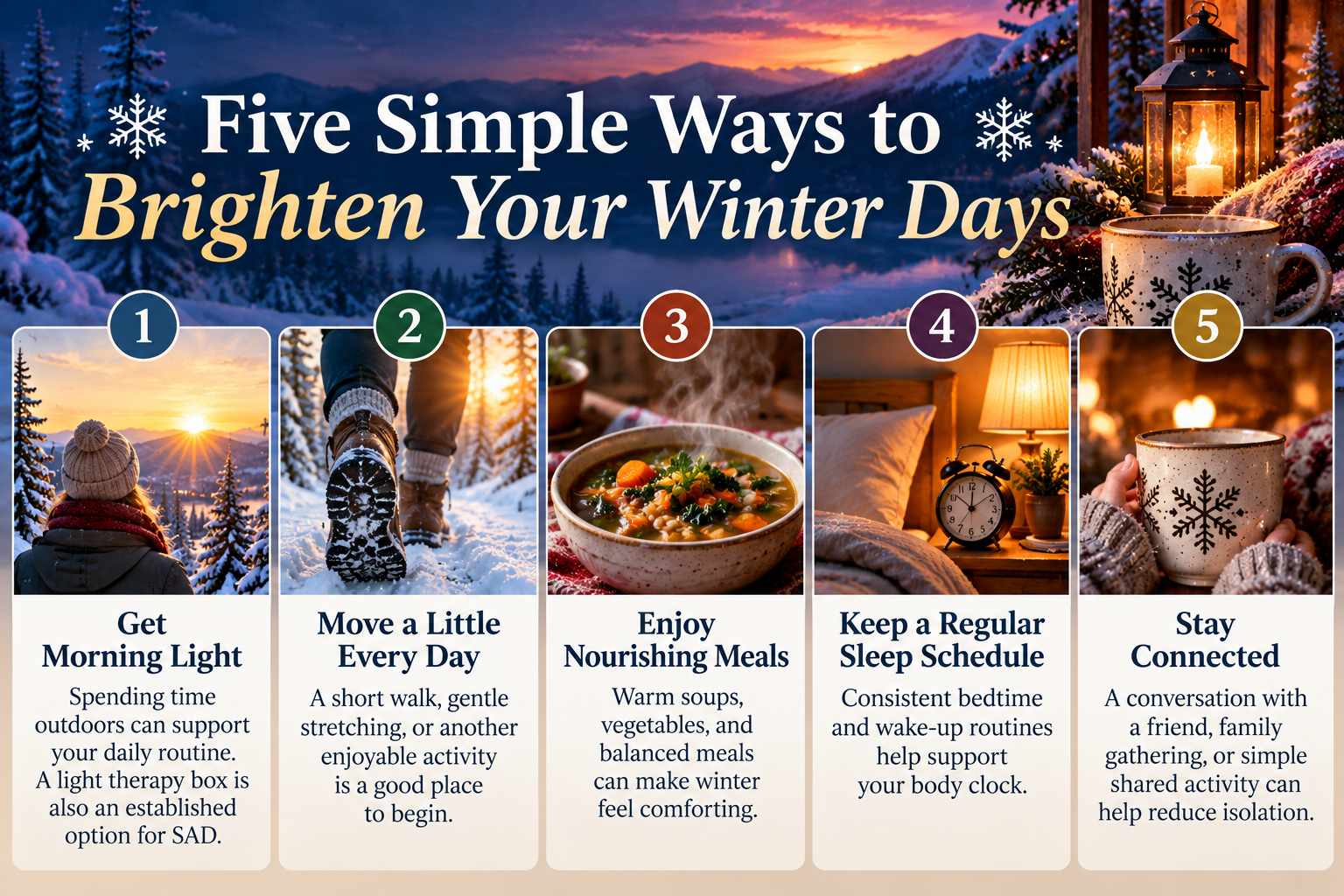
Five Simple Ways to Brighten Your Winter Days
Herbs are only one part of the broader wellness conversation. For seasonal depression, evidence-based approaches deserve priority.
- Get morning light. Spending time outdoors can support your daily routine. A purpose-designed light therapy box is also an established SAD treatment, but check with a clinician about appropriate use.
- Move a little every day. A short walk, gentle stretching, or another enjoyable activity is a good place to begin.
- Enjoy nourishing meals. Warm soups, vegetables, and balanced meals can make winter feel comforting.
- Keep a regular sleep schedule. Consistent bedtime and wake-up routines help support your body clock.
- Stay connected. A conversation with a friend, family gathering, or simple shared activity can help reduce isolation.
For persistent SAD, treatments such as light therapy, cognitive behavioral therapy, and medication may be appropriate.
Frequently Asked Questions
Can Chinese herbs treat Seasonal Affective Disorder?
No Chinese herb has been established as a treatment for SAD. Traditional herbal practices may be explored as part of general wellness, but they should not replace evidence-based care.
What is the difference between winter blues and SAD?
Winter blues generally refers to milder seasonal changes. SAD is a recurring form of depression that can significantly affect everyday life.
Which Chinese herbs are traditionally associated with vitality?
Astragalus and Asian Ginseng are traditionally classified as Qi-tonifying herbs. Their traditional classifications do not establish effectiveness for seasonal fatigue or depression.
Does light therapy help with SAD?
Yes. Bright-light therapy is an established treatment option for winter-pattern SAD. Consult a healthcare professional before using it if you have bipolar disorder, certain eye conditions, or medications that increase light sensitivity.
A Little Winter Encouragement
Winter doesn't have to be a season of simply waiting for spring.
It can also be a time for comforting meals, a warm cup of tea, gentle routines, and appreciating life's quieter moments.
At 1st Chinese Herbs, we've enjoyed sharing traditional Chinese herbal knowledge since 1994. We believe understanding herbs—their history, uses, and precautions—helps customers make thoughtful choices.
Explore our Chinese herbs and traditional herbal preparations and discover more about the plants that have been part of Chinese herbal traditions for centuries.
Trusted Resources
- National Institute of Mental Health: Seasonal Affective Disorder
- PubMed: Review of Chinese Herbal Medicine for Depression
Research involving depression generally does not establish effectiveness for seasonal affective disorder or any particular commercial herbal product.
Medical and FDA Disclaimer: This article is educational and is not medical advice. Chinese herbs are not established treatments for seasonal depression. Statements about dietary supplements have not been evaluated by the FDA. Dietary supplements are not intended to diagnose, treat, cure, or prevent disease. If seasonal depression affects your daily life, seek professional care.