

Why Can't I Sleep? 10 Possible Causes of Insomnia
Posted by Sarah Johnson on Nov 16th 2026
Why Can't I Sleep? 10 Possible Causes of Insomnia and What Your Body May Be Telling You
Understanding Your Symptoms | 1st Chinese Herbs
Have you ever gone to bed completely exhausted, expecting a wonderful night's sleep, only to find yourself wide awake with a thousand thoughts racing through your mind? Or perhaps you fall asleep easily, only to wake up at 2 or 3 in the morning, staring at the ceiling and wondering why you can't get back to sleep.
Has this ever happened to you? It used to happen to me all the time. Night after night, I struggled to understand why I couldn't get the restful sleep I desperately needed. That is, until I started asking myself a different question: What was actually causing me to wake up?
I began to realize that instead of simply looking for something to help me sleep, I needed to understand what might be disrupting my sleep in the first place.
And that's what I want to share with you today. Because sometimes, understanding why something is happening is the first step toward making meaningful changes.
When sleep becomes difficult, it's tempting to search for something that will help you fall asleep immediately. But an equally important question is often overlooked:
What might be keeping you awake in the first place?
Insomnia isn't always caused by one thing. Stress, daily routines, eating habits, medications, physical discomfort, and underlying health conditions can all affect your sleep.
Understanding these possible contributors is an important first step toward finding an appropriate solution.
Let's explore ten common reasons you may be struggling to sleep—and what you can do to better understand your own sleep patterns.
1. Worry and Anxiety: When Your Mind Won't Turn Off
Have you ever climbed into bed only to begin thinking about everything you need to do tomorrow?
Perhaps you're worrying about finances, relationships, family responsibilities, or something that happened earlier in the day.
Stress activates the body's alertness systems. Even when you're physically exhausted, your mind may remain active.
Clues to look for:
-
You feel sleepy until you get into bed.
-
Your thoughts become louder when the house gets quiet.
-
You replay conversations or worry about tomorrow.
-
You become frustrated because you cannot fall asleep.
What may help: Set aside 10–15 minutes earlier in the evening to write down concerns and possible next steps. Create a calming bedtime routine, and avoid checking the clock repeatedly.
The goal isn't to force yourself to stop thinking. It's to give your mind a chance to settle before bedtime.
A personal comment that has helped me is: Depression is living in the past, anxiety is living in the future, and peace is living in the present.
2. Chronic Stress: Your Body May Still Be on Alert
Stress doesn't always feel like worry.
Sometimes it shows up as muscle tension, restlessness, irritability, or difficulty relaxing.
Long periods of emotional or physical stress can contribute to a state of heightened arousal, making sleep more difficult.
Ask yourself:
-
Have I been under unusual pressure?
-
Do I feel tense even when I'm resting?
-
Am I constantly rushing or multitasking?
-
Do I have time during the day to relax?
What may help: Gentle movement, relaxation exercises, regular daytime activity, and a predictable evening routine may help reduce stress-related sleep difficulties.
If stress or anxiety is persistent, speaking with a qualified professional can be an important part of addressing the problem.

3. Eating Late at Night: Could Dinner Be Disturbing Your Sleep?
Eating a large meal shortly before bed may leave you feeling uncomfortable when you lie down.
For some people, late meals can contribute to acid reflux, bloating, or digestive discomfort.
Spicy or fatty foods may also aggravate nighttime reflux in susceptible individuals.
Clues to look for:
-
You experience heartburn after lying down.
-
You wake with a sour taste in your mouth.
-
You feel overly full at bedtime.
-
Sleep is worse after a particularly large or late dinner.
What may help: Try finishing larger meals several hours before bedtime and observe whether symptoms improve.
However, don't skip necessary meals or change prescribed diabetes treatment simply to avoid nighttime eating. Individual medical and nutritional needs matter.
4. Daytime Napping: Are You Using Up Your Sleepiness?
A short nap can feel wonderful, especially after a difficult night.
But long naps—or naps taken late in the afternoon—may reduce the natural sleep pressure that builds throughout the day.
This can make it harder to fall asleep at night.
Ask yourself:
-
Am I napping because I feel tired every afternoon?
-
Do my naps last an hour or longer?
-
Am I sleeping late in the day?
-
Is my bedtime becoming later?
What may help: Experiment with reducing long or late naps while keeping a consistent morning wake-up time.
If you regularly need lengthy naps despite adequate time in bed, consider whether an underlying sleep or medical condition needs evaluation.
5. Cortisol and Your Body Clock: Are Your Hormones Involved?
Cortisol is a hormone produced by the adrenal glands. It plays important roles in metabolism, stress responses, and the body's daily rhythm.
Cortisol normally changes throughout the day, generally rising around waking and declining toward nighttime.
Stress and circadian-rhythm disturbances can influence sleep, but waking during the night does not automatically mean your cortisol is too high.
You may have heard the term adrenal fatigue. This is not a scientifically established medical diagnosis.
Actual adrenal disorders do exist, but they require proper medical evaluation rather than assumptions based on fatigue or insomnia alone.
What may help: Maintain regular sleep and wake times, seek daylight exposure in the morning, and discuss persistent or unusual symptoms with your healthcare provider.
Routine cortisol testing is not necessary for most people with insomnia unless there are specific medical reasons to investigate hormone disorders.
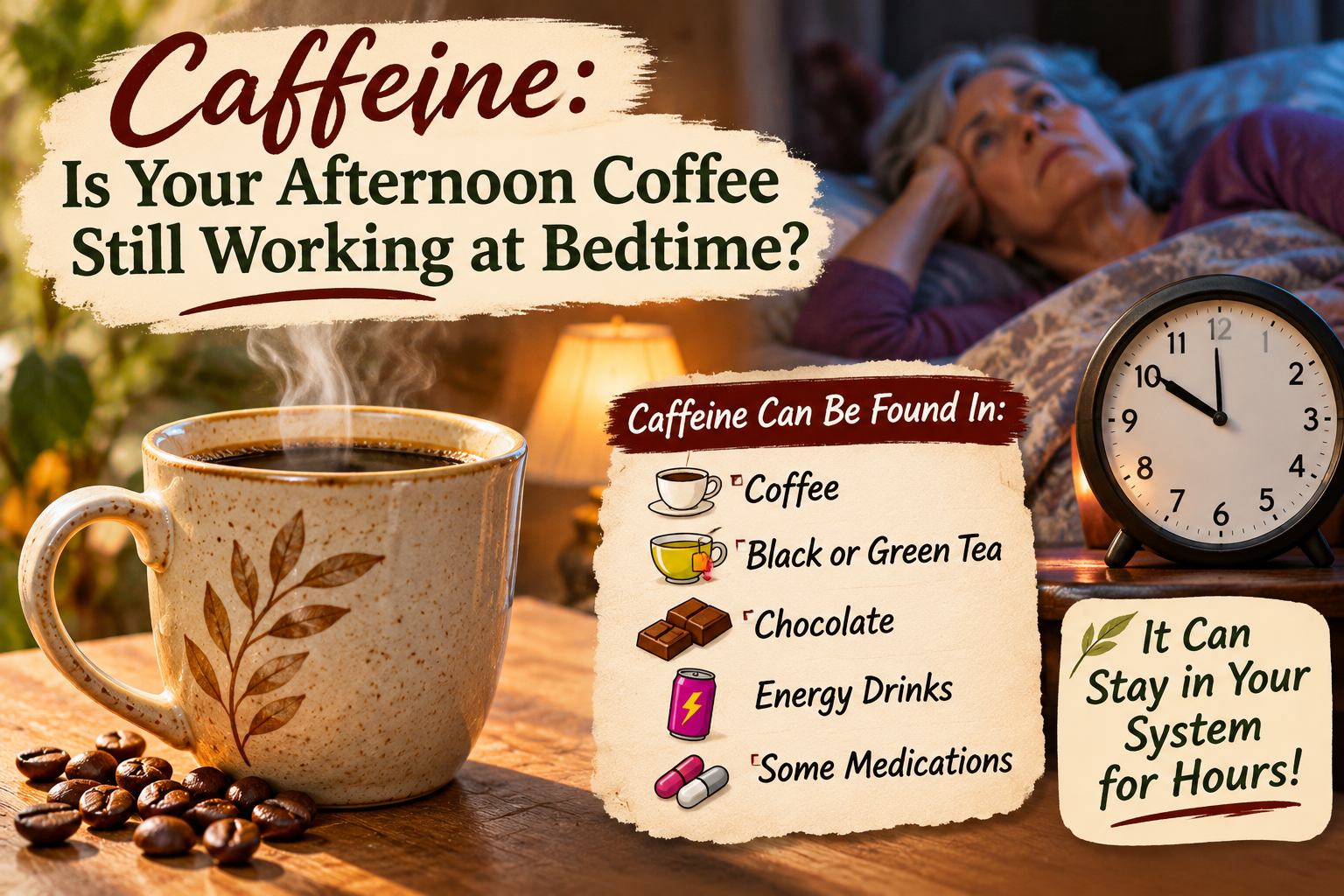
6. Caffeine: Is Your Afternoon Coffee Still Working at Bedtime?
You may enjoy coffee in the morning and feel that it doesn't affect your sleep.
But caffeine can remain active in the body for hours.
Coffee, black tea, green tea, energy drinks, chocolate, and certain medications may contain caffeine.
Some people are more sensitive than others.
Clues to look for:
-
You drink coffee or caffeinated tea in the afternoon.
-
You feel tired but unusually alert at bedtime.
-
You fall asleep but experience restless or lighter sleep.
What may help: Try avoiding caffeine for at least six to eight hours before bedtime, or longer if you're sensitive.
Remember that even natural beverages can contain stimulants.
7. Blood Sugar Changes: Could Glucose Be Interrupting Sleep?
Blood sugar fluctuations can affect sleep, particularly for people with diabetes.
High blood glucose may contribute to thirst and frequent urination. Low blood glucose during sleep may cause sweating, nightmares, or disturbed sleep, although it can also occur without obvious symptoms.
Clues to look for:
-
You wake repeatedly to urinate.
-
You experience unusual nighttime sweating.
-
You wake feeling shaky, confused, or unwell.
-
Your sleep difficulties coincide with changes in medication or eating patterns.
What may help: If you have diabetes, discuss recurring nighttime symptoms and glucose readings with your diabetes care team.
Do not adjust insulin or other diabetes medications without appropriate guidance. Suspected severe low blood sugar requires prompt treatment.
8. Sleep Apnea: Are You Waking Because Your Breathing Is Interrupted?
Not every sleep problem is caused by stress or lifestyle habits.
Obstructive sleep apnea occurs when breathing repeatedly becomes blocked or reduced during sleep.
It can cause repeated awakenings, sometimes without the person remembering them.
Possible warning signs include:
-
Loud or frequent snoring.
-
Gasping or choking during sleep.
-
Morning headaches.
-
Unrefreshing sleep despite spending enough time in bed.
-
Excessive daytime sleepiness.
Sleep apnea can occur alongside insomnia, and some people experience both conditions.
What may help: If these symptoms sound familiar, ask your healthcare provider whether a sleep evaluation is appropriate.
Sleep apnea deserves attention because untreated breathing disturbances can affect overall health.
9. Medications: Could Something You're Taking Affect Sleep?
Some prescription and over-the-counter medications can interfere with sleep.
Possible effects include increased alertness, nighttime urination, vivid dreams, digestive discomfort, or other symptoms that interrupt rest.
Even medications that are necessary and beneficial may occasionally have sleep-related side effects.
Ask yourself:
-
Did my sleep change after starting a new medication?
-
Did my dose or dosing time recently change?
-
Am I taking a medication that increases urination?
-
Do I use cold remedies or other products containing stimulants?
What may help: Review your medications, supplements, and dosing schedule with your pharmacist or healthcare provider.
Never stop or change a prescribed medication solely because you suspect it is disturbing your sleep.
10. Pain, Discomfort, and Other Health Conditions
Sometimes the reason for poor sleep is physical.
Joint discomfort, nerve pain, restless legs, nighttime urination, breathing problems, and other health conditions may repeatedly interrupt sleep.
Even when discomfort is mild, frequent awakenings can leave you feeling exhausted the next morning.
Clues to look for:
-
You wake because of pain or tingling.
-
You repeatedly change positions to get comfortable.
-
You feel an urge to move your legs at night.
-
You wake frequently to use the bathroom.
-
You feel short of breath when lying down.
What may help: Discuss recurring physical symptoms with a healthcare professional, particularly if they are new, worsening, or interfering with daily life.
New or severe shortness of breath, chest pain, or other emergency symptoms require immediate medical attention.
Follow the Clues: What Is Your Sleep Pattern Telling You?
Instead of assuming all insomnia is the same, pay attention to when your sleep difficulties occur.
| Your sleep pattern | Possible contributors to explore |
|---|---|
| Trouble falling asleep | Stress, anxiety, caffeine, irregular bedtime, environmental factors |
| Waking after a few hours | Sleep apnea, pain, nighttime urination, reflux, stress |
| Waking very early | Stress, mood changes, circadian timing, other health factors |
| Feeling exhausted despite sleeping | Sleep apnea, fragmented sleep, medications, underlying medical conditions |
| Sleep worse after late meals | Reflux, digestive discomfort, meal timing |
| Sleep worse after long naps | Reduced nighttime sleep pressure, irregular sleep schedule |
These patterns are clues, not diagnoses. Different conditions can produce similar symptoms.
Try a Seven-Day Sleep Journal
For one week, record:
-
What time you went to bed.
-
Approximately how long it took to fall asleep.
-
How often you woke during the night.
-
What you noticed when you woke up.
-
Your morning wake-up time.
-
Any daytime naps.
-
Caffeine, late meals, and evening activities.
-
How rested you felt the following morning.
You may begin noticing patterns that were previously easy to overlook.
Bring your notes to a healthcare appointment if your sleep difficulties persist.
What Does Traditional Chinese Medicine Say About Insomnia?
Traditional Chinese medicine (TCM) has its own framework for understanding sleep disturbances.
Rather than viewing every case of insomnia as identical, traditional practitioners consider a person's overall pattern, including emotional well-being, digestion, temperature sensations, energy, and other symptoms.
Several traditional concepts may be discussed when evaluating sleep.
Shen: The Spirit and Mental Restlessness
In TCM, Shen is associated with mental and emotional activity and is traditionally connected with the Heart system.
Restlessness, excessive dreaming, and difficulty settling at night may be interpreted through this traditional framework.
Liver Qi Stagnation
Traditional Chinese medicine sometimes associates emotional tension, frustration, and a sense of constraint with Liver Qi stagnation.
This is a traditional pattern description, not a diagnosis of liver disease.
Yin Deficiency
In traditional theory, Yin deficiency may be discussed when sleep disturbances occur alongside sensations such as nighttime warmth, dryness, or restlessness.
These traditional descriptions should not be confused with medically diagnosed hormone deficiencies or other clinical disorders.
Heart and Kidney Patterns
TCM also describes relationships between the Heart and Kidney systems in its traditional understanding of sleep and balance.
These concepts are part of a historical medical framework and do not directly correspond to modern anatomical or laboratory diagnoses.
An important distinction: Traditional Chinese medicine patterns are not established medical explanations for insomnia. Herbal treatment should be individualized, and anyone with chronic illness, pregnancy, or prescription medications should consult appropriately qualified healthcare professionals before using herbal formulas.
What Actually Helps Chronic Insomnia?
Good sleep habits matter, but persistent insomnia may need more than a bedtime routine.
One of the best-supported treatments for chronic insomnia is cognitive behavioral therapy for insomnia (CBT-I).
CBT-I is a structured treatment that helps address behaviors, thoughts, and sleep patterns that can maintain insomnia.
It may include:
-
Learning how to respond differently to worries about sleep.
-
Establishing a more consistent sleep-wake pattern.
-
Strengthening the association between bed and sleep.
-
Reducing behaviors that unintentionally perpetuate sleeplessness.
-
Practicing appropriate relaxation strategies.
CBT-I is recommended as an initial treatment for chronic insomnia in adults. It can be delivered by trained professionals in person or through certain online programs.
Sleep-hygiene tips alone may not be enough for persistent insomnia.
When Should You Seek Medical Advice?
Consider professional evaluation if insomnia is frequent, persists for weeks, affects your daytime functioning, or occurs alongside concerning symptoms.
Seek assessment particularly if you experience loud snoring, gasping during sleep, significant daytime sleepiness, repeated nighttime low blood sugar, or new physical symptoms.
Frequently Asked Questions About Insomnia
Why do I wake up at 3 a.m. every night?
Repeated early-morning awakenings can have several explanations, including stress, sleep apnea, pain, medication effects, nighttime urination, or changes in sleep timing. The exact hour does not identify a specific medical condition or hormone imbalance.
Can stress cause insomnia even when I don't feel anxious?
Yes. Stress can contribute to heightened physical or mental alertness even when someone does not consciously feel worried.
Does high cortisol always cause insomnia?
No. Cortisol is involved in the body's daily rhythm, but insomnia alone does not establish that cortisol levels are abnormal.
Can eating too late keep me awake?
For some people, yes. Large or late meals may worsen reflux or digestive discomfort, which can interfere with sleep.
Are daytime naps bad for insomnia?
Not always. However, long or late naps can make nighttime sleep more difficult for some people.
Can Chinese herbs help with insomnia?
Chinese herbs have a long history of traditional use, but evidence for particular herbal formulas varies, and safety depends on the ingredients, individual health conditions, and medications involved.
Herbs should not replace evaluation of persistent insomnia, suspected sleep apnea, or other medical problems.
What is the best first step if I can't sleep?
Start by observing your sleep pattern and possible contributors. If insomnia is persistent, discuss evaluation and evidence-based treatment, including CBT-I, with a healthcare professional.
A Final Thought: Listen to the Clues, Not Just the Symptom
When you're unable to sleep, it's natural to want immediate relief.
But your sleep difficulties may be influenced by several different factors.
Perhaps you're drinking caffeine later than you realize. Maybe stress is keeping your mind alert. Or perhaps an underlying health condition deserves attention.
The most useful question may not be simply, “What can I take to sleep?”
It may be:
“What is contributing to my sleep problem, and what can I do about it?”
Understanding your symptoms can help you ask better questions, recognize patterns, and make more informed decisions about your health.
At 1st Chinese Herbs, we believe herbal education should encourage curiosity, informed choices, and respect for both traditional knowledge and modern healthcare.
Discover Nature's Finest Herbs. Experience the Difference.
Trusted Since 1994.
What I Personally Changed to Get a Better Night's Sleep
After struggling with sleepless nights, I finally realized something important: Instead of constantly worrying about why I couldn't sleep, I needed to look at what I was doing during the day that might be affecting my nights.
I didn't make dramatic changes. I started with four simple things that I could realistically do every day.
1. I Started Walking for 10 Minutes After Dinner
Every evening after dinner, I made it a point to walk for just 10 minutes. It didn't matter what the weather was like. I made that short walk part of my daily routine.
It wasn't about getting a strenuous workout. It was about moving my body, getting some fresh air, and giving myself a little time to unwind.
2. I Bought a Pillow That Properly Supported My Neck
Sometimes the smallest things make a difference.
I realized that my pillow wasn't providing the support I needed. So I invested in a new pillow that supported my neck and helped me feel more comfortable in bed.
I had spent so much time thinking about why I couldn't sleep that I hadn't given enough attention to something as simple as how comfortable I was.
3. I Stopped Eating Dinner Late
Since I normally go to bed around 10 p.m., I decided that 5:30 p.m. would be the latest I would eat dinner.
This gave me several hours between my evening meal and bedtime.
Rather than going to bed feeling full or uncomfortable, I gave my body time to digest my dinner.
It was another small change that became part of my evening routine.
4. The Biggest Change: I Started Journaling
Of all the changes I made, journaling was probably the most important for me.
I realized how much time I spent worrying about things that hadn't happened yet, replaying problems in my mind, and trying to figure everything out while lying in bed.
So I started writing things down.
But I didn't want my journal to become just another place to complain or dwell on everything that was going wrong.
I wanted to turn my worries into solutions.
When something bothered me, I began asking myself:
-
What is the actual problem?
-
Is this something I can control?
-
What action can I take to improve the situation?
-
What would a positive outcome look like?
-
What can I learn so I don't keep facing the same problem?
Writing down my thoughts helped me organize them instead of allowing everything to swirl around in my head.
I began focusing less on what might go wrong and more on what I could actually do to make things better.
And perhaps the most important lesson was realizing that not every problem needs to be solved tonight.
Some things can wait until tomorrow.
What I Learned About Sleep
Looking back, I realized that improving my sleep wasn't about finding one magical solution.
It was about paying attention to my habits, recognizing what was troubling me, and making small changes that worked for me.
A 10-minute walk. A more comfortable pillow. An earlier dinner. And a journal where I could turn worries into constructive action.
These changes helped me work toward more restful nights.
Will they work for everyone? Of course not. Sleep difficulties can have many causes, and persistent insomnia sometimes requires professional evaluation and treatment.
But perhaps my experience will encourage you to look at your own daily routines and ask yourself what might be contributing to your sleepless nights.
Here's the thought I'd like to leave you with:
You cannot change yesterday, and you cannot solve every problem tomorrow may bring. But you can take one positive step today.
Sometimes, that one small step is where meaningful change begins.
Wishing you peaceful evenings and more restful nights.
References and Further Reading
-
National Heart, Lung, and Blood Institute — Insomnia: Causes and Risk Factors
-
National Heart, Lung, and Blood Institute — Insomnia: Treatment
-
American College of Physicians — Management of Chronic Insomnia Disorder in Adults
-
Endocrine Society — Understanding Adrenal Fatigue
-
National Institute of Diabetes and Digestive and Kidney Diseases — Low Blood Glucose
Educational Disclaimer: This article is provided for general educational purposes and is not intended to diagnose, treat, cure, or prevent any disease. Traditional Chinese medicine concepts are presented as historical and cultural frameworks, not as substitutes for medical diagnosis. Consult a qualified healthcare professional about persistent insomnia, medical conditions, medications, or herbal product use.