
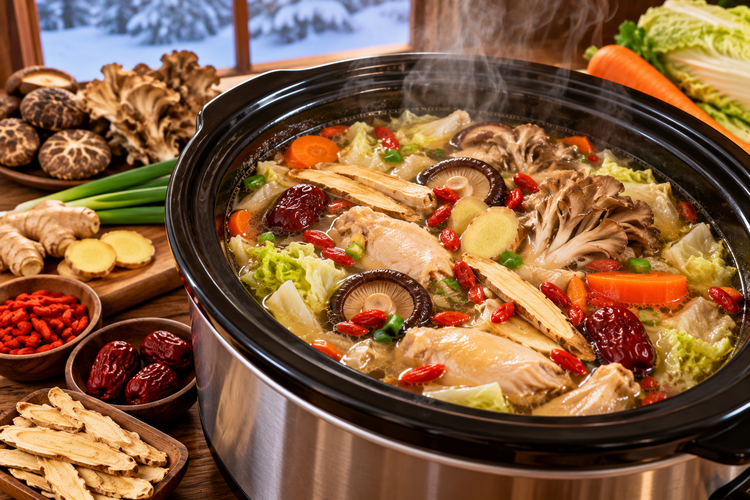
Time to Bring Out the Crockpot! Soup Is On!
Posted by Written by Sarah Johnson, Certified Herbalist, 1st Chinese Herbs. Trusted since 1994. on Oct 28th 2026
First Snow in Republic, Washington! Time to Bring Out the Crockpot!

Easy, delicious winter soups with Chinese herbs, savory mushrooms, and simple ingredients that make coming home on a cold day something to look forward to.
Well, it's official! We've had our first snow here in Republic, Washington!
The mountains are turning white, the mornings are getting chilly, and winter is knocking at the door.
And you know what that means?
Well, besides putting away the gardening tools for the season, it's time to bring out the crockpot!
There's nothing quite like coming inside on a cold winter day and smelling a big pot of homemade soup simmering away. The aroma of garlic, onions, mushrooms, and herbs fills the kitchen, and suddenly the whole house feels a little cozier.
I'm not talking about opening a can of soup and heating it on the stove.
I'm talking about homemade soup filled with fresh vegetables, tender chicken or beef, savory mushrooms, and a rich broth that tastes like you've been cooking all day.
The kind of soup that makes you want to sit down, wrap your hands around a warm bowl, and enjoy every spoonful.
And here's the best part.
You don't have to be an experienced cook to make a fantastic pot of soup.
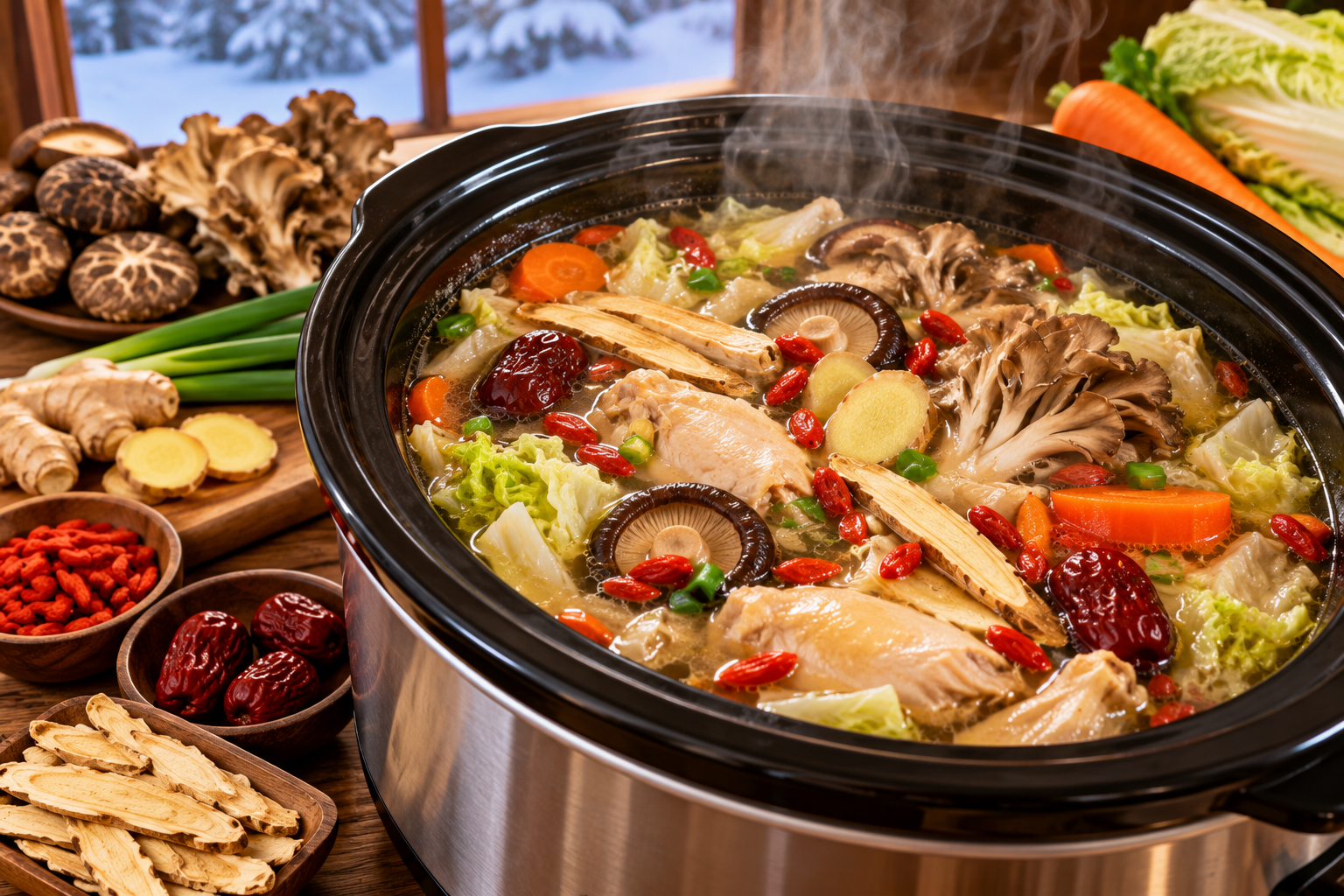
With a crockpot, you can put everything together in the morning, turn it on, and let it do most of the work.
By dinnertime, you've got a homemade meal waiting for you.
Simple, affordable, nutritious, and just right for a cold winter evening.
Here at 1st Chinese Herbs, we've been helping customers discover traditional Chinese herbs and ingredients since 1994. Winter is one of my favorite times to bring some of those familiar ingredients into the kitchen.
And soup is a wonderful place to start.
Why Homemade Soup Is One of Winter's Best Meals
When the temperatures drop, a hot bowl of soup just seems to hit the spot.
But there's more to love about homemade soup than the warmth.
It makes you feel cozy. A steaming bowl of soup offers a welcome feeling of warmth after being outdoors.
It's easy to make nutritious. Fill it with vegetables, mushrooms, beans, lean meats, and other ingredients you enjoy.
It's easy on the grocery budget. A few vegetables, some broth, and a little chicken or beef can make enough soup for several meals.
You know exactly what's going into it. You control the amount of salt, fat, and other ingredients. While not all canned soups contain preservatives, homemade soup gives you more freedom to choose what goes into your family's meals.
It saves time. A crockpot lets you start dinner in the morning and get on with your day.
And perhaps my favorite reason?
Homemade soup can taste absolutely fantastic with just a few simple ingredients.
A little garlic, a handful of mushrooms, some fresh ginger, and a few traditional Chinese culinary ingredients can turn an ordinary soup into something special.
Let's Make Soup More Interesting With Chinese Herbs and Mushrooms!
Most of us are familiar with adding onions, carrots, celery, and potatoes to soup.
But have you ever tried adding goji berries, Chinese red dates, shiitake mushrooms, or maitake mushrooms?
These ingredients have been enjoyed in Chinese cooking traditions for generations. Some add gentle sweetness, others bring rich, earthy flavors, and a few create a beautifully aromatic broth.
You don't need to use them all at once. In fact, if you're new to cooking with Chinese ingredients, I recommend starting with just one or two.
Here are some worth getting to know.
Huang Qi — Astragalus Root
Astragalus root, also called Huang Qi, is a traditional Chinese herb sometimes used in long-simmered broths.
The dried root has a mild, slightly sweet, earthy character.
In traditional preparations, slices may be simmered in liquid and removed before serving, much like a bay leaf.
Astragalus is often paired with chicken, ginger, and red dates.
Good to know: Astragalus is a medicinal herb, not an everyday seasoning for everyone. It can interact with medications and may be inappropriate for certain medical conditions. Ask a qualified healthcare professional before using it.
Gou Qi Zi — Goji Berries
These little red berries are a lovely addition to soup!
Goji berries add gentle sweetness, a beautiful touch of color, and an interesting contrast to savory ingredients.
Try them in chicken soup with ginger and shiitake mushrooms.
Beginner's tip: Add about a tablespoon of dried goji berries during the last 15–20 minutes of cooking. They'll soften without becoming too mushy.
Da Zao — Chinese Red Dates
Chinese red dates, also called jujubes, have a pleasantly sweet flavor that works beautifully in certain savory soups.
They're especially nice with chicken, ginger, and goji berries.
A couple of red dates can give your broth a subtle sweetness without making it taste like dessert.
Beginner's tip: Start with two or three red dates and remove the pits before serving.
Maitake Mushrooms — Hen of the Woods
If you love mushrooms, give maitake a try!
These beautiful, layered mushrooms have a rich, earthy flavor and a tender texture when cooked.
They're delicious in chicken soup, vegetable soup, and hearty mushroom broth.
Maitake is especially good when you want a soup that tastes rich and satisfying without adding heavy cream.
Beginner's tip: If using fresh maitake, simply tear the mushroom into smaller pieces with your hands before cooking.
Shiitake Mushrooms
Now here's an ingredient that can make a real difference in your soup!
Shiitake mushrooms have a deep, savory flavor that makes a simple broth taste like you've spent hours preparing it.
They're especially delicious with garlic, ginger, cabbage, chicken, and noodles.
Dried shiitake mushrooms are convenient to keep in the pantry for winter cooking.
Beginner's tip: If using dried shiitake, rehydrate them according to the package directions, remove any tough stems, and slice the caps before adding them to your soup.
Ling Zhi — Reishi Mushroom
Reishi, also known as Ling Zhi, has a long history in traditional Chinese herbal preparations.
Unlike shiitake or maitake, reishi is woody, tough, and often bitter. It isn't the type of mushroom you simply slice up and eat.
Reishi is traditionally simmered to prepare a liquid, but medicinal reishi preparations can interact with medications and are not suitable for everyone.
For everyday mushroom soup, shiitake and maitake are much easier choices.
Sheng Jiang — Fresh Ginger
Fresh ginger is one of my favorite ingredients for winter cooking.
Just a few slices add a wonderful aroma and a little spicy warmth to the flavor of your soup.
It goes beautifully with chicken, mushrooms, garlic, and vegetables.
And when ginger and garlic start cooking together, the kitchen smells amazing!
Beginner's tip: Start with two or three thin slices. You can always add more next time if you enjoy a stronger ginger flavor.
A Few More Ingredients to Try
Want to experiment a little?
Snow Fungus (Bai Mu Er): An edible fungus with a delicate texture, often used in traditional Chinese soups.
Lotus Seeds (Lian Zi): Food-grade lotus seeds can be cooked until tender and added to certain soups.
Aged Tangerine Peel (Chen Pi): A small amount of culinary-grade dried tangerine peel can add a pleasant citrus aroma.
Scallions: Simple, inexpensive, and delicious sprinkled over a finished bowl of soup.
Too Busy to Spend Hours Cooking? Me Too!
Between work, household chores, and everything else that needs doing, I don't want to spend my entire afternoon standing over the stove.
That's why I love crockpot soups.
A little chopping in the morning, a few simple ingredients, and dinner practically takes care of itself.
And don't worry if you're new to cooking.
You don't need special skills or expensive equipment. A crockpot, a cutting board, a knife, and a few ingredients are all you need to get started.
Here are three easy recipes that are full of flavor without being a lot of work.
Three Easy Crockpot Soups for Cold Winter Days
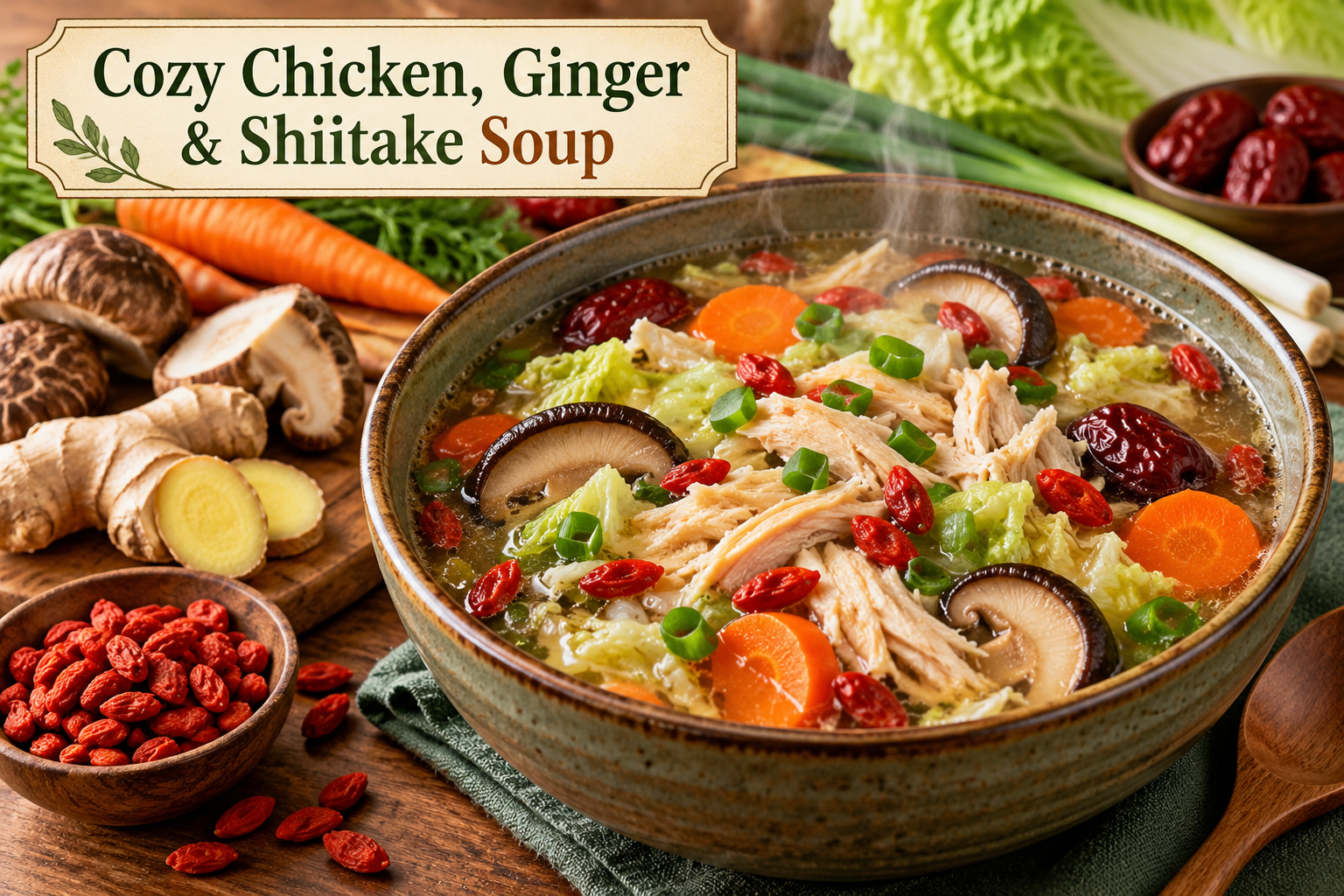
1. Cozy Chicken, Ginger & Shiitake Soup
Perfect for a snowy afternoon when you want something warm, savory, and satisfying.
Serves: Approximately 4–6
Prep time: 15 minutes
Cook time: Approximately 6–7 hours on LOW
Ingredients
-
1½ pounds boneless, skinless chicken thighs, fully thawed
-
6 cups low-sodium chicken broth
-
1 cup sliced shiitake mushrooms
-
2 cups chopped cabbage
-
2 carrots, sliced
-
1 small onion, chopped
-
3 cloves garlic, minced
-
3 thin slices fresh ginger
-
1 tablespoon dried goji berries
-
2 pitted Chinese red dates, optional
-
Black pepper to taste
-
Chopped scallions for serving
Let's Make It!
-
Place the chicken, broth, mushrooms, cabbage, carrots, onion, garlic, ginger, and optional red dates into your crockpot.
-
Put on the lid and cook on LOW for approximately 6–7 hours, until the chicken reaches 165°F and is tender.
-
Remove the chicken, shred it with two forks, and return it to the pot.
-
Add the goji berries during the last 15–20 minutes of cooking.
-
Remove the ginger slices if you prefer, sprinkle with chopped scallions, and enjoy!
Why you'll love it: The shiitake mushrooms create a rich, savory broth, while the ginger adds fragrance and the red dates and goji berries contribute just a touch of sweetness.
A little kitchen shortcut: If you don't feel like chopping garlic, use prepared minced garlic. And there's nothing wrong with buying pre-cut vegetables when you're short on time!
2. Hearty Maitake, Cabbage & Vegetable Soup
An easy, flavorful way to enjoy more vegetables during the winter.
Serves: Approximately 4–6
Prep time: 15 minutes
Cook time: Approximately 5–6 hours on LOW
Ingredients
-
6 cups low-sodium vegetable broth
-
2 cups fresh maitake mushrooms, torn into pieces
-
3 cups chopped cabbage
-
1 cup green beans
-
2 carrots, sliced
-
1 small onion, chopped
-
3 cloves garlic, minced
-
1 tablespoon olive oil
-
½ teaspoon dried thyme
-
1 bay leaf
-
Black pepper to taste
-
Optional: ½ cup green peas
Let's Make It!
-
For extra flavor, sauté the onion, garlic, and mushrooms in olive oil for a few minutes. If you're in a hurry, you can skip this step.
-
Transfer everything to the crockpot.
-
Add the broth, cabbage, green beans, carrots, thyme, bay leaf, and pepper.
-
Cover and cook on LOW for approximately 5–6 hours, until the vegetables are tender.
-
If you're adding green peas, stir them in during the final 20–30 minutes, allowing enough time for them to heat through.
-
Remove the bay leaf, ladle into bowls, and enjoy.
A little something extra: I like to toss in a handful of green peas, too. I can't explain exactly why, but they seem to give the soup a little extra something!
Want a heartier meal? Add some cooked chicken or a serving of cooked beans.
Why you'll love it: Maitake mushrooms give this simple vegetable soup a rich, satisfying flavor, while cabbage adds a pleasant sweetness as it cooks.
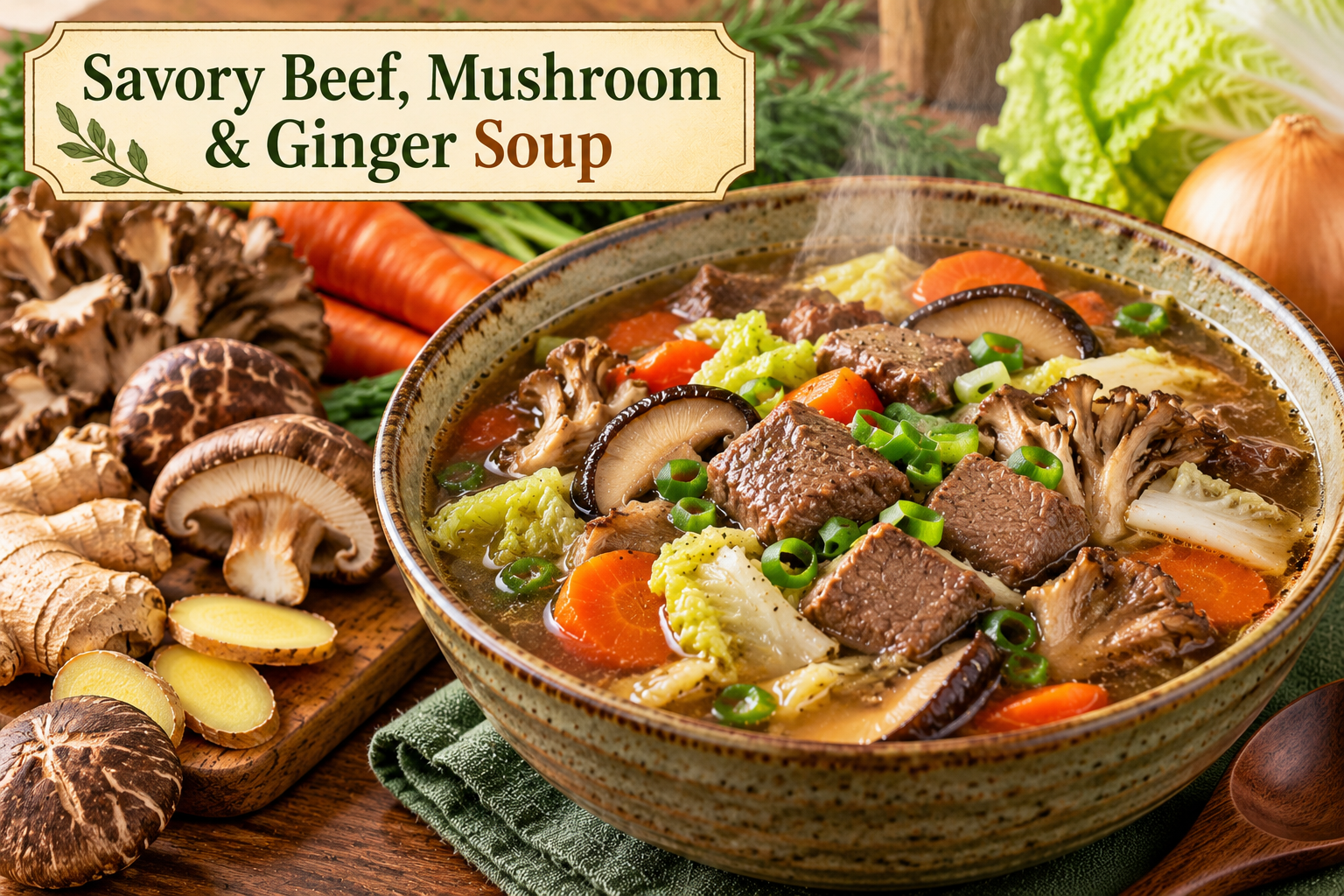
3. Savory Beef, Mushroom & Ginger Soup
(This is my go-to soup; it never disappoints.)
This is the soup to make when the snow is falling and you want a hearty dinner waiting for you.
Serves: Approximately 4–6
Prep time: 15–20 minutes
Cook time: Approximately 7–8 hours on LOW
Ingredients
-
1 pound lean beef stew meat, fully thawed and cut into small pieces
-
6 cups low-sodium beef broth
-
1 cup sliced shiitake mushrooms
-
1 cup maitake mushrooms
-
2 cups chopped cabbage
-
2 carrots, sliced
-
1 onion, chopped
-
3 cloves garlic, minced
-
2 thin slices fresh ginger
-
1 tablespoon tomato paste
-
1 teaspoon dried thyme
-
Black pepper to taste
Let's Make It!
-
If you have a few extra minutes, brown the beef in a skillet first. This adds extra flavor, but it's optional.
-
Place the beef and remaining ingredients into your crockpot.
-
Stir gently, cover, and cook on LOW for approximately 7–8 hours, until the beef is tender.
-
Remove the ginger slices if desired.
-
Serve hot and enjoy.
Why you'll love it: The combination of beef, mushrooms, garlic, and ginger creates a deep, savory broth without needing heavy cream or complicated seasonings.
Beginner's tip: If your beef isn't quite tender after the suggested cooking time, give it a little longer. Stew meat often becomes more tender with gentle, slow cooking.
Five Little Secrets for Making Homemade Soup Taste Fantastic
You don't need a chef's training to make delicious soup. Sometimes it's the little things that make the biggest difference.
1. Brown your meat first. It only takes a few extra minutes and adds flavor. But if you're pressed for time, you can skip it.
2. Don't be afraid of mushrooms. Shiitake and maitake add rich, savory flavors that can make a simple broth taste more satisfying.
3. Use garlic and onions. They're inexpensive and provide a flavorful foundation for almost any soup.
4. Add a little fresh ginger. It gives chicken and vegetable soups a pleasant aroma and a slightly spicy flavor.
5. Make extra! Many soups taste even better the next day, and leftovers make lunch easy.
And here's one more tip: Taste your soup before serving.
Sometimes a little black pepper, a squeeze of lemon, or a sprinkle of fresh scallions is all it needs.
Make Winter Cooking Easier on Yourself
One thing I really appreciate about crockpot cooking is how little effort it takes.
You can chop your vegetables the night before, keep dried mushrooms and other ingredients in the pantry, and have dinner cooking before you've finished your morning coffee.
Then you can get on with your day.
By the time evening arrives, the house smells wonderful, dinner is ready, and there's very little cleanup.
And when it's cold and snowy outside, that's a pretty nice feeling!
A Few Crockpot Basics for Beginners
If you're new to using a slow cooker, here are a few things worth remembering.
-
Thaw your meat first. Don't put frozen chicken or beef directly into the crockpot.
-
Keep the lid on. Every time you lift it, heat escapes and cooking may take longer.
-
Don't overfill it. Follow your slow cooker's instructions, generally filling it no more than about two-thirds full.
-
Check that meat is safely cooked. Chicken should reach an internal temperature of 165°F. Beef stew meat should be cooked until safely done and tender.
-
Store leftovers properly. Refrigerate soup promptly in shallow containers and enjoy within 3–4 days, or freeze portions for later.
And remember, crockpot cooking doesn't have to be perfect.
Start with a simple recipe, follow the instructions, and adjust the flavors to your liking the next time you make it.
That's how favorite family recipes are created!
From Our Snowy Little Town to Your Kitchen
Here in Republic, Washington, that first snowfall is always a reminder that winter is on its way.
The days get shorter, the evenings get colder, and there's something especially comforting about having a warm, homemade meal waiting at the end of the day.
So this winter, why not try something a little different?
Pick up some shiitake or maitake mushrooms. Add a little fresh ginger. Experiment with goji berries or Chinese red dates.
You might discover a new favorite soup!
And remember, you don't have to make anything complicated.
Good soup is simply good ingredients, wonderful flavors, and a little time to let everything come together.
From our kitchen here in Republic, Washington, to yours, we hope your winter is filled with warm bowls of soup, satisfying meals, and plenty of cozy evenings.
Stay warm, eat well, and enjoy soup season!
Your friends at 1st Chinese Herbs — helping customers discover traditional Chinese herbs and ingredients since 1994.
Ready to try something new in your next pot of soup?
Explore our selection of Chinese herbs, mushrooms, goji berries, and traditional ingredients at 1st Chinese Herbs.
A Note About Traditional Herbs
This article focuses on culinary enjoyment and traditional food preparations. Not all Chinese herbs are suitable for cooking or everyday use. Medicinal herbs such as astragalus, reishi, and Ban Lan Gen require additional consideration and may interact with medications. Consult a qualified healthcare professional before using medicinal herbs, especially during pregnancy or if you have kidney or liver disease or take prescription medications. Use properly identified, food-grade ingredients.
Traditional uses do not establish that an ingredient prevents or treats illness. Dietary supplement products are not intended to diagnose, treat, cure, or prevent any disease.