
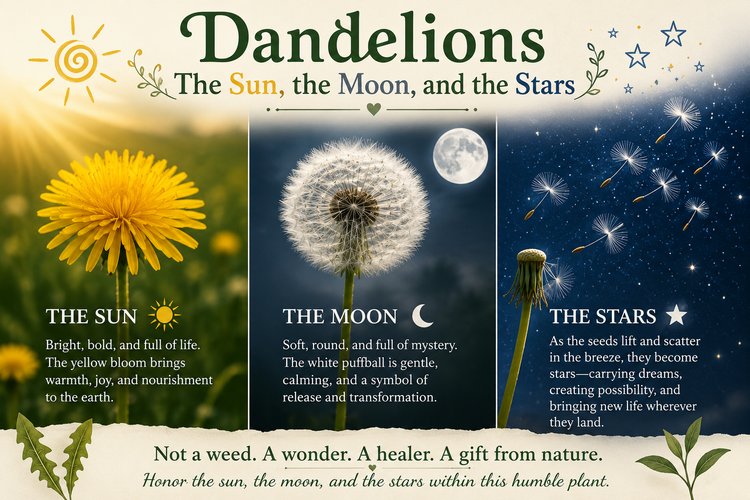
Dandelions are the Sun, the Moon, and the Stars
Posted by 1st Chinese Herbs Research Team. on Jun 28th 2026
Dandelions: The Sun, the Moon, and the Stars Beneath Our Feet
We spray them. We pull them. We curse them. We call them a nuisance. Ah, but they aren't.
Yet one of the most useful, beautiful, and misunderstood plants on earth may already be growing in your yard.
The dandelion. Most people call it a weed.
But dandelions are so much more than that.
They are food. They are tradition. They are medicine. They are survival. They are beauty.
And perhaps most beautifully of all… they are the sun, the moon, and the stars.
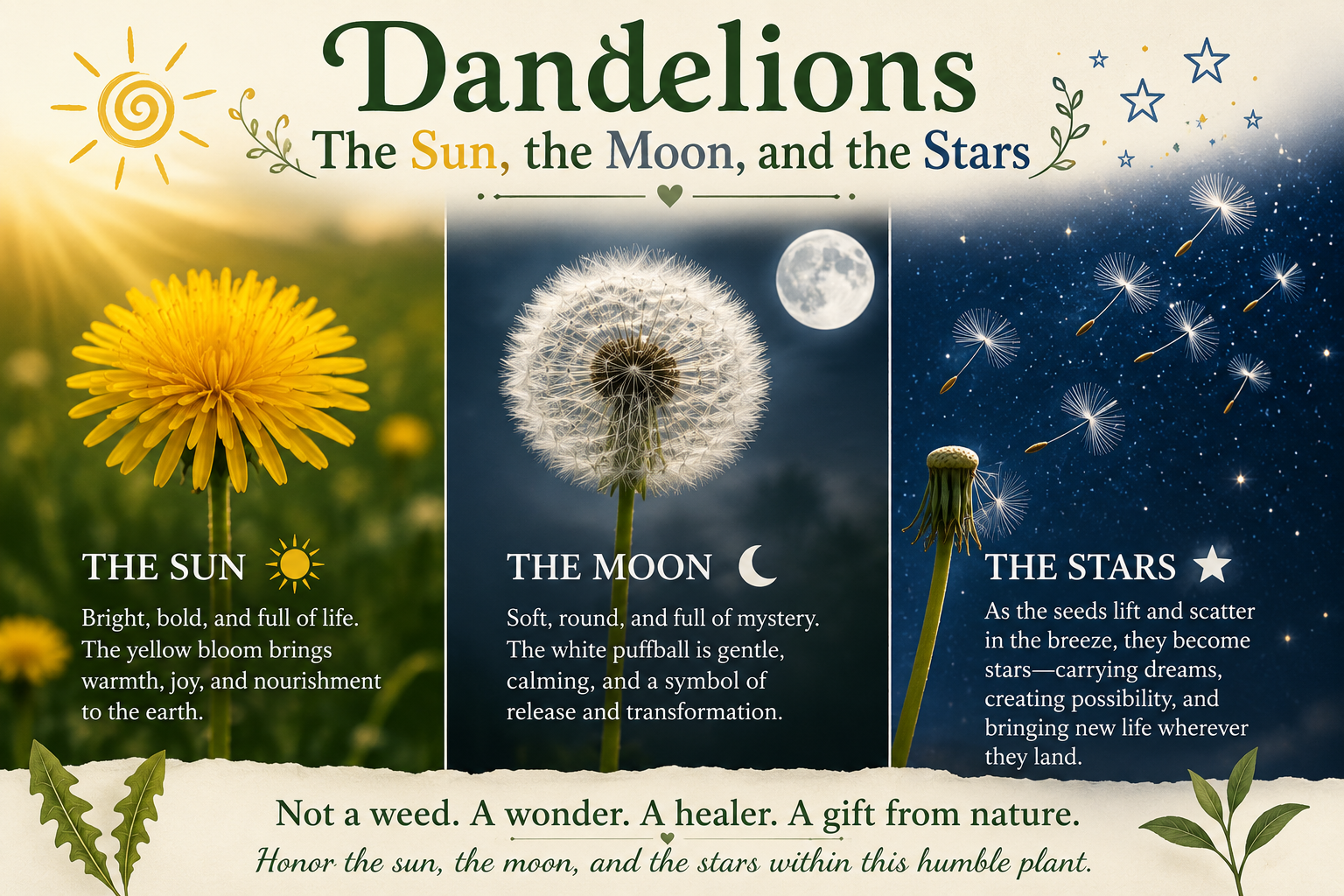
The Sun
When dandelions bloom bright yellow, they become tiny suns scattered across the earth.
Bold. Golden. Warm. Full of life.
They appear early in spring, often when everything else still looks gray and tired.
They bring light when the earth is waking up.
Their bright yellow flowers feed bees and pollinators when food is scarce.
That alone makes them valuable.
The Moon
Then something magical happens.
The bright yellow flower transforms into a soft white globe.
Round. Quiet. Gentle.
Like a tiny moon resting in the grass.
This is the stage children love most.
Pick one. Make a wish. Blow.
The Stars
Then the wind comes.
The fluffy white seeds lift into the air.
And suddenly the moon becomes stars.
Tiny stars floating on the wind.
Scattering possibility.
Planting life wherever they land.
Dandelions Are Not Weeds — They Are Misunderstood
A weed is often just a useful plant growing where someone doesn’t want it.
The problem isn’t the dandelion.
The problem is that most people were never taught how useful it is.
For generations, dandelions were gathered in baskets each spring.
Grandmothers dried roots for tea. Families cooked greens.
Flowers were turned into wine, jelly, syrup, and medicine.
Then somewhere along the way, we forgot.
7 Surprising Facts About Dandelions
- Every part of the dandelion is usable.
- The flowers, leaves, and roots all have traditional uses.
- Dandelions support pollinators.
- Dandelion roots can be roasted like coffee.
- Dandelion greens are nutrient dense.
- Dandelions have been used for centuries in herbal traditions.
- Dandelions grow almost everywhere.
15 Ways to Use Dandelions at Home
- Dandelion tea
- Dandelion wine
- Dandelion jelly
- Dandelion syrup
- Dandelion tincture
- Roasted root tea
- Coffee substitute
- Spring salads
- Sautéed greens
- Soups
- Salves
- Infused oils
- Bitters
- Smoothies
- Herbal blends
Health Benefits of Dandelion
Supports Digestion
Dandelion’s bitter compounds are traditionally used to support digestion and digestive comfort.
Supports Liver Wellness
Dandelion root is commonly used in traditional herbal routines focused on liver support.
Supports Fluid Balance
Dandelion leaf has a long history of traditional use for supporting healthy fluid balance.
Rich in Antioxidants
Dandelions contain plant compounds that contribute to overall wellness support.
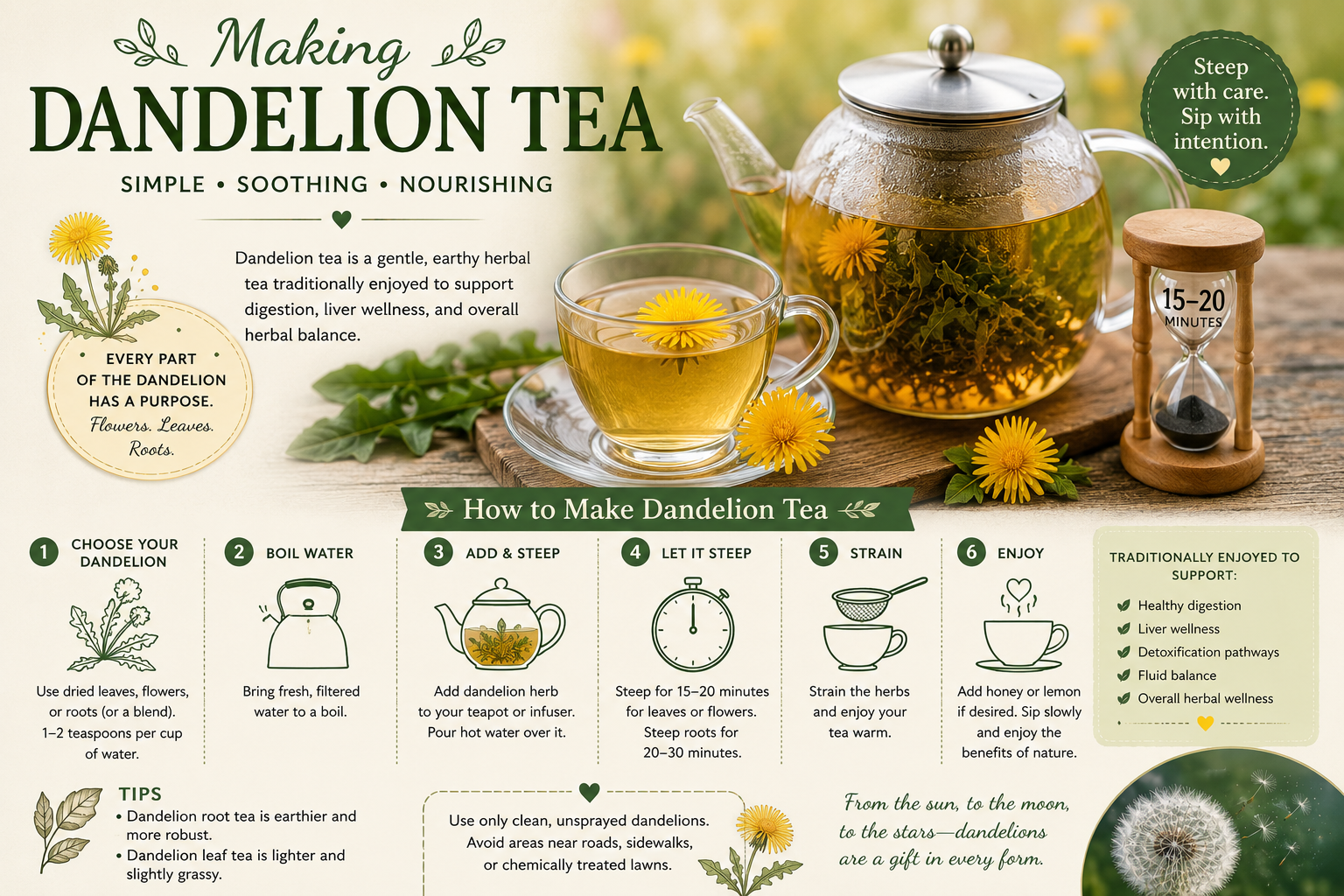
How to Make Dandelion Tea
Dandelion tea is one of the easiest ways to enjoy this remarkable plant.
- 1–2 teaspoons dried dandelion root or leaf
- 2 cups water
- Simmer 15–20 minutes
- Strain and enjoy warm
Making Dandelion Wine
Dandelion wine tastes like spring captured in a bottle.
Light. Floral. Golden. Wild.
It is sunshine you can sip.
- Dandelion petals
- Water
- Sugar
- Lemon
- Orange
- Wine yeast
Gather clean petals, steep them, add sugar and citrus, ferment, then age.
The result is a golden floral wine full of spring character.
What Research Says About Dandelion
Research suggests dandelion contains antioxidant and anti-inflammatory compounds.
Studies have explored potential support for:
- Liver health
- Digestive health
- Blood sugar balance
- Inflammatory pathways
A Final Thought
The next time you see a dandelion, pause before calling it a weed.
You may be looking at the sun.
The moon.
And the stars.
All growing quietly beneath your feet.
Maybe the dandelion was never the problem.
Maybe we simply forgot how to see it.
PubMed Research on Dandelion
- Dandelion as a Potential Complementary Treatment
Research highlights dandelion’s antioxidant, anti-inflammatory, and traditional wellness applications.
PubMed: https://pubmed.ncbi.nlm.nih.gov/22617197/
- Antioxidant Properties of Dandelion
Studies suggest dandelion contains beneficial plant compounds with antioxidant activity.
PubMed: https://pubmed.ncbi.nlm.nih.gov/22718685/
- Dandelion and Liver Support Research
Research has explored dandelion’s traditional use in liver wellness and protective support.
PubMed: https://pubmed.ncbi.nlm.nih.gov/24424436/
- Anti-Inflammatory Activity of Taraxacum officinale
Research suggests dandelion may help support healthy inflammatory pathways.
PubMed: https://pubmed.ncbi.nlm.nih.gov/21234313/
- Dandelion Root and Digestive Support
Studies have examined traditional uses of dandelion root for digestion and gastrointestinal wellness.
PubMed: https://pubmed.ncbi.nlm.nih.gov/28273844/
- Dandelion and Blood Sugar Research
Emerging research has investigated dandelion’s role in metabolic and glucose support.
PubMed: https://pubmed.ncbi.nlm.nih.gov/26176368/