
Wait! I Didn't Know That About Herbs!
Posted by 1st Chinese Herbs Botanical Research & Education Team on Jul 16th 2026
The Truth About Buying Raw Chinese Herbs: What Most First-Time Buyers Don't Know
Let's Make This Easy
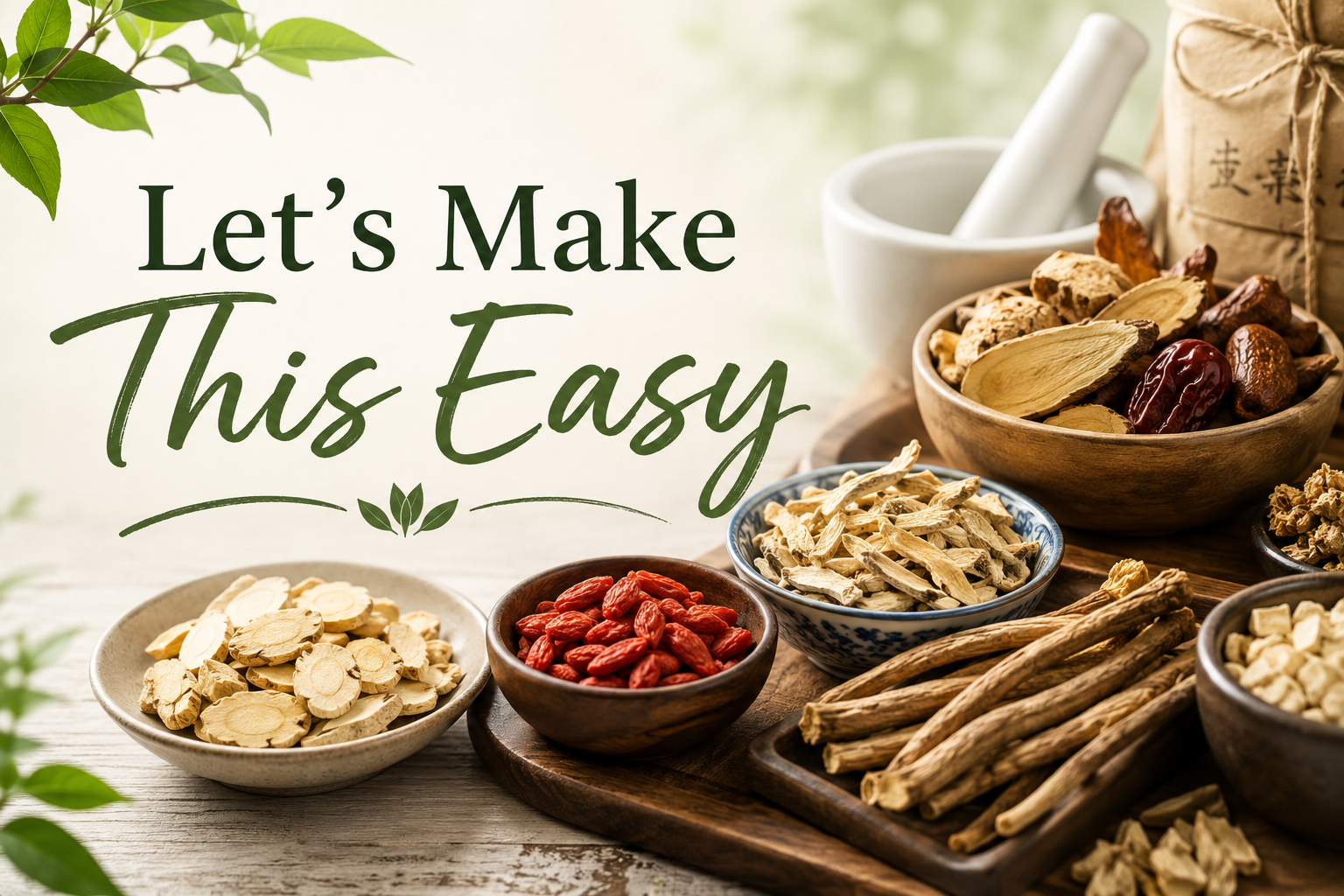
Have you ever wondered why one bag of Astragalus sells for $15 while another costs twice as much—even though both claim to be the same herb?
Or why one company's herbs smell rich and fresh while another's seem dull and lifeless?
Most people assume they're simply paying for a nicer package or a bigger brand name.
In reality, the answer is often much more interesting.
Two bags of what appears to be the same Chinese herb can differ in freshness, botanical identity, harvesting methods, processing, storage, and quality testing. Those differences aren't always obvious from a product photo or a short online description, but they can make a significant difference in your experience.
The good news?
You don't need to be a professional herbalist to recognize quality.
Once you understand a few simple principles, you'll know what to look for, what questions to ask, and how to avoid common mistakes that many first-time buyers make.
Whether you're brewing your first cup of herbal tea or adding another favorite botanical to your collection, this guide will help you shop with confidence.
By the time you finish reading, you'll probably know more about buying Chinese herbs than most people who have been purchasing them for years.
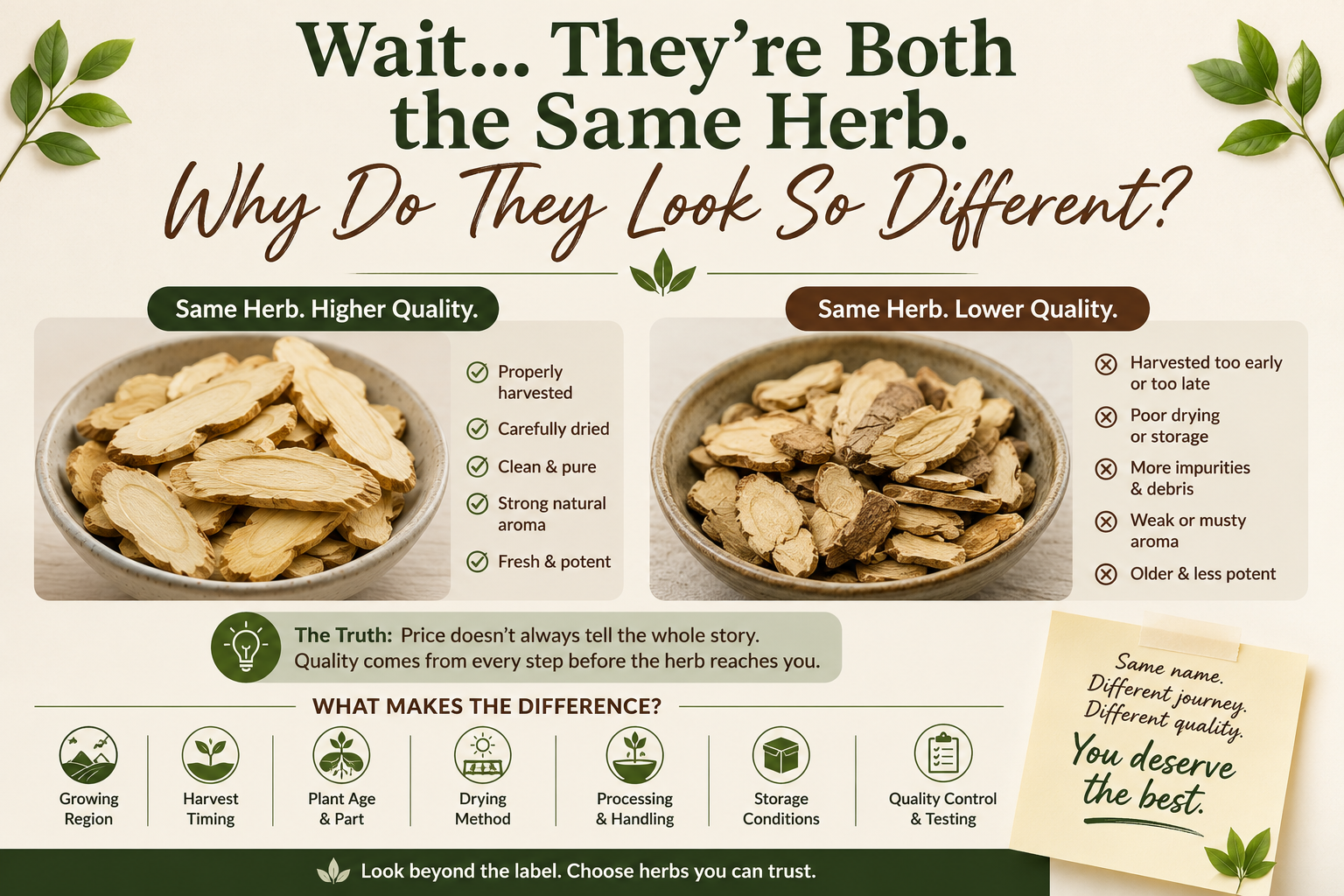
Wait… They're Both the Same Herb. Why Do They Look So Different?
This surprises almost everyone new to Chinese herbs.
Imagine placing two bags of Astragalus Root side by side.
Both say "Astragalus."
Both have attractive labels.
Both appear to contain sliced roots.
So why does one look brighter? Why does one have a stronger aroma? Why does one cost considerably more?
The answer is simple.
Chinese herbs are agricultural products.
Just as no two apples from different farms are exactly alike, herbs naturally vary depending on where they were grown, how they were harvested, and how they were handled before reaching your kitchen.
Several factors influence quality:
• The botanical species used
• The age of the plant at harvest
• The region where it was grown
• Soil and climate conditions
• Traditional processing methods
• Drying techniques
• Storage conditions
• Quality-control procedures
Here's an example.
A mature root harvested at the proper time and carefully dried may look, smell, and prepare differently than younger material harvested too early.
Neither bag may appear "wrong," but experienced herbalists immediately notice the difference.
Here's the first secret:
You're not simply buying a plant. You're buying the care that went into every step before it reached your home.
That's why experienced herb buyers rarely shop by price alone.
They look beyond the label.
The Biggest Buying Mistake Almost Everyone Makes
If there's one mistake that nearly every beginner makes, it's this:
They shop by the English name alone.
Imagine searching online for "Licorice Root."
Hundreds of products appear.
Most shoppers choose one based on price or reviews.
But experienced herbalists ask a different question:
Which Licorice Root is this?
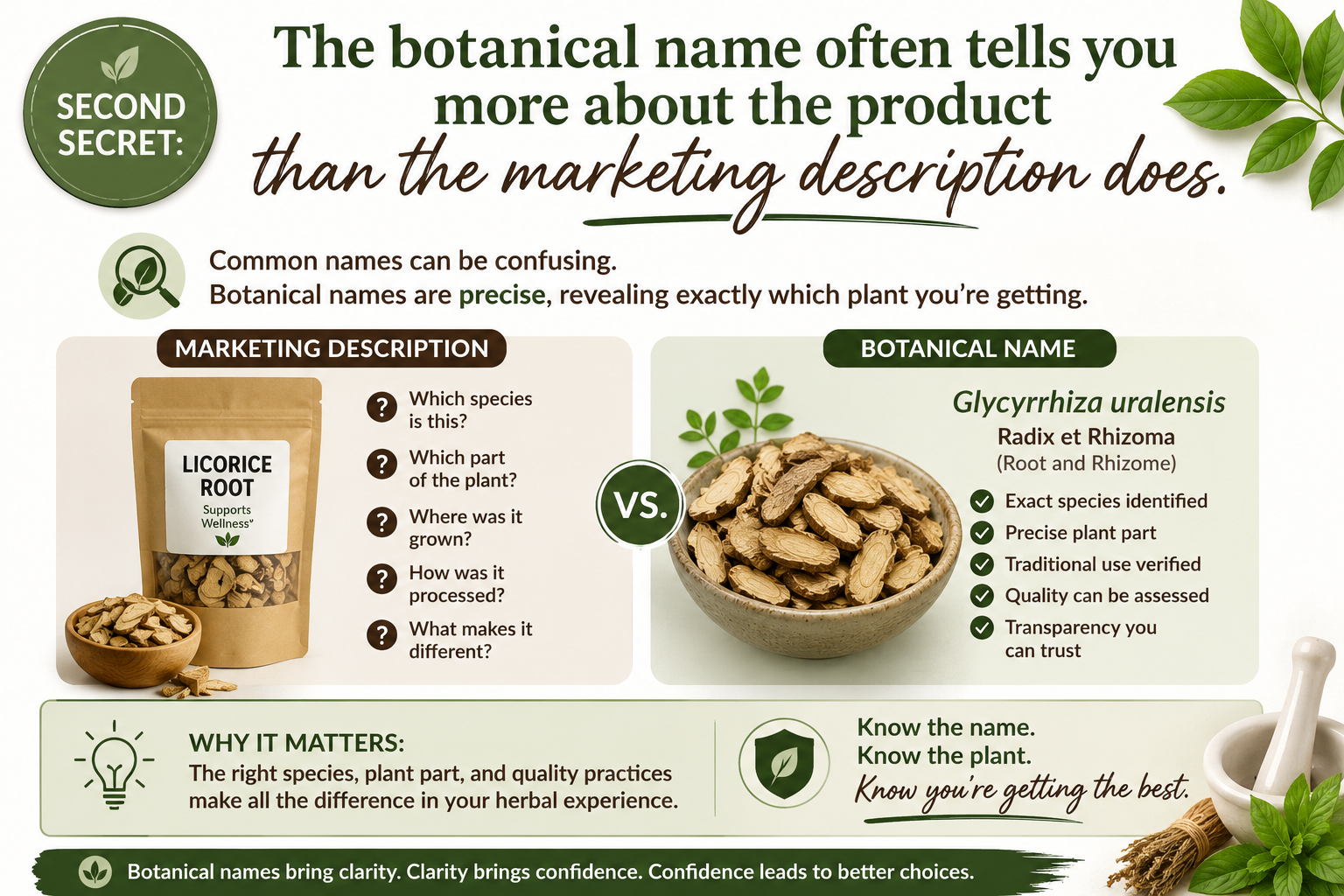
That's where the botanical name becomes incredibly important.
Botanical names are like a plant's fingerprint.
They help identify exactly which species you're buying instead of relying only on a common name that may be shared by multiple plants.
The plant part matters just as much.
Consider these examples:
Magnolia Bark is not Magnolia Flower.
Mulberry Leaf is not Mulberry Fruit.
Immature Green Tangerine Peel is different from mature Tangerine Peel.
Even though the English names sound similar, they're entirely different herbal materials with different traditional uses.
Second Secret: Why Does The Name Matter
The botanical name often tells you more about the product than the marketing description does.
That's one reason reputable herbal companies include both the botanical name and the traditional Chinese name whenever possible.
It removes guesswork and helps you know exactly what you're purchasing.
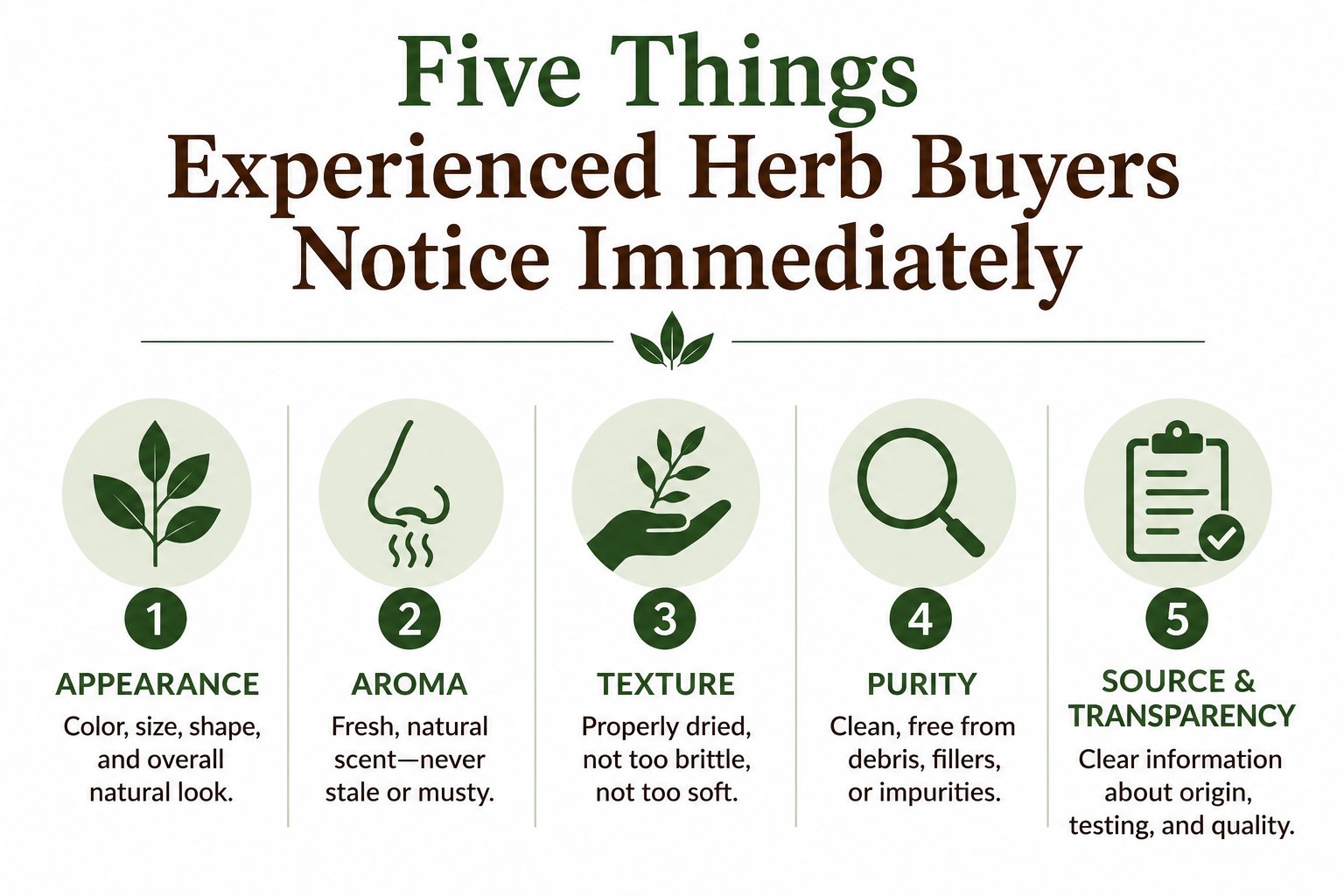
Five Things Experienced Herb Buyers Notice Immediately
Professional herbalists don't need expensive laboratory equipment to notice quality.
Long before a product reaches a microscope, they begin with something much simpler.
They use their senses.
1. Aroma
Fresh herbs often have a more noticeable natural aroma.
Some are earthy.
Some are sweet.
Some are citrus-like.
Others are spicy or pleasantly bitter.
If an herb smells unusually musty, damp, or stale, it deserves a closer look.
2. Appearance
Natural herbs are beautifully imperfect.
Color can vary slightly from one harvest to another.
That's completely normal.
Ironically, herbs that look unnaturally bright or perfectly uniform aren't always the best quality.
Nature isn't manufactured.
3. Cleanliness
Good herbs should consist primarily of the plant you intended to purchase.
Large amounts of stems, excessive dust, foreign material, or broken debris may indicate less careful processing.
4. Moisture
Properly dried herbs should feel dry—not damp.
Too much moisture can shorten shelf life and encourage spoilage during storage.
5. Information
This one surprises many people.
Experienced buyers don't just inspect the herb.
They inspect the product page.
Does it identify the botanical name?
Does it tell you which plant part you're buying?
Does it explain how to prepare it?
Does it mention quality testing?
If the seller provides almost no useful information, it becomes much harder to make an informed decision.
Yes! Third Secret:
Buying Chinese herbs doesn't have to be confusing. Once you understand what to look for—botanical identity, quality standards, proper preparation, and trustworthy sourcing—you can make informed decisions with confidence.
At 1st Chinese Herbs, we believe education is just as important as the herbs themselves. Whether you're exploring Chinese herbs for the first time or have years of experience, our goal is to provide accurate information, quality products, and knowledgeable support every step of the way.
If you have questions about a specific herb, how to prepare it, choosing between products, or understanding traditional herbal terminology, we're here to help. Our team is happy to share the information and guidance you need to make confident, well-informed choices.
Have a question? Just ask. We're committed to helping you find the answers you're looking for.