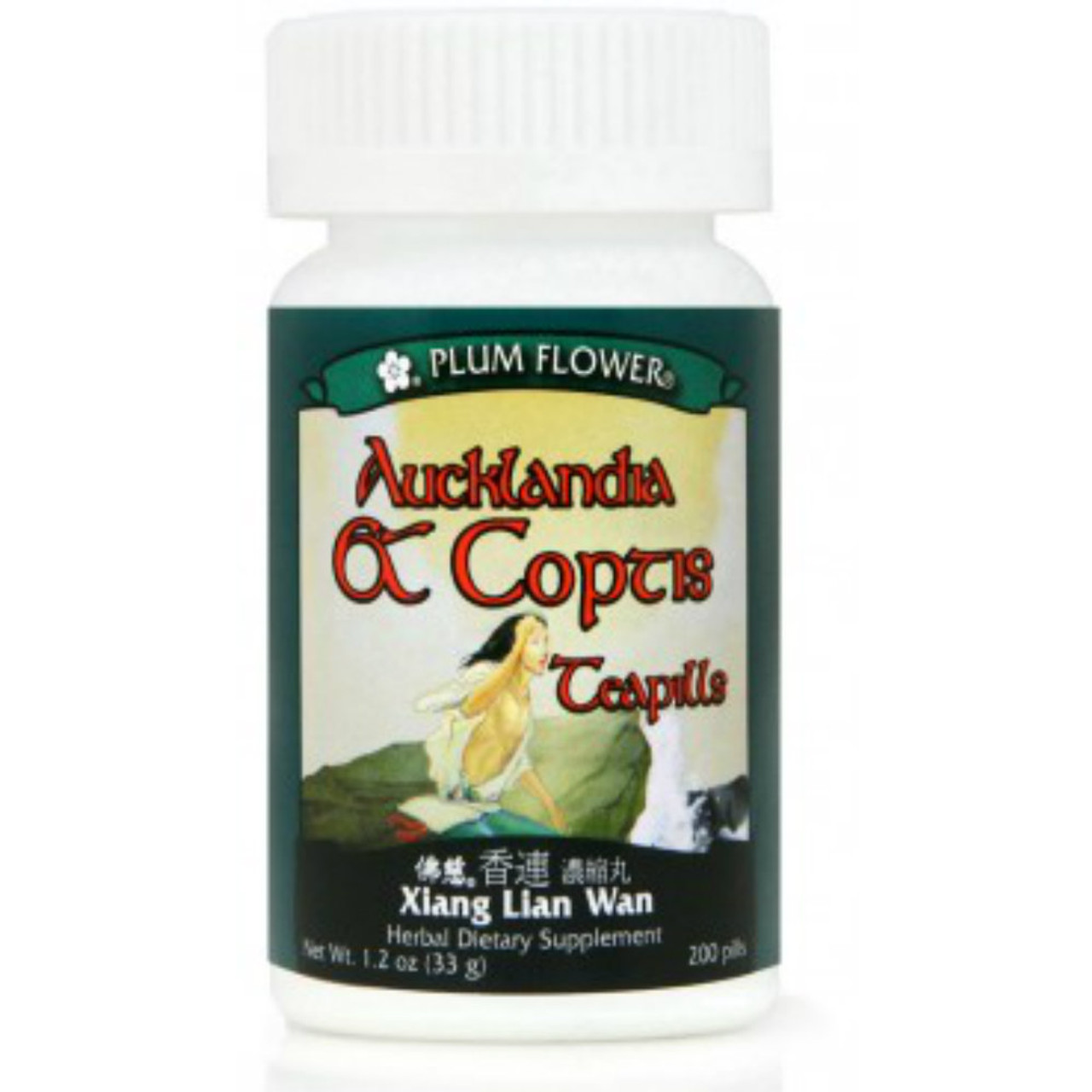


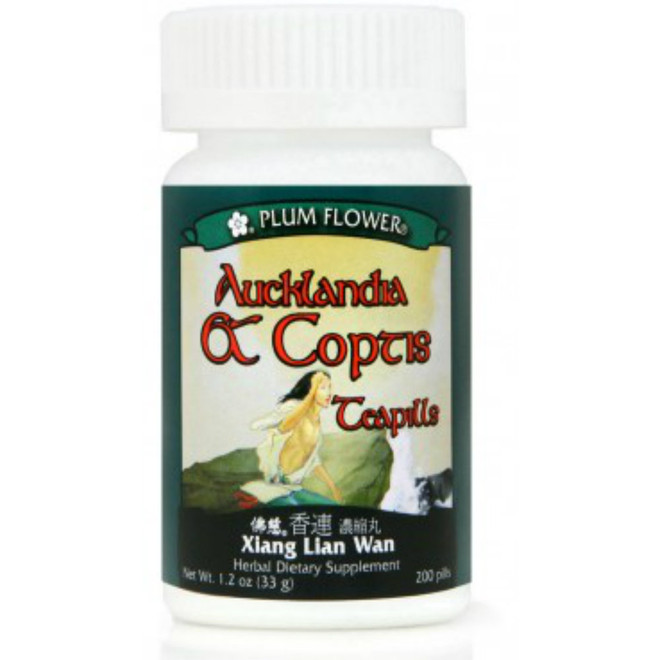
Aucklandia & Coptis Teapills – Xiang Lian Wan – Plum Flower – 200 Teapills
A classic two-herb Chinese formula traditionally used to clear Heat, transform Dampness, and promote the healthy movement of Qi according to Traditional Chinese Medicine.
Xiang Lian Wan, also known as Aucklandia & Coptis Teapills, is an unusually simple traditional Chinese herbal formula containing just two primary herbs: Huang Lian (Coptis) and Mu Xiang (Aucklandia).
The simplicity of the formula is part of what makes it interesting. Huang Lian provides the traditional Heat-clearing and Dampness-transforming action, while Mu Xiang promotes the movement of Qi. Together, the two herbs create a focused traditional formula associated with the digestive system when Damp-Heat and Qi stagnation are part of the TCM pattern.
What Is Xiang Lian Wan?
Xiang Lian Wan is a traditional Chinese herbal formula also known as Aucklandia & Coptis Pills.
Unlike complex formulas containing a dozen or more ingredients, Xiang Lian Wan is built around only two complementary herbs:
Huang Lian + Mu Xiang
According to Traditional Chinese Medicine, Xiang Lian Wan is traditionally used to:
- Clear Heat
- Transform Dampness
- Promote the movement of Qi
- Support digestive balance when Damp-Heat and Qi stagnation fit the traditional pattern
The combination of clearing Damp-Heat while simultaneously moving Qi is central to the traditional logic of this formula. Traditional references likewise describe Xiang Lian Wan as an Aucklandia-and-Coptis formula centered on clearing Damp-Heat and moving Qi
Heat, Dampness, and Qi stagnation are Traditional Chinese Medicine pattern concepts and are not conventional medical diagnoses.
What Does “Damp-Heat” Mean in Traditional Chinese Medicine?
The term Damp-Heat can sound confusing if you are unfamiliar with Traditional Chinese Medicine.
In TCM, practitioners look for patterns rather than focusing only on an individual symptom. Dampness and Heat are two traditional pattern descriptions that may occur together.
Dampness is traditionally associated with heaviness, sluggish transformation, accumulation, or impaired movement.
Heat describes another group of traditional characteristics associated with warmth and excess.
When these characteristics occur together, a TCM practitioner may describe the pattern as Damp-Heat.
Xiang Lian Wan is traditionally classified as a formula that clears Heat and transforms Dampness while promoting Qi movement.
These terms describe the formula within the traditional Chinese herbal system. They should not be interpreted as a diagnosis of a gastrointestinal disease or infection.
Product Details at a Glance
Traditional Name: Xiang Lian Wan
English Name: Aucklandia & Coptis Teapills
Brand: Plum Flower
SKU: 13612
Form: Prepared Chinese herbal teapills
Bottle Size: 200 teapills
Formula Size: 2 traditional herbs
Label Directions: 8 teapills, 3 times per day
Approximate Supply: Approximately 8 days when taking 24 teapills per day
Origin: China
Preparation Required: None — swallow the prepared teapills according to label directions
What's in Xiang Lian Wan?
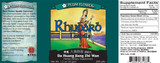
Xiang Lian Wan contains only two primary herbal ingredients. Each has a distinct role within the traditional formula.
| Pin Yin | Botanical / Ingredient | Traditional Role in the Formula |
|---|---|---|
| Huang Lian | Coptis chinensis rhizome, prepared | The primary Heat-clearing herb in the formula. Traditionally clears Heat and dries or transforms Dampness. It provides the cooling, bitter component of the two-herb combination. |
| Mu Xiang | Aucklandia lappa root | The Qi-regulating component of the formula. Traditionally promotes the movement of Qi, particularly within the digestive system, and balances the strongly cooling nature of Huang Lian. |
Other Ingredients: Talcum and botanical wax.
The current Plum Flower catalog identifies the herbal formula as prepared Huang Lian (Coptis chinensis rhizome) and Mu Xiang (Aucklandia lappa root).
How Do Huang Lian and Mu Xiang Work Together?
This is where the simplicity of Xiang Lian Wan becomes particularly useful for understanding the formula.
Huang Lian is bitter and cooling according to traditional Chinese herbal classification. Its primary role in Xiang Lian Wan is to clear Heat and transform Dampness.
Mu Xiang has a different role. It is traditionally used to promote the movement of Qi.
The combination therefore addresses two sides of the traditional pattern:
Huang Lian → Clears Heat + Transforms Dampness
Mu Xiang → Moves Qi
Traditional formula references describe Huang Lian as the primary herb and Mu Xiang as the accompanying Qi-moving herb. Mu Xiang's warmer character also provides balance to the strongly cold nature of Huang Lian.
In simple terms, the formula's traditional strategy can be summarized as:
Clear + Dry/Transform + Move.
Why Is Xiang Lian Wan Only a Two-Herb Formula?
More herbs do not necessarily make a traditional Chinese formula better.
Chinese herbal formulas can range from very simple combinations to formulas containing more than a dozen ingredients. The number of herbs depends on what the traditional formula is designed to accomplish.
Xiang Lian Wan is highly focused.
Huang Lian provides the traditional Heat-clearing and Dampness-transforming action, while Mu Xiang provides the Qi-moving action. This allows two herbs with very different characteristics to complement one another.
For customers trying to understand exactly what is in their Chinese herbal formula, Xiang Lian Wan is one of the easiest traditional combinations to understand.
Is Xiang Lian Wan the Same as Taking Coptis by Itself?
No.
Although Huang Lian (Coptis) is a major component of Xiang Lian Wan, the traditional formula deliberately combines it with Mu Xiang (Aucklandia).
Huang Lian is strongly bitter and cooling according to Chinese herbal theory. Mu Xiang contributes a warming and Qi-moving action that changes the character of the combination.
This is an important principle of traditional Chinese herbal formulas: the combination matters.
Xiang Lian Wan should therefore be understood as a two-herb formula rather than simply as another way of taking Huang Lian.
Why Choose Xiang Lian Wan Teapills?
Traditional Chinese herbs can be purchased individually and prepared as a decoction, but that requires measuring the ingredients, simmering them in water, straining the liquid, and repeating the process regularly.
Plum Flower Xiang Lian Wan provides the traditional Huang Lian + Mu Xiang combination in a prepared teapill form.
There is no measuring, simmering, brewing, or straining required.
For customers who have already identified Xiang Lian Wan as the traditional formula they are looking for, teapills provide a simple way to use the prepared formula according to the product directions.
How Do I Take Xiang Lian Wan Teapills?
The dosage stated on the bottle is:
Take 8 teapills, 3 times per day.
Swallow the teapills with water. No brewing or other preparation is required.
At the label amount of 24 teapills per day, a 200-count bottle provides approximately 8 days of use.
Follow the directions printed on the bottle you receive. Consult your qualified healthcare practitioner if you have questions about appropriate use.
Who Should Use Extra Caution?
Do not use during pregnancy or while nursing unless specifically directed by a qualified healthcare professional.
People taking prescription medications or managing a medical condition should discuss the use of Xiang Lian Wan with their physician, pharmacist, or qualified herbal practitioner before use.
Because Huang Lian is traditionally considered strongly bitter and cold, Xiang Lian Wan is not intended as a general-purpose digestive formula for every TCM pattern.
Persistent or severe digestive symptoms should receive appropriate medical evaluation. Seek prompt medical attention for blood in the stool, black or tarry stool, severe abdominal pain, persistent vomiting, signs of dehydration, high fever, or persistent or worsening diarrhea.
California Proposition 65 Warning
Frequently Asked Questions About Xiang Lian Wan
What is Xiang Lian Wan?
Xiang Lian Wan is a traditional Chinese herbal formula containing Huang Lian (Coptis) and Mu Xiang (Aucklandia). According to Traditional Chinese Medicine, the formula traditionally clears Heat, transforms Dampness, and promotes the movement of Qi.
How many herbs are in Xiang Lian Wan?
There are only two primary herbs in this Plum Flower formula: Huang Lian and Mu Xiang.
What is Huang Lian?
Huang Lian is prepared Coptis chinensis rhizome. Within Xiang Lian Wan, it provides the formula's primary traditional Heat-clearing and Dampness-transforming action.
What is Mu Xiang?
Mu Xiang is Aucklandia lappa root. It is traditionally classified as a Qi-regulating herb and provides the Qi-moving component of Xiang Lian Wan.
What does Damp-Heat mean?
Damp-Heat is a Traditional Chinese Medicine pattern concept. It combines the traditional characteristics of Dampness and Heat and does not represent a conventional medical diagnosis.
Is Xiang Lian Wan the same as taking Huang Lian by itself?
No. Xiang Lian Wan combines Huang Lian with Mu Xiang. The two herbs have complementary traditional actions, with Huang Lian clearing Heat and transforming Dampness while Mu Xiang promotes Qi movement.
How do I take Xiang Lian Wan Teapills?
The bottle directions state 8 teapills, 3 times per day. Follow the directions printed on the product you receive or instructions provided by your qualified healthcare practitioner.
How long does a bottle last?
A bottle contains 200 teapills. At 8 teapills three times daily, or 24 teapills per day, one bottle provides approximately 8 days of use.
Do I need to brew Xiang Lian Wan?
No. The formula has already been prepared as small teapills. There is no measuring, simmering, brewing, or straining required.
Can I take Xiang Lian Wan with prescription medications?
If you take prescription medications, discuss the formula with your physician, pharmacist, or qualified herbal practitioner before use.
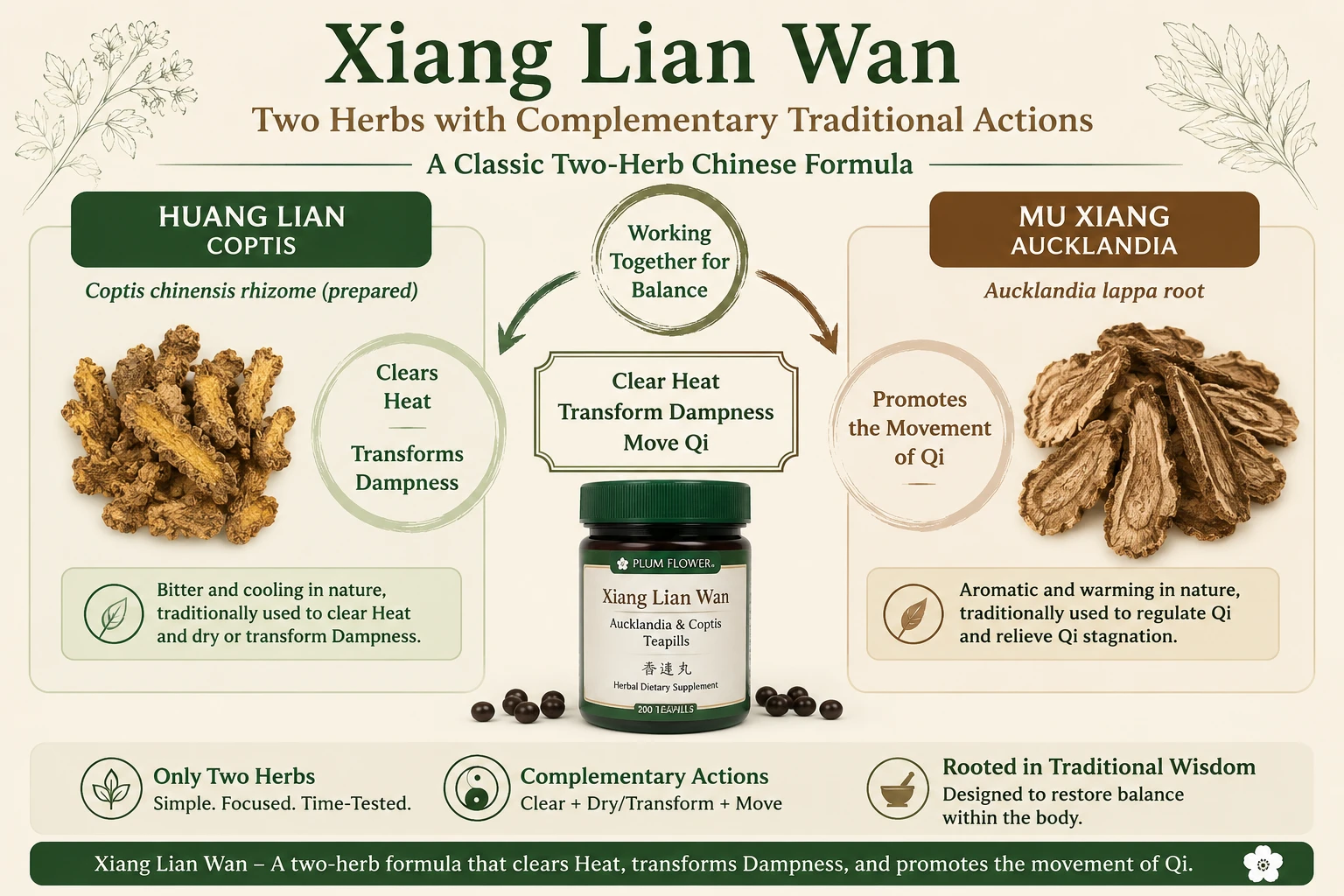
Xiang Lian Wan – Two Herbs with Complementary Traditional Actions
Xiang Lian Wan demonstrates that a traditional Chinese herbal formula does not need a long ingredient list to have a carefully designed structure.
Huang Lian provides the traditional Heat-clearing and Dampness-transforming component, while Mu Xiang promotes Qi movement and balances the combination.
For customers who have already identified Xiang Lian Wan as the traditional formula they are looking for, Plum Flower teapills provide this classic two-herb combination in a convenient prepared form.
200 teapills • 2-herb traditional formula • 8 teapills three times daily • Approximately 8 days per bottle • No brewing required
Research on Herbs Found in Xiang Lian Wan
The two primary herbs in Xiang Lian Wan—Huang Lian (Coptis) and Mu Xiang (Aucklandia)—have been studied in modern scientific research. These links are provided for educational purposes. Research on individual herbs or their constituents does not establish that Xiang Lian Wan diagnoses, treats, cures, or prevents any disease.
Huang Lian – Coptis chinensis
PubMed: Coptis Rhizome – Traditional Uses, Phytochemistry, Pharmacology & Toxicology
Huang Lian – Coptis chinensis
PubMed: Coptis Rhizome – Comprehensive Modern Research Review
Huang Lian – Coptis & Berberine
PubMed: Coptis Rhizome Constituents & Berberine Pharmacology
Mu Xiang – Aucklandia lappa
PubMed: Aucklandia lappa – Traditional Uses, Phytochemistry & Pharmacology
Mu Xiang – Saussurea costus / Aucklandia
PubMed: Costus Root – Pharmacology, Phytochemistry & Traditional Uses
Disclaimer: These statements have not been evaluated by the Food and Drug Administration. This product is not intended to diagnose, treat, cure, or prevent any disease. Information concerning traditional uses refers to Traditional Chinese Medicine theory and is provided for educational purposes only. Consult a qualified healthcare professional before using dietary supplements, particularly if you have a medical condition, take medications, are pregnant, nursing, or are preparing for surgery.